

PROTECT YOUR DNA WITH QUANTUM TECHNOLOGY
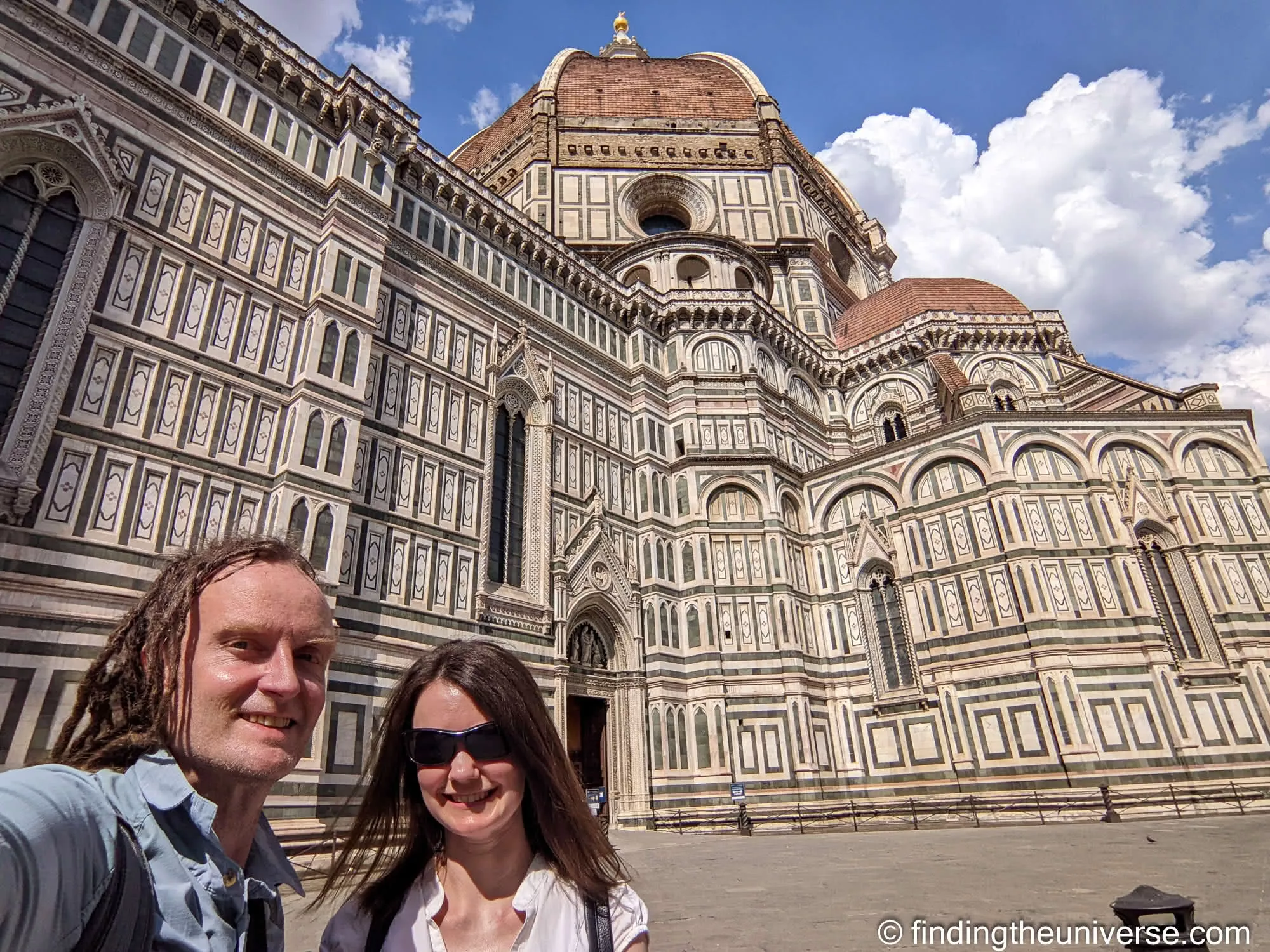
Orgo-Life the new way to the future Advertising by AdpathwayFlorence is the city in Italy we keep going back to. We first visited in 2015, staying in a small apartment a few streets from the cathedral, and we’ve returned several times since, most recently stepping off the fast train and walking ten minutes to our hotel with the Duomo already crowding the skyline.
I’m a professional travel photographer, so I’ve shot the city at sunrise and sunset from most of its best viewpoints, and Jess could happily spend both days in front of the art and never get bored. Between us we’ve climbed the dome, queued for the David, watched the sun go down from two different hills, and made most of the planning mistakes so you don’t have to.
So is two days enough in Florence? Yes, comfortably, for the headline sights, as long as you book the big three before you arrive and accept that you’re seeing the city rather than the wider region. Two days gets you Michelangelo’s David, the Duomo and a climb up its dome, the Uffizi, a sunset over the rooftops and a proper wander through the artisan workshops of the Oltrarno.
What it doesn’t get you is a day trip out to Siena or Pisa as well. If you want to split your time between the city and the Tuscan countryside, we have a separate 2 days in Florence and Tuscany itinerary for exactly that. This one keeps both days in the city, where two days is plenty to fill.
The difficult part of planning Florence isn’t deciding what to see. Everyone sees the same handful of icons, which are iconic for a reason. The difficult part is the tickets: which passes cover what, what sells out and when, and which of the dozen ticket combinations actually makes sense for your trip. We’re going to help you work that out, because the right combination changes completely depending on the kind of traveller you are. That decision comes first, then the two days.
Your Two Days in Florence at a Glance
Here’s how the two days break down. Florence’s historic centre is small, walkable corner to corner in about 20 minutes, so the itinerary is built around the three sights you have to book a timed slot for, not around walking distances.
- Day one is the icons: Michelangelo’s David at the Accademia first thing, the Duomo complex and the dome climb late morning, lunch near the Mercato Centrale, Piazza della Signoria and Ponte Vecchio in the afternoon, then sunset from Piazzale Michelangelo.
- Day two is slower and crosses the river: the Uffizi at opening, then the Oltrarno for the Pitti Palace and Boboli Gardens (or the quieter Bardini Garden), lunch around Santo Spirito, the artisan workshops, and a calmer second viewpoint at San Miniato al Monte.
Before you book anything, two timing rules matter more than the order of the sights. First, check whether either of your two days is a Monday, because the Uffizi, the Accademia and the Pitti Palace are all closed on Mondays.
If your trip lands on a Monday, do the Oltrarno gardens, the churches and the viewpoints that day and save the big galleries for the other one. Second, the dome climb sells out two to three weeks ahead in season, so it dictates everything. Book that first, then build the rest of the day around the slot you get.
Florence Tickets: What to Pre-Book and What to Skip
You do not need a pass for everything, and the most expensive option is rarely the right one for a two-day visit. Here’s what each ticket actually costs and covers in 2026, then a breakdown of which combination to buy depending on your trip.
| Uffizi Gallery | €29 online / €25 at the door | The main gallery: Botticelli, Leonardo, the Medici collection | uffizi.it | Closed Mondays. A cheaper €16 ticket covers entry from 4pm. |
| Accademia Gallery | €20 advance / €16 at the door | Michelangelo’s original David | Firenze Musei (b-ticket.com) | Closed Mondays. The worst queue in the city if you don’t pre-book. |
| Brunelleschi Pass | €30 | The dome climb, plus the bell tower, Baptistery, museum and crypt | tickets.duomo.firenze.it | The only ticket that includes the dome climb. Valid 72 hours. Sells out weeks ahead. |
| Giotto Pass | €20 | The bell tower (campanile), Baptistery, museum and crypt | tickets.duomo.firenze.it | No dome climb. The campanile is scaffolded for restoration through to around 2030. |
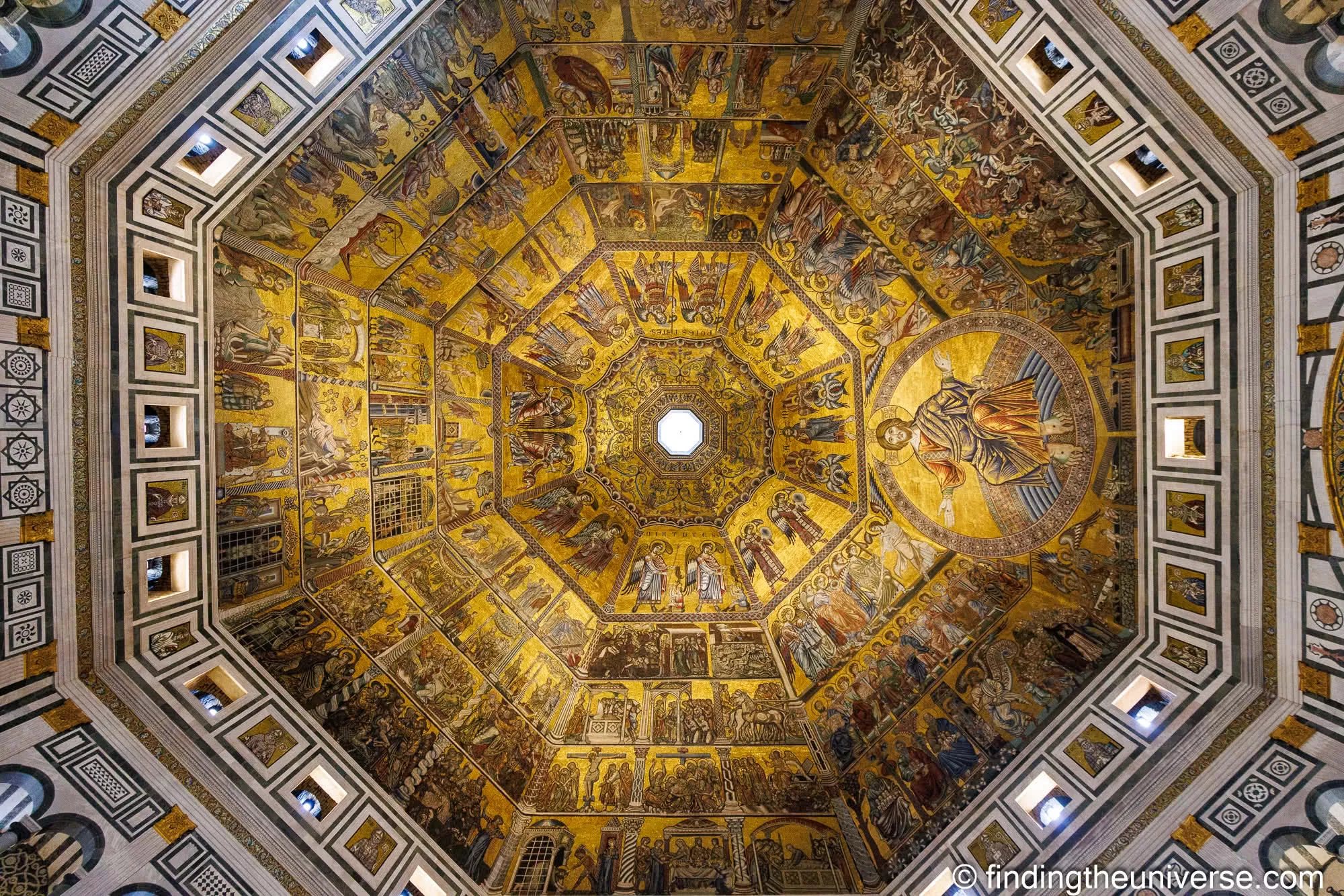
| Ghiberti Pass | €15 | The Baptistery, museum and crypt, no climbing | tickets.duomo.firenze.it | The Baptistery’s gold mosaic ceiling is under restoration until roughly 2028. |
| Firenze Card | €85, valid 72 hours | 60-plus museums including the Uffizi, Accademia, Pitti, Boboli, Bardini and Bargello | firenzecard.it | Does not include the Duomo dome climb, which you still buy separately. |
| Pitti Palace + Boboli | €22 at the door / €25 advance | The Pitti galleries and the Boboli Gardens | uffizi.it | Closed Mondays. Both sit across the river in the Oltrarno. |
| Bardini Garden | €10 | A quiet hillside garden and city viewpoint | villabardini.it | Closed the first and last Monday of the month. A €15 combined ticket (in person at the Uffizi ticket office only) adds Boboli. |
One thing worth saying up front, because it surprises people: walking into the cathedral itself, Santa Maria del Fiore, is free. You queue, but you don’t pay. The passes above are for climbing the dome and the bell tower, and for the Baptistery, museum and crypt. So if you just want to stand inside the cathedral, you don’t need any pass at all.
Which Tickets Should You Actually Buy?
The right combination comes down to one thing: how much art you actually want to see. Here are the three most common two-day visits, and exactly what we’d book for each.
| Art-lovers, two full days | Uffizi + Accademia + Brunelleschi Pass (for the dome) + Pitti and Boboli | About €104 | The Firenze Card, unless you’ll really be visiting five or more extra state museums in 72 hours |
| The classic first-timer (David and the Duomo) | Accademia + Brunelleschi Pass | About €50 | The Firenze Card. Add the Uffizi (€29) only if you actively want a big gallery |
| Family with younger children, no dome climb | Uffizi + Accademia for the adults (under-18s are free at both), plus a Ghiberti Pass (€15) if you want the Baptistery | About €49 per adult, children free | The dome climb (463 steps is a lot with small kids) and the Firenze Card |
You’ll notice the Firenze Card doesn’t win in any of these. For a two-day visit it rarely pays off, and the reason is specific: the two things a first-timer most wants, the dome climb and the David, sit awkwardly against it. The dome isn’t included at all, and while the Accademia is technically in the card’s network, the card only beats buying à la carte if you pack in a lot of extra museums inside 72 hours. On a tight two days you won’t. Buy the individual tickets, keep the flexibility, and spend the difference on dinner. The card flips to good value if you’re staying longer or you’re a serious museum-hopper, and not really before then.
If you do want the Firenze Card, you can buy it on the official site for €85, or through GetYourGuide for a little more, with more relaxed cancellation terms, which is worth it if your plans might still change.
How the Duomo Tickets Work (and Where the Real David Is)
The Duomo passes confuse everyone, so here’s the short version. All three of them, the Ghiberti, Giotto and Brunelleschi, cover the Baptistery, the Opera del Duomo museum and the crypt. The difference is the climbing. The €15 Ghiberti includes no climb, the €20 Giotto adds the bell tower, and the €30 Brunelleschi adds both the bell tower and the dome. There is no way to buy a standalone dome ticket. If you want to climb Brunelleschi’s dome, the €30 Brunelleschi Pass is the only ticket that does it.
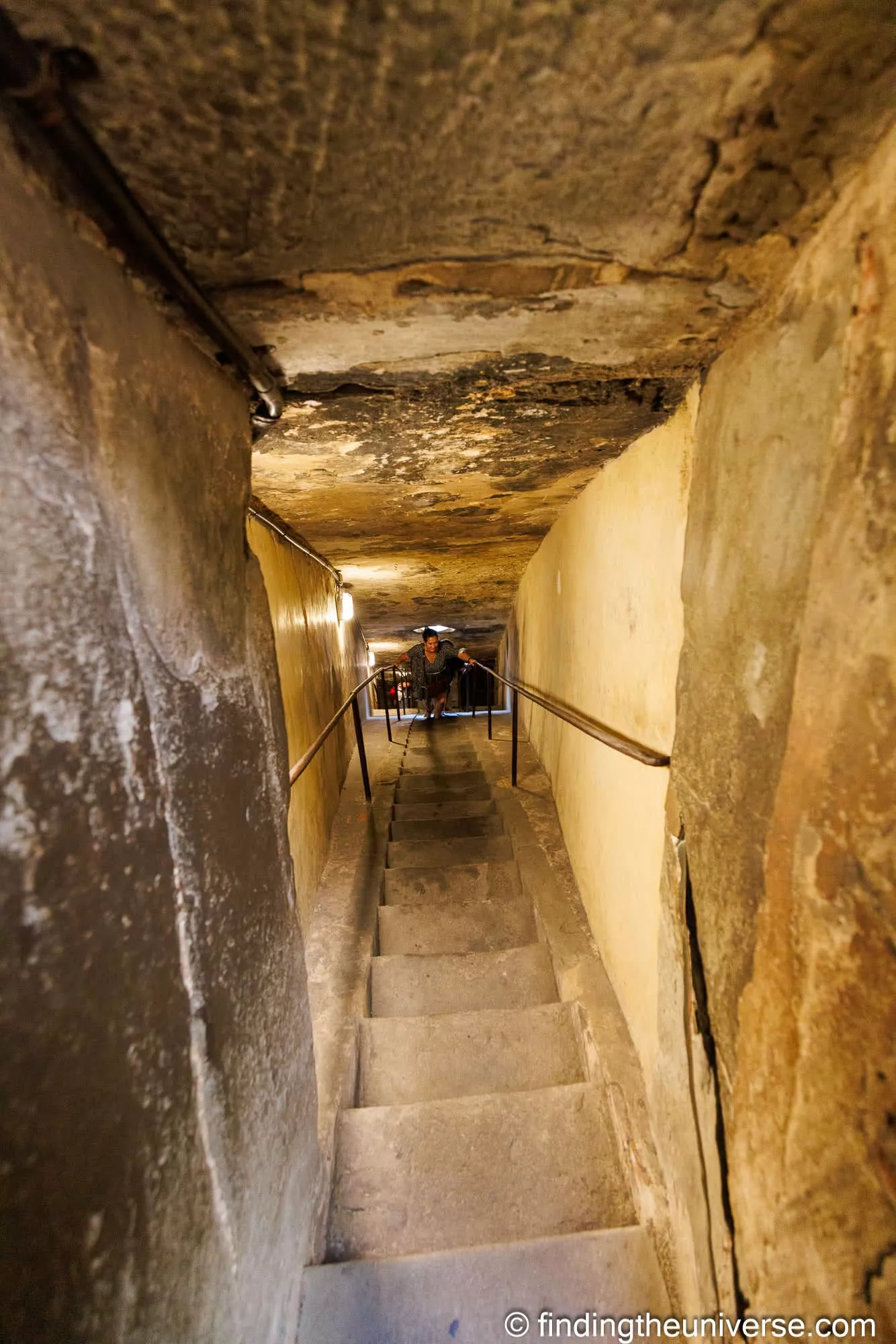
The dome climb is a timed reservation, the slots are limited, and they sell out two to three weeks ahead in the busy months. You’ll need photo ID at the gate. We’d book a morning slot: the staircase is narrow, unventilated and 463 steps with no lift, and you do not want to be doing that in the afternoon heat of a Florentine July.
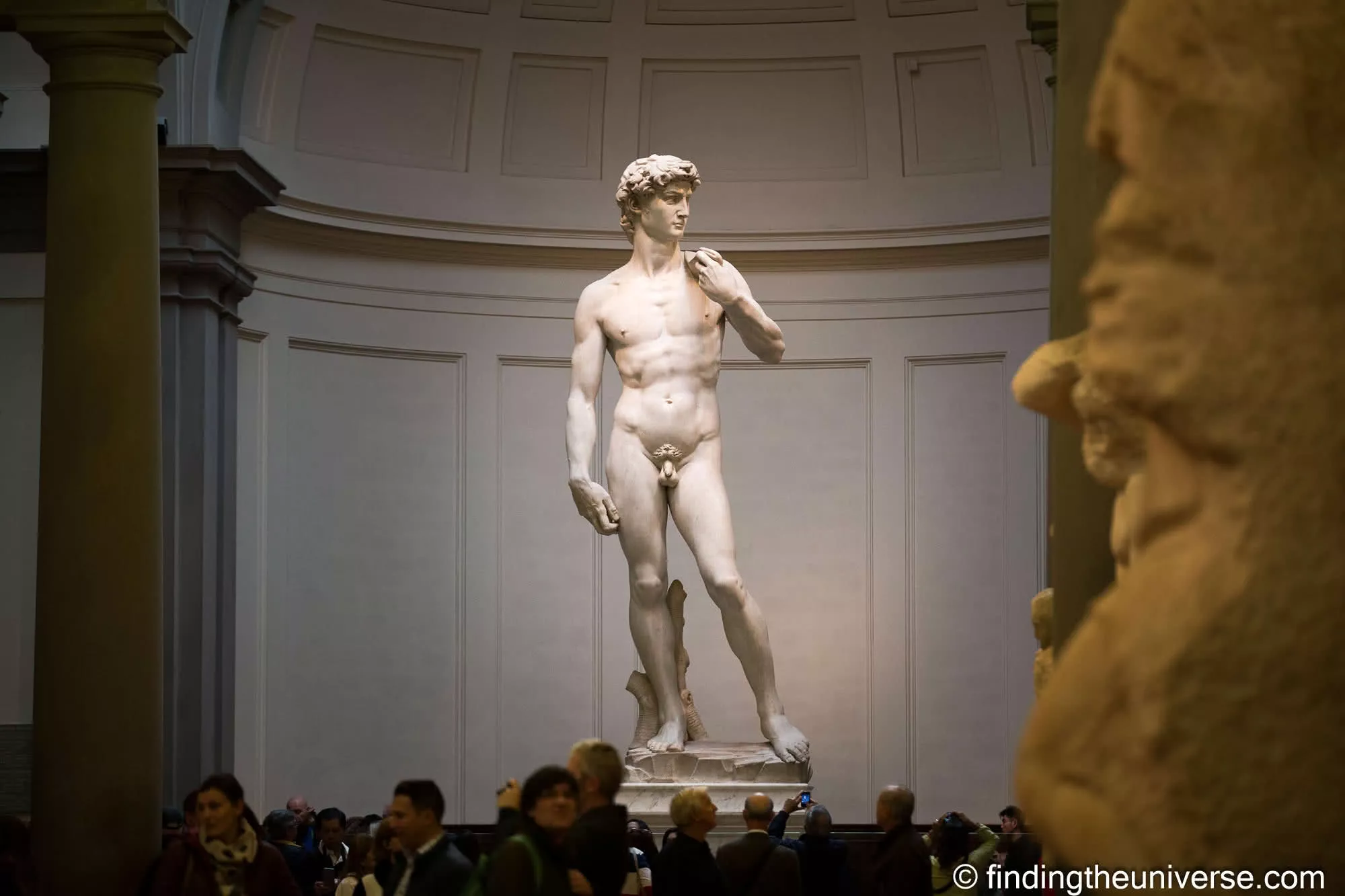
One more thing that catches people out. The David standing in Piazza della Signoria is a copy, placed there in 1910, and the bronze one up at Piazzale Michelangelo is a copy too. The original Michelangelo has been indoors at the Accademia since 1873. So if seeing the real thing matters to you, and it should, you need an Accademia ticket. You can photograph the copy in the square for free, which is a perfectly good photo, but it isn’t the David.
Skip-the-Line Tickets: Worth It or Not?
For the Uffizi and the Accademia, “skip the line” really means a timed entry slot booked in advance, and that matters. The Accademia queue without a reservation can run to a couple of hours in summer. You can book directly with the museums, or through a reseller like Tiqets or GetYourGuide, which usually charge a few euros more for an easier interface, multiple languages and flexible cancellation. Prices and availability move around, though, so it pays to compare before you book: a reseller is sometimes cheaper than booking direct, or still has availability when the museum’s own site is sold out. GetYourGuide also sells the two together as a single combined ticket if you’d rather book both at once. For the David specifically, where availability vanishes fastest, it’s worth checking the official Firenze Musei site and resellers like Tiqets and GetYourGuide side by side, because they hold separate allocations and one often has slots when the others are sold out.
For the dome, ignore any third-party “skip the line dome” product. The Opera del Duomo is the only seller of the dome climb, so a reseller is just passing you the same timed slot at a markup. Book it direct at tickets.duomo.firenze.it.
If you’d rather have someone walk you through the art instead of reading the labels yourself, a guided tour that includes the Accademia is a good shout. We did the Florence in a Day tour with Take Walks on one trip, and having someone explain what we were looking at, the Medici politics behind the paintings and the engineering behind the dome, made the whole thing far more interesting. Jess in particular got a lot more out of the art with the context.
Dome or Campanile? Which Climb to Make
If you’ve only got the legs or the time for one climb, this is the decision, and there’s a clear answer for 2026. Climb the dome.
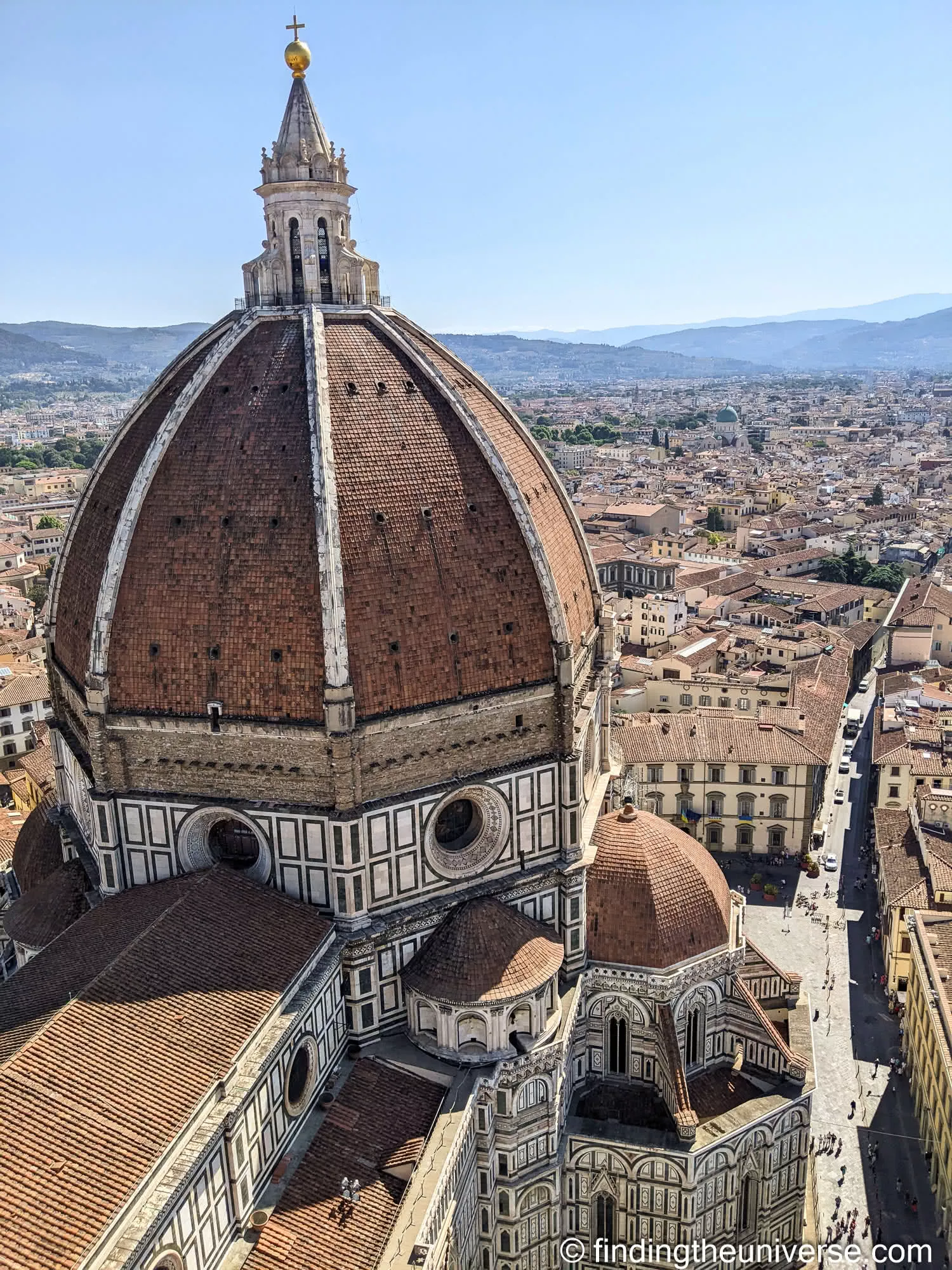
Here’s the trade-off, and I’ve now climbed both. Brunelleschi’s dome is 463 steps and about 114 metres up, with no lift, and the climb itself is the draw: the staircase carries you up past Vasari’s painted Last Judgement, frescoed across the inside of the dome, then threads you through the gap between its two shells before opening onto a viewing platform at the very top of the city.
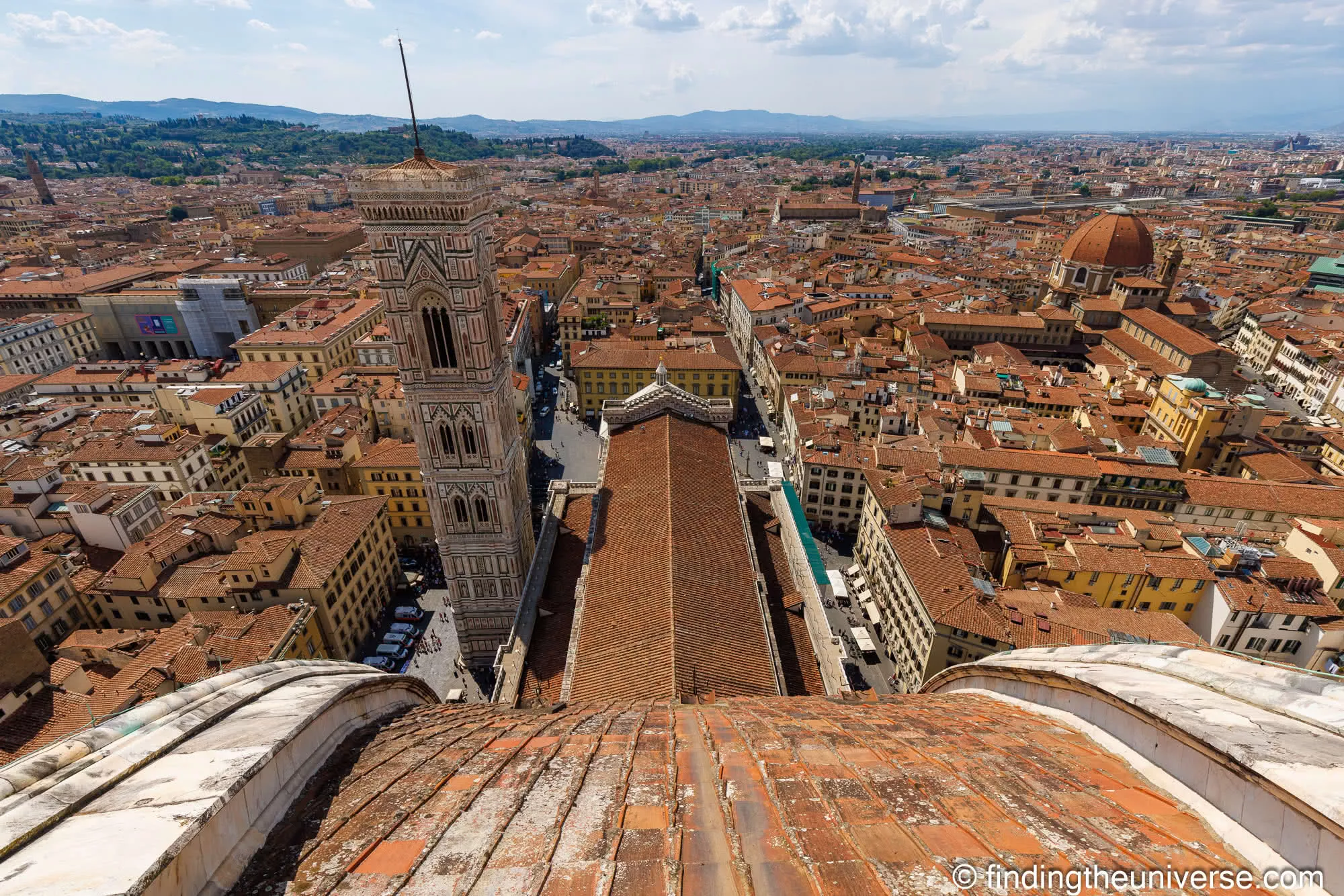
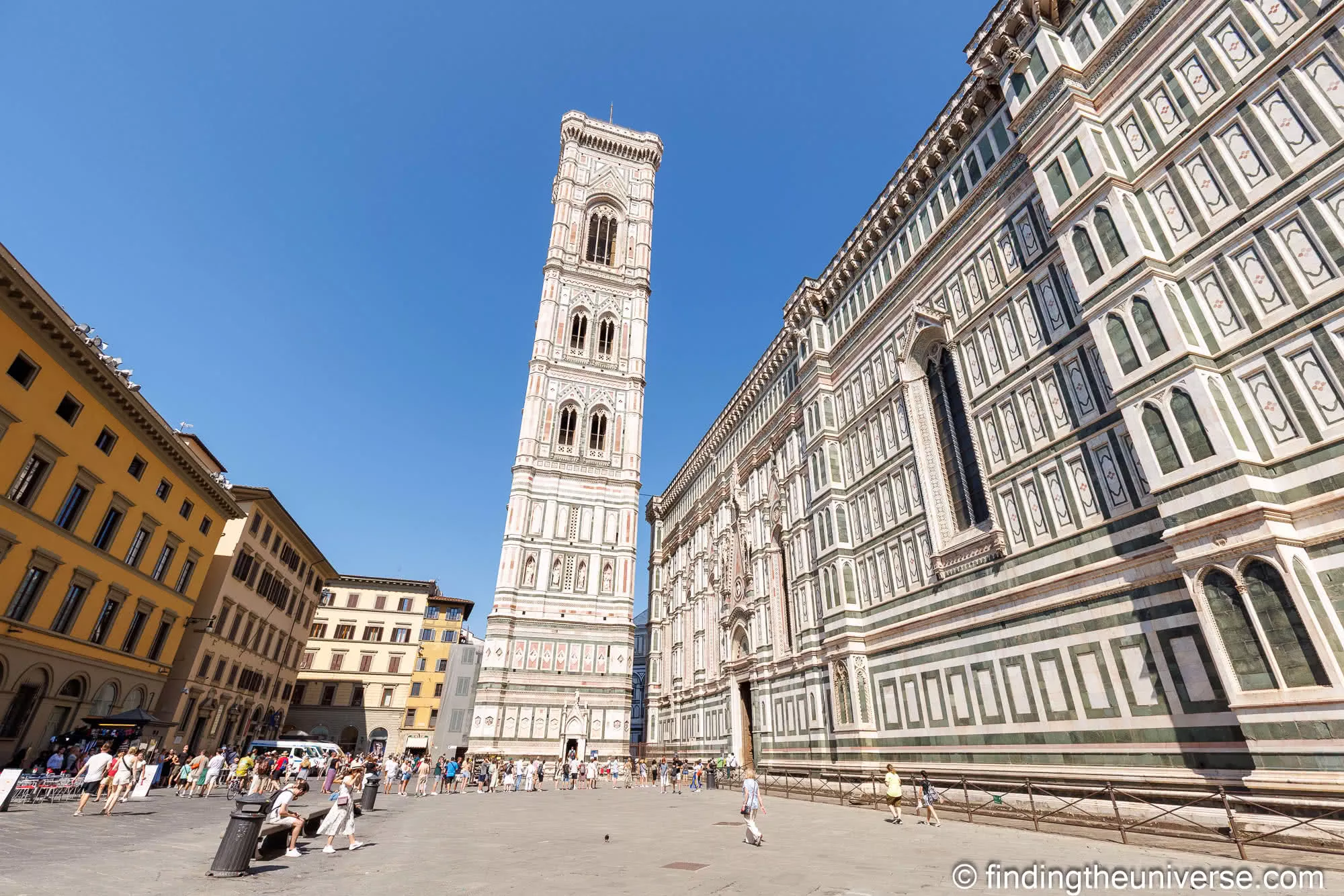
That middle stretch, walking inside the double wall of the dome, is the part that stays with you. Giotto’s bell tower next door is a little lower, around 85 metres and 414 steps, and its payoff is the view rather than the climb, because from the campanile you can photograph the dome itself, which you obviously can’t do when you’re standing on it.
That view is the usual reason to pick the campanile, and in a normal year it makes the choice a close one. For photography I’d lean towards the bell tower, since the dome across the rooftops is the better shot. For the overall experience I’d still send you up the dome, for the frescoes and that walk between the shells. In 2026 the decision makes itself: the campanile went into a roughly four-year restoration in early 2026 and is wrapped in scaffolding, so while it’s still open to climb, the clean shot of the dome it’s famous for is compromised for the next few years.
Climb the dome first. The Brunelleschi Pass covers both, so you can add the campanile if you have the legs for it, as I did. And if you only want the dome in a photo while the tower’s under wraps, you’ll get it from Piazzale Michelangelo or San Miniato instead, which we come to below.
Day One: The David, the Duomo, and Sunset Over the City
Day one is the icons. It’s a full day, with an early start and a sunset finish, and it carries two of your timed bookings, so the order matters.
Start at the Accademia with the earliest slot you can get, ideally the 8:15am opening. Get there before the day-trip coaches and you’ll have the David almost to yourself for a few minutes, which is worth the early alarm. He’s smaller and more enormous than you expect at the same time, set under his own skylight at the end of the gallery. You don’t need long here. An hour or so covers the David, the unfinished Slaves and the rest, and then it’s a five-minute walk south to the Duomo.
The Duomo complex is the centrepiece of the day. Time your dome climb for your booked slot, and remember it’s 463 steps with no lift. The cathedral nave is free to walk into if the queue isn’t silly, and the Baptistery is worth a look even with its ceiling under restoration. Give the whole complex a couple of hours.
For lunch, walk a few minutes north to the Mercato Centrale and the streets around San Lorenzo. The ground floor is the working market; the upstairs food hall is the easy lunch option, no reservation needed, with stalls cooking pasta, pizza, panini and more. It’s touristy but the food is good, and it’s right where you are.
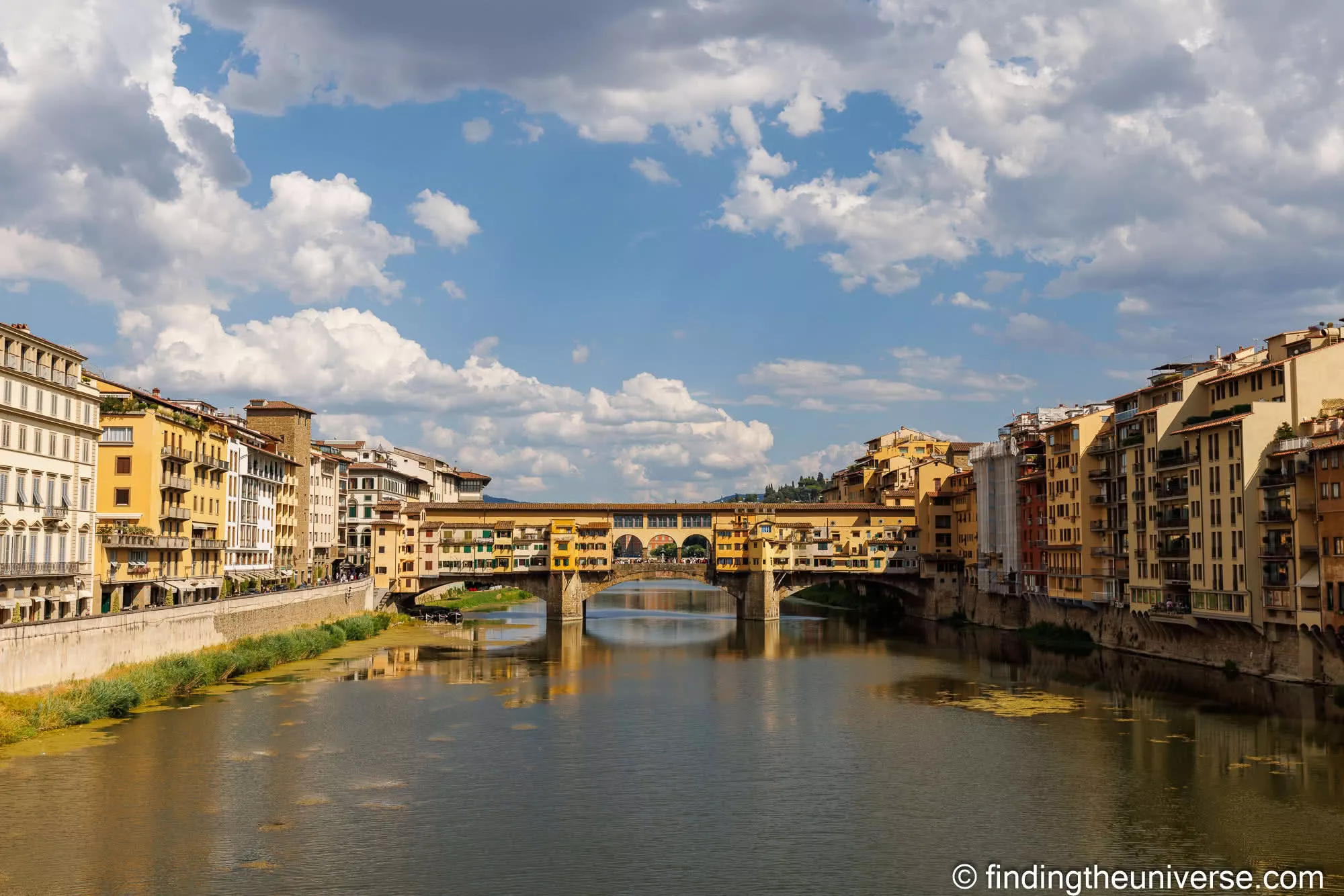
In the afternoon, wander down through Piazza della Signoria, the open-air sculpture gallery in front of the Palazzo Vecchio. This is where the David copy stands, alongside the Loggia dei Lanzi statues, all free to look at. From there it’s on to the Ponte Vecchio, the old bridge lined with goldsmiths. It gets shoulder to shoulder in the afternoon, so don’t plan to linger. Just cross it and feel slightly pickpocket-wary like everyone else.
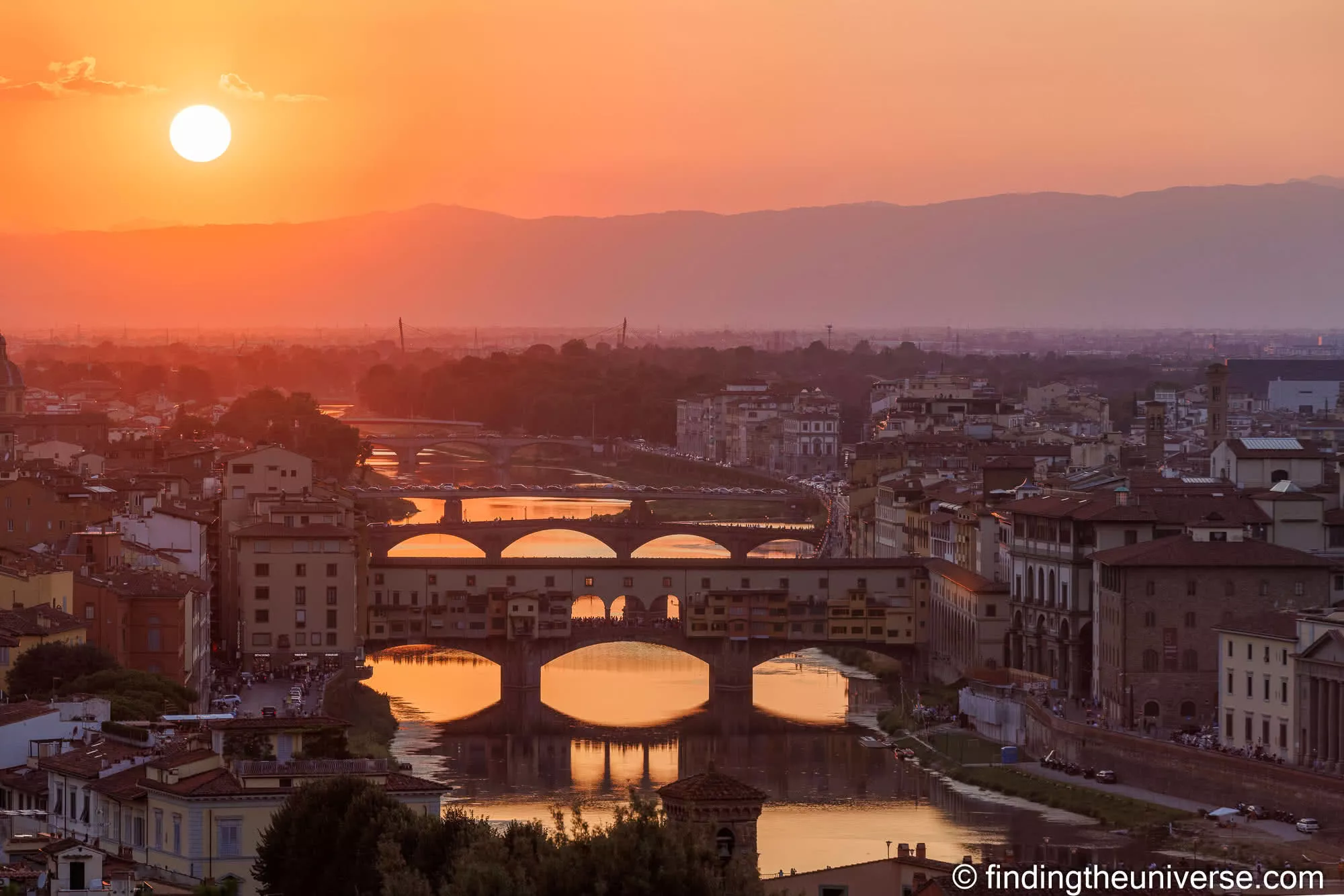
Finish at Piazzale Michelangelo for sunset. It’s a 20-minute uphill walk from the river or a short bus ride, and it gives you the classic postcard view of the whole city with the dome dead centre. Get there a good 30 to 45 minutes before sunset to claim a spot on the balustrade, because everyone else has the same idea. In midsummer that means being up there by around 8:30pm, with the light going closer to 9pm.
If you’d rather keep your evening free for a long Oltrarno dinner, swap it around. Piazzale Michelangelo early in the morning is almost empty, with soft light coming up the river behind the city. We’ve shot it both ways, and the quiet morning version is the one fewer people think of.
Day Two: The Uffizi and the Oltrarno
Day two is one big gallery in the morning and a slower, left-bank afternoon. It carries one timed booking, the Uffizi, so it’s a gentler day.
Be at the Uffizi for an early slot. It’s one of the great galleries of the world and you could spend a full day in it, but a focused two to three hours gets you the rooms everyone comes for: the Botticellis, the Leonardos, the Raphaels, the long corridor with the Arno through the windows. Pre-book without fail. The standby queue here is brutal.
For art-lovers with more appetite, this is also where the Vasari Corridor comes in, the elevated private passage the Medici built from the Uffizi across the river to the Pitti Palace. It reopened in 2024 after a long restoration, and walking it now means the combined Uffizi and Vasari Corridor ticket, which runs €43 on the day or €47 if you book ahead, on a timed slot. We’ve walked it, and Jess rates it as one of her favourite things we’ve done in Florence, partly for the corridor itself and partly for the Medici history it tells. It’s a niche add-on, not a must, but if the family politics of Renaissance Florence is your thing, it’s special.
Cross the Ponte Vecchio into the Oltrarno, the quieter side of the river, and here you choose. The grand option is the Pitti Palace and Boboli Gardens (€22 to €25 combined), a vast palace and its terraced gardens that can eat a whole afternoon. The calmer, cheaper option is the Bardini Garden (€10), a small hillside garden with a wisteria pergola in spring and a lovely view back over the city, far less crowded than anywhere on day one. Your Bardini ticket doesn’t include Boboli, though. If you want both gardens, there’s a €15 combined ticket, but you can only buy that in person at the Uffizi ticket office on the day, not online. We’d take Bardini on a hot day and Pitti if the weather’s against you.
Spend the rest of the afternoon in the Oltrarno proper. Santo Spirito, with Brunelleschi’s understated church on its own square, sits at the centre of the neighbourhood, and the surrounding streets are full of the leather and gilding workshops Florence has had for centuries. This is the part of the city that still feels lived-in rather than visited.
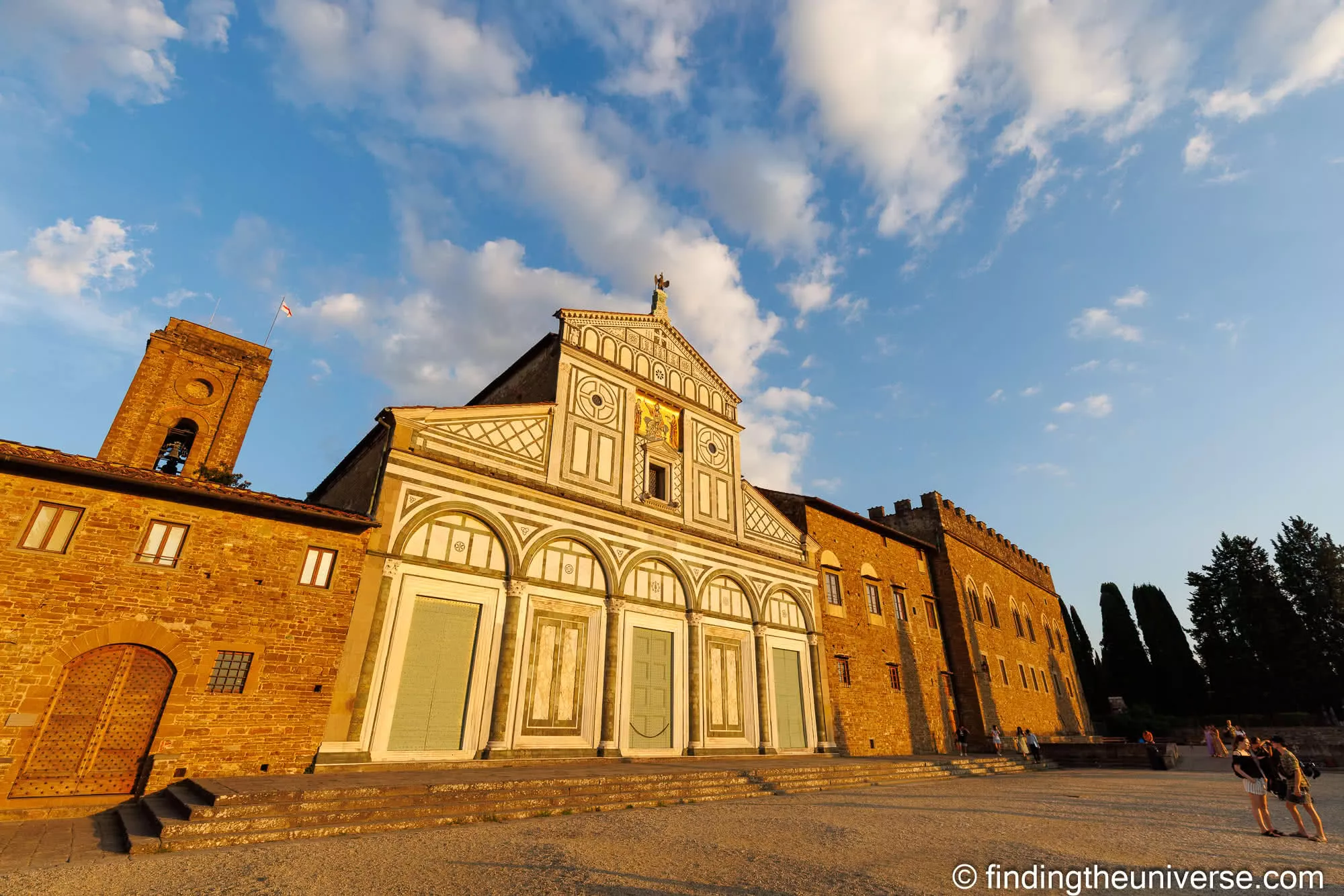
If you’ve got the energy, climb up to San Miniato al Monte, the striped Romanesque church on the hill above Piazzale Michelangelo. It’s a working monastery, much calmer than the Piazzale below it, and the view is just as good with a fraction of the crowd. One thing to know: the church itself closes around 7pm (a little later, nearer 8pm, in high summer), so in the long-daylight summer months it shuts before the sun actually sets. The view from the steps in front, and from Piazzale Michelangelo just below, stays open regardless, so you don’t miss the sunset. You just may not get inside the church if you leave it late.
Where to Eat in Florence
A quick word on what we can and can’t vouch for here. The single food thing we’d most recommend in Florence is a Devour evening food and wine tour. We did it on one of our trips and it was one of the highlights, the kind of evening where you eat far too much, learn where locals actually go, and come away with a list of places to come back to. On a two-day trip it does double duty as dinner and as orientation.
Beyond that, a few reliable pointers by area rather than a list of specific restaurants. For lunch, the upstairs food hall at the Mercato Centrale near San Lorenzo is easy and good, and the streets around it do cheap, excellent panini.
For a more local lunch, the Sant’Ambrogio market east of the centre is where Florentines shop and eat. For dinner, cross into the Oltrarno, around Santo Spirito, where the trattorie are a notch less touristy than the ones ringing the Duomo. And wherever you are, have a gelato in the afternoon: look for muted, natural colours rather than the bright mounded tubs, which is the quick tell for the good places.
And a few specific places we’ve eaten at ourselves and would happily go back to, most of them a couple of streets apart in the Oltrarno:
- Gelateria della Passera, a tiny place by Piazza della Passera, is our gelato pick on this side of the river, with a short list of unusual seasonal flavours done well.
- Lo Sprone, just round the corner on Via dello Sprone, does good-value thin-crust pizza and Tuscan plates well away from the Duomo mark-up.
- Bulli & Balene, on the same little street, is a Venetian-style spot for cicchetti and a cheap spritz, which is where we’d start the evening.
- All’Antico Vinaio, over near Piazza della Signoria, is the famous one, the schiacciata panini everyone queues for. It’s good, and the queue moves quickly, but if it’s stretching right down the street we wouldn’t always wait.
Where to Stay in Florence
Florence’s historic centre is small enough that you can stay almost anywhere inside it and walk to everything, so the choice is really about budget and atmosphere. A few notes on the neighbourhoods, then where we’ve actually stayed.
The Areas
The historic centre around the Duomo puts you in the middle of everything but it’s the busiest and priciest. Around Santa Maria Novella station is the most practical base if you’re arriving by train, a few minutes’ walk and well connected. Santa Croce, east of the centre, is a touch quieter and still very central. And the Oltrarno, across the river, is the most local-feeling, with the trade-off of a slightly longer walk to the day-one sights.
Where We’ve Stayed
On our first trip, back in 2016, we rented a small apartment in the centre, which is still a good move if you want space and somewhere to make breakfast.
More recently we stayed at the Hotel Executive, about 250 metres from the station, specifically because we were arriving by train and it was an easy walk with bags. It’s a comfortable mid-range choice and the location is hard to beat for train arrivals.
For other options across all three budget tiers, you can browse Florence hotels on Booking.com and filter by neighbourhood. We’d point budget travellers towards apartments and guesthouses near the station, mid-range visitors to the historic centre or Santa Croce, and anyone splashing out towards the boutique hotels of the Oltrarno or a room with a view over the Arno.
Where to Book, by Budget
Beyond our own stays, here are well-rated central hotels across the price range, all within walking distance of the main sights.
- Hotel Cestelli is a small budget pick in the historic centre near Ponte Santa Trinita.
- Soggiorno Battistero is a budget B&B with rooms looking out at the Baptistery, about as central as Florence gets.
- Hotel Davanzati is a well-reviewed mid-range hotel near Piazza della Repubblica.
- Hotel Spadai is a smart mid-range option a few steps from the Duomo.
- Rocco Forte Hotel Savoy is the splurge, a luxury hotel on Piazza della Repubblica between the Duomo and the Uffizi.
- Hotel Lungarno is a luxury riverside choice on the Oltrarno bank, a minute from the Ponte Vecchio and looking over the Arno.
Getting to Florence and Getting Around
Florence’s own airport, Amerigo Vespucci, is small and close to the city. The easiest way in is the T2 tram, which runs from the airport straight to Santa Maria Novella station. A single ticket is €1.70 and is valid for 90 minutes, and the trams are frequent. The old airport bus stopped running back in 2022, so don’t go looking for it. If you’re flying in on a budget airline, you may well land at Pisa instead, which is about an hour away by train and perfectly workable.
Most people, though, reach Florence by train, and it’s the best way to do it. The high-speed services put Florence about 1 hour 25 minutes from Rome, 2 hours from Venice and 1 hour 45 minutes from Milan, all arriving right in the centre at Santa Maria Novella. You can compare times and book Italian rail through Trainline or directly with Trenitalia. If you’re building a bigger trip, those fast connections are why Florence slots so neatly between Venice and Rome.
Once you’re in the city, you walk. The centre is compact and largely pedestrianised, and you’re unlikely to need a bus or a taxi except to get up to Piazzale Michelangelo if you’d rather not do the hill on foot. Wear shoes you can cover a lot of cobbled kilometres in.
When to Visit
The short version: spring and autumn are the sweet spot, summer is hot and crowded, and winter is the quietest. April, May, September and October give you warm days and the lightest crowds of the comfortable months, which is when we’d go if we had the choice.
July and August are the peak of both heat and visitor numbers. Temperatures sit in the mid-30s Celsius and the centre has very little shade, which is exactly why we keep banging on about an early start and a morning dome climb. Winter is cold but quiet, the queues shrink, and you’ll have the galleries to yourself by Florentine standards.
Two scheduling notes that matter for a two-day trip. The state museums, including the Uffizi and the Accademia, are free on the first Sunday of every month. That sounds great and mostly isn’t on a tight visit: you usually can’t pre-book a timed slot on those days, the crowds are heavy, and the queue eats the time you came to spend looking at art. And as we said at the top, the big galleries are closed on Mondays, so check your dates before you build the days around them.
What We’ve Learned From Going Back
A few things we’d tell any first-timer, learned from doing this more than once.
Book the dome the moment you know your dates. It’s the single most time-sensitive thing in the whole trip, it sells out weeks ahead, and everything else on day one bends around the slot you get. We treat it as the first booking.
Take a guided tour for the Accademia, at least. Having someone explain the art and the history, the Medici, the rivalries and the engineering, turned a tick-the-box gallery visit into the part of the trip we remember best.
Start early, every single day. The difference between the Accademia at 8:15am and the Accademia at 11am is the difference between a quiet gallery and a scrum. The heat and the crowds both build through the day, so front-load everything.
Photographing Florence
This is where two days in a compact city ringed by hills really pays off, and it’s the part I plan most carefully as a photographer. Florence gives you a handful of quite different viewpoints within a short walk of each other, and the light changes all of them.
Piazzale Michelangelo is the famous one, and for good reason: the whole city laid out with the dome in the centre and the hills behind. Sunset is the obvious time and you’ll be sharing the balustrade, so get there early. The quieter alternative most people miss is dawn, when soft light comes up the river from the east and you can have the views largely to yourself.
The Ponte Vecchio shot everyone pictures, the bridge with its overhanging shops reflected in the Arno, is best taken from the next bridge upstream, the Ponte Santa Trinita, rather than from the Ponte Vecchio itself. Golden hour into blue hour is the moment, when the lights come on and reflect in the water. That’s one of my favourite half-hours in the city with a camera.
San Miniato al Monte gives you a similar panorama to the Piazzale with far fewer people, and the striped marble facade of the church is a subject in its own right. For the dome itself as a subject, with the campanile under scaffolding for the next few years, the hill viewpoints are your friend, along with blue hour down in Piazza del Duomo when the cathedral is lit.
You don’t need much gear for any of this. A single mid-range zoom covers almost everything, the hill viewpoints reward a longer lens if you have one to compress the city, and a small travel tripod earns its place for the blue-hour shots. If you want to get more out of your travel photography in general, we run an online travel photography course that covers exactly this kind of planning and shooting.
Frequently Asked Questions
Is two days enough in Florence?
Yes, two days is enough to see Florence’s headline sights without rushing, as long as you pre-book the Accademia, the Uffizi and the dome climb. In two days you can comfortably do the David, the Duomo and its dome, the Uffizi, the Oltrarno and a sunset viewpoint.
What two days can’t stretch to is a day trip out to Siena, Pisa or the Tuscan countryside as well. If you want both the city and the region, you need three days or a separate Tuscany itinerary.
Do I need to book the Uffizi, the Accademia and the dome in advance?
Yes, and the dome especially. The Brunelleschi Pass dome slots sell out two to three weeks ahead in season, so book that first. The Accademia and the Uffizi both use timed entry, and the Accademia queue without a reservation can run to a couple of hours in summer.
You can book all three directly with the museums for the lowest price, or through resellers like Tiqets or GetYourGuide for a small premium and more flexible cancellation.
Is the Firenze Card worth it for two days?
Usually not. At €85 for 72 hours, the Firenze Card only beats buying tickets individually if you visit five or more state museums in that time, which is hard to do on a two-day trip. It also doesn’t include the Duomo dome climb, which you still have to buy separately.
For most two-day visitors, buying individual tickets is cheaper and more flexible. The card makes sense if you’re staying longer or you’re a dedicated museum-goer.
Where is the real statue of David?
The original David by Michelangelo is in the Accademia Gallery, where it has been since 1873. You need a ticket to the Accademia to see it.
The David in Piazza della Signoria and the bronze one at Piazzale Michelangelo are both copies. They’re free to photograph and perfectly good photos, but they aren’t the original.
Can you see Florence without climbing the dome?
Yes, easily. The dome climb is 463 steps with no lift, and plenty of people skip it, especially families with young children or anyone who isn’t keen on tight, steep staircases. You still get superb city views from Piazzale Michelangelo and San Miniato al Monte, both of which are free.
If you want to go up something but the dome feels like too much, the bell tower is a slightly lower alternative, though it’s wrapped in scaffolding for restoration in 2026.
What’s the best area to stay in Florence for a short trip?
For a two-day trip, stay inside the historic centre or right by Santa Maria Novella station, both of which put you within walking distance of everything. The station area is the most practical if you’re arriving by train.
The Oltrarno across the river is quieter and more local-feeling if you don’t mind a slightly longer walk to the main sights.
Plan the Rest of Your Italy Trip
Florence sits right in the middle of Italy’s best rail routes, so it pairs naturally with the other great cities. If you’re building a longer trip, we’ve got matching two-day itineraries for Venice, Verona, Milan and Rome, plus a full 10-day Italy itinerary that ties them together. And if you’d rather spend your second day out in the countryside, our Florence and Tuscany in two days guide covers exactly that.
For a guidebook to carry, we still rate Rick Steves Italy, which is useful for the practical detail and the self-guided museum walks. And if these photos have you wanting to come home with better shots of your own, take a look at our online travel photography course.
Have a brilliant time in Florence. It’s a city that rewards going back, and we suspect two days won’t be your last.

















 English (US) ·
  French (CA) ·