

PROTECT YOUR DNA WITH QUANTUM TECHNOLOGY
Orgo-Life the new way to the future Advertising by AdpathwayBy Rémi Potier
Rémi works with Bird Photo Tours Asia (bird-photo-tours.com), which runs small-group bird photography trips in Asia and the Pacific. All photographs by Bird Photo Tours Asia, taken in Palau in March 2026.
Palau is a small place to hold eighteen endemic birds. The whole republic adds up to about 460 square kilometres of land, spread over some 340 islands. The 2020 census counted 17,614 people. And yet thirteen bird species live nowhere else on Earth. Five more are shared only with the other islands of Micronesia. When Douglas Pratt and his colleagues wrote up their field notes in The Condor in 1980, they called it the richest avifauna in Micronesia. Nothing since has changed that.
The reason is geography. Palau sits at the western end of the Caroline Islands, about 800 kilometres east of Mindanao and roughly as far north of New Guinea. No other part of Micronesia is so close to the great source faunas of Asia and Melanesia. The islands are old, and they are varied. Babeldaob is volcanic, with rivers and the only natural lake in Micronesia. South of Koror, the Rock Islands are mushrooms of limestone. Peleliu and Angaur are flat coral platforms. Kayangel, in the north, is an atoll. Birds arrived, found forest on volcanic soil and forest on limestone, mangrove, swamp and strand, and in long isolation became something new.
In March 2026, our team set out from Palau on a seventy-day crossing of Micronesia, west to east. From Palau, the route went on to the Marianas, then the Federated States of Micronesia, and ended in Kiribati. This is the first of the stories from that journey. The photographs here are our lead photographer’s frames from that stay. I have worked through them species by species. What follows is an account of what the camera found, and what the birds told us about the state of these islands.
The limestone forest around Koror
Most of the endemics live within a short drive of Koror. The lowland and limestone forest still cover the hills and the nearer Rock Islands, and that is where you start. The first bird to announce itself is usually the Palau Kingfisher, Todiramphus pelewensis. For a long time it was treated as a race of the Micronesian Kingfisher. Now it stands on its own. It likes edges: mangrove margins, wooded coast, even big gardens with old trees. The frame we kept shows a warm ochre crown and nape, a broad dark line through the lores, and a pale throat and breast against blue-green wings and tail. BirdLife lists it as Near Threatened for a single reason. The Brown Tree Snake, Boiga irregularis, might one day reach Palau. For now, the kingfisher is common.
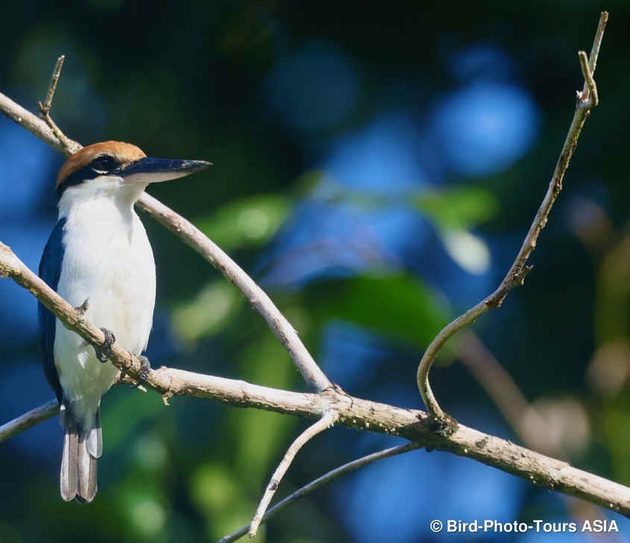
Palau Kingfisher Todiramphus pelewensis
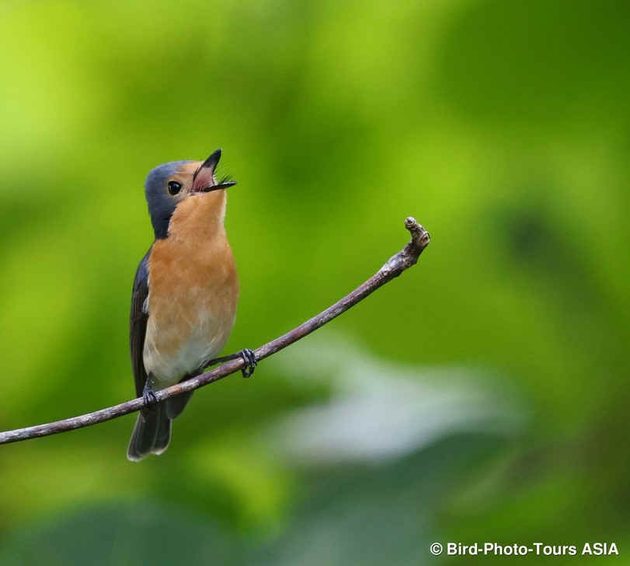
Palau Flycatcher Myiagra erythrops
Palau Flycatcher Myiagra erythrops is a small monarch. Blue-grey crown and face, orange-rufous throat and upper breast, greyish white below. It sits upright on a bare twig and flicks its tail. Once you know the call, it is not hard to find. Palau Fantail, Rhipidura lepida, is its opposite in temperament. It is never still. It fans a rufous tail and shows a white throat cut off below by a dark breast band, and it follows you through the undergrowth the way fantails do everywhere.
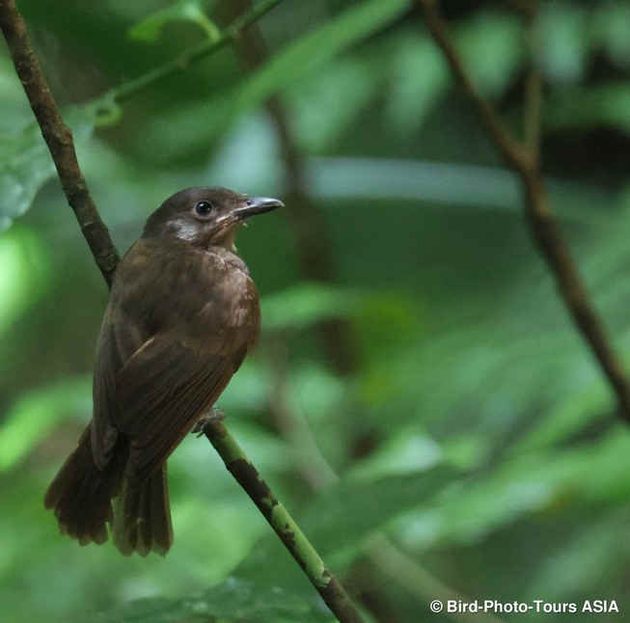
Morningbird Pachycephala tenebrosa
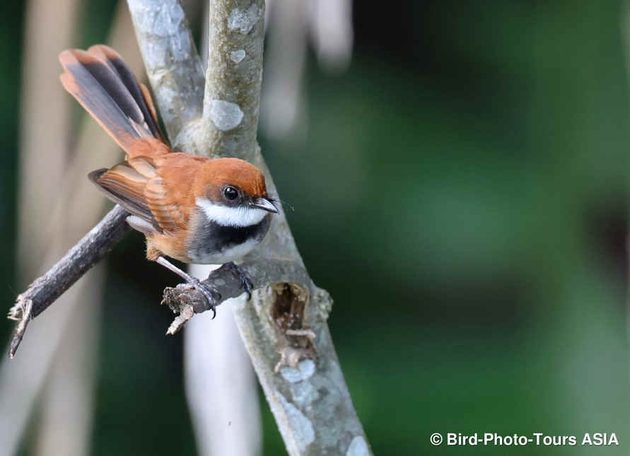
Palau Fantail Rhipidura lepida
The Morningbird Pachycephala tenebrosa is the one most visitors underrate. It is a sombre whistler, dark brown with a stout bill. For decades it sat in the shrike-thrush genus Colluricincla, until genetic work moved it. The name comes from its song, given before dawn. It is far easier to hear than to photograph in the dim understorey where it lives.
Palau Cicadabird Edolisoma monacha is the clearest case of sexual dimorphism among the endemics, and we photographed both sexes. The male is plain slate-grey. Blackish bill, dark lores, grey wing coverts against darker flight feathers. The female looks like another species altogether: grey-brown crown, buff throat, and dense dark barring across the lower breast, belly and flanks, with warm buff edges to the wing feathers. Anyone who has worked through the cuckooshrikes of the region will know the pattern. Here the contrast is unusually strong.
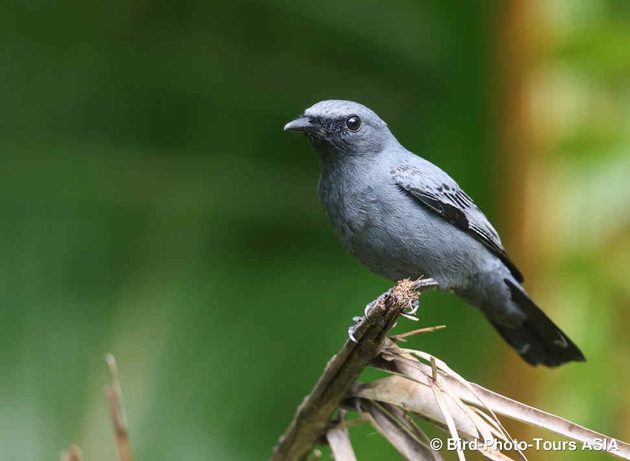
Palau Cicadabird Edolisoma monacha, male …
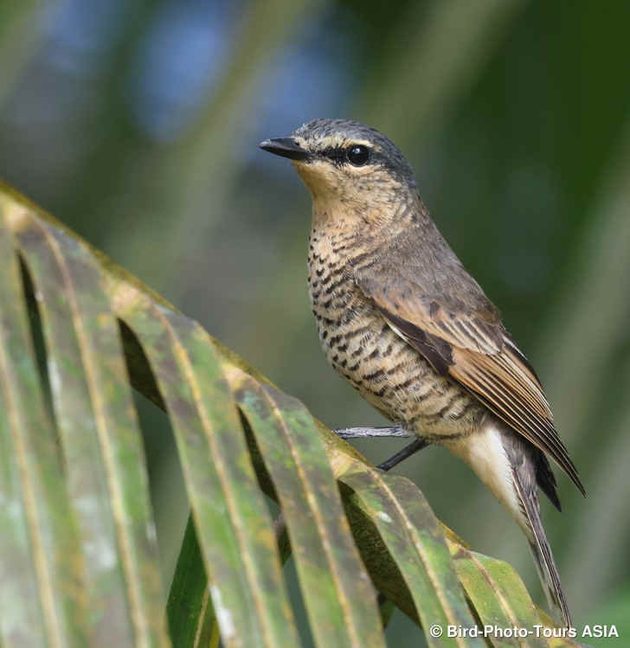
and female
The hardest of this group is the Palau Bush Warbler, Horornis annae. It once had a genus to itself, Psamathia, and it still behaves like a bird that wants to be left alone. It sings loudly from dense tangles and shows itself for seconds. Our frame catches the olive-brown upperparts, a narrow pale supercilium, a slender pointed bill and yellowish legs. The throat is paler than the flanks.
Three white-eyes, one white eye
Palau has three white-eyes. Together they make a neat lesson in not trusting family names. Dusky White-eye Zosterops finschii is brown-olive with a paler grey-brown throat and a fine dark bill. Look at the photograph. There is a reddish-brown iris, and no white ring around it at all. It is endemic, it is common, and first-time visitors walk straight past it because it does not look like a white-eye.
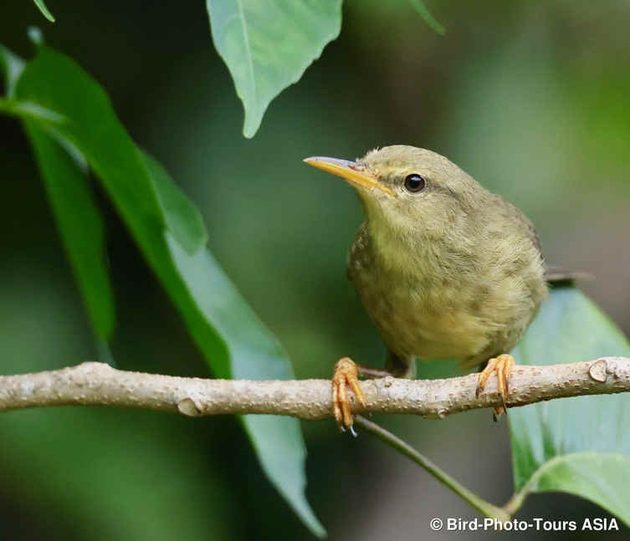
Palau Bush Warbler Horornis annae
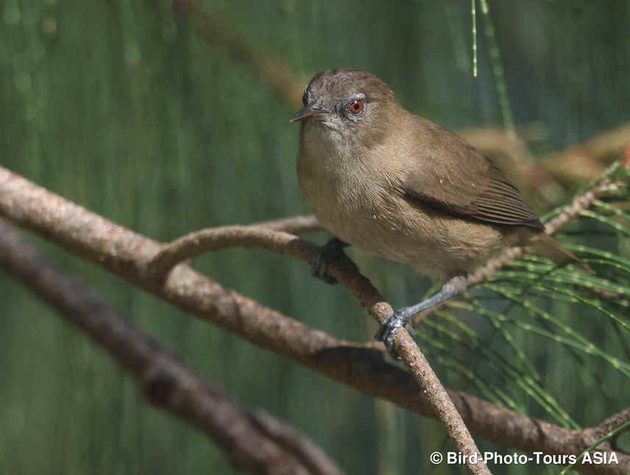
Dusky White-eye Zosterops finschii, with no white eye-ring.
Giant White-eye Megazosterops palauensis is stranger still. It is the only member of its genus. It is big for a white-eye, 13.5 to 14 centimetres, dull olive, with a heavy yellowish bill and only a narrow, indistinct pale ring around the eye. For most of the last century it was known from two islands, Peleliu and Ngeruktabel in the Rock Islands. A more recent survey of the Rock Islands Southern Lagoon by the Belau National Museum added a few more islets, where the birds were feeding on the flowers and fruit of wax apple trees. BirdLife classifies it as Near Threatened because the range is so small. Within that range it does well, even in thickets of introduced Leucaena. To photograph it, you go to Peleliu. It is a flat limestone island an hour south of Koror by boat, and its forest has grown back over the battlefield of 1944.
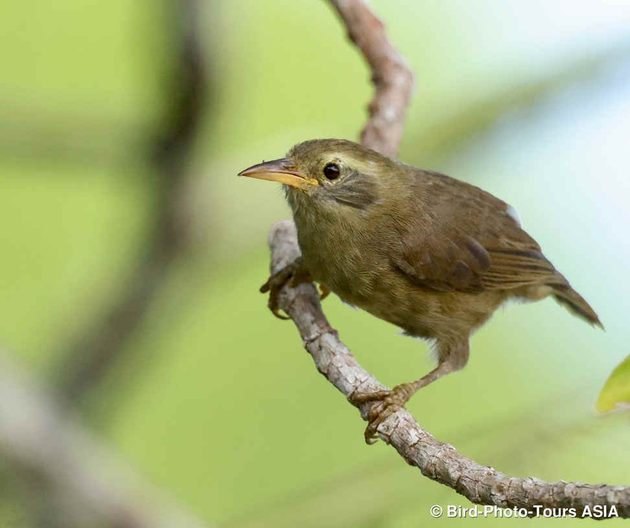
Giant White-eye Megazosterops palauensis, Peleliu
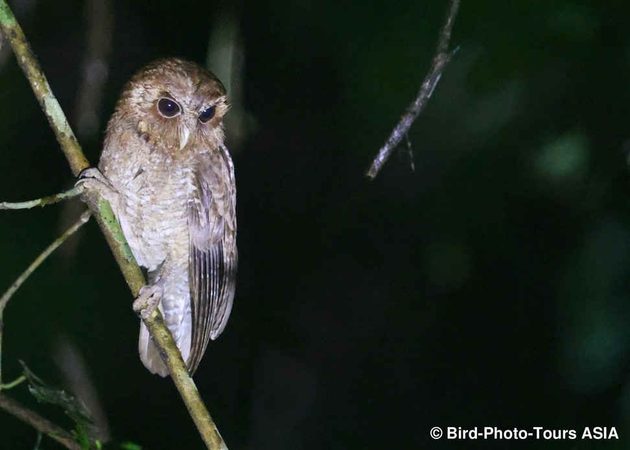
Palau Scops Owl Otus podarginus
The third is the only one that looks the part. Caroline Islands White-eye Zosterops semperi has the broad white orbital ring, a yellowish forehead shading into an olive crown, and a pale yellow throat. It is a regional endemic, shared with the islands to the east. Our bird was photographed with a dark berry in its bill. That is how it spends most of its day.
After dark
Two of the endemics only come out at night. Palau Scops Owl Otus podarginus is small and round-headed, with no obvious ear tufts. It is distinctive enough that older checklists gave it a genus of its own, Pyrroglaux. Our photograph shows the fine pale vermiculations that break up the brown crown and facial disc, and a mix of pale feathering and darker streaks below. The other night bird is the Palau Nightjar, Caprimulgus phalaena, which hunts over the same forest edges once the owls have started.
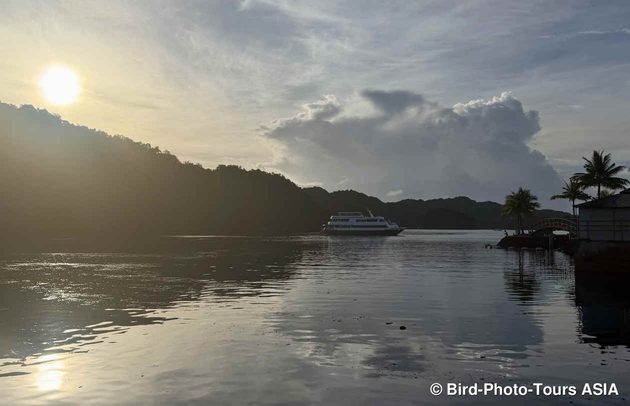
Evening light over the lagoon, Koror
The Micronesian five
Five more species are endemic to Micronesia as a region rather than to Palau alone. The most remarkable is Micronesian Megapode Megapodius laperouse, represented in Palau by the subspecies senex. It is a dark, chicken-sized bird with a short grey crest, a bare red patch on the throat, an orange-yellow bill and enormous yellow-orange feet. It uses those feet to build earthen nesting mounds on flat forested ground close to beaches. The eggs are warmed by the heat of decay and the sun. IUCN listed the species as Endangered from 2000 to 2016 and moved it to Near Threatened in 2021. It is still on the United States endangered species list. In Palau, it is locally common only on Kayangel and in the Rock Islands. Rising seas are the new worry. A mound built a few metres from the tide line on a coral islet has nowhere to go.
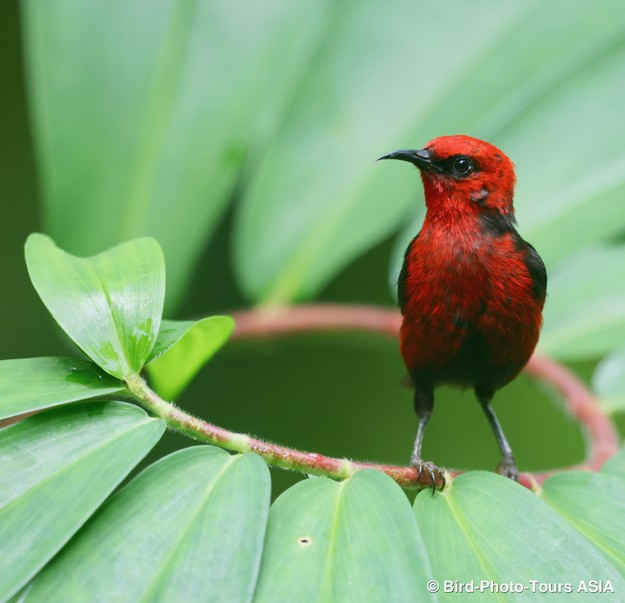
Micronesian Myzomela Myzomela rubratra, male
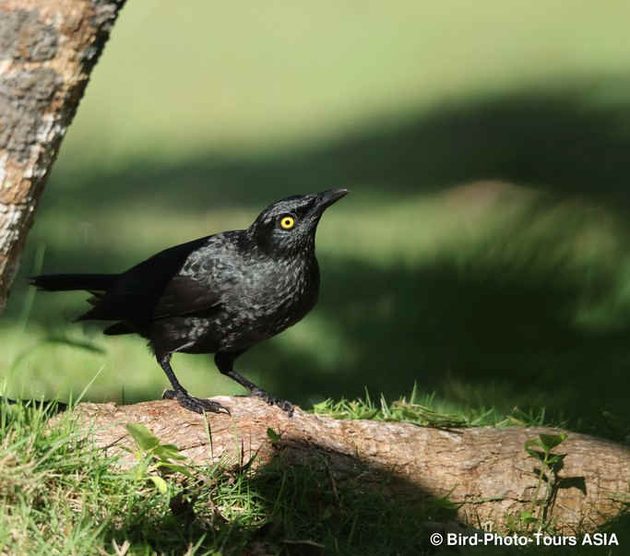
Micronesian Starling Aplonis opaca
Micronesian Myzomela Myzomela rubratra is the splash of colour in the forest. Scarlet head, throat and breast against blackish wings, and the slender, slightly decurved bill of a honeyeater. Our bird is a male; females are duller. Micronesian Starling, Aplonis opaca, is glossy black with a staring pale yellow iris, common from gardens to forest edge. Caroline Islands White-eye, described above, is the fourth. The fifth is the Micronesian Imperial Pigeon, Ducula oceanica, a big canopy pigeon classed as Vulnerable across its range.
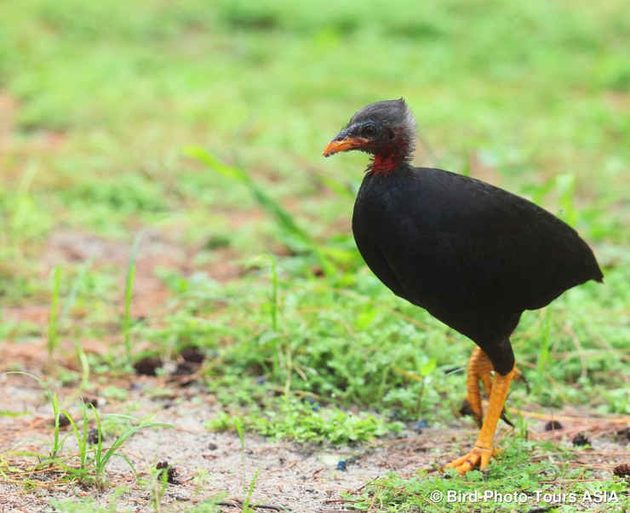
Micronesian Megapode Megapodius laperouse senex
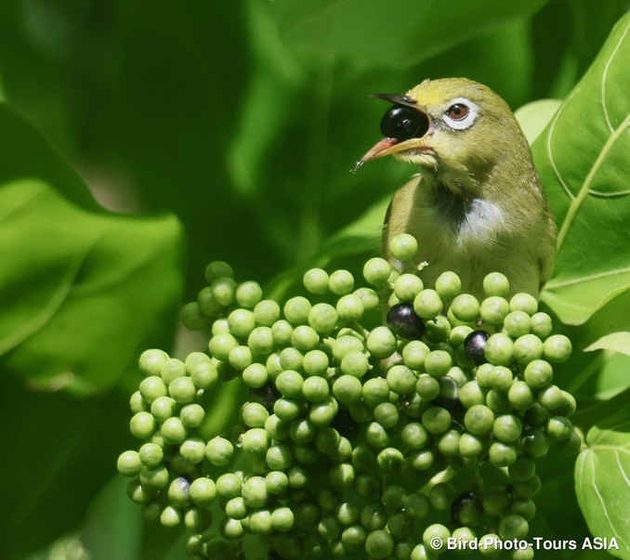
Caroline Islands White-eye Zosterops semperi
Shore, reef and the birds nobody came for
Between forest sessions, the shore fills the middle of the day. The Black Noddy at the top of this article was resting on coral sand. Brown Noddy Anous stolidus is the larger, browner bird with a grey-white cap. Ours was caught in flight over shallow water, carrying a dead leaf, presumably for a nest. White Tern Gygis alba sits on bare branches in the coastal trees, pure white, with a black eye and a sharp bill that is blue at the base. Brown Booby Sula leucogaster patrols the reef edge. Dark brown above and across the breast, clean white below.
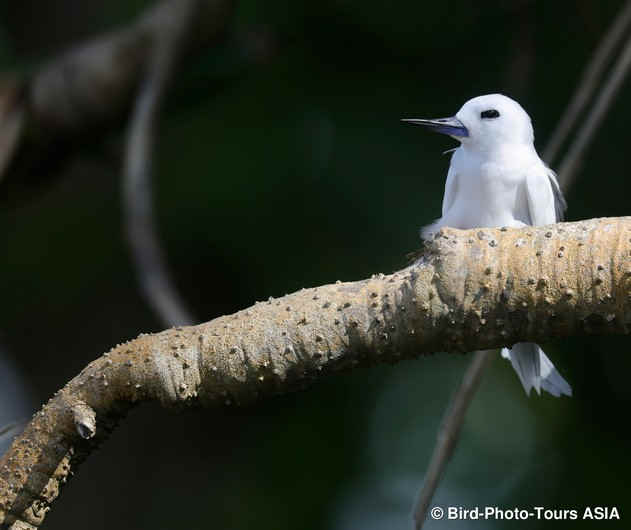
White Tern Gygis alba
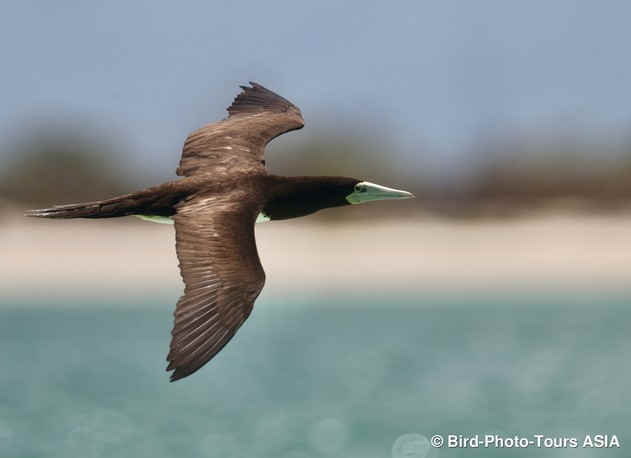
Brown Booby Sula leucogaster
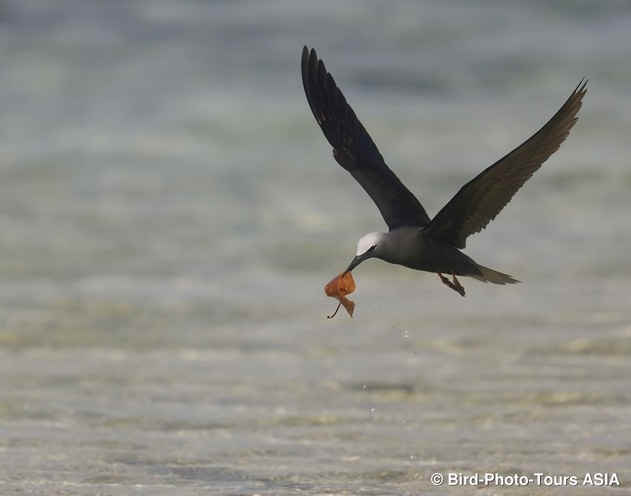
Brown Noddy Anous stolidus
The tidal flats hold migrants most readers will know. Pacific Golden Plover Pluvialis fulva in mottled non-breeding dress. Ruddy Turnstone Arenaria interpres on orange legs. In the wetter corners of Babeldaob three resident ground birds showed well. Nankeen Night Heron, Nycticorax caledonicus, cinnamon above with a black crown and a yellow eye. Buff-banded Rail, Gallirallus philippensis, with its chestnut eye-stripe and barred flanks. And White-browed Crake, Poliolimnas cinereus, grey-headed, with a bold white supercilium and a yellow bill that is red at the base.
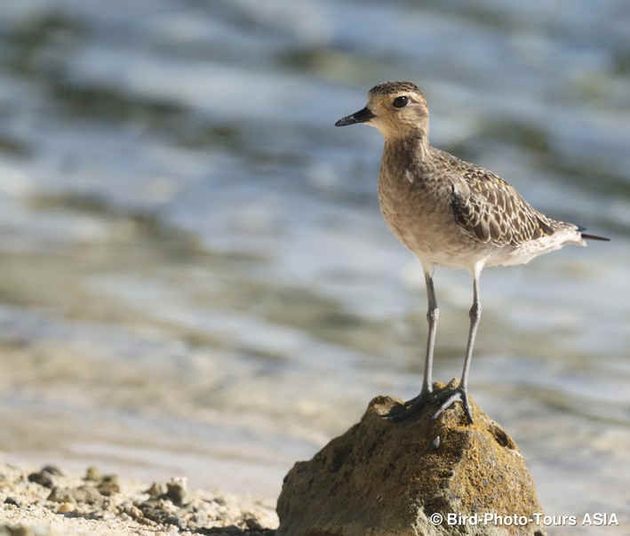
Pacific Golden Plover, Pluvialis fulva
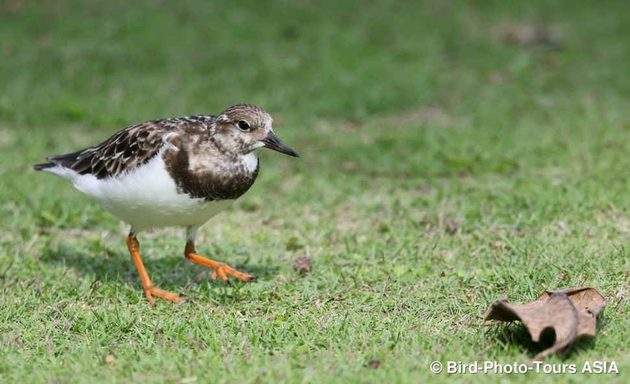
Ruddy Turnstone Arenaria interpres
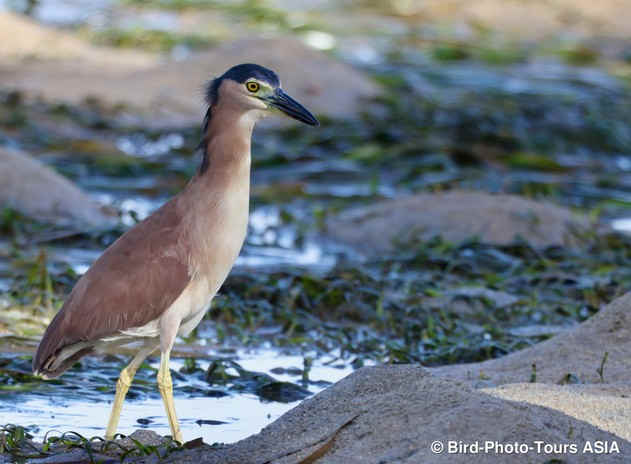
Nankeen Night Heron Nycticorax caledonicus
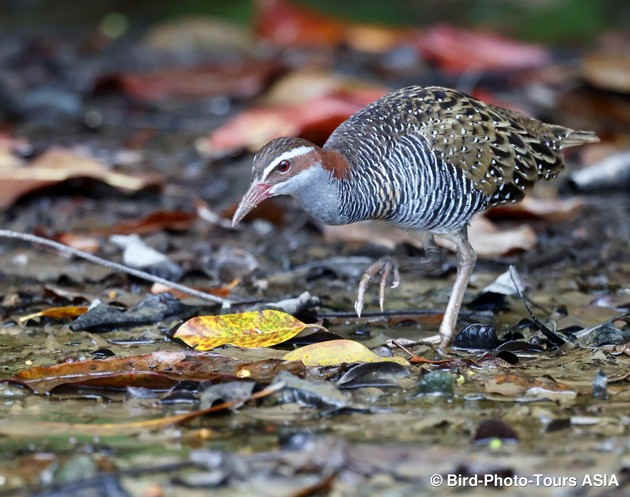
Buff-banded Rail Gallirallus philippensis
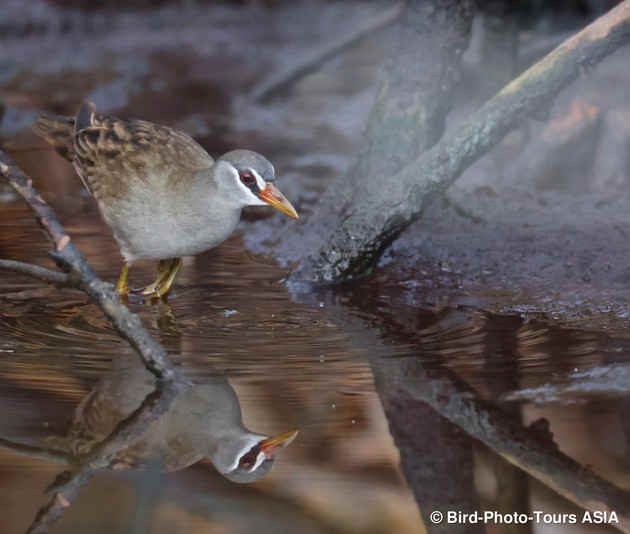
White-browed Crake Poliolimnas cinereus
Two more deserve a line. Blue-faced Parrotfinch Erythrura trichroa is widespread across the Pacific, but a green finch with a bluish face in a Palauan tangle is still a pleasure. And Red Junglefowl Gallus gallus, here a hen with chicks in roadside grass, is a reminder. People have been bringing animals to these islands for three thousand years. Not all of those introductions have been harmless.
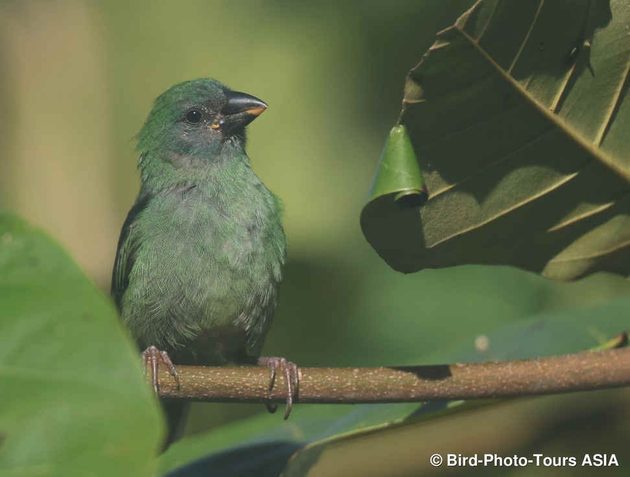
Blue-faced Parrotfinch Erythrura trichroa
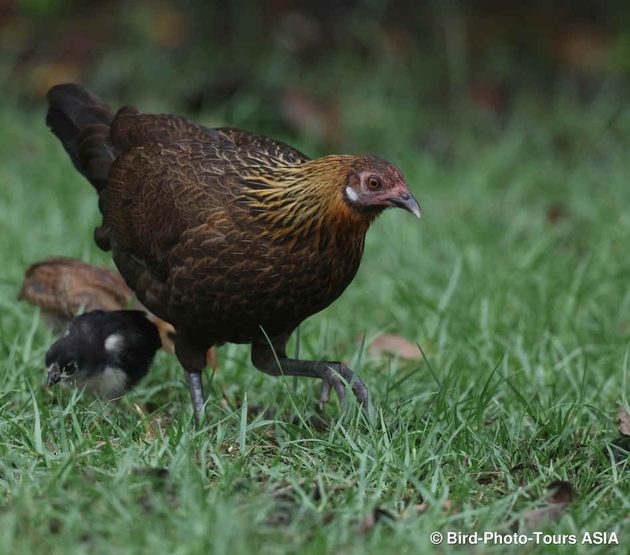
Red Junglefowl Gallus gallus, hen with chicks
What the birds are up against
None of Palau’s endemics is as badly off as the birds of Guam, 1,300 kilometres to the north-east. There the Brown Tree Snake arrived in cargo after the Second World War and emptied the forests within a few decades. That comparison hangs over every conservation document written about Palau. The snake has never established here. Keeping it out is the single most important thing the country can do for its birds. BirdLife’s Near Threatened listings for Palau Kingfisher and Giant White-eye rest almost entirely on that one risk.
The damage that has already happened is on Angaur, the southernmost of the main islands. German phosphate miners brought in long-tailed macaques a century ago. The monkeys have since stripped the island of most of its forest birds. A 2011 feasibility study counted fourteen native bird species present on neighbouring Peleliu, which has no monkeys, and absent from Angaur. The Palau Conservation Society has asked for years for the macaques to be removed, and for the 1972 law banning their transport to other islands to be enforced. Angaur is a very clear experiment in what Palau would look like with one more invasive mammal. It is ten kilometres from Peleliu.
Rats and cats are the everyday pressure. Here there is good news. In 2023 and 2024, Island Conservation, Koror State and the Koror State Rangers removed rats from Ulong Island in the Rock Islands. A year of monitoring with trail cameras and environmental DNA found none left. The first results, published in October 2025, reported Palau Ground Doves with chicks at landing sites where the species had never been recorded, and more calling Brown Noddies, White Terns and Bridled Terns. A smaller drone-based eradication on Ngerkeklau in the north, where megapodes nest, came first in 2022. On Peleliu and Kayangel, Rainforest Trust and local partners have been buying private forest parcels to protect megapode nesting and foraging ground.
Palau also has institutions that most small countries lack. Lake Ngardok in Melekeok State is the largest natural lake in Micronesia. It has been a Ramsar wetland since 2002 and a state nature reserve since 1997, and you need the reserve manager’s permission to go in. The Rock Islands Southern Lagoon is a UNESCO World Heritage site. And since December 2017, every visitor has had the Palau Pledge stamped into their passport and has signed it in front of an immigration officer. It is a promise, written with the help of Palauan schoolchildren, to tread lightly. It is easy to be cynical about a stamp in a passport. The noddies calling again on rat-free Ulong suggest the country means it.
If you go
Palau is reached by air through Guam, Manila, Taipei or Seoul. Almost everyone stays in Koror. From there the forest birds are a short drive away. Babeldaob is linked by road. Peleliu is about an hour by boat, or a short flight. The Rock Islands need a Koror State permit, and Lake Ngardok needs permission from the reserve. A local guide makes an enormous difference with the owl, the megapode, and the Ground Dove. The light is kind for an hour after dawn and an hour before dusk, and brutal in between. Plan the forest for the first two hours of the day. Keep the shore and the tidal flats for the harsh middle.
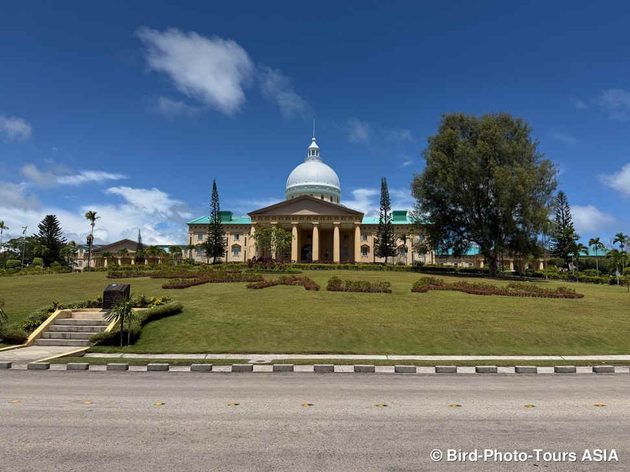
The national capital at Melekeok, Babeldaob
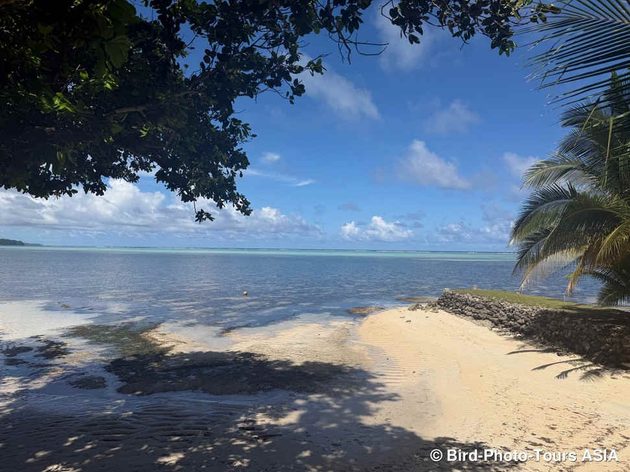
The east coast of Babeldaob
Two weeks is comfortable. A week is enough for most of the endemics if the weather holds. Whatever you do, give Peleliu more than a day trip. The Giant White-eye lives nowhere else in any numbers. The megapodes are there. The Ground Dove is there if you are lucky. And the forest growing back over Bloody Nose Ridge is one of the quieter, more affecting places in the Pacific.
Cover Photo: Black Noddy Anous minutus, Rock Islands, Palau
















 English (US) ·
 French (CA) ·