

With limited growing space, I like to grow hard-working pollinator plants: great at attracting bees to my vegetable patch, of course, but also lovely to pick for my home and use in craft projects or the kitchen. Choosing multipurpose pollinator plants works well for all of us because the more blooms I pick to use indoors, the more flowers grow to feed the bees and butterflies.
Bunches of blooms are expensive to buy at the store and I realised long ago it’s much cheaper to grow my own cut flowers. The same goes for craft materials and edible flowers. As well as saving money, growing your own is far more satisfying too, and it's wonderful to have fresh flowers that taste good and last well. Growing your own culinary ingredients and craft materials also gives you a selection that money simply can't buy.
As a busy mum of three, my time and resources are just as tight as my growing space, so the flowering plants I choose for my pollinator garden are not only beautiful but also low maintenance, easy to grow and fuss-free. Here are my top picks, and I hope you (and your garden pollinators) love them as much as I do.
1. Calendula
(Image credit: Ellie Tennant)
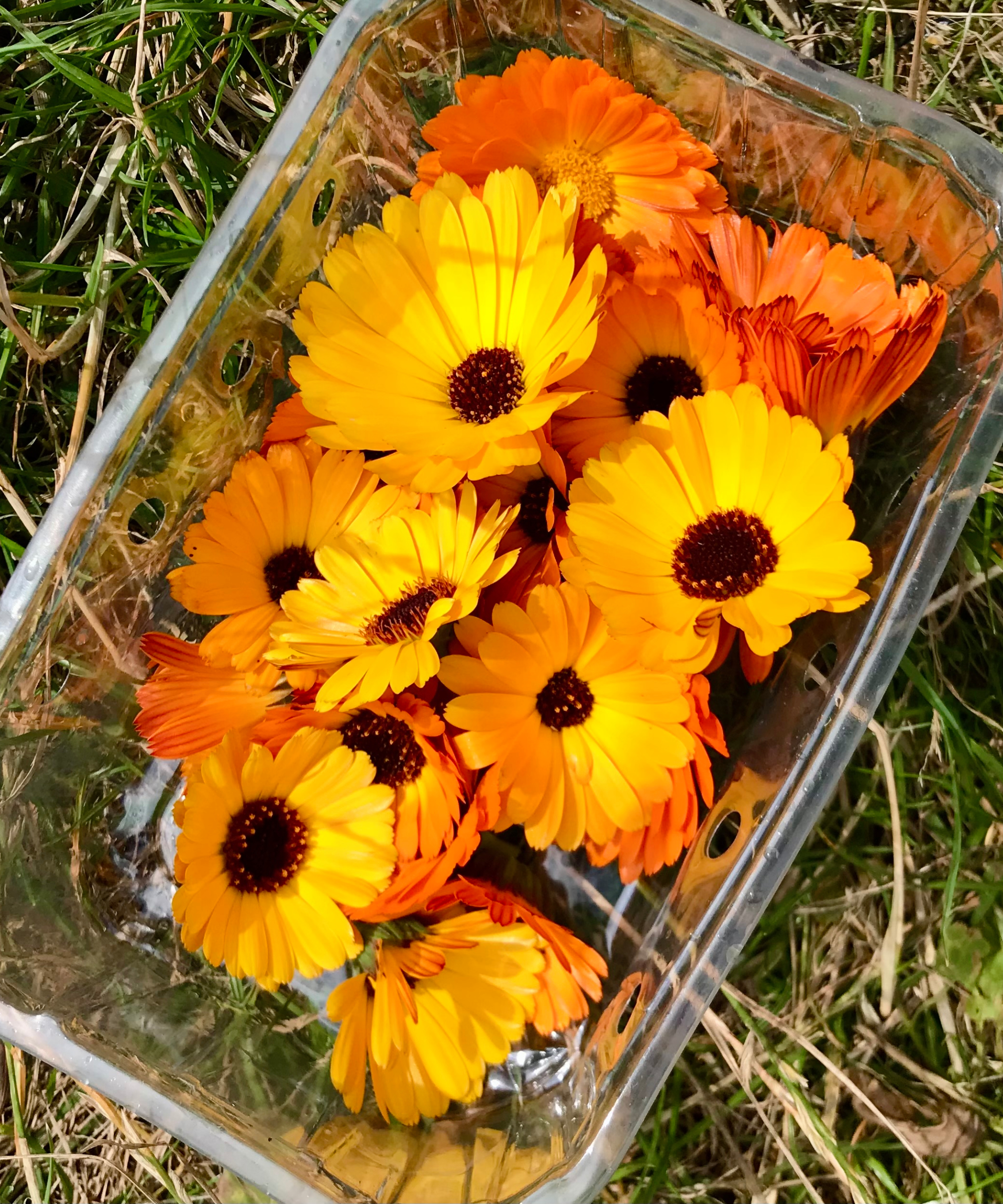
These cheery edible flowers from the daisy family bloom from May right through to November. I grow them in vast quantities but they also pop up randomly all over my vegetable patch as they're prolific self-seeders and I can’t bear to pull them out because they’re so pretty! Calendula officinalis flowers – also known as pot marigolds – are real magnets for pollinators, attracting bees, butterflies and moths galore.
You can get single or double calendula varieties in various shades from a creamy yellow through apricot and peach through to neon orange, and Eden Brothers has a good selection of seeds. I prefer the simple single cultivars such as ‘Nova’ (available from Eden Brothers) as the doubles are a bit frilly for my taste, but having an eclectic mix of different types looks lovely, too. The flower heads close up at night or on very gloomy days, then open up again every morning, so make sure you harvest them when they are fully open and dry on a sunny day. It's so easy to grow calendula as long as you give it a sunny position, because it’s tough and doesn’t need much water.
You can pour hot water over fresh calendula flowers to make a reviving tea, dry the petals (so you can store the tea for months to come), use it in skin creams (it’s very soothing and promotes healing) and use the edible petals to decorate cakes or salads.
(Image credit: Ellie Tennant)
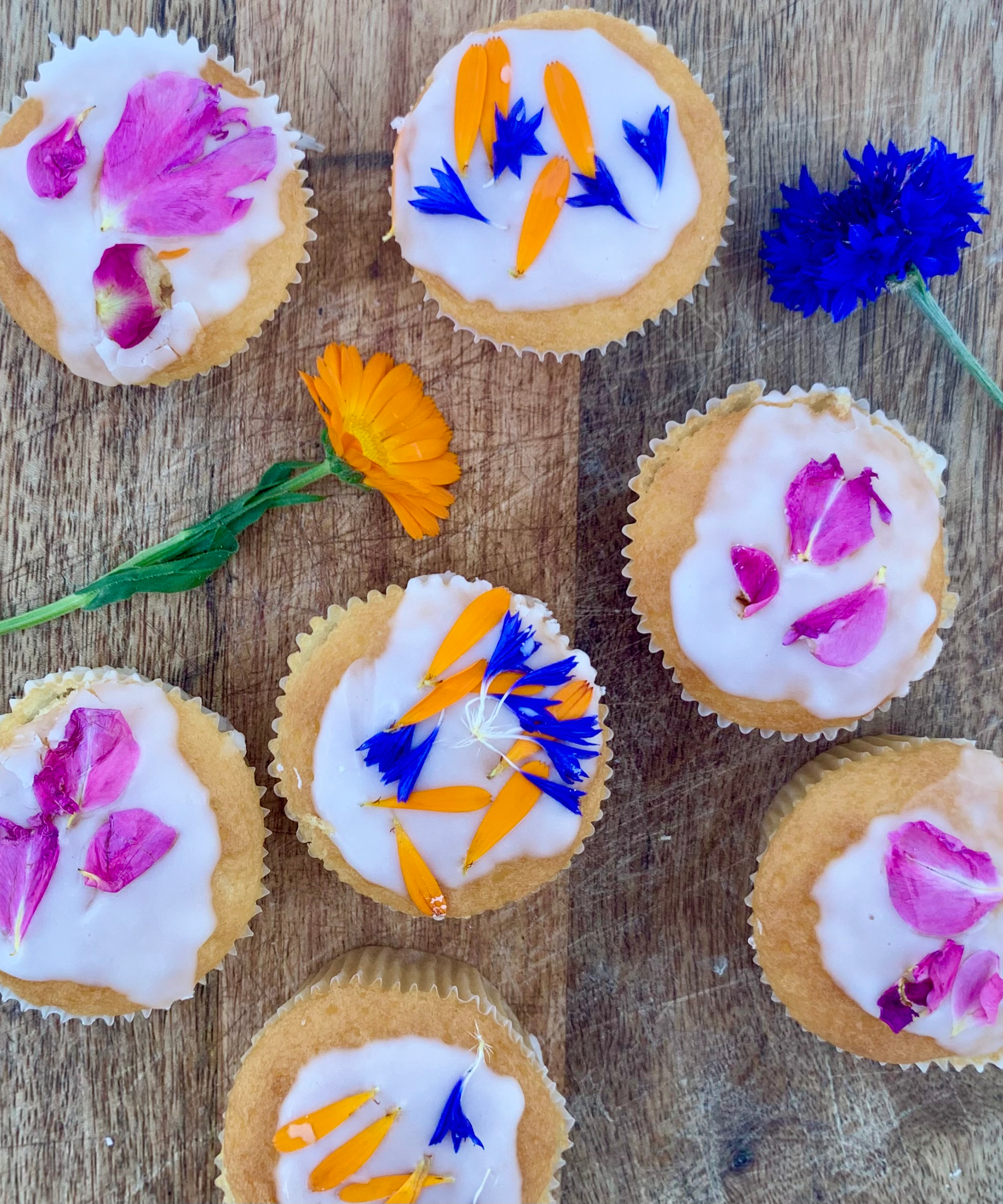
I like to scatter the vibrant petals on cupcakes on top of white frosting, along with edible blue cornflower and pink rose petals – a more natural option than store-bought sprinkles which can contain artificial colors and flavors. I also pick the flowers and fill jugs and jars with them to enjoy around my home. The orange blooms look particularly lovely in a contrasting blue vessel such as a vintage Ball Mason jar, and the foliage smells amazing, too.
2. Hydrangea
(Image credit: Ellie Tennant)
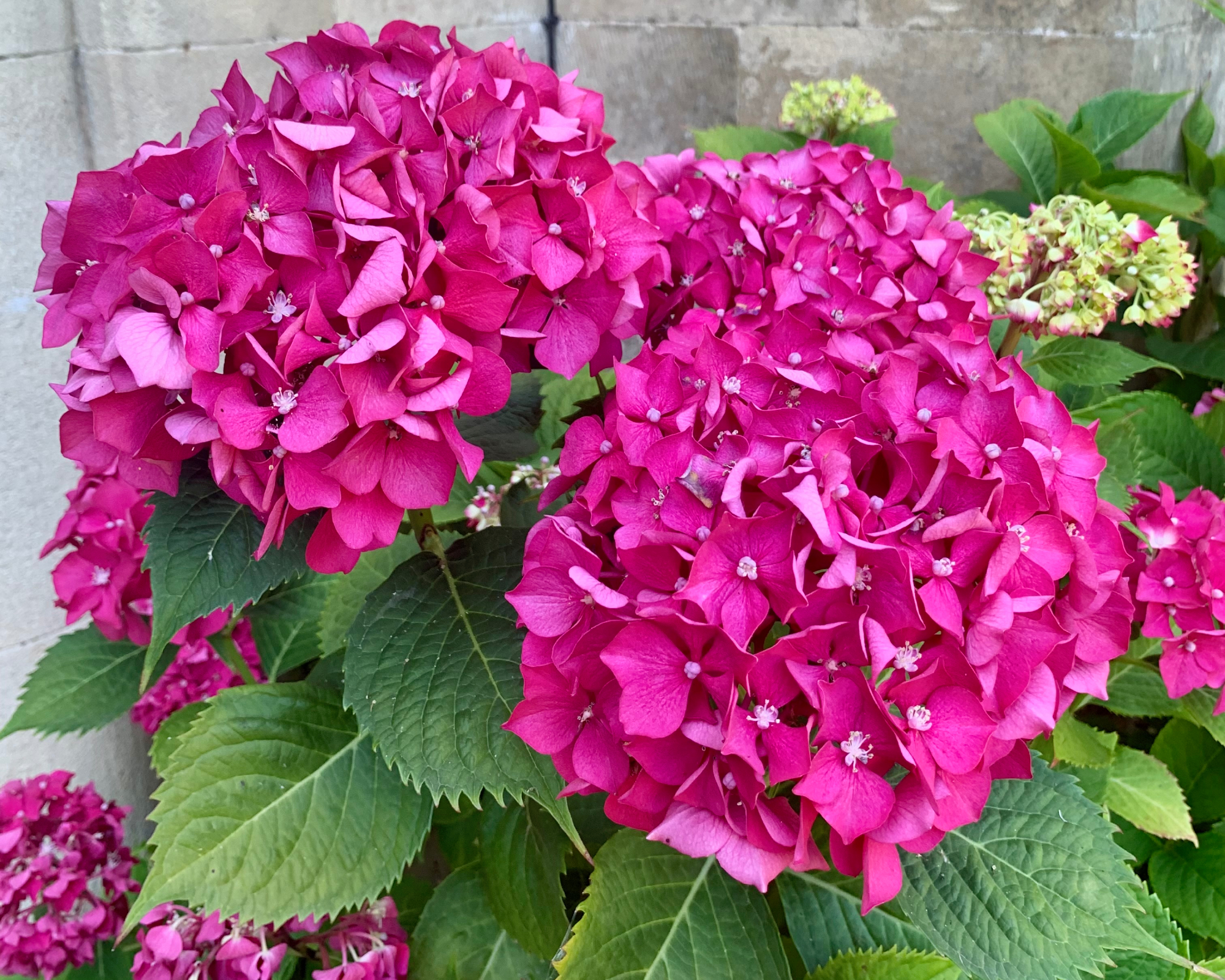
I’ve always loved these flowering shrubs. The color of bigleaf hydrangea (Hydrangea macrophylla) and mountain hydrangea (Hydrangea serrata) petals is affected by the pH of the soil they are grown in – if the soil is alkaline, the flowers are more blue, but if the soil is acidic, they’re pink. Other hydrangea types have shades that range from a deep, rich purple to a lively raspberry red.
My favorite flowers to craft with are bigleaf varieties, such as Hydrangea macrophylla Endless Summer Summer Crush, available from Fast Growing Trees. The flowers grow pink in my garden and bloom from June to September, covered with beautiful butterflies.
(Image credit: Ellie Tennant)
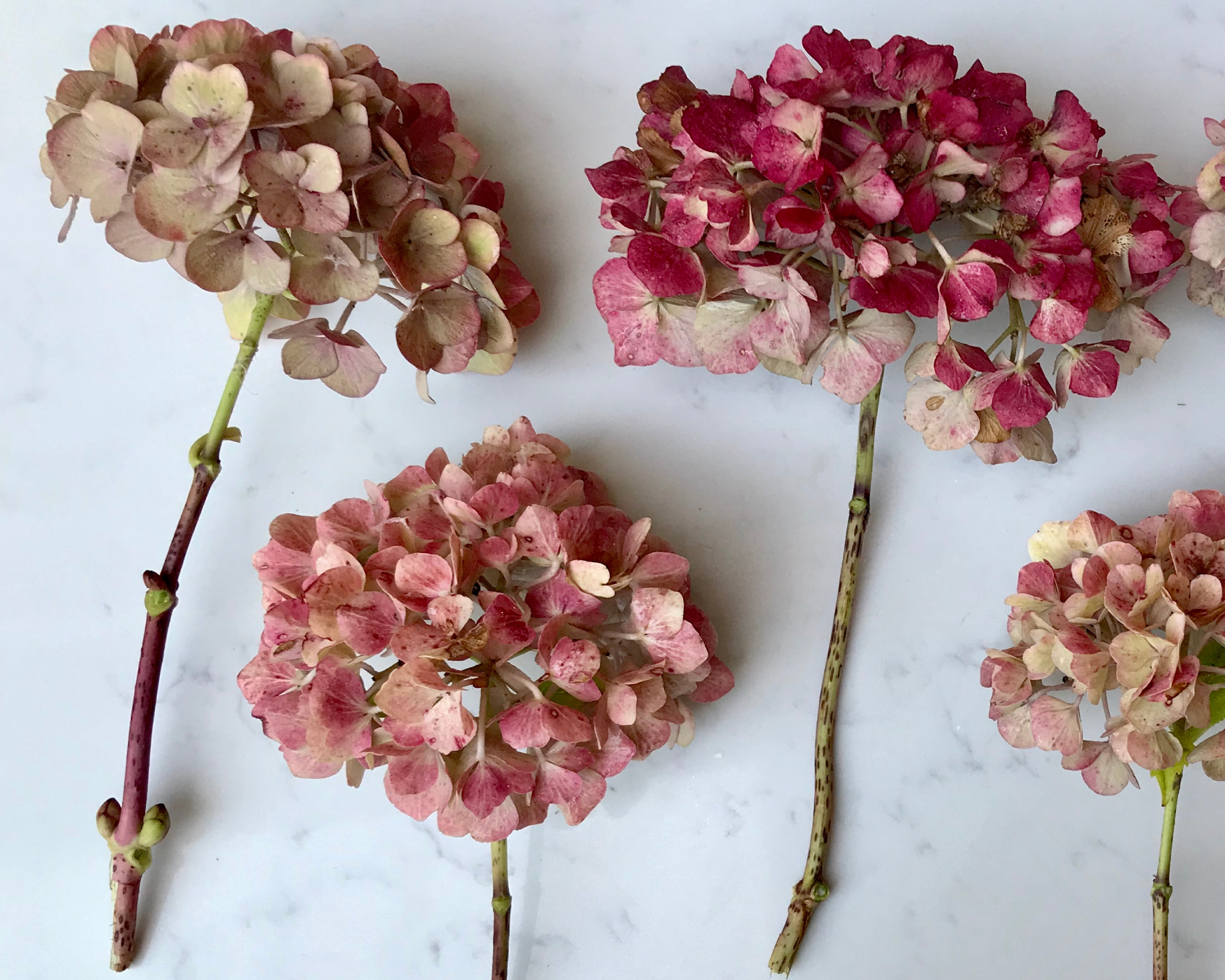
I pick the flowerheads when they’re at their peak, remove any leaves and dry the stems. I find the color is lost and they turn brown when drying hydrangea flowers out of water, so I stand them in vases with water and leave them to dry out very slowly for a few weeks in my sunny kitchen. This helps the petals retain their color and the dried heads are simply gorgeous in faded pinks, palest creams and deep crimsons. Once the blooms are dry, they're papery and fragile, but by storing them in a box to protect them, they last long enough to make a home-crafted Christmas wreath later in the year. But yes, of course I keep a few in a jar so I can enjoy them all through the winter season!
I’ve also used hydrangea flowers to make decorative garlands, tying the heads together with fine floristry wire.
3. Nasturtium
(Image credit: Ellie Tennant)
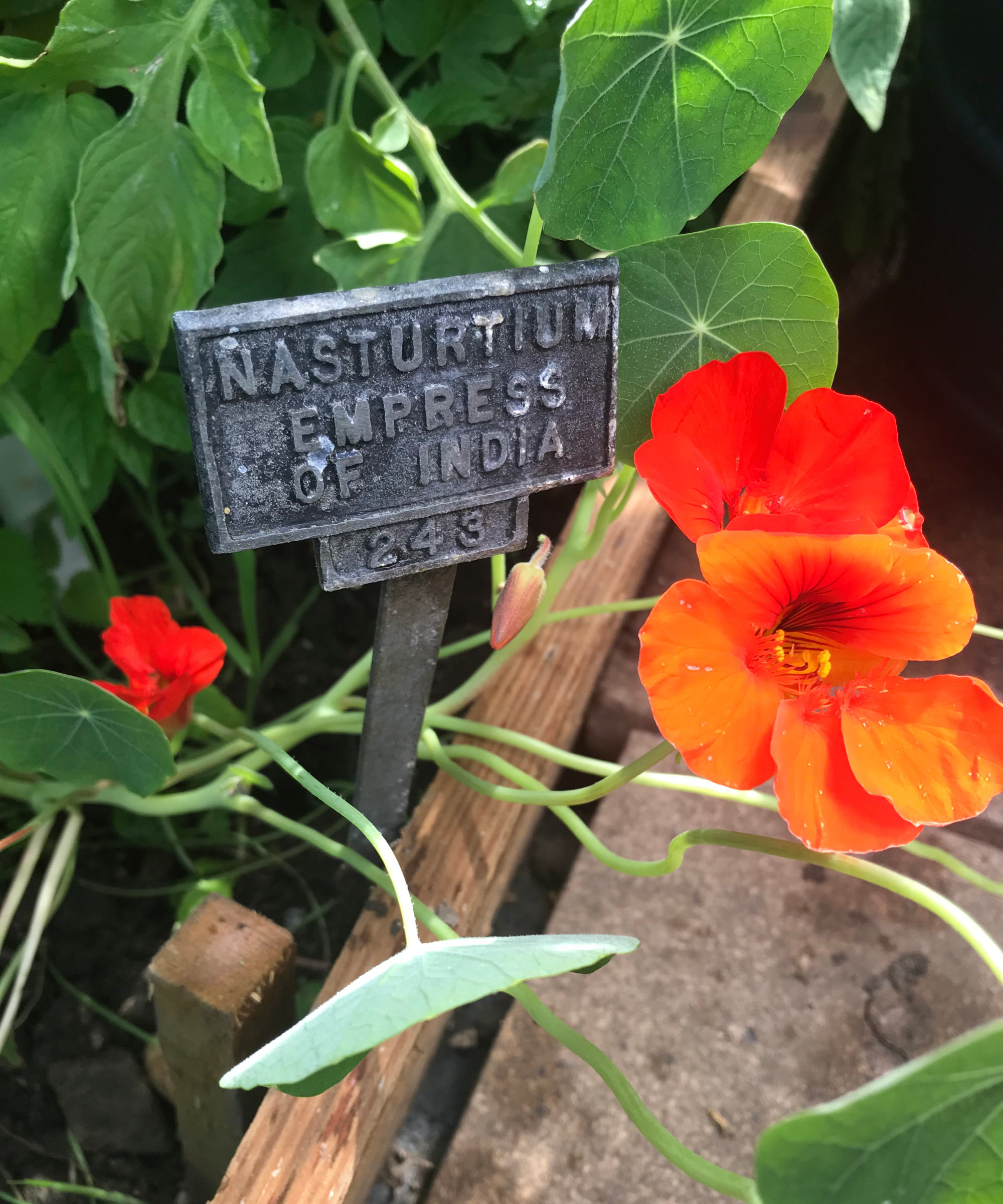
I adore all nasturtiums, but Victorian heirloom variety 'Empress of India' is my all-time fave, and seeds are available from Eden Brothers. The foliage is dark green and the flowers are a bright, zingy orange and I grow it everywhere – in pots on the deck, in flower beds and in my greenhouse to attract pollinators to fruit and veggie plants. It seems to be loved by bumblebees in particular.
(Image credit: Ellie Tennant)
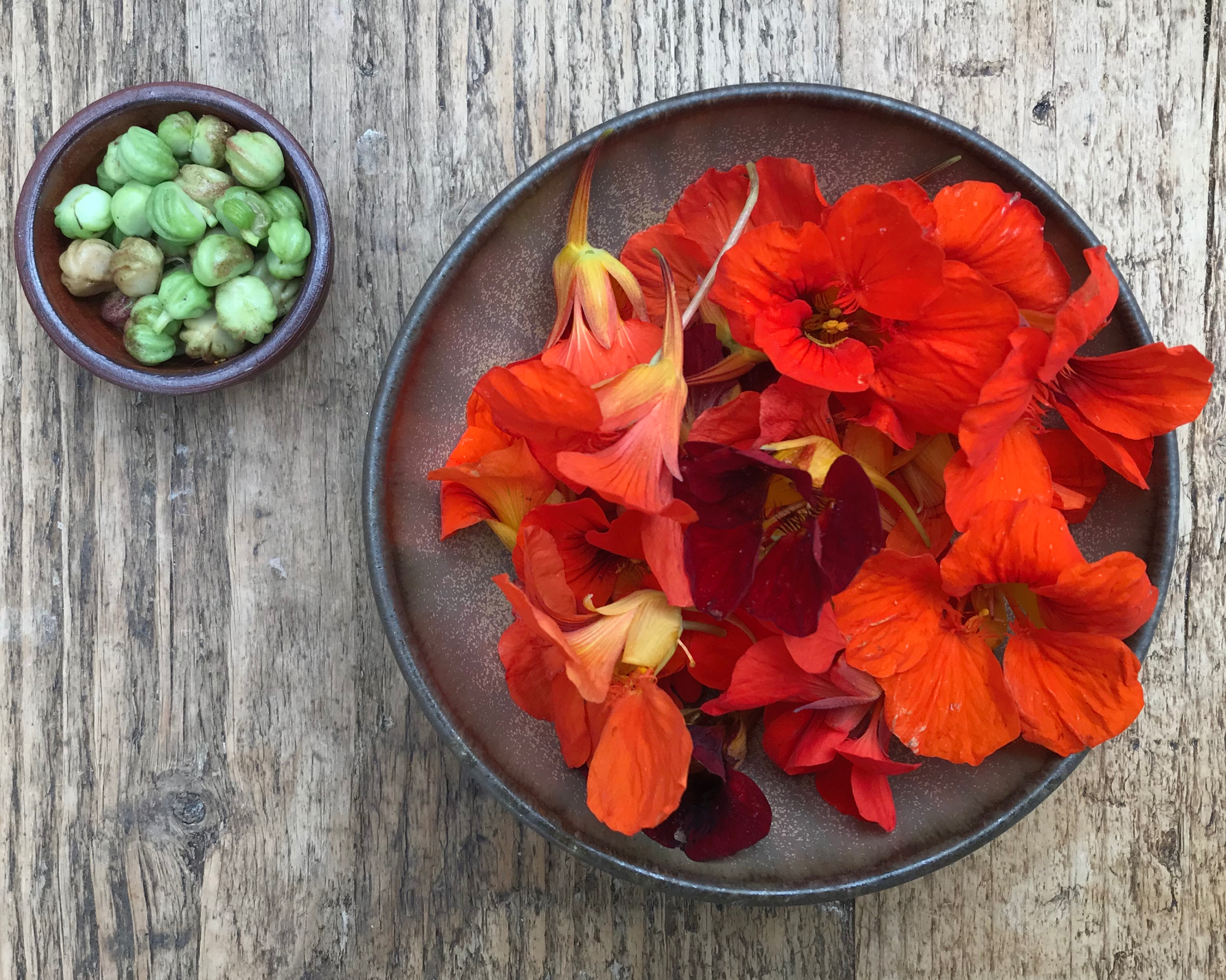
The flowers and leaves taste peppery and add flavor and color to salads, or you can blend the leaves up to make a pest for pasta dishes. Even the seeds are edible – you can pick them when they’re young and green then pickle them in vinegar and use them like capers. I even found a Nasturtium 'Empress of India' vintage metal label in a thrift store once, cementing my love for this fabulous flowering plant!
4. Strawflower
(Image credit: Ellie Tennant)
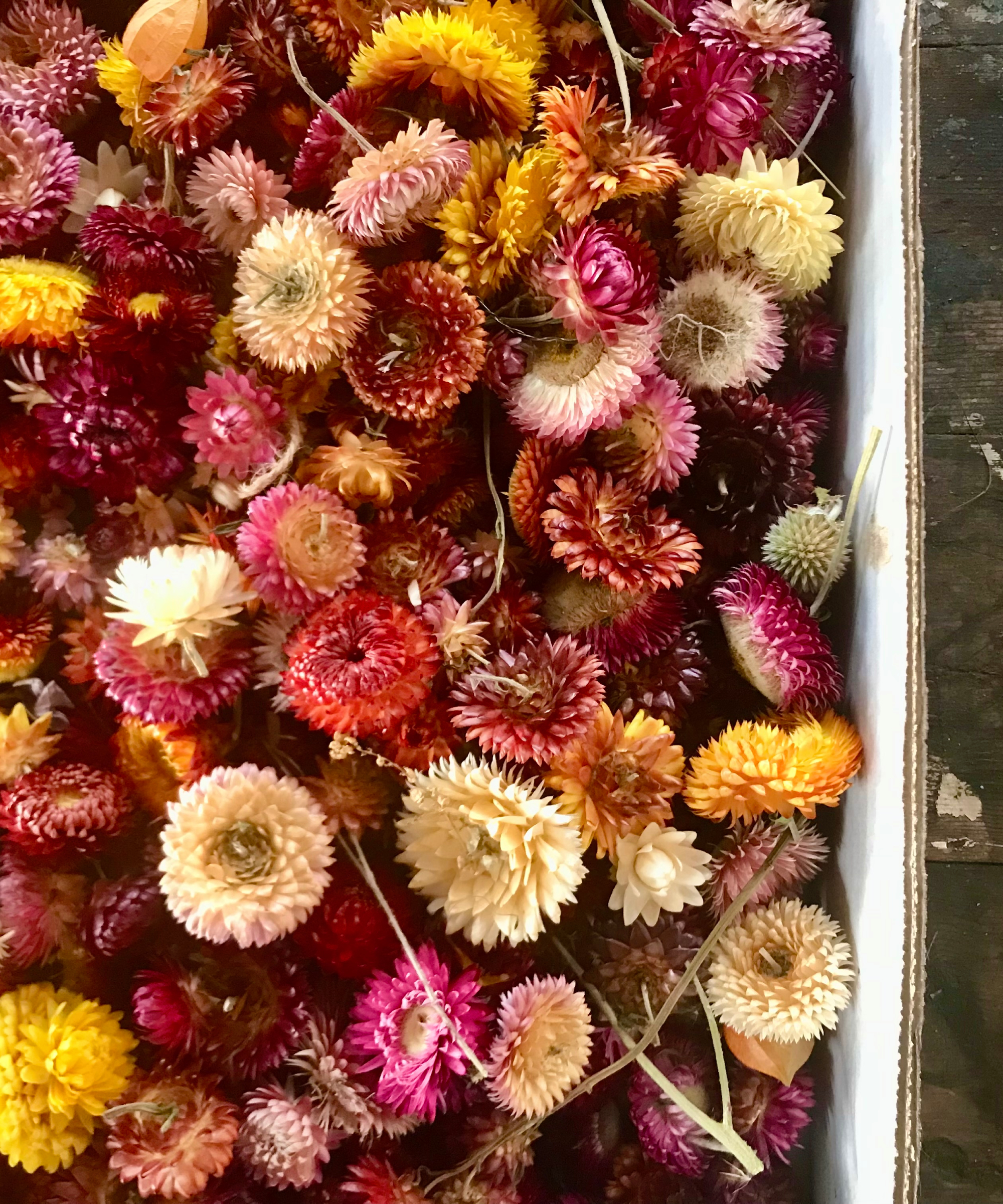
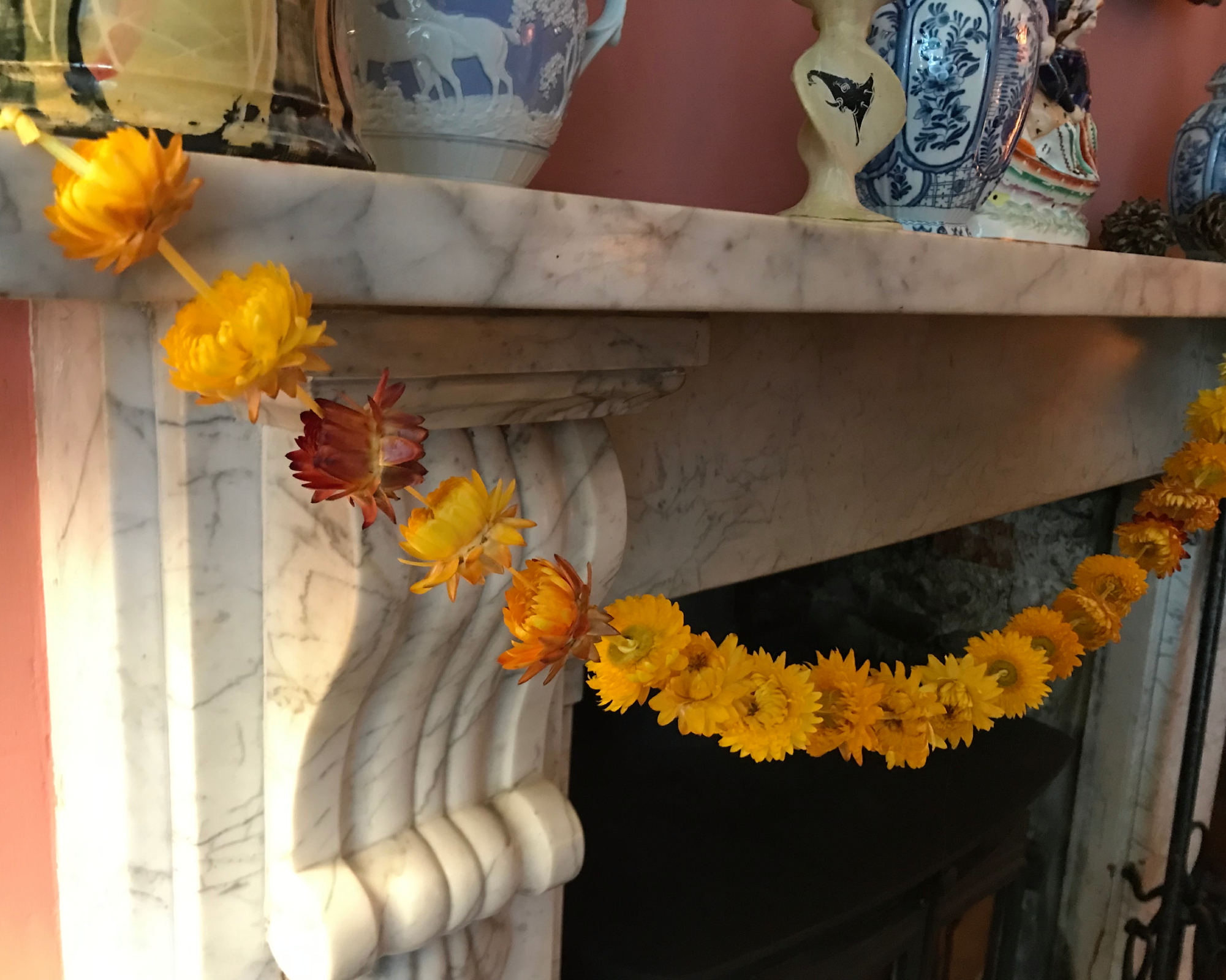
I grow strawflowers (Xerochrysum bracteatum) in a rainbow of colours so I can dry the blooms then thread them onto wire to make garlands to drape around my house or gift to friends. This is an idea I spotted at Glebe House in Devon, England, where homegrown strawflower garlands adorn the fire surrounds.
(Image credit: Ellie Tennant)
My favourites are the pale pink, slightly metallic varieties such as 'King Size Silvery Rose', and seeds are available from Botanical Interests. I direct-sow seeds after the last spring frosts and I love that they bring so many bees to my garden.
To dry strawflowers, I simply cut a bunch and hang the stems upside down in my greenhouse, but anywhere warm and airy will work.
5. Sea Holly
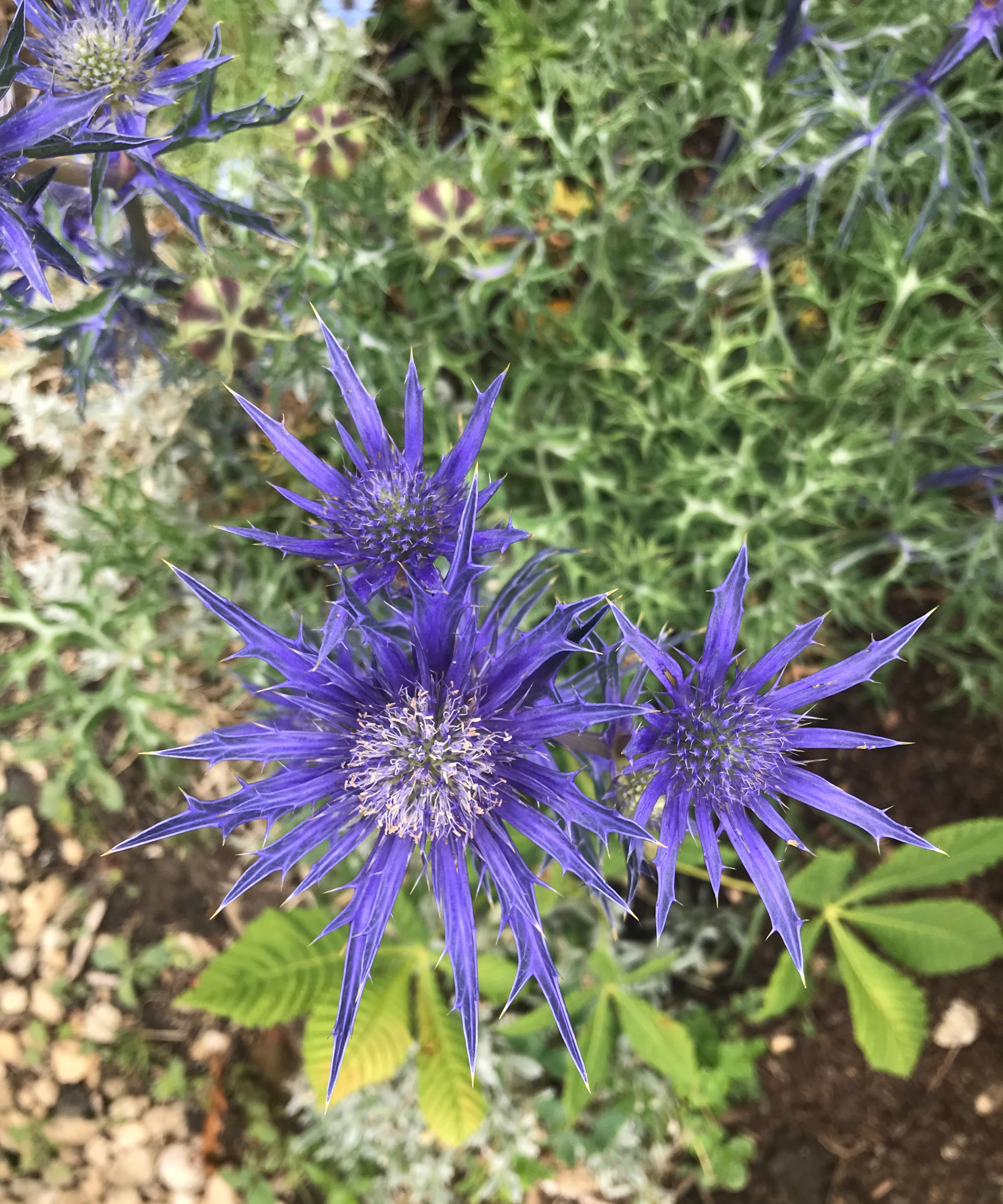
(Image credit: Ellie Tennant)
Butterflies adore sea holly plants and I do, too, for heir stunning architectural flowerheads which bring color and structure to my garden. Eryngium planum ‘Blue Glitter’ has a beautifully deep blue hue, and plants are available from Nature Hills. Eryngium giganteum ‘Miss Willmott’s Ghost’, available from White Flower Farm, has more silvery, white-green flowers with an ethereal quality.
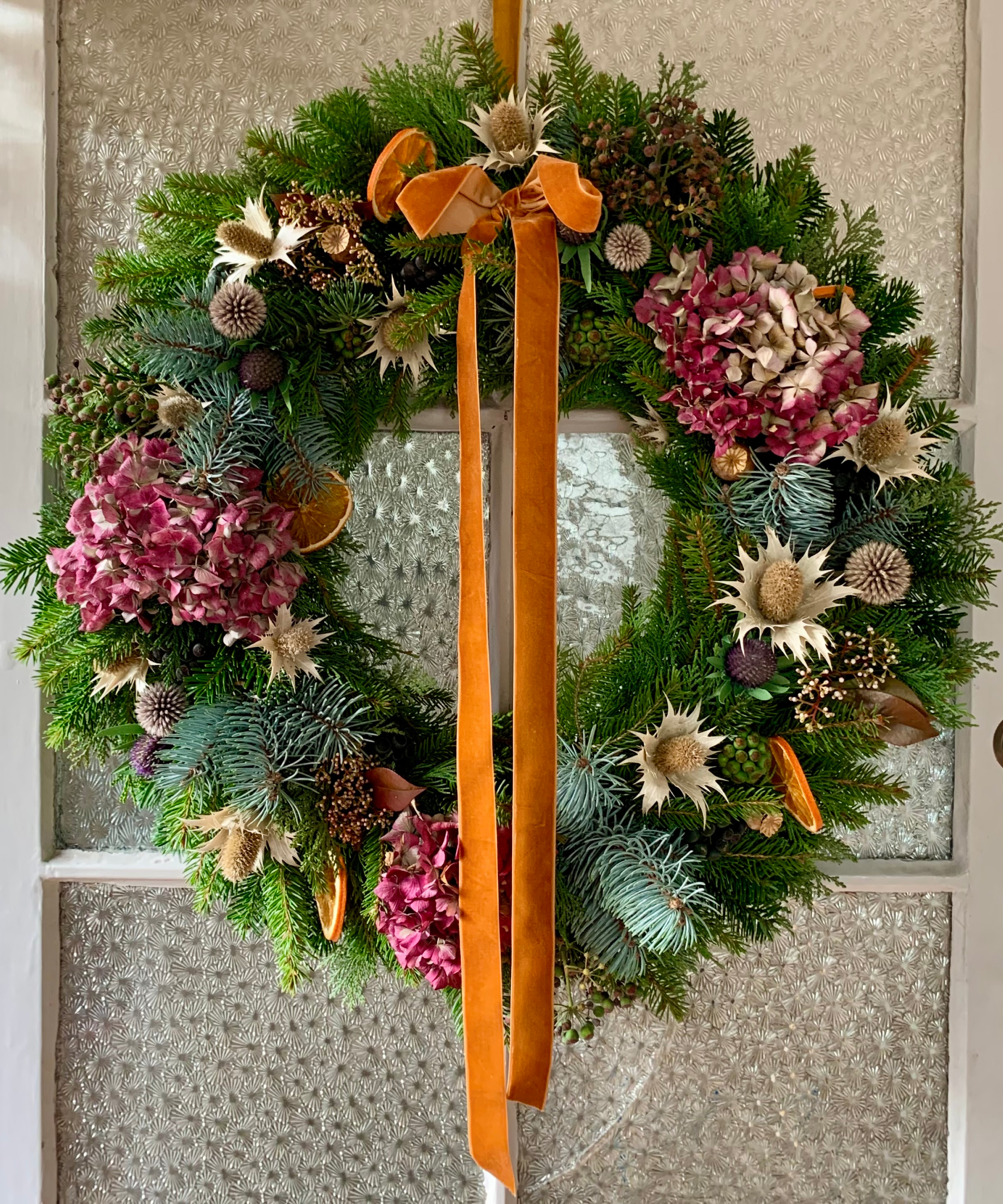
(Image credit: Ellie Tennant)
I pick the flowerheads and dry them upside down in bunches in my greenhouse, then use them in floral arrangements and in festive wreaths.
6. Echinops
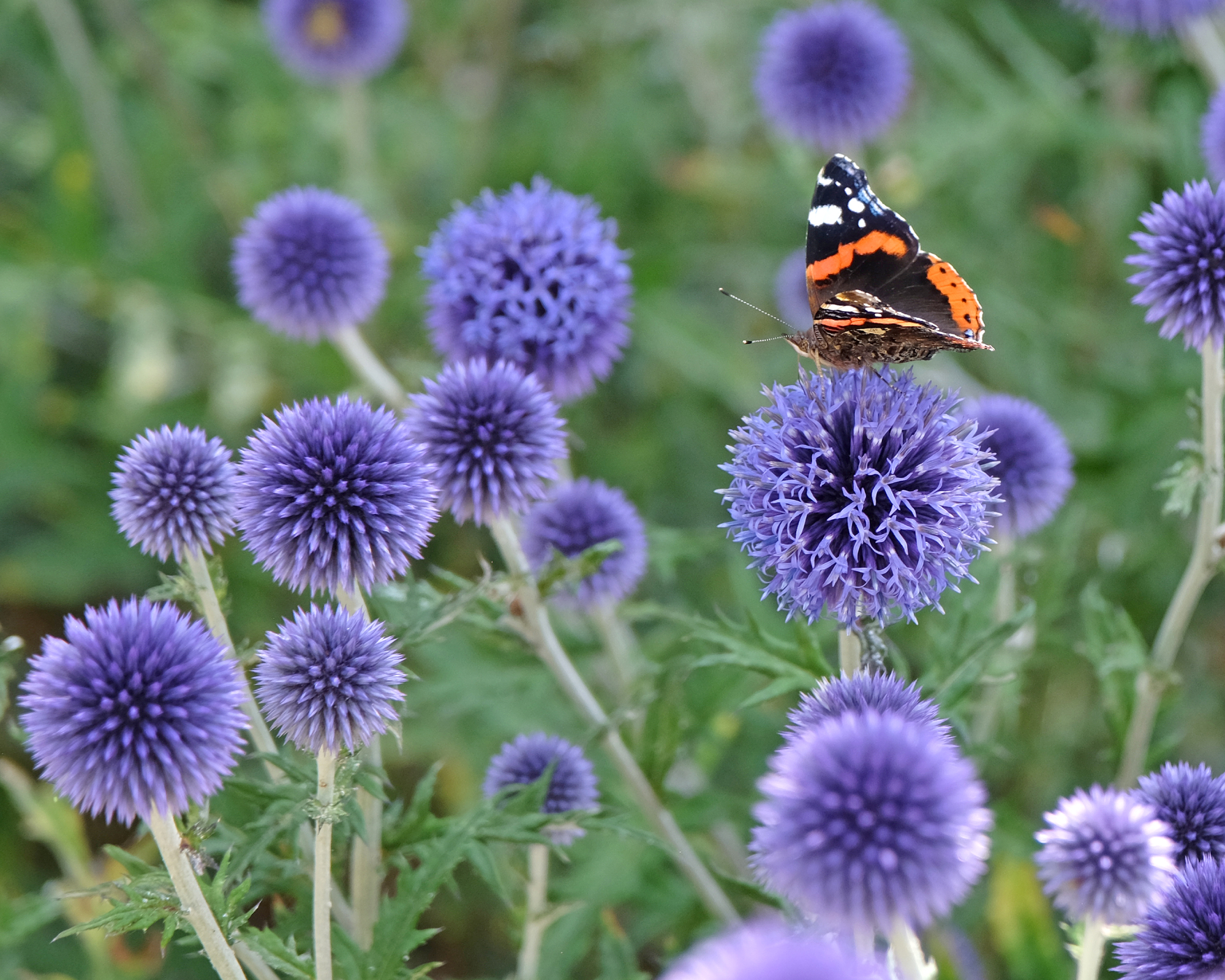
(Image credit: Getty Images)
With vivid blue pompom flowers, my perennial Echinops ritro plants are always covered with bumblebees. I grow globe thistle ‘Veitch’s Blue’ and, while it’s a bit of a thug, it gives me so many flowers. The plant gets bigger every season and has a tendency to take over my border, but I've found that dividing it and giving roots away to friends keeps it in check.
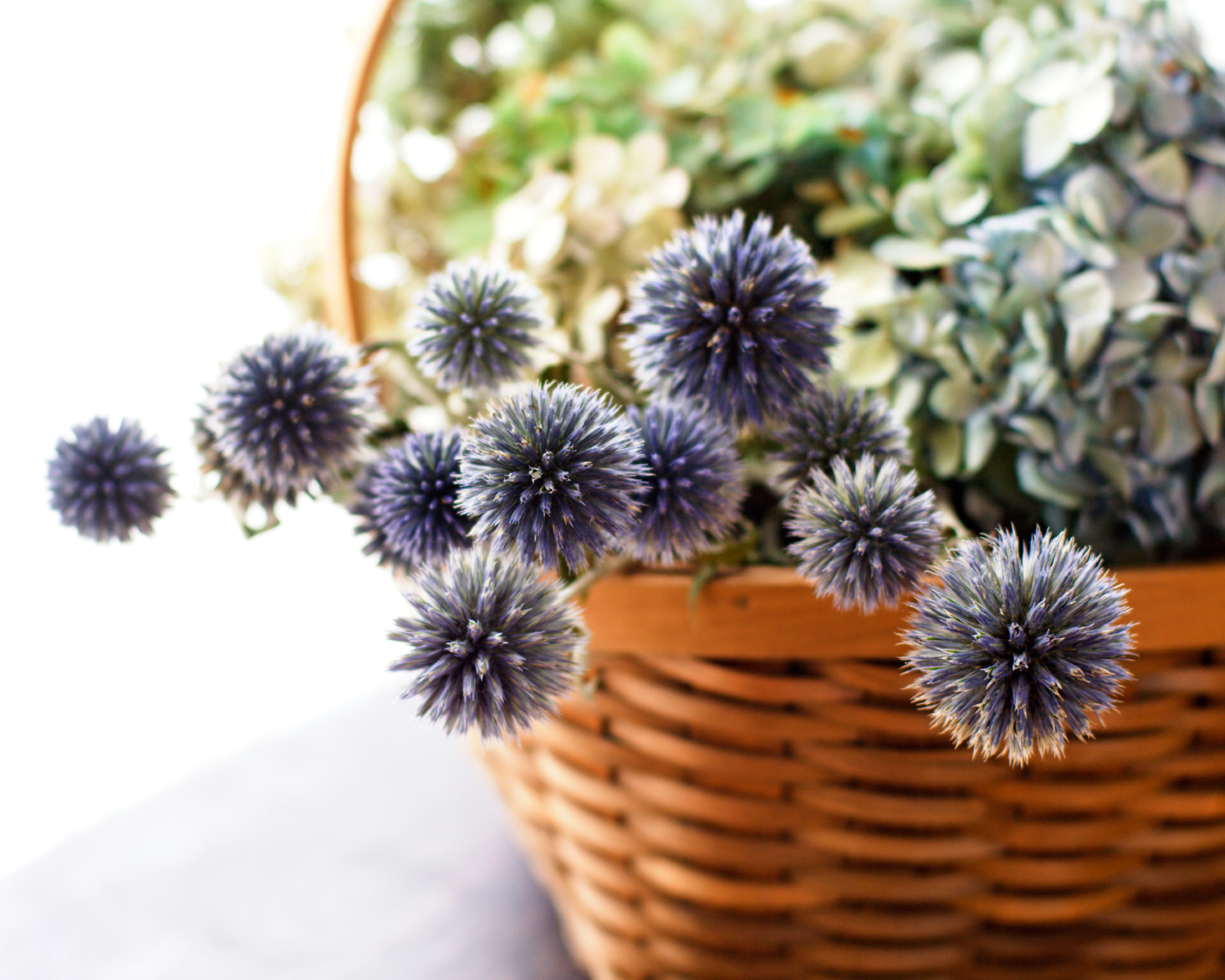
(Image credit: Getty Images)
Once the flowers have bloomed, you can cut and dry the heads and it couldn't be simpler – I place the stems upright in a jar, without water, in my kitchen. After six months, the dried heads become fragile and the colour fades from blue to grey, but that gives me just enough time to pop them into festive wreaths and decorations.
7. Rose
(Image credit: Ellie Tennant)
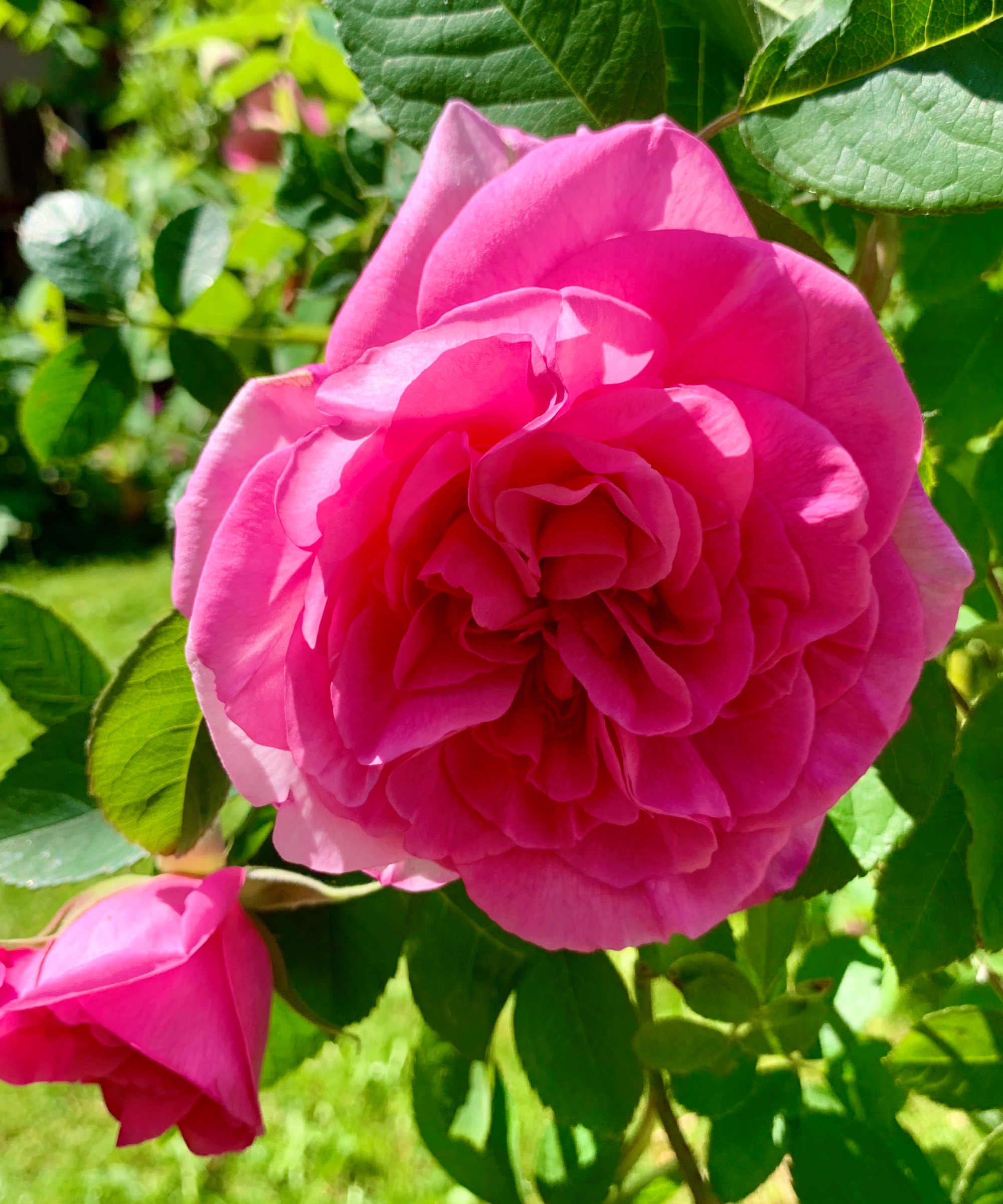
I love all Rosa, but my absolute favorite rose for fragrance is Gertrude Jekyll English Rose Shrub by David Austin. You can buy it as a mature shrub from Fast Growing Trees and it can also be grown as a climber, and bare roots are available direct from David Austinfrom fall to spring.
(Image credit: Ellie Tennant)
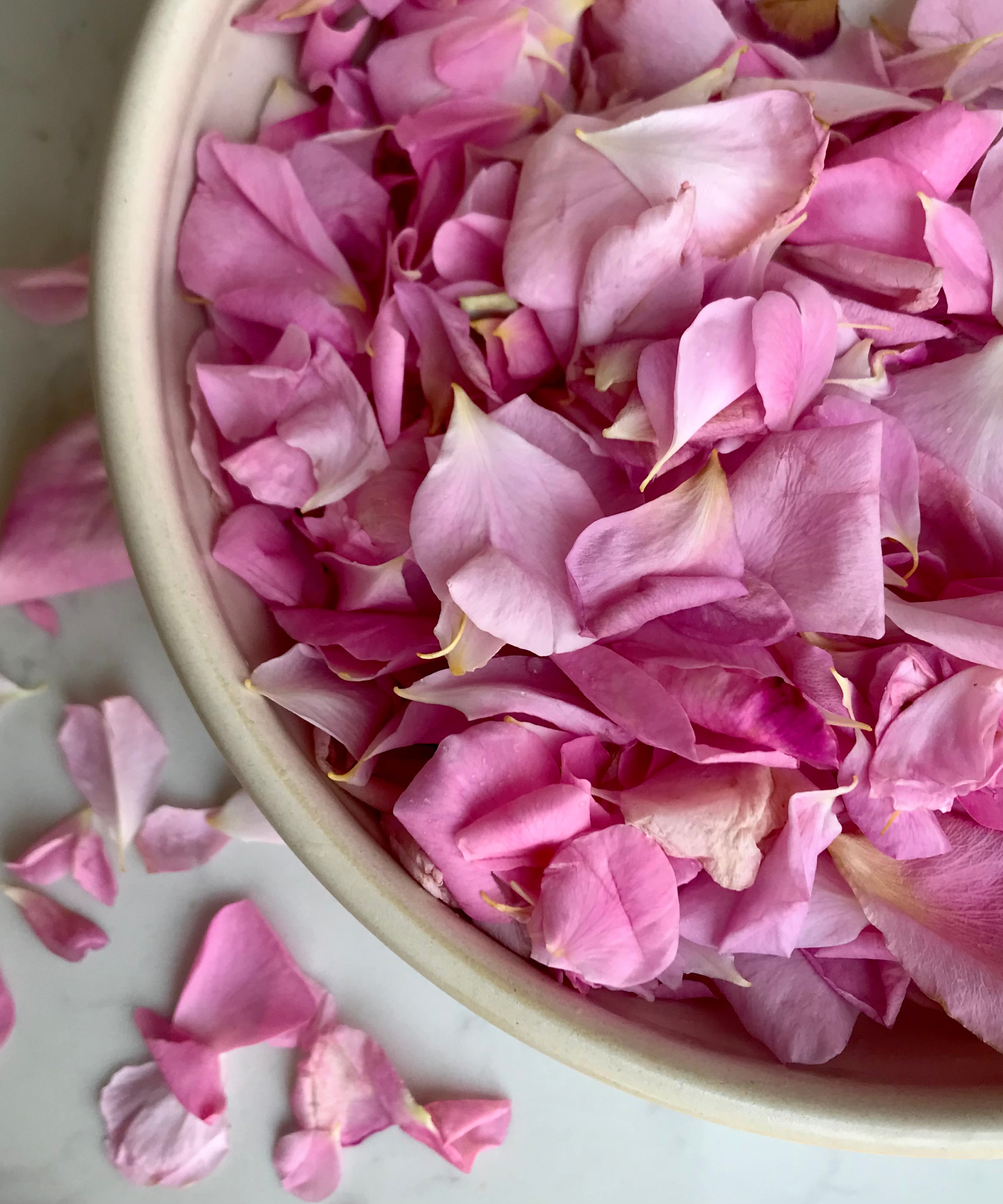
Long-flowering with the most exquisite scent, my Gertrude Jekyll shrub rose is always buzzing with pollinators, and the flowers are perfect for crafting and cooking, too. I pick blooms on a warm, sunny day and spread the petals out to dry on sheets of paper in my kitchen. Then I store them in a jar to use as sprinkles on cakes, making rose petal tea (just steep the petals in hot water) or creating scented gifts like dried lavender and rose petal sachets.
8. Lilac
(Image credit: Getty Images)
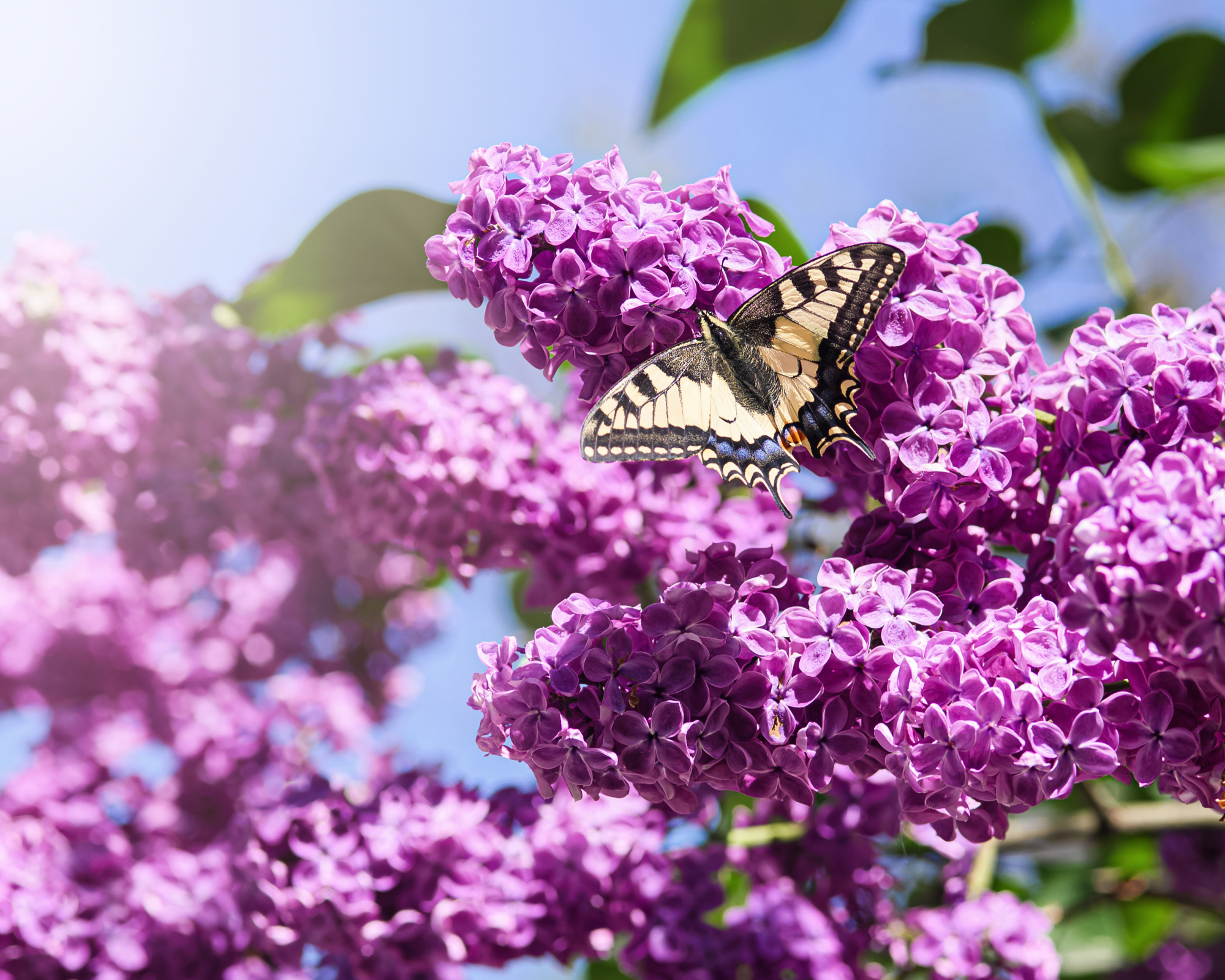
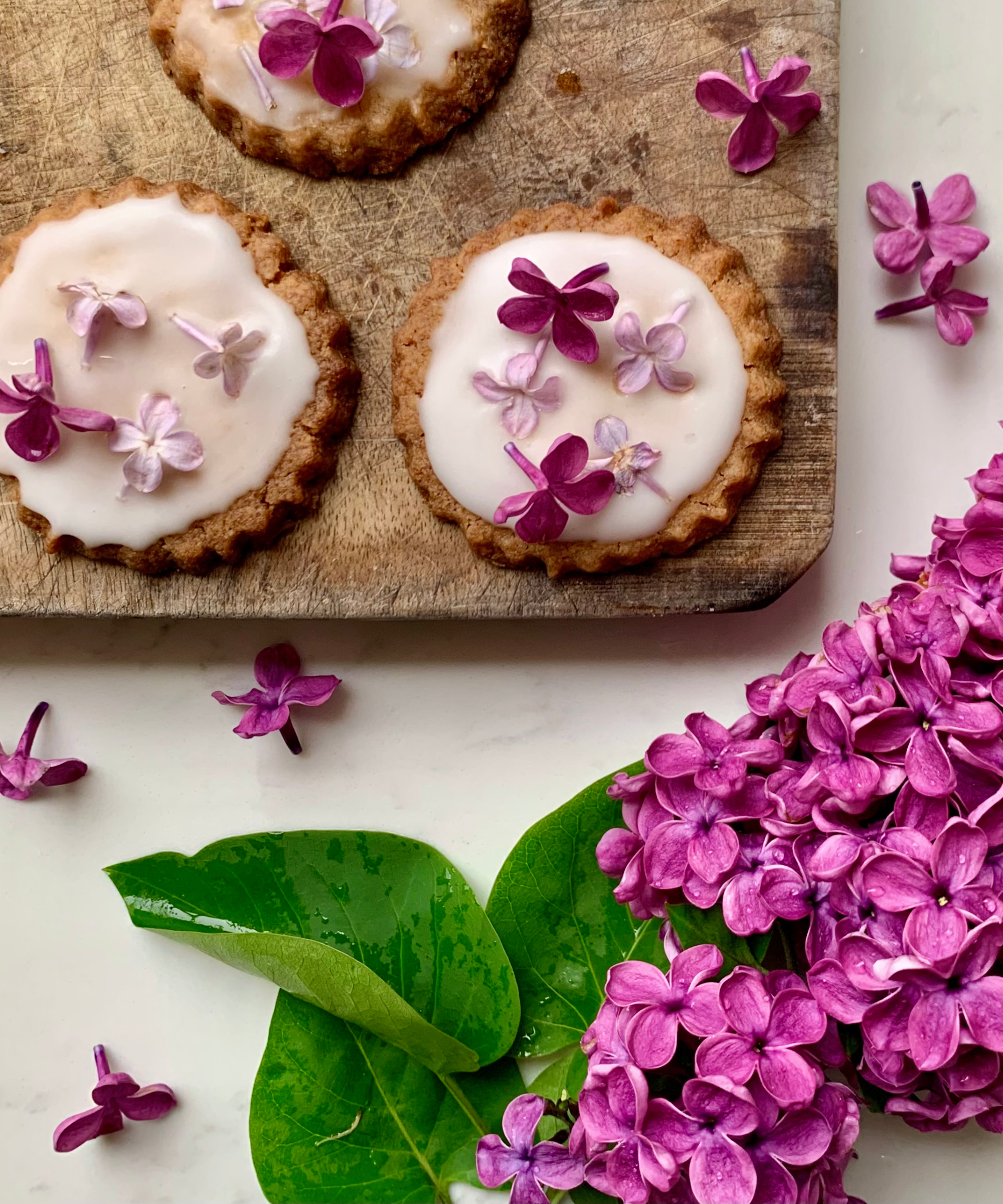
One of the best flowering plants for pollinators, lilac is one of the first shrubs to bring color to my garden in spring. This beautiful bush is always alive with butterflies, too, thanks to its elegant, deep lavender-purple flowers. I use the fresh and fragrant flowers to make lilac shortbread cookies which are always a big hit with my kids.
(Image credit: Ellie Tennant)
Boomerang Dark Purple lilac, available from Burpee, is my forever favorite because it reblooms right up until the first frost, is exceptionally hardy and has particularly large clusters of flowers – which means plenty of cookies!















 English (US) ·
  French (CA) ·