

PROTECT YOUR DNA WITH QUANTUM TECHNOLOGY
Orgo-Life the new way to the future Advertising by AdpathwayThe fossil helps show how the front appendages of spiders’ kin may have evolved
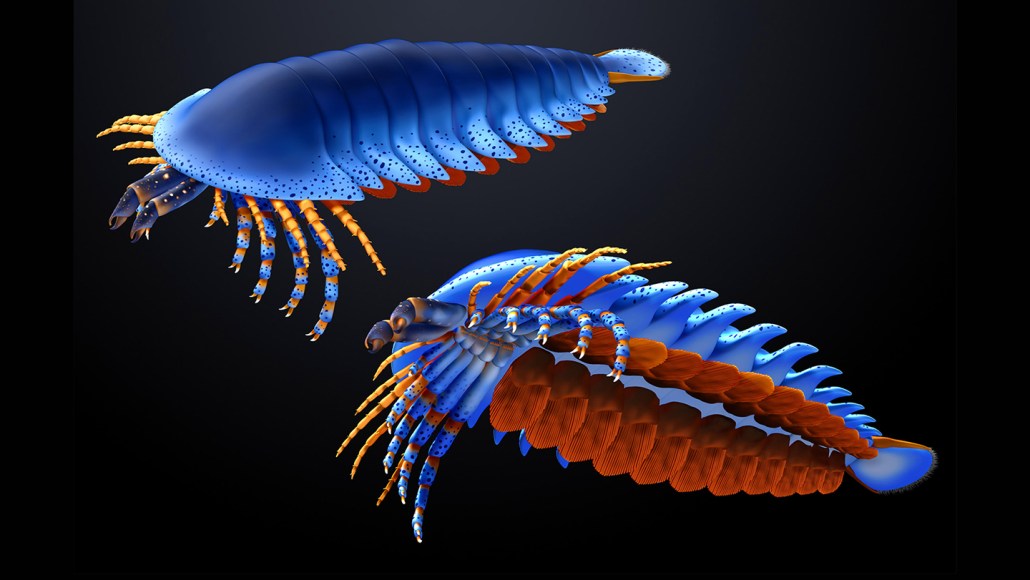
An early relative of modern spiders and scorpions (illustrated) lived in water, was about the size of a human hand — and already had the characteristic claws that still define this animal group some 500 million years later.
Masato Hattori
A stunningly preserved fossil shows that early relatives of spiders and scorpions were already armed with their hallmark front claws about half a billion years ago.
The newly described animal preserves the oldest clear example yet found of these specialized appendages, paleontologist Rudy Lerosey-Aubril and colleagues report April 1 in Nature. The find helps settle a long-standing debate over how the claws evolved and shows that chelicerates — the group that today includes horseshoe crabs, ticks and daddy longlegs — had already taken on a surprisingly modern body plan.
“This creature is super-modern in anatomy for an animal that is 500 million years old,” says Lerosey-Aubril, of Harvard University.
The fossil’s obvious pincers sit on a pair of appendages beside its mouth. In modern chelicerates, those appendages, called chelicera, have evolved to do different jobs. In spiders, they have become fangs, sometimes used to inject venom. In scorpions, they are small mouthparts used in feeding.
Younger fossils clearly show clawed chelicera, but earlier candidates had not preserved them. That left open the possibility that the structures evolved from the sensory antennae seen on insects, a related animal group. Instead, the new fossil’s well-developed claws suggest that chelicera evolved from the grasping “great appendages” seen on some earlier arthropods, Lerosey-Aubril says.
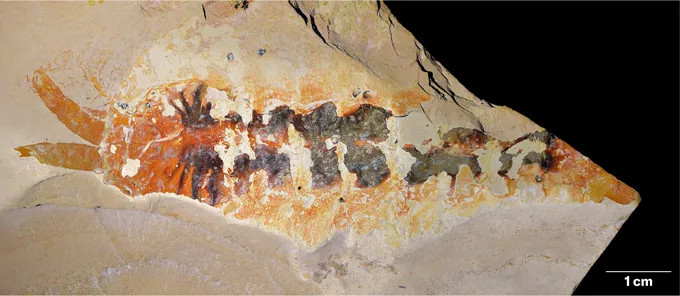 The fossil of a 500-million-year-old spider relative (shown) clearly show appendages ending in claws near its mouth.Rudy Lerosey-AubrilThe fossil of a 500-million-year-old spider relative (shown) clearly show appendages ending in claws near its mouth.Rudy Lerosey-Aubril
The creature probably lived in a primeval sea. Its shape and the location it was found in suggest it swam close to the seafloor, where it may have used its chelicera to lift animal prey — probably primitive worms — to its mouth.
“It’s a very nice fossil,” Lerosey-Aubril says. “What’s amazing is that it’s been in our collection for decades.”
The hand-sized specimen was found in the early 1980s at Utah’s Wheeler Formation, famous for its remains of the early sea creatures called trilobites. But little could be seen of it until recently, after Lerosey-Aubril spent weeks carefully removing the grains of overlying sediments to reveal the ancient critter in all its horrible glory. The split shale it was encased in preserved views of both the top and underside of its body, helping researchers reconstruct how the animal looked when alive.


















 English (US) ·
  French (CA) ·