

 8 months ago
114
8 months ago
114
PROTECT YOUR DNA WITH QUANTUM TECHNOLOGY
Orgo-Life the new way to the future Advertising by AdpathwayIn a groundbreaking study, researchers have harnessed the power of artificial intelligence (AI) to revolutionize the way oncologists approach colorectal cancer prognosis. The study, conducted by a team of prominent scientists, unveils a novel method of quantifying the tumor-stroma ratio within colorectal cancer tissues. This innovative technique holds the potential to not only enhance the accuracy of patient outcomes but also offers new insights into the complexities of the tumor microenvironment, particularly the role of the stroma in immune evasion.
Colorectal cancer remains a significant cause of morbidity and mortality worldwide, emphasizing the urgent need for advancements in early detection and treatment strategies. Traditional prognostic methods often fall short in precisely assessing the aggressiveness of tumors, highlighting the necessity for more refined approaches. The research team, led by notable figures in oncology and computational biology, aimed to bridge this gap by employing sophisticated AI models capable of analyzing histopathological images with remarkable precision.
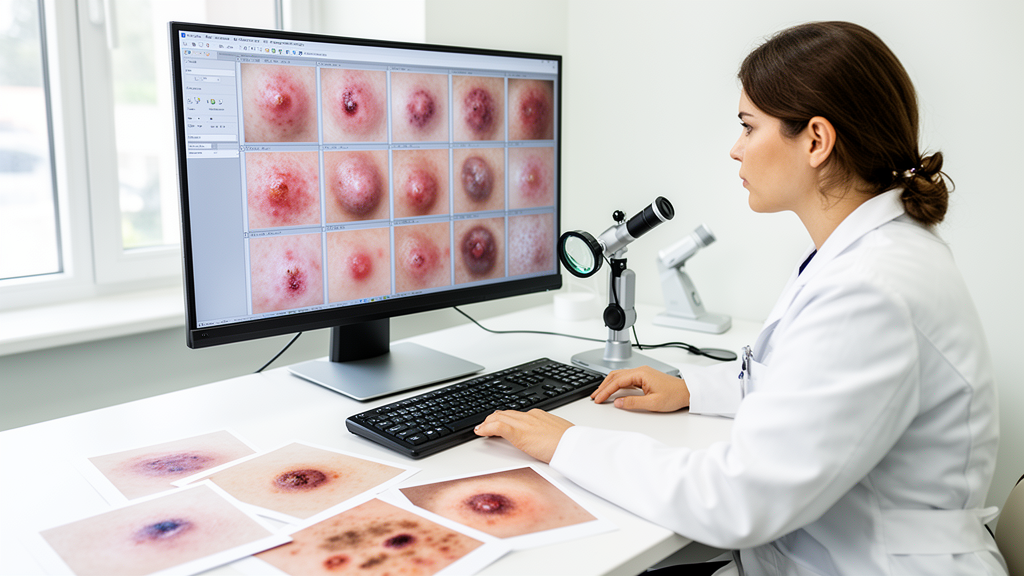
The tumor-stroma ratio (TSR) is a crucial aspect of tumor biology, representing the relative proportions of tumor cells to the surrounding stromal tissue. This ratio has profound implications for tumor behavior, including its capacity for growth, invasion, and response to therapies. In this seminal study, the researchers meticulously quantified TSR using advanced machine learning algorithms that analyze pathological images, offering a level of detail previously unattainable through manual examination.
One of the pivotal findings of the study is the clear correlation between a high tumor-stroma ratio and unfavorable clinical outcomes. Patients exhibiting higher TSR values were found to have a significantly poorer prognosis, underscoring the importance of this metric in clinical decision-making. The implications of these findings are monumental, suggesting that assessment of TSR could become a standard part of pathology reports, aiding oncologists in tailoring more effective treatment plans and improving patient outcomes through personalized medicine.
Moreover, the study delves deep into the interactions between tumor cells and the stromal microenvironment, revealing that stromal components can actively drive immune suppression in colorectal cancer. This discovery highlights a possible mechanism through which tumors evade immune surveillance, posing challenges in immunotherapy approaches. By elucidating the role of stroma in tumor progression and immune evasion, the research opens new doors for therapeutic interventions aimed at modulating the tumor microenvironment.
The validation of the AI-based TSR quantification approach was undertaken through an international collaboration, pooling data across diverse populations to enhance the robustness and applicability of the findings. This global effort not only strengthens the credibility of the results but also showcases the potential for AI to unify research efforts across geographical boundaries in the fight against cancer.
Furthermore, the study highlights the transformative role of AI in oncology, illustrating how technology can augment the capabilities of pathologists. While human expertise remains invaluable, integrating AI tools can facilitate faster and more accurate analyses, allowing for timely treatment decisions that can significantly impact patient survival. This synergy between human insight and machine intelligence embodies the future of medicine, wherein technology empowers clinicians to make more informed choices.
As the study progresses toward clinical implementation, researchers envision a future where AI-driven tools are routinely incorporated into pathology labs worldwide. This shift not only promises to enhance the precision of cancer diagnostics but also paves the way for developing tailored treatment regimens based on individual tumor biology.
Ethical considerations surrounding the use of AI in healthcare are also addressed, underscoring the necessity for transparency and accountability in algorithmic decision-making. The researchers advocate for rigorous validation processes and collaborative frameworks to ensure that AI applications uphold the highest standards of patient safety and efficacy.
In conclusion, the unveiling of AI-based tumor-stroma ratio quantification represents a significant leap forward in colorectal cancer research. The study’s findings underscore the importance of integrating technological advancements into clinical practice, as the field embraces innovative solutions to age-old challenges. As the study enters further stages of validation and implementation, the potential for transforming colorectal cancer prognosis and treatment paradigms will be closely watched by both the scientific community and patients alike.
In the ever-evolving landscape of cancer research, this study stands as a beacon of hope, illustrating how artificial intelligence can be harnessed to decode the complexities of cancer biology and propel patient care into a new era of precision medicine. The implications reach far beyond colorectal cancer; as researchers continue to refine these methodologies, the potential applications for various cancers and therapeutic approaches are boundless, heralding a future where cancer care can be adapted to the unique needs of each individual patient.
The ongoing exploration of the tumor microenvironment and its impact on treatment efficacy will undoubtedly remain a hot topic in the coming years. As scientists and clinicians build upon this foundational work, the collaboration between technology and medicine promises to yield even more revolutionary insights, ultimately striving to reduce the burden of cancer worldwide.
The journey doesn’t end here; as researchers push the boundaries of what is possible, the future of oncology will increasingly rely on data-driven insights, precision therapeutics, and compassionate care tailored to the patient’s unique tumor biology. The study by Ye and colleagues represents just the beginning of a transformative effort, as the world eagerly anticipates the next revelations in the ongoing battle against colorectal cancer and beyond.
Subject of Research: Artificial intelligence-based tumor-stroma ratio quantification in colorectal cancer.
Article Title: Artificial intelligence-based tumor-stroma ratio quantification reveals prognostic value and stromal-driven immunosuppression in colorectal cancer: an international validation study.
Article References:
Ye, H., Zhao, K., Cui, Y. et al. Artificial intelligence-based tumor-stroma ratio quantification reveals prognostic value and stromal-driven immunosuppression in colorectal cancer: an international validation study. J Transl Med (2026). https://doi.org/10.1186/s12967-026-07681-6
Image Credits: AI Generated
DOI: 10.1186/s12967-026-07681-6
Keywords: colorectal cancer, artificial intelligence, tumor-stroma ratio, prognostic value, immunosuppression, machine learning, tumor microenvironment.
Tags: AI in colorectal cancer prognosisartificial intelligence in oncologycolorectal cancer treatment advancementscomputational biology in cancer researchearly detection of colorectal cancerenhancing patient outcomes in oncologyhistopathological image analysisimmune evasion in cancerprecision medicine in colorectal cancerprognostic models for cancertumor microenvironment insightstumor-stroma ratio analysis




















 English (US) ·
  French (CA) ·