

PROTECT YOUR DNA WITH QUANTUM TECHNOLOGY
Orgo-Life the new way to the future Advertising by AdpathwayWhether searching for extraterrestrial intelligence or building our very own space mission, The Planetary Society has a long history of advancing cutting-edge space science and technology. Now, we are announcing the latest winners of our Science and Technology Empowered by the Public (STEP) Grants: three groups of scientists who will receive crowdfunded support for important work that furthers the scientific exploration of space.
These projects were chosen through an open call for proposals from around the world. They were selected based on their scientific value, achievability, and relevance to The Planetary Society’s core enterprises — exploring worlds, finding life, and defending Earth — among other strengths. Previous STEP Grant winners have explored the possibility of growing plants in space, used rare lakes on Earth to learn about potentially habitable moons of Jupiter and Saturn, and recruited people around the world to help search for intelligent alien life.
“Through programs like these STEP grants, TPS members are helping the community make important advances,” said Jim Bell, planetary scientist at Arizona State University as well as member and former president of The Planetary Society’s board of directors. “It’s wonderful that The Planetary Society can support cutting-edge research.”
The new winners are:
A Solar System shadow-tracker
CORA+: Collaborative Occultation Resources and Archive for the Rubin Era
Amount awarded: US$30,000
Principal Investigator: Mike Cretlow, astronomer and software engineer at the German Center for Astrophysics
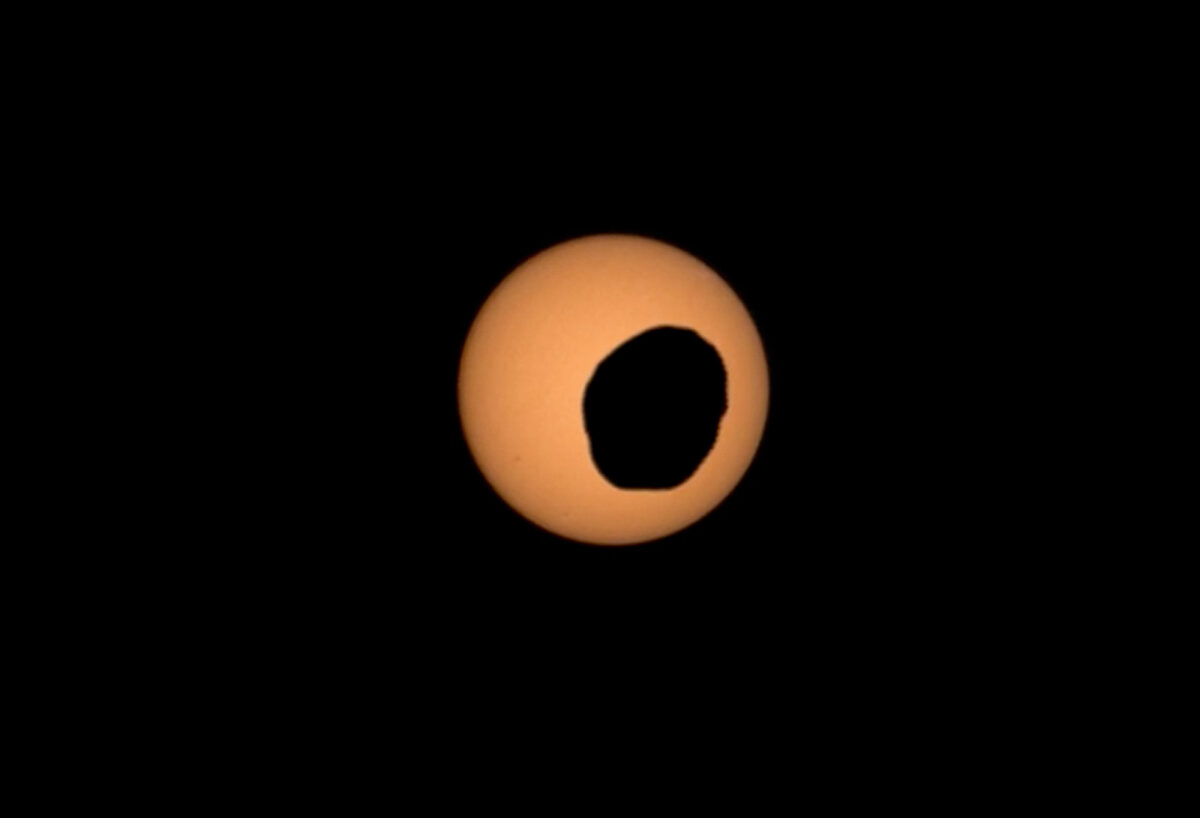 Phobos transit from Perseverance 2026 NASA’s Perseverance Mars rover used its Mastcam-Z camera to capture the silhouette of Phobos, one of the two Martian moons, as it crossed in front of the Sun on Aug. 12, 2026. The stellar occultations that CORA+ will track come down to something similar — a rocky body blocking light from a background star — except the rocky body will be farther away, and the background stars so distant that they are only visible as points.Image: NASA / JPL-Caltech / ASU / MSSS / SSI
The Vera C. Rubin Observatory is about to flood the scientific world with discoveries, and CORA+ is designed to help humanity make the most of it. Rubin’s decade-long survey of the night sky, which began this year from atop a remote mountain in Chile, discovered 11,000 new asteroids in just six weeks of preliminary data. The telescope is expected to be especially good at finding worlds beyond the orbit of Neptune that — besides being strange, captivating places in themselves — hold evidence of the Solar System’s ancient history. Rubin is expected to multiply the known number of these trans-Neptunian objects, or TNOs, by roughly tenfold.
With CORA+, Mike Kretlow is laying the groundwork to deepen our understanding of these worlds once they are discovered. Though Rubin is expected to find tens of thousands of TNOs and other small Solar System worlds, it will not provide detailed measurements of some of their properties, including their size. Kretlow aims to fix that by equipping scientists with a powerful method to study these worlds: watching their silhouettes.
“CORA+ will enable observers, no matter where they are, to plan observations that will help transform our understanding of newly discovered objects in the Solar System,” said Bruce Betts, chief scientist at The Planetary Society. “They will become tangible, thought-provoking worlds.”
Whenever a TNO or asteroid happens to pass in front of a distant star, it casts a little shadow, blocking that star’s light from reaching us. For a brief instant, the resulting shade passes over our planet. This event is called a stellar occultation. By measuring exactly when and how the background star dimmed, scientists can learn about the silhouette of the world that passed in front of it.
 Mike Kretlow Image: Mike Cretlow
Researchers have used occultations to discover rings around the outer Solar System worlds Haumea and Chariklo, to learn about the tenuous atmospheres of Pluto and Triton, and to help pin down the trajectory of Arrokoth for a visit by NASA’s New Horizons spacecraft. The method also has the power to reveal the details of a world’s size, shape, its brightness, and its surrounding moons.
To help coordinate this science, a few groups of astronomers regularly publish predictions of which stellar occultations will be happening when. These predictions are hand-curated, though, for a small number of worlds. The coming discoveries from Rubin will far outnumber what could be handled by existing occultation networks.
This project funds the expansion of an existing prediction tool, called the Collaborative Occultation Resources and Archive (CORA), to enable it to automatically handle the tens of thousands of new worlds that Rubin will soon discover. With CORA+, observers located in the path of an occultation could contribute valuable measurements if they have the right equipment, often just a relatively small telescope. The result will multiply Rubin’s impact, turning initial discoveries into a more detailed understanding of these distant worlds.
A new telescope tool to help defend Earth
Expanding access to polarimetry for planetary defense applications
Amount awarded: US$49,593
Principal Investigator: Nicholas Moskovitz, astronomer at Lowell Observatory and Northern Arizona University in Flagstaff, Arizona.
Co-Investigators: Katie Breeland-Newcomb (Lowell), Ryan Hamilton (Lowell), Stephen Levine, Maxime Devogele (ESA/NEOCC), Ben Hardesty (Lowell)
 Lowell Discovery Telescope The Lowell Discovery Telescope in Flagstaff, Arizona.Image: Jeremy Perez
Asteroids measuring 10 meters and 100 meters across might sound similar, but if one were headed toward Earth, those sizes would spell the difference between a harmless streak in our atmosphere and an explosion powerful enough to level a city. Unfortunately, though humanity has discovered over one million asteroids to date — thousands of which orbit near Earth — scientists aren’t exactly sure how large many of them are.
Nicholas Moskovitz and his team plan to help fix that. This STEP Grant supports a tool that would make it cheaper and easier to measure asteroid sizes in order to better understand these worlds and the risks they pose. The tool, called a polarimeter, could be used by both professional and amateur astronomers on their telescopes.
“This inexpensive instrument, once developed and tested, would be another arrow in the quiver of ways to determine more accurate asteroid sizes,” said Betts.
There are several methods for determining an asteroid’s size, but each has its own limitations. The most common approach is to roughly estimate size from brightness, because larger objects tend to reflect more light — but this doesn’t always hold true If an asteroid is small but very reflective, it could still be just as bright as an asteroid that is larger, but darker. The device that Moskovitz and his team are building can undo this knot by measuring how reflective asteroids are, using a property of their reflected light called polarization.
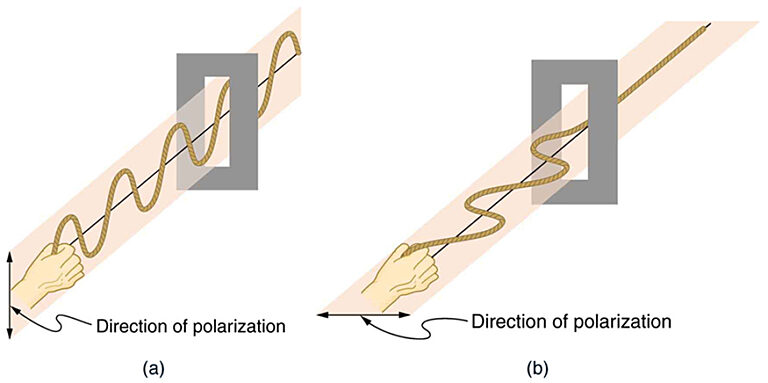 Polarization analogy A demonstration of polarized waves, using a rope wiggled by hand. The left rope is vertically polarized, and the right rope is horizontally polarized.Image: Douglas College Physics 1207 / OpenStax
Picture a wave of light like a rope being shaken up and down (see above image). When you shake the rope, the disturbance travels down the length of the rope, but the angle of the disturbance along the rope can be horizontal, vertical, or at some angle in between. That is its polarization.
Often, light is an even mix of waves with these different angles. But when light reflects off a surface, waves with a particular polarization get redirected more easily depending on the angle between the surface and wherever the light is coming from and bouncing toward. This is why polarized sunglasses reduce glare: they block light that is polarized in this way by, say, bouncing off a lake or road.
The same thing happens when light from the Sun bounces off an asteroid: waves with a particular polarization get reflected more easily toward Earth. A dark asteroid will tend to shine with light that shows a preference for this specific angle. Light that hits a more reflective asteroid, on the other hand, will scatter around its surface several times before it heads off into space, and the angles of those bounces will erase the polarization that the light would have had if it bounced just once.
 Moskovitz and team Katie Breeland-Newcomb, Ben Hardesty, Stephen Levine, Nick Moskovitz, Maxime Devogele (on iPad), and Ryan Hamilton at Lowell Observatory in Flagstaff, Arizona.Image: Nick Moskovitz
The tool that Moskovitz’s team is building will measure these polarizations to tell how light or dark an asteroid is. The device is essentially a tube fitted with a couple of lenses, prisms, a camera detector, and two pairs of crystal wedges cemented together perpendicularly, which split light into different beams depending on its polarization.
The researchers plan to design and build this polarimeter using off-the-shelf and 3D-printed parts, so it can be relatively cheap and easy for other observers to buy or make themselves. If a large network grows to use this instrument, they would be able to quickly measure any potentially dangerous asteroid soon after it's discovered. They would also flesh out our understanding of less hazardous asteroids, too.
The Planetary Society’s award to this team will mostly go to funding the work of a Northern Arizona University graduate student, Katie Breeland-Newcomb, as she designs, builds, and tests the polarimeter on Lowell Observatory’s 4.3-meter Lowell Discovery Telescope, as well as on a 1-meter telescope.
An asteroid database for the scientific community
AsteroiDB: A Community Platform for Asteroid Photometry and Characterization
Amount awarded: US$50,080
Principal Investigator: Miguel R. Alarcon, director of scientific operations at Light Bridges and affiliated with Instituto de Astrofísica de Canarias (IAC) and the Observatorio Astronómico del Teide in Guimar, Spain.
Co-Investigators: Miquel Serra-Ricart (Light Bridges/IAC), Javier Licandro (IAC)
 The Two-metre Twin Telescope The Two-metre Twin Telescope (TTT) at Teide Observatory in the Canary Islands.Image: StarryEarth
Whether you are a researcher at a major observatory or an amateur astronomer in your backyard, if you spot an asteroid through a telescope, you can help see if it is on a collision course with Earth. That is thanks to an online database, maintained by the Minor Planet Center, that collects hundreds of millions of observations of where asteroids are. If their measurements meet the minimum quality standards, anyone, from anywhere, can submit to it.
But for both asteroid science and planetary defense, knowing where these worlds are is only the beginning. That is why Miguel Alarcon and his team want to bring this same sharability to measurements of what asteroids are like — specifically, how their brightness varies with time and wavelength, which can tell us about their shape, size, density, and structure. They are developing a one-stop shop for people all around the world to share such measurements and analyze them easily, called AsteroiDB.
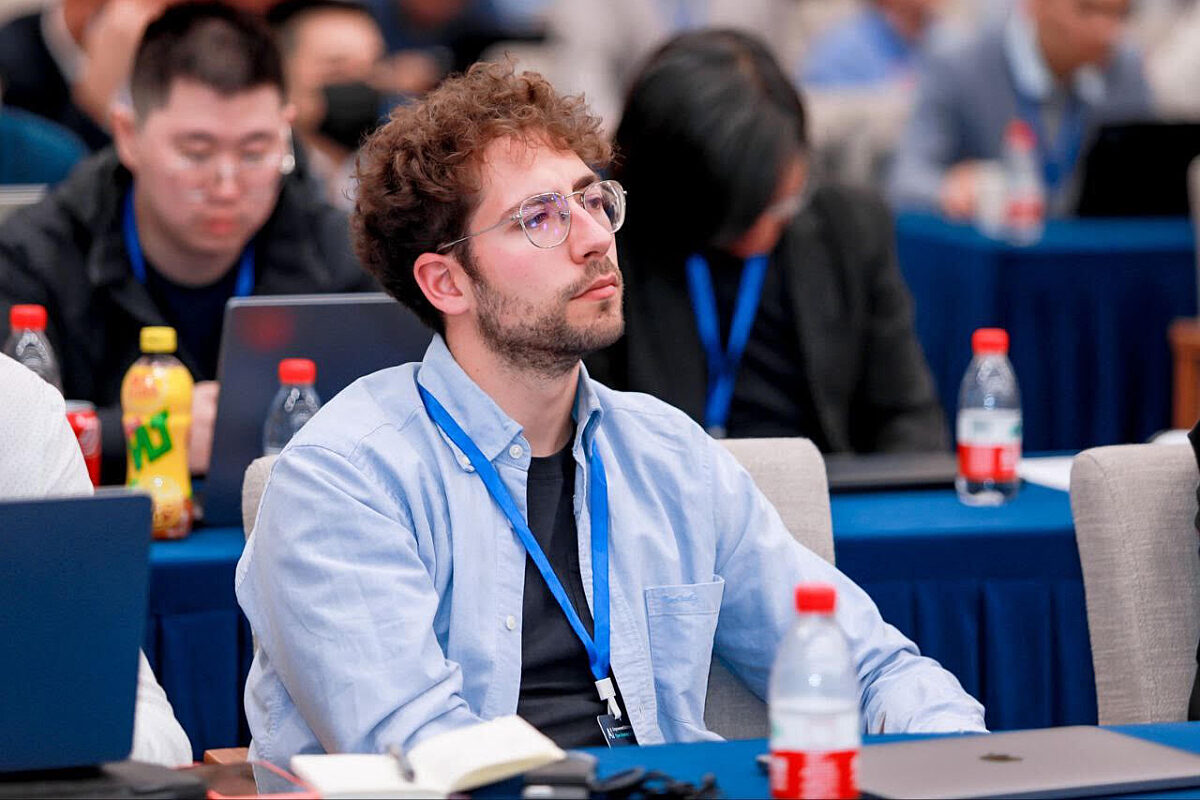 Miguel Alarcon Image: Miguel Alarcon
As it stands, there is no standardized, public-facing clearinghouse for these sorts of observations, though they can help inform how much danger an asteroid might pose to Earth and how easily one might be deflected. Asteroid properties like shape and chemical makeup can also hint at what the Solar System was like billions of years ago, when most asteroids formed, and how Earth has since evolved into the habitable world it is today.
AsteroiDB already exists as a pilot program, containing over 11 million measurements of over 400,000 asteroids. This STEP Grant funds its expansion into a public-facing service, building out its infrastructure to function with a broader base of users.
“Observers around the world will be able to use the AsteroidDB tools to ease collaboration. They’ll be able to improve the speed and quality of how they study the physical properties of asteroids,” Betts said.
Eventually, AsteroiDB will convene an expert panel to determine what standard formats the community should use for these measurements.
As part of this rollout, LightBridges, the organization that operates the Two-meter Twin Telescope and the Transient Survey Telescope at Teide Observatory in the Canary Islands, will offer observing time across three different research-grade telescopes for observers to take new measurements and test sharing them with AsteroidDB. Both amateur astronomers and professional researchers can apply, and members of The Planetary Society will be notified when this call for proposals is announced.
The review panel
Proposals were reviewed by:
- Jim Bell, planetary scientist at Arizona State University and former president of The Planetary Society
- Bruce Betts, chief scientist at The Planetary Society
- John Grunsfeld, planetary scientist and former NASA astronaut
- Heidi Hammel, vice president of science for the Association of Universities for Research in Astronomy and interdisciplinary scientist for JWST
- Dipak Srinivasan, member of the Principal Staff at The Johns Hopkins University Applied Physics Laboratory
Bell, Grunsfeld, Hammel, and Srinivasan are also members of The Planetary Society’s board of directors.
You Power the Next Great Discovery!
Fund future scientific research that advances space science and exploration with your gift today.

Empowering the world's citizens to advance space science and exploration.
Account Center • Contact Us • Privacy Policy
Give with confidence. The Planetary Society is a registered 501(c)(3) nonprofit organization.
© 2026 The Planetary Society. All rights reserved.
Cookie Declaration














 English (US) ·
  French (CA) ·