

 1 day ago
3
PROTECT YOUR DNA WITH QUANTUM TECHNOLOGY
Orgo-Life the new way to the future Advertising by AdpathwayUpdate Note: This article reports new information involving the scientific gap left by NASA's Swift observatory following Nature World News' earlier coverage. Latest verified update: NASA mission page, updated Oct. 26, 2026. No official reentry date or location had been published as of Oct. 28, 2026 (Eastern Time).
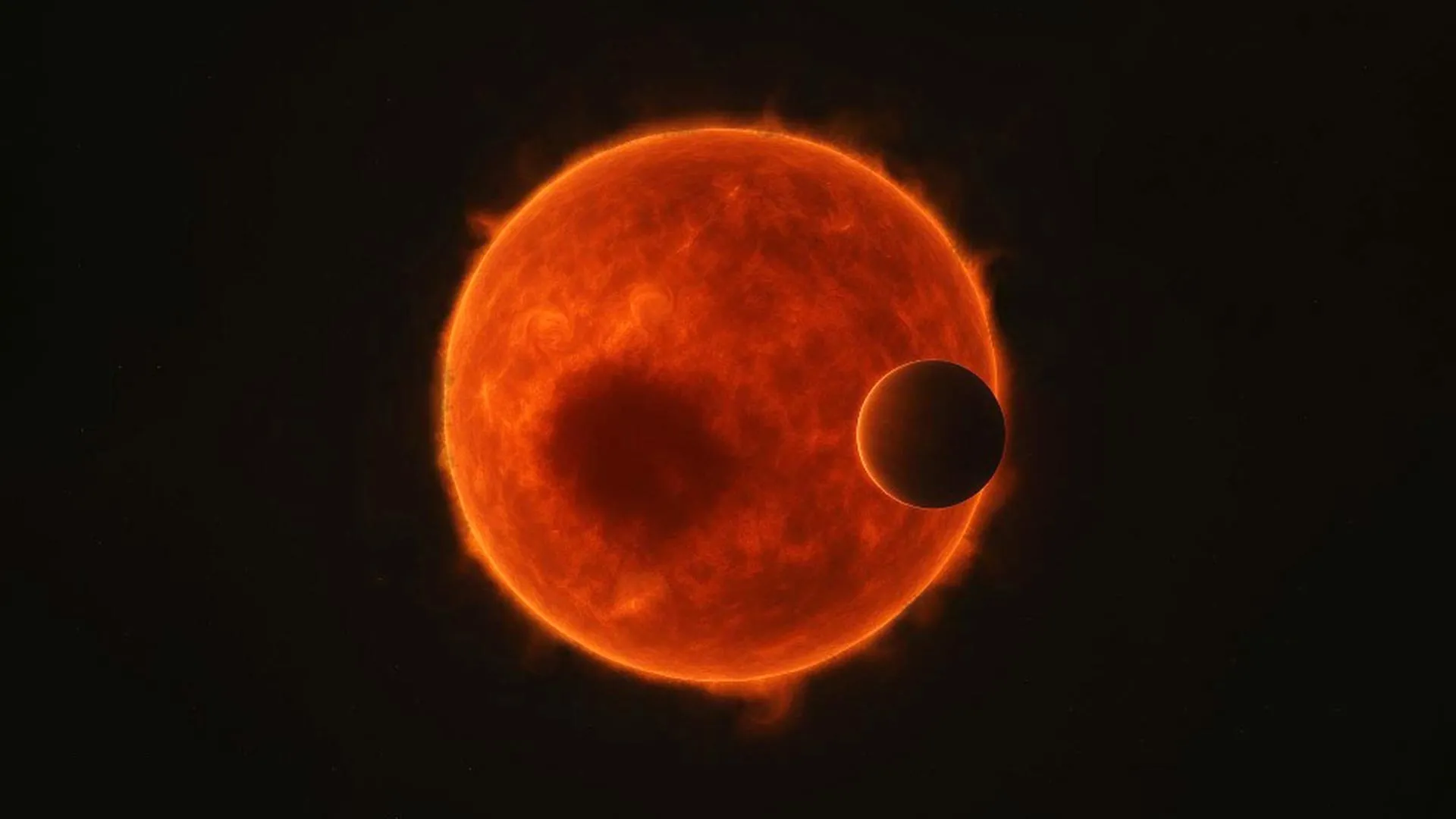
NASA's Swift observatory is drifting toward an uncontrolled reentry, and the agency has no dedicated spacecraft ready to take over its signature job of spotting cosmic explosions and turning its telescopes on them within minutes. In its end-of-mission announcement, NASA said it will use current missions to help fill the gap while it looks for new options, but it named no successor.
That leaves astronomers who study gamma-ray bursts, the most powerful explosions known, relying on a patchwork of other observatories. Two of the most capable newer burst hunters are Chinese-led missions, one built jointly with France, so more of the earliest alerts on exploding stars and colliding neutron stars will come from outside NASA.
The practical effect for the public is modest, since Swift's work never touched daily weather or communications. The larger effect is scientific — fewer bursts caught early, fewer precise positions, and slower follow-up on alerts from gravitational-wave and neutrino detectors.
The Final Weeks of a 22-Year Mission
Swift made its last science observation on Oct. 20 and is orbiting less than 171 miles (275 kilometers) above Earth, where thickening air drag keeps it from pointing steadily, according to NASA. The agency said reentry is expected in the next few weeks but has not published a date, time window or location. Swift has no engine, so it cannot be steered.
Nature World News previously reported on NASA's decision to end Swift's mission at 171 miles up, including the failed August rescue attempt by Katalyst Space's LINK spacecraft and the record of more than 2,000 gamma-ray bursts, more than 1,400 supernovae and about 7,000 scientific papers. Since that report, no tracking agency has issued a public reentry prediction.
Most of the spacecraft is expected to burn up. The tracking firm LeoLabs told CNN that some hardware could survive because of Swift's size, but that the chance of debris causing significant damage or injury is very small, with any pieces most likely to fall in the ocean or unpopulated areas, as reported by KRDO.
The orbit decayed faster than planned because the Sun passed the peak of its 11-year cycle. The NOAA Space Weather Prediction Center explains that "The drag force on satellites increases during times when the Sun is active," as solar energy heats and expands the upper atmosphere.
A Fast-Response Job No Other Telescope Fully Matches
Swift's value came from speed — its Burst Alert Telescope spotted a burst, and the spacecraft swung its X-ray and ultraviolet-optical telescopes onto the location before the afterglow faded, often within minutes. It could juggle up to 75 targets a day, and astronomers worldwide used its positions to aim larger telescopes on the ground.
NASA's Fermi Gamma-ray Space Telescope still detects three to four bursts a week but cannot pinpoint them as precisely, according to Giancarlo Ghirlanda, a gamma-ray burst researcher at Italy's National Institute for Astrophysics (INAF), in an interview with Media INAF. He said China's Einstein Probe watches about one-twelfth of the sky and detects and locates about one burst per week, while the French-Chinese SVOM mission carries instruments from gamma rays to visible light. In his view, translated from Italian, those two missions now carry Swift's legacy.
The loss also reaches beyond bursts. Swift was among the observatories astronomers used to chase alerts from gravitational-wave detectors and neutrino observatories, quickly scanning sky regions where a cosmic collision might have flared. Without it, that follow-up will depend more heavily on other spacecraft and on the availability of telescopes on the ground.
NASA astrophysics director Shawn Domagal-Goldman said the agency is responding by "exploring our ability to use and augment NASA's fleet of existing space telescopes." He also noted that Swift's archive of nearly 22 years of observations, about 12 terabytes, will remain open to researchers.
Researchers, Students and the Data Left Behind
The heaviest burden falls on the international community of high-energy astronomers, and the students trained on Swift data, including at Penn State, which ran the mission's operations center. University groups that built programs around Swift's quick turnaround may need to rely on shared time on other observatories or on the archive.
The gap could persist for years. A new NASA rapid-response mission would have to be proposed, selected, funded, and built, and no such mission has been announced. Some Swift tasks may be partly covered sooner if NASA reprograms existing telescopes, as Domagal-Goldman described, but the agency has not said which ones or how quickly.
Watching the Sky and the Tracking Updates
For readers, there is no safety action to take. Reentry predictions for objects like Swift typically narrow only in the final days, and the window can stay hours wide until shortly before it falls. Readers can follow NASA's Swift mission page and official reentry trackers, and treat social media claims about a specific landing spot with caution until an agency confirms them.
Anyone who finds suspected space debris should not touch it and should report it to local authorities. Space enthusiasts can follow Swift's decay in public satellite-tracking apps using its catalog number, 28485.
The bottom line: Swift's reentry is expected within weeks, with no date or location yet announced and little risk on the ground. The lasting impact is a fast-response gap in high-energy astronomy that existing missions can only partly cover, and the next development to watch is whether NASA names a plan to close it.
What Readers Want to Know
When will Swift reenter Earth's atmosphere? NASA says within the next few weeks. No date, time window, or location had been published as of Oct. 28.
Is falling debris a danger? Most of Swift is expected to burn up. LeoLabs said the chance of debris causing significant damage or injury is very small.
Why did Swift's orbit decay so quickly? High solar activity near the peak of the Sun's 11-year cycle heated and expanded the upper atmosphere, increasing drag on the spacecraft.
Is there a replacement for Swift? NASA has not named one. It plans to use existing telescopes, while China's Einstein Probe and the French-Chinese SVOM cover some of Swift's work.
What happens to Swift's data? About 12 terabytes of observations from nearly 22 years remain in a public archive for researchers.
How can I track Swift before it falls? Public satellite-tracking apps list it under catalog number 28485. Do not touch any suspected debris and report it to local authorities.
© 2026 NatureWorldNews.com All rights reserved. Do not reproduce without permission.












 English (US) ·
 French (CA) ·