

 1 year ago
190
1 year ago
190
PROTECT YOUR DNA WITH QUANTUM TECHNOLOGY
Orgo-Life the new way to the future Advertising by AdpathwayThe slow-motion pitter-patter of tiny giant tortoise feet has been worryingly rare in recent years, but that looks set to change thanks to the first successful hatching of the species with artificial incubation.
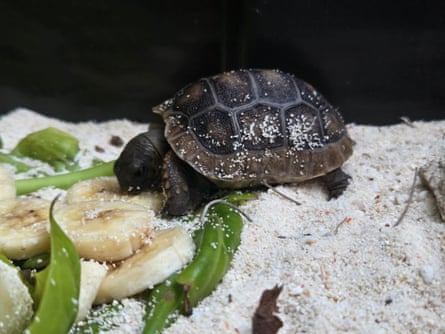
One week after the intervention, the 13 babies are building up their strength on a diet of banana slices and leaves in Seychelles, which is home to one of the last remaining populations of the tortoise.
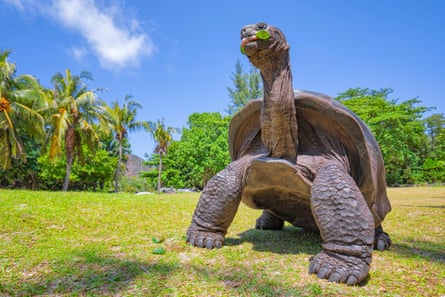
As new members of one of the biggest and longest-lived reptile species in the world, the Aldabra giant tortoise, they could eventually reach a weight of about 250kg (39st) and live more than 100 years.
The hatchlings are the survivors from 18 eggs taken from a single nest on Cousin Island by local conservationists after scientists used a groundbreaking microscopic technique to analyse whether the shells contained at-risk embryos.
The researchers said the successful trial could help to stave off an extinction crisis for other threatened species.
“This is a huge leap,” said Alessia Lavigna, a Seychelloise based at the University of Sheffield, in England, who was the lead author of a recent study related to the project. “It shows what conservation can do.”
The study examined the reproduction rates of five turtle and tortoise species, which revealed that 75% of undeveloped eggs had been fertilised but contained embryos that died at an early stage.
Those findings cast new light on why the Aldabra giant tortoise, which is classified as vulnerable by the International Union for Conservation of Nature, has extremely low hatching success in wild nests. The failure rate is considered more likely to be due to environmental factors than to any genetic trait of the tortoises.
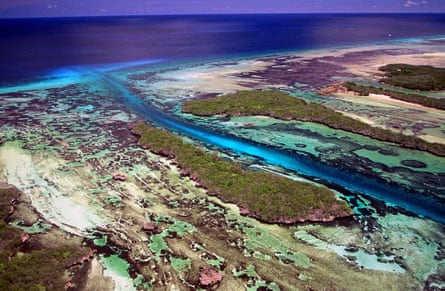
Giant tortoises were wiped out from most other Indian Ocean islands in the 19th century as a result of hunting by sailors, but the population on the Aldabra group of islands in the Seychelles was saved thanks to their isolation. They, along with 400 other endemic species and the extraordinary colours of the landscape, were the reason why the atoll was listed as a world heritage site by Unesco in 1982.
As a hedge against extinction, some individuals were moved to nearby islands, including Cousin, in the hope that they could establish backup populations in the event of new threats. This has proved prescient because at least one island is being developed as a luxury tourist resort, funded with Qatari money, as the Guardian revealed last year.
after newsletter promotion
According to Lavigna, there have been few sightings of juveniles on some islands in recent decades, suggesting reproduction rates are low. Decadal studies record only the same individuals, prompting concerns that the relative stability of the population has more to do with the longevity of the species rather than their breeding rates.
The incubation of fertilised eggs, which is being trialled in collaboration with the Save Our Seas Foundation, Nature Seychelles and several other local conservation organisations, can help to bolster numbers if there is a crisis. But the priority for research will be how to improve the conditions of wild nests.
“Artificially incubating eggs is not a long-term solution. We can’t have animals that need human intervention to take the eggs, hatch them and put them back,” said Nicola Hemmings, of the University of Sheffield’s school of biosciences. “We have to identify the variables that are impacting survival, and then see if there are ways to improve the natural nest environment.”
The team says it would like to share its results with scientists in the Galápagos islands, which are home to the only other species of giant tortoises.
















 English (US) ·
  French (CA) ·