

 1 hour ago
8
PROTECT YOUR DNA WITH QUANTUM TECHNOLOGY
Orgo-Life the new way to the future Advertising by AdpathwayIn a prospective study of 382 women aged 85 years, researchers found that the ability to maintain a one-leg balance for five seconds was a significant predictor of fracture risk, independent of standard bone density measurements. The study, published in the Archives of Osteoporosis, demonstrates that functional performance measures, specifically the one-leg balance test and total radial volumetric bone mineral density, provide additional information on fracture risk that is not captured by areal bone mineral density measured at the femoral neck. This finding suggests that simple physical assessments may enhance fracture risk evaluation in very old women, a population where standard clinical risk factors and bone density scans may not fully account for the complexity of falling and breaking bones.
The research was conducted within the Osteoporosis Prospective Risk Assessment (OPRA) study, a population-based cohort initiated in 1995 in Malmö, Sweden. At the 10-year follow-up, 382 women who had reached the age of 85 participated in the current analysis. These participants underwent a comprehensive battery of assessments, including peripheral quantitative computed tomography (pQCT) of the radius and tibia, dual-energy X-ray absorptiometry (DXA) of the hip and lumbar spine, and specific physical performance tests. The women were followed for a mean of 4.3 years, during which time fracture events were recorded through radiology files and cross-checked with self-reported questionnaires.
The primary objective was to evaluate the associations between fracture risk and volumetric bone mineral density (vBMD) measured by pQCT, physical performance tests, and fall history, comparing these factors against femoral neck areal bone mineral density (aBMD) measured by DXA. The study hypothesized that both radial and tibial volumetric BMD would be associated with fracture risk independent of common clinical risk factors. Furthermore, the researchers sought to determine whether measures of functional performance and history of falls provided additional information on fracture risk beyond what is offered by standard bone density assessments and clinical variables such as body mass index, smoking, and medication use.
During the follow-up period, 116 women, representing 30% of the cohort, sustained at least one fracture. Major osteoporotic fractures occurred in 99 women, including 34 hip fractures, 44 clinical vertebral fractures, 24 distal forearm fractures, and 15 proximal humerus fractures. The mean femoral neck T-score at baseline was –2.4, indicating that the cohort had bone mineral density levels consistent with osteoporosis, while the Z-score was near zero, suggesting their density was similar to age-matched reference populations. Women who experienced a fracture had significantly lower femoral neck aBMD compared to those who did not, although the difference in the proportion failing the one-leg balance test was not statistically significant at baseline.
The physical performance tests included a one-leg standing balance test, where a failure was defined as the inability to maintain balance for five seconds on either leg. Gait speed was measured by timing a 15-meter walk, a 180-degree turn, and a 15-meter return, reflecting both straight-line walking and turning ability. Knee extension force was measured using isometric dynamometry. These tests were selected to assess postural stability, mobility, and lower extremity strength, factors that are increasingly relevant in advanced age due to physical decline and frailty. The five-second threshold for the balance test was derived from previous observations in this cohort at age 75, where participants unable to maintain balance for this duration generally could not maintain postural stability.
In univariate analyses, higher trabecular vBMD at both the radius and tibia was associated with a lower risk of any fracture. Specifically, the hazard ratio for any fracture was 0.68 for radial trabecular vBMD and 0.69 for tibial trabecular vBMD. Radial trabecular vBMD was also associated with a lower risk of hip fracture. In contrast, higher femoral neck aBMD was associated with a lower risk of any fracture but was not significantly associated with hip fracture risk in the unadjusted model. A failed balance test and lower gait speed were associated with a higher risk of any fracture, with hazard ratios of 1.55 and 1.22, respectively. History of multiple falls was associated with a higher risk of major osteoporotic fractures and clinical vertebral fractures.
After adjusting for clinical covariates including body mass index, previous fracture, smoking, and use of vitamin D, glucocorticoids, and bisphosphonates, the associations for some variables changed. Total radial vBMD remained significantly associated with any fracture, with a hazard ratio of 0.79. However, femoral neck aBMD did not remain significantly associated with fracture risk after multivariate adjustment. Most notably, a failed one-leg balance test remained significantly associated with both any fracture and hip fracture. The hazard ratio for any fracture was 1.70, and for hip fracture, it was 2.30. This association for the balance test was independent of femoral neck aBMD, suggesting that postural balance captures an aspect of fracture risk not fully reflected by bone density measurements alone.
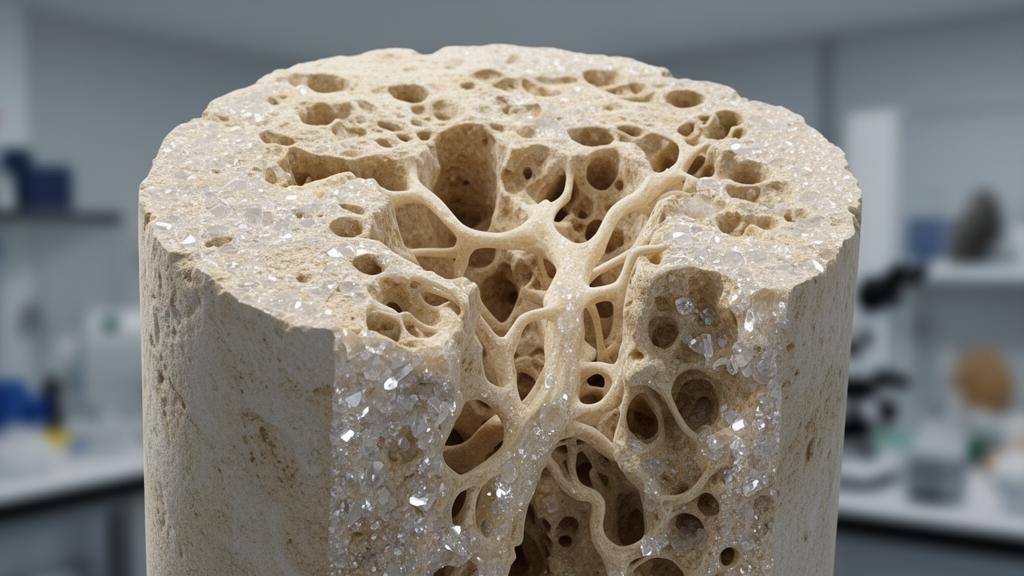
The study highlights the limitations of standard fracture risk assessment tools, such as FRAX, which integrate femoral neck aBMD with clinical risk factors. While these tools are well-supported, they do not fully encompass the complexity of fracture risk in very old adults. The findings suggest that volumetric BMD assessed by pQCT, which provides three-dimensional measurements and allows for separate evaluation of trabecular and cortical components, may offer additional information beyond areal BMD. However, pQCT remains primarily a research tool with limited clinical availability, whereas DXA is widely used in clinical settings. The one-leg balance test, in contrast, is simple, inexpensive, and easy to perform in clinical practice, making it a potentially practical tool for risk assessment.
The results extend previous findings from the same cohort at age 75, where a failed balance test and reduced gait speed were associated with increased hip fracture risk. The current study confirms that these associations persist into the 85-year-old age group, with the one-leg balance test showing a particularly strong independent association with hip fracture. The study also notes that prior fracture history was the strongest predictor of subsequent fractures, with hazard ratios exceeding those of bone density and performance measures. However, 20% of women who sustained an incident fracture had no prior fracture history, indicating that additional assessments may help identify high-risk individuals before their first fracture.
Several limitations were acknowledged by the authors. The observational design limits the ability to interpret causality, and the study population may not be representative of all older women due to a healthy survivor effect, as participants at age 85 were less frail than those who had not survived or did not participate. The mean follow-up time of 4.3 years may limit the observation of long-term outcomes, and the relatively small number of hip fracture events (n=34) may reduce statistical power. Additionally, the pQCT models were not adjusted for aBMD, so the independence of radial vBMD from aBMD could not be assessed. The upper confidence interval for total radial vBMD in the multivariate model was close to unity, suggesting that this finding should be interpreted with caution and warrants confirmation in larger cohorts.
The study contributes to the growing body of evidence that physical performance measures are important fracture risk factors not captured by standard risk assessment tools. The one-leg balance test, in particular, emerged as a robust predictor of hip fracture in 85-year-old women, independent of bone density. This suggests that postural balance may play a critical role in fracture risk, particularly with advancing age. Integrating simple physical performance tests with bone density assessment may enhance fracture risk evaluation in older women, potentially leading to more targeted preventive measures. The findings underscore the need for a multifaceted approach to fracture risk assessment in the elderly, one that considers not only bone quality but also functional capacity and fall risk.
In conclusion, this prospective study of 85-year-old women demonstrates that volumetric BMD by pQCT and physical performance tests are associated with fracture risk independent of commonly recognized clinical risk factors. The one-leg balance test showed a particularly strong independent association with hip fracture, suggesting that postural stability is a key determinant of fracture risk in this age group. While pQCT provides valuable volumetric data, its clinical utility is limited by availability. The one-leg balance test, however, is a practical and clinically useful measure that could be easily integrated into routine assessments. These findings highlight the importance of considering functional performance in addition to bone density when evaluating fracture risk in older women, potentially improving the identification of high-risk individuals and guiding preventive interventions.
Subject of Research: Associations between volumetric bone mineral density, physical performance, and fracture risk in 85-year-old women
Article Title: Fracture risk in 85-year-old women: associations with volumetric bone mineral density, physical performance and falls
Article References: Wihlborg, A., Åkesson, K. E., & Gerdhem, P. (2026). Fracture risk in 85-year-old women: associations with volumetric bone mineral density, physical performance and falls. Archives of Osteoporosis, 21(1), Article 161. https://doi.org/10.1007/s11657-026-01777-8
Image Credits: AI Generated
DOI: 10.1007/s11657-026-01777-8
Keywords: osteoporosis, fracture risk, volumetric bone mineral density, peripheral quantitative computed tomography, one-leg balance test, hip fracture, geriatric medicine, physical performance, fall prevention, bone density, aging, clinical risk factors, postural stability, Malmö cohort, prospective study

















 English (US) ·
 French (CA) ·