

PROTECT YOUR DNA WITH QUANTUM TECHNOLOGY
Orgo-Life the new way to the future Advertising by AdpathwayWhat is your favorite bird species?
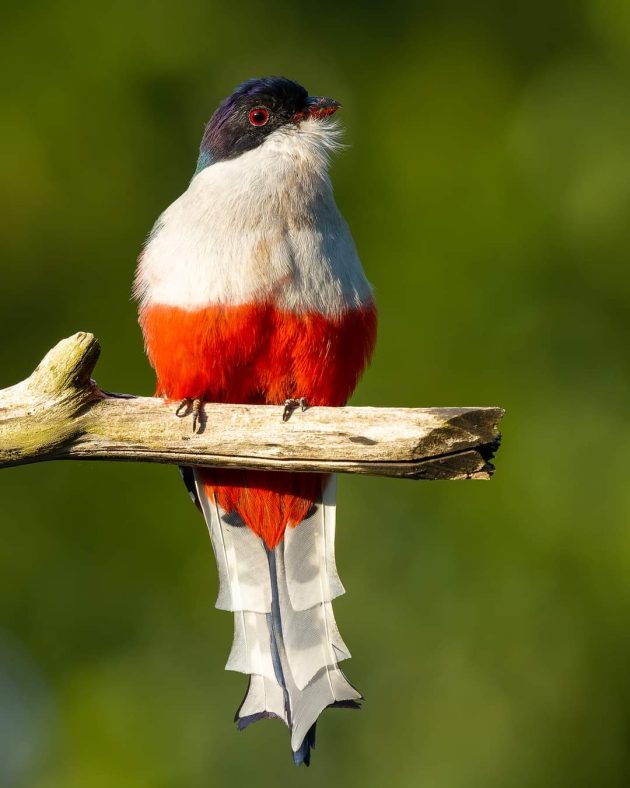
The Bee Hummingbird — the smallest bird in the world. It feeds all day long in my garden and its surroundings. I also have a special love for the Cuban Trogon (Cuba’s national bird) and the Cuban Tody. Together, these three species are the true jewels of Cuban ornithology.
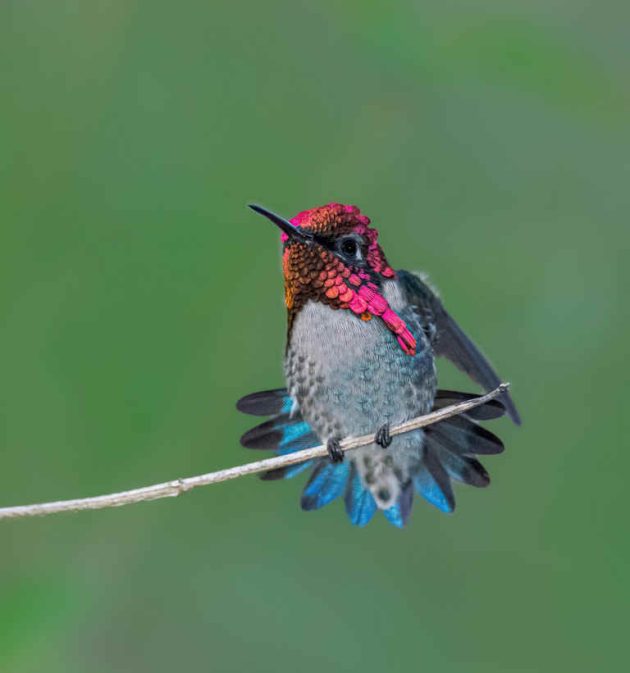
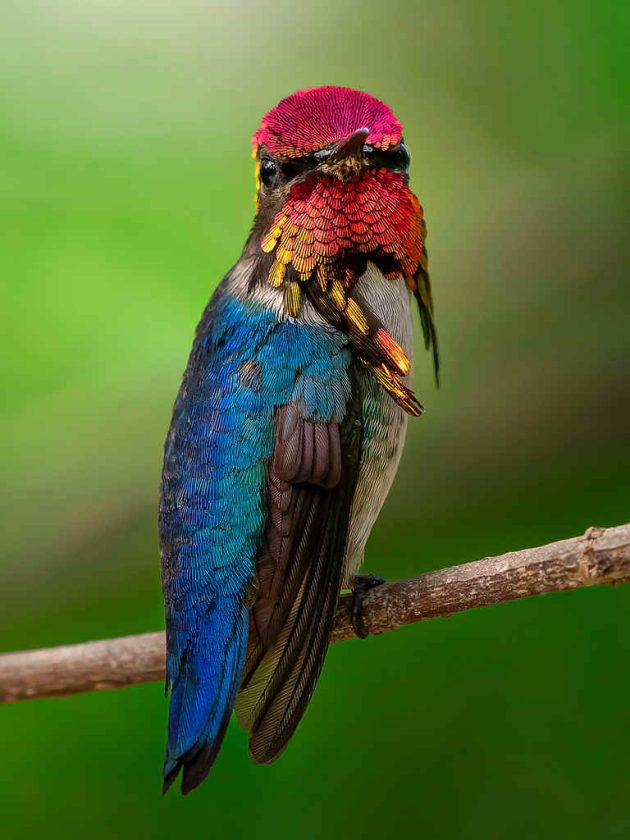
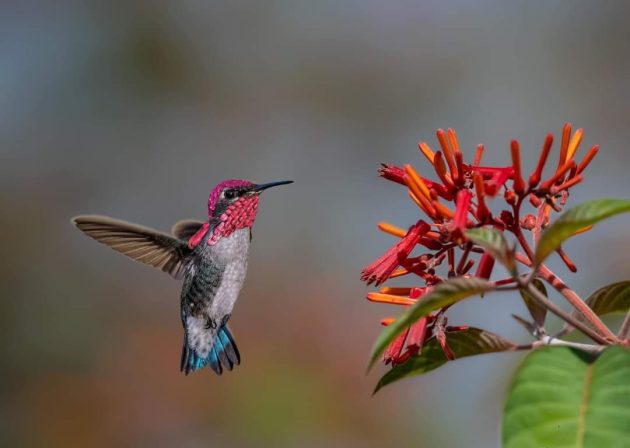
What is your name, and where do you live?
My name is Adrián Cobas Arencibia. I live at Casa Ana Birding, inside Ciénaga de Zapata National Park, Cuba.
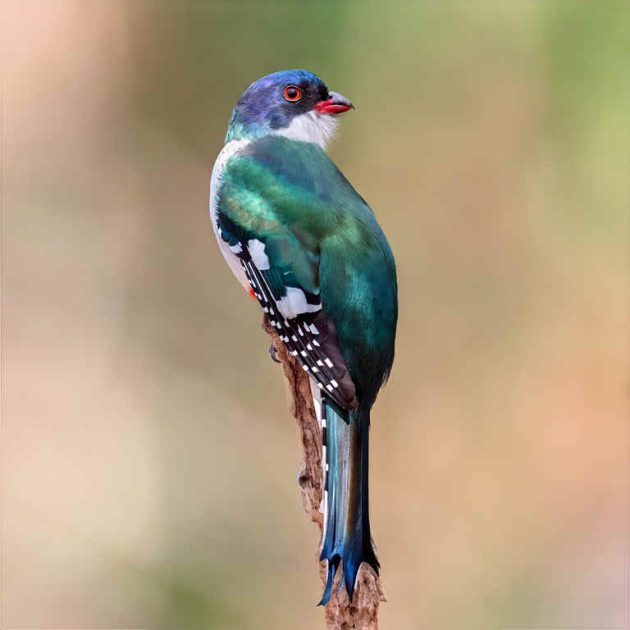
Cuban Trogon
What are the main regions or locations you cover as a bird guide?
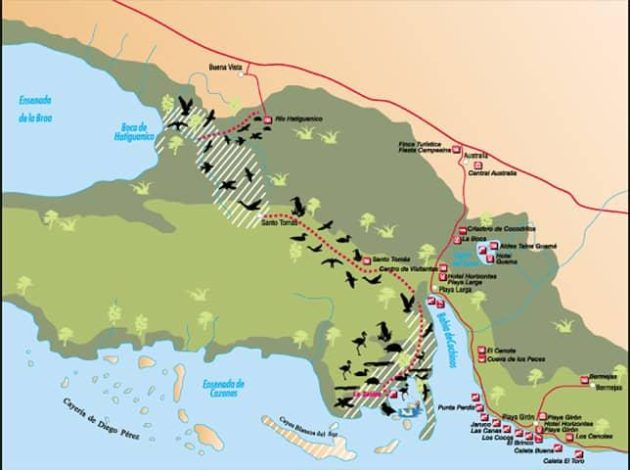
I mainly guide within Ciénaga de Zapata National Park — the largest and best-preserved wetland in the insular Caribbean, and home to the great majority of Cuba’s endemic birds. Depending on each client’s preferences and time available, I also organize tours across other provinces of Cuba, from the western limits of Pinar del Río to Trinidad, and even as far as Cayo Coco in Ciego de Ávila.
How long have you been a bird guide?
I have been a bird guide for 10 years.
How did you get into bird guiding?
As a child, I used to hunt birds with a slingshot with my friends, simply out of curiosity and a lack of awareness. My grandparents would tell me the names of the birds I brought home. In 2001, I built Casa Ana Birding, and a Chinese photographer friend, Dustin Chen, began bringing groups of professional photographers to photograph the Bee Hummingbird in my garden. I already had knowledge of birds, but I wasn’t authorized to take tourists into the protected areas of Ciénaga de Zapata National Park. That pushed me to complete several courses in tourism and environmental interpretation in order to become a certified bird and photography guide. Since I am also a photographer myself, I’m able to help most of my clients get great shots by showing them the best wild perches — always respecting what the bird allows.
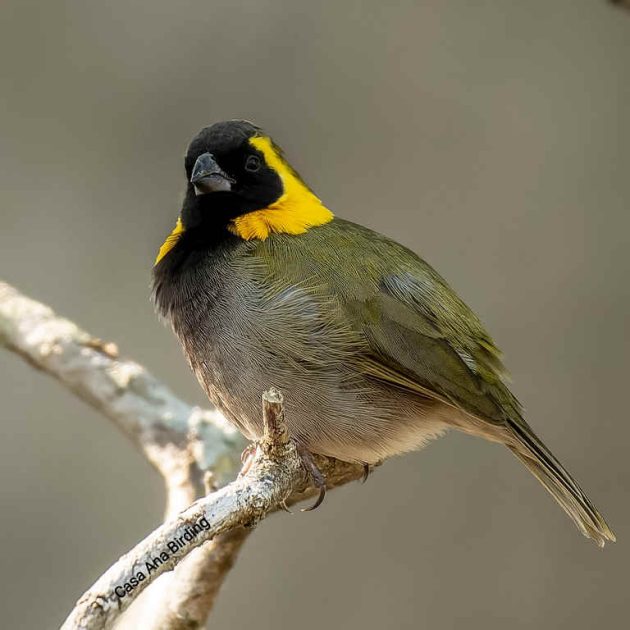
Cuban Grassquit
What are the aspects of being a bird guide that you like best? Which aspects do you dislike most?
Being a bird and photography guide is a big responsibility — you’re in charge of one or several people at once, and you’re ultimately responsible for leading the group and making sure everything comes together so the tour is 100% successful. I truly enjoy every moment of it, especially each bird that is found and well photographed — even though I recognize it takes time and sacrifice. My greatest satisfaction is seeing clients happy when they capture their favorite bird on camera, or seeing a birdwatcher leave fully satisfied at the end of a tour.
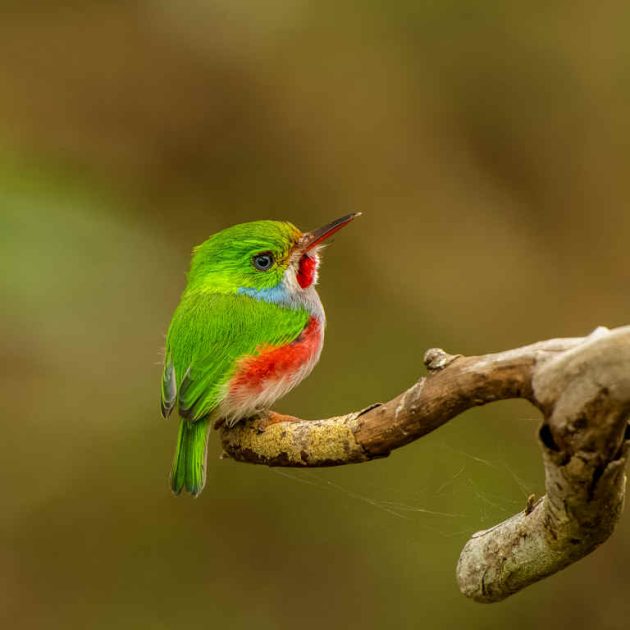
Cuban Tody
What are the top 5-10 birds in your region that are the most interesting for visiting birders?
- Bee Hummingbird, Cuban Trogon, and Cuban Tody — the three jewels of Cuban ornithology.
- Zapata Wren — found exclusively in Ciénaga de Zapata, nowhere else in the world; it lives in the marsh grasslands about 20 km from Casa Ana Birding and can only be observed and photographed at dawn, before the wind picks up with the sunrise
- Zapata Sparrow — also endemic to Ciénaga de Zapata (with a subspecies on Cuba’s north coast)
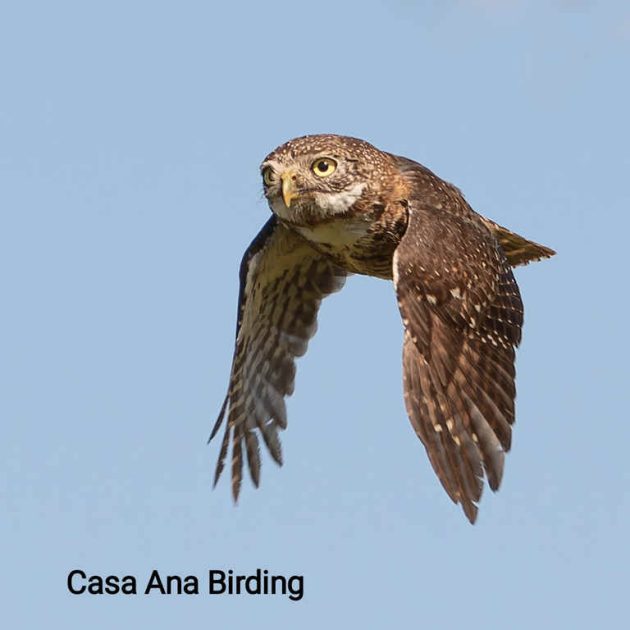
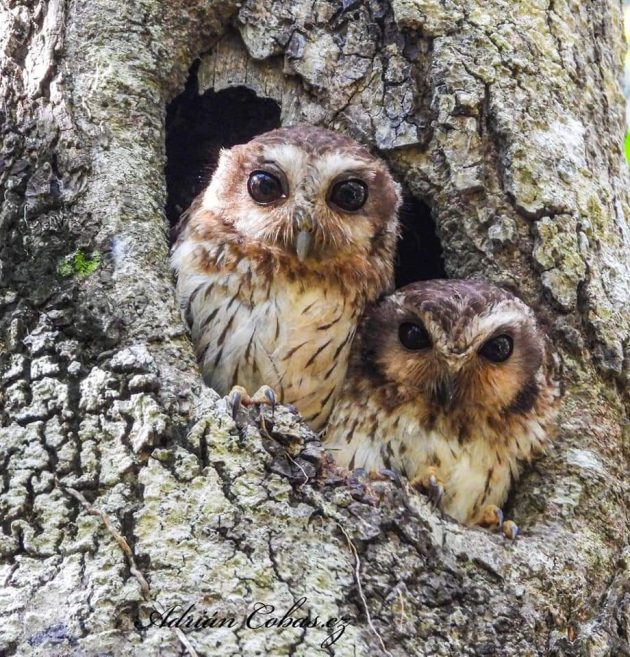
- Cuban Pygmy Owl and Bare-legged Owl — the two endemic owls
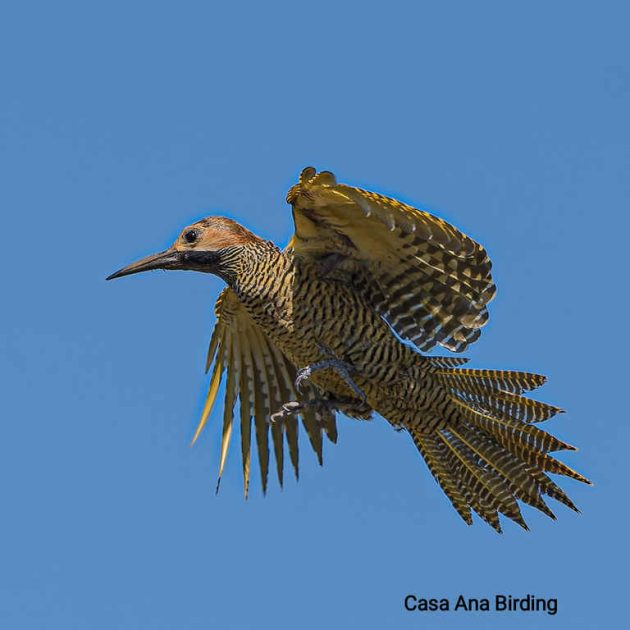
- Cuban Green Woodpecker and Fernandina’s Flicker — the two endemic woodpeckers; the Flicker is endangered due to habitat loss
- Yellow-headed Warbler, Cuban Bullfinch, Cuban Vireo, and Cuban Oriole
- Blue-headed Quail-Dove and Gray-fronted Quail-Dove — the two endemic doves.
To me, every endemic species matters, but these are the ones most sought after by visiting birders.
Cuban Pygmy Owl
Can you outline at least one typical birdwatching trip in your area? Please briefly describe the locations, the key birds and the approximate duration of such a trip.
It all depends on each client’s preferences and available time.
- One-day visit: Clients arrive early in the morning, observe the Bee Hummingbird right in the garden, and we do a short walk around the property in search of the three ornithological jewels and the two endemic owls.
- 4-5 day trip: For clients who want to see the roughly 20 endemic species found within the national park itself, staying 4 nights / 5 days, visiting different protected areas of Ciénaga de Zapata (which are spread out and require transportation between sites).
- 10-15 day trip: For clients who want to see all of Cuba’s endemic birds, visiting several provinces from the western edge of Pinar del Río to Trinidad, or extending to Cayo Coco in Ciego de Ávila. Everything is adapted to each client’s priorities, time, and budget.
Ferdinand’s Flicker
What other suggestions can you give to birders interested in your area?
Endemic birds can be observed and photographed year-round in Cuba. That said, the best season is November to May, when there is no rain and no mosquitoes. Many clients like to combine endemics with migratory species — migration season runs from October to April.
A few extra details for photographers:
- The male Bee Hummingbird loses its colorful gorget around June (courtship/breeding season) and begins regaining it in December
- January to March is the best window for courtship photos
- March to May is the breeding season for most endemics, which is especially good timing for the Zapata Wren, Cuban Tody, Cuban Trogon, and Fernandina’s Flicker.
Bare-legged Owl
If any readers of 10,000 Birds are interested in birding with you, how can they best contact you?
Whatever is most convenient for them:
- WhatsApp: +53 53536855
- Instagram: instagram.com/casaanabirdingendemic
- Facebook: facebook.com/casa.ana.playa.larga.cuba
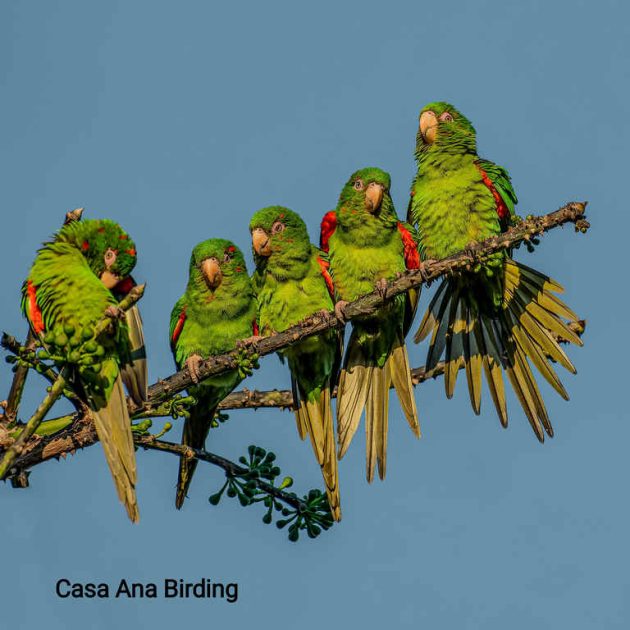
Cuban Parakeet
Is there anything else you would like to share with the readers of 10,000 Birds?
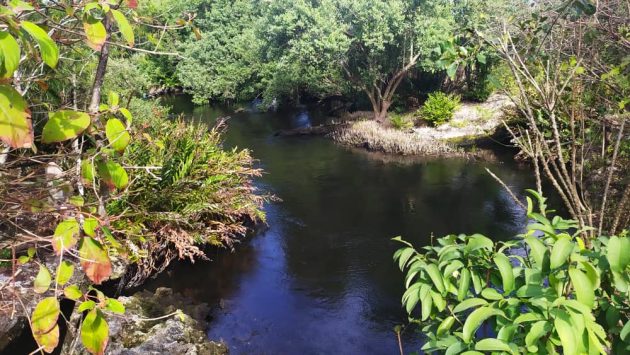
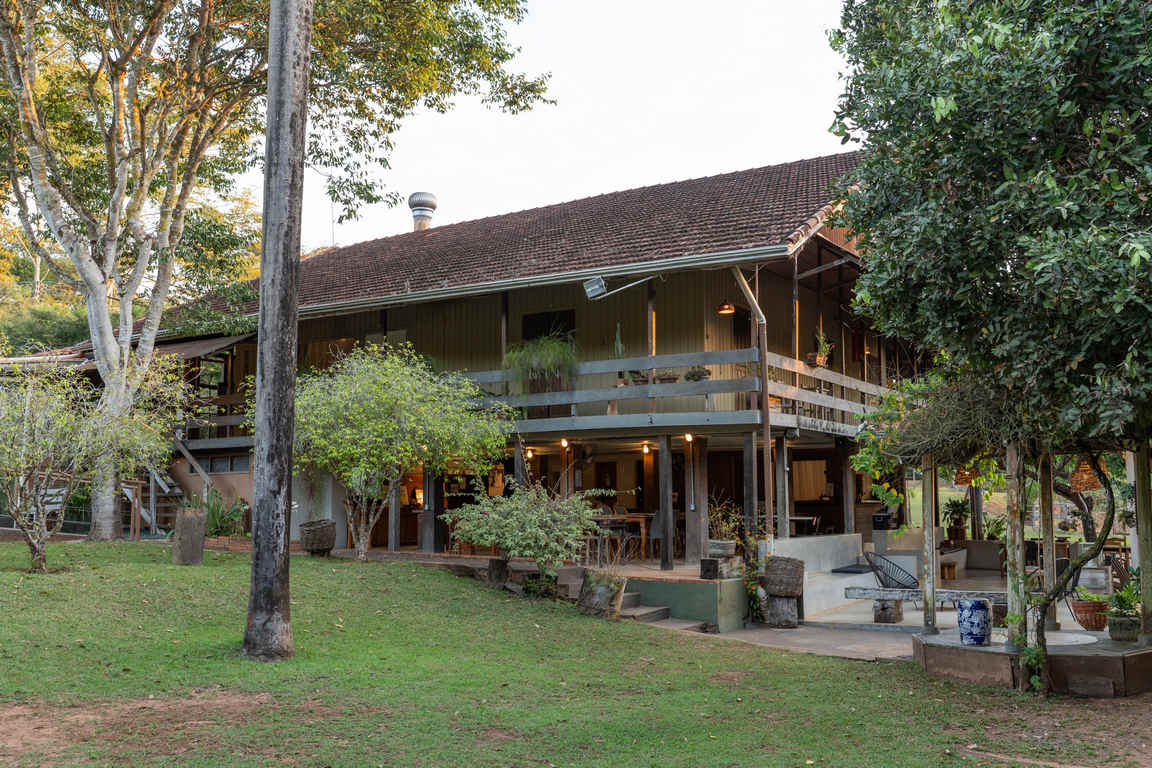
I built Casa Ana Birding in 2001 in the heart of Ciénaga de Zapata National Park. Back then, the garden was an old dumping ground full of rubble and plastic bottles. I chose this spot because of a small natural freshwater stream flowing from the Zapata wetland toward the sea — it runs through the back of the garden with a phenomenal view, continuing underground beneath the house, out to the sea. I’m very proud of having turned that dumping ground into a small oasis for birds, especially for the Bee Hummingbird, creating a welcoming environment where they can be observed and photographed year-round — something that is nearly impossible to achieve well out in the forest. As a child, I hunted birds with a slingshot out of pure entertainment and ignorance. Today, I give back to nature by creating welcoming spaces where I provide food, nesting sites, and protection for the birds of the island. We also organize volunteer work cleaning up trash in the forested areas around the community, finishing at Casa Ana Birding’s garden, watching birds and learning to identify the different species — all to help bring the next generation of children and teenagers into caring for and conserving birds, with me as an example.
















 English (US) ·
  French (CA) ·