

 3 weeks ago
17
3 weeks ago
17
The Philippine hotel industry is entering an increasingly competitive and technology-driven era, and Megaworld Global Hotels & Resorts (MGHR) is preparing for the next phase of growth.

Patria Puyat, Vice President for Business Development, joined the panel, The Invisible Hotel: AI, Automation & Seamless Guest Journeys.
Rather than focusing solely on opening more properties and adding hotel rooms, the hospitality group is looking at what it takes to build a stronger, more adaptable portfolio. Its vision includes developing better partnerships, creating smarter operating systems, embracing technology, and paying closer attention to what travelers actually want.
These priorities took center stage during the 9th Hospitality Philippines Conference, held September 9–10, 2026, in Manila, where three MGHR executives shared their insights into the future of the hospitality business.
Their discussions offered a glimpse into how the group plans to scale its operations while keeping the guest experience at the heart of its strategy.
Growing Beyond Homegrown Hotel Brands
As MGHR expands its hospitality portfolio, the group is preparing to work with an increasingly diverse range of hotel brands, owners, partners, and markets.
Avinash Menon, Vice President for Operations, moderated the session “Future-Proofing Assets: Structuring Resilient Hotel Management Agreements,” which explored how hotel management agreements can help create a healthy balance between hotel owners and operators.
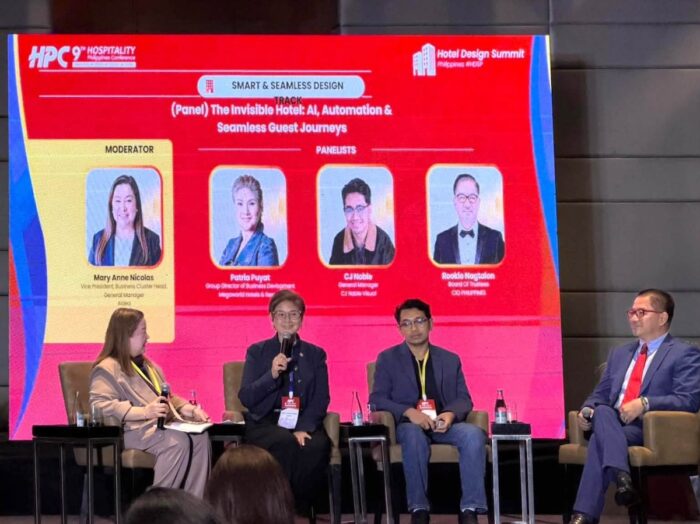 Avinash Menon, Vice President for Operations, moderated the session Future-Proofing Assets: Structuring Resilient Hotel Management Agreements
For Menon, a resilient hotel management agreement is not about anticipating every possible challenge. Instead, it is about establishing a framework that allows both parties to respond effectively when market conditions change.
“Resilience in a hotel management agreement (HMA) is not about predicting every disruption—it is about creating a framework that can respond when change comes,” Menon said.
He emphasized the importance of clear performance benchmarks, transparent reporting, disciplined cost and capital controls, and enough flexibility for owners and operators to adapt.
“A strong HMA protects long-term asset value through clear performance benchmarks, transparent reporting, disciplined cost and capital controls, and sufficient flexibility for owners and operators to adapt as markets, guest expectations, and operating realities evolve,” he added.
This approach becomes particularly important as MGHR transitions from a portfolio largely centered on its homegrown brands toward a broader hospitality platform that includes global brands and external partnerships.
For travelers, this could eventually mean greater hotel choices across destinations, while for the industry, it signals a more sophisticated approach to managing a growing portfolio.
Building the Systems Behind the Guest Experience
Opening new hotels is only one part of hospitality expansion. Behind every successful property are systems, technologies, and people that keep operations running smoothly.
Patria Puyat, Vice President for Business Development, explored this side of the industry during the panel “The Invisible Hotel: AI, Automation & Seamless Guest Journeys.”
The discussion focused on how technology and automation can enhance the hotel experience without necessarily becoming its centerpiece.
“We have always been moving towards hospitality that is more intuitive, personalized and seamless, with the help of technology quietly removing friction and bottlenecks from the guest journey,” Puyat said.
For modern travelers, convenience increasingly begins before they even arrive at a hotel. From booking and digital communication to personalized services and faster processes, technology can remove many of the small frustrations associated with travel.
But Puyat stressed that innovation should never replace the human side of hospitality.
“What should never change is the human connection at the heart of hospitality or the feeling of being welcomed, understood and genuinely cared for.”
That balance could become increasingly important as MGHR grows. The challenge is not simply to introduce more technology, but to use it in ways that allow hotel employees to provide better and more meaningful service.
In this sense, the “invisible hotel” is about everything guests may not consciously notice: efficient systems, smooth processes, intelligent decision-making, and behind-the-scenes operations that make a stay feel effortless.
Why Guest Feedback Matters More Than Ever
While technology and management structures can help hotels operate more efficiently, the ultimate measure of success remains the guest experience.
Samantha Manuel, Group Director of Digital Marketing and Reputation Management, addressed this during the panel “Handling Guest Feedback and Online Reviews Effectively.”
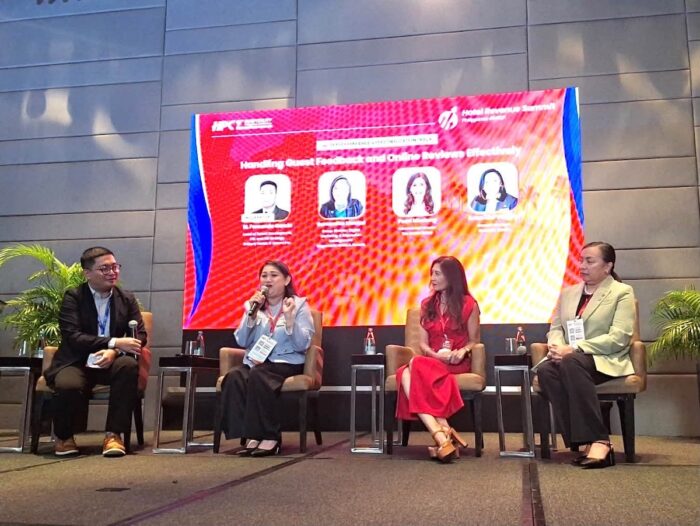 Samantha Manuel, Group Director of Digital Marketing and Reputation Management, joined the panel Handling Guest Feedback and Online Reviews Effectively.
Online reviews have become a powerful part of the travel decision-making process. For many travelers, a hotel’s reputation can influence where they stay just as much as its location, price, amenities, or brand.
Manuel emphasized that every interaction can contribute to a hotel’s public image.
“Every guest experience contributes to a hotel’s public reputation, making it essential to listen, respond, and act on guest feedback in ways that build trust,” Manuel said.
However, guest feedback is more than a score or collection of online comments. It can provide hotels with valuable information about changing traveler expectations.
According to Manuel, feedback should be viewed as an opportunity for continuous improvement.
“We see feedback not simply as a measure of performance, but as an opportunity to continuously learn, improve, and strengthen the guest relationship.”
This perspective is especially relevant as MGHR expands into more destinations and serves a wider range of travelers.
Understanding what guests appreciate, what frustrates them, and what they increasingly expect can help the group refine its brands and strengthen guest loyalty.
The Road to 12,000 Hotel Rooms by 2032
MGHR is working toward a portfolio of close to 12,000 hotel rooms by 2032, with growth expected across both homegrown and global hospitality brands.
Reaching that goal will require more than simply developing new properties.
It will require management agreements that create strong partnerships between owners and operators. It will require technology and operational systems capable of supporting a larger portfolio. And perhaps most importantly, it will require a deep understanding of the people who ultimately stay in those hotels.
The insights shared by Menon, Puyat, and Manuel at the Hospitality Philippines Conference reflect these three interconnected priorities: partnerships, innovation, and guest experience.
Building More—and Building Better
For MGHR, the journey toward 2032 is shaping up to be about much more than increasing its hotel room count.
The next chapter is about creating a hospitality platform that can support multiple brands, markets, owners, and guest segments while maintaining consistent standards and a distinctly human approach to service.
As travelers become more digitally connected and increasingly discerning, hotels will need to deliver more than comfortable rooms. They will need to offer seamless experiences, responsive service, trusted brands, and a genuine understanding of what guests value.
That is ultimately the bigger story behind MGHR’s expansion: not simply building more hotels, but building the partnerships, systems, people, and experiences that can make that growth sustainable and meaningful.
Follow and subscribe to OutofTownBlog.com on Facebook, Twitter, Instagram, Pinterest, and YouTube for more Travel-related updates.
Read:






















 English (US) ·
  French (CA) ·