

 8 hours ago
8
8 hours ago
8
PROTECT YOUR DNA WITH QUANTUM TECHNOLOGY
Orgo-Life the new way to the future Advertising by AdpathwayThe new Living Planet Report is out. Published every two years, it assesses the health of the natural world and, historically, it’s made for gloomy reading.
Take 2024’s report, which showed global wildlife populations had plummeted by 73% in 50 years and that ecosystems were being pushed toward collapse.
After reading it, I retired to a dark room and drank gin, but every time I popped my head out, there was more bad news: heatwaves, floods, wildfires and mass coral bleaching.
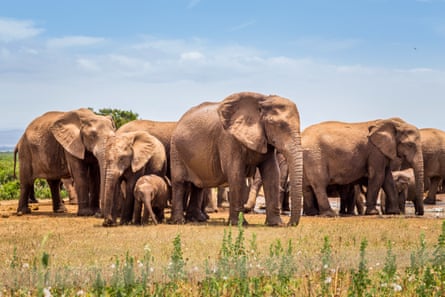
So, when this year’s edition dropped, I braced myself. But there was a plot twist. Biodiversity is still being pummelled, but not everywhere. According to the new report, conservationists have prevented the extinction of 32 birds and 16 mammals since 1993, and the numbers of wild tigers, elephants and sea otters are stable or growing. The energy sector has historically been extremely damaging to the planet, accounting for about 75% of global greenhouse gas emissions. But the report notes we have passed a positive tipping point in the energy system, with the transition to renewables snowballing and coal use declining in many wealthy countries.
I can therefore see why the report is titled The Science of Hope.
But pegging it on hope is a bold move. People who write about the natural world, myself included, face a difficult choice. Focus on the bad news, and risk shouting into a void where people simply don’t want to listen. Focus on the good news and risk peddling “hopium” – stories that dull the pain briefly but do little to spur action.
The report, however, isn’t talking about your average kind of hope. It’s talking about a geeky kind of hope rooted in psychological research.
The American psychologist Charles “Rick” Snyder spent decades studying hope and came up with a surprisingly practical definition. Hope, he argued, starts with a goal but also requires pathways, or ideas about how to get there, and agency: the belief that you can make a difference. To this, the Living Planet Report adds another ingredient: resilience – the capacity to keep going when progress stalls. Or, as British anarchist punk band Chumbawamba famously put it: you get knocked down, but you get up again.
We can illustrate this point by looking at New Zealand’s kākāpō, the world’s fattest, greenest, least-able-to-fly parrot. When non-native predators drove the kākāpō to the brink of extinction, conservationists didn’t waste time wishing its numbers back up. In the mid 1990s, they moved the remaining birds to predator-free islands, and when recovery was slow, they changed tack.
after newsletter promotion
They experimented with hand-rearing, foster mothers and artificial insemination. They fitted the birds with smart transmitters and monitored them almost obsessively. When new technology came along, they embraced it: the genomes of every living bird have now been sequenced to inform decisions about who should breed with whom.
This is what real hope looks like. It’s not the same as optimism – the expectation that things will work out. Nor is it wishful thinking. And it’s certainly not “hopium”, which can make the problem seem smaller than it is. Real hope has its sleeves rolled up and is prepared to get messy. It leaves room for uncertainty and failure but refuses to believe that there’s nothing left to do. That’s why the opposite of hope isn’t despair. It’s inaction.
Scientists who have studied hope have found it matters what we’re hopeful about. A 2023 meta-analysis found that people who felt hopeful about their ability to make a difference were more likely to engage with the climate crisis – from seeking information and supporting climate policies to taking everyday action to reduce their environmental impact. Those whose hope rested on the belief that the climate crisis wasn’t really a problem were less likely to engage.
In other words, useful hope needs to be grounded in reality. And that requires knowing what we’re up against. This was why the Starmer government’s decision not to publish the full national security assessment on global biodiversity loss is so frustrating. The public has since seen an abridged 14-page version. But the detail – and any devil within it – likely remains hidden.
Produced by the Joint Intelligence Committee, it asks a stark question: what would ecosystem collapse mean for the UK?
The answer is bleak: threats to national security and prosperity, havoc wroughtwith food and water supplies, a surge in irregular migration and even more geopolitical instability around the world.
To find a way through the climate crisis, we need both a clear view of the problem and the determination to tackle it. How can we find the right pathway if we don’t have the full map?
In 1995, there were just 51 kākāpō. Today, there are 324, a remarkable turnaround for such a slow-breeding bird. Conservation plans are still evolving, and the species isn’t out of the woods yet. But at least it has a fighting chance.
That’s the kind of hope we need: pragmatic, resilient and open to revision. We need our governments to be honest about the scale of the challenge we face. Because when they withhold information, they don’t just rob us of knowledge. They also rob us of hope.
-
Helen Pilcher is a science writer and the author of Life Changing: How Humans Are Altering Life on Earth and This Book May Cause Side Effects

















 English (US) ·
  French (CA) ·