

PROTECT YOUR DNA WITH QUANTUM TECHNOLOGY
Orgo-Life the new way to the future Advertising by AdpathwayThe arrival of scorching temperatures in the DMV provides an excellent reason to head for the hills for a cool hike. Forays to the Appalachian Trail and Catoctin Mountain Park in Maryland provide the perfect locations to escape summer’s heat and provide an opportunity to visit some of Mother Nature’s most interesting recyclers of organic compounds. Millipedes are detritivores, creatures that consume organic matter including mosses, algae, and decaying vegetation carpeting the forest floor. Millipedes belong to the subphylum of the arthropods called Myriapoda, those with “many feet”.
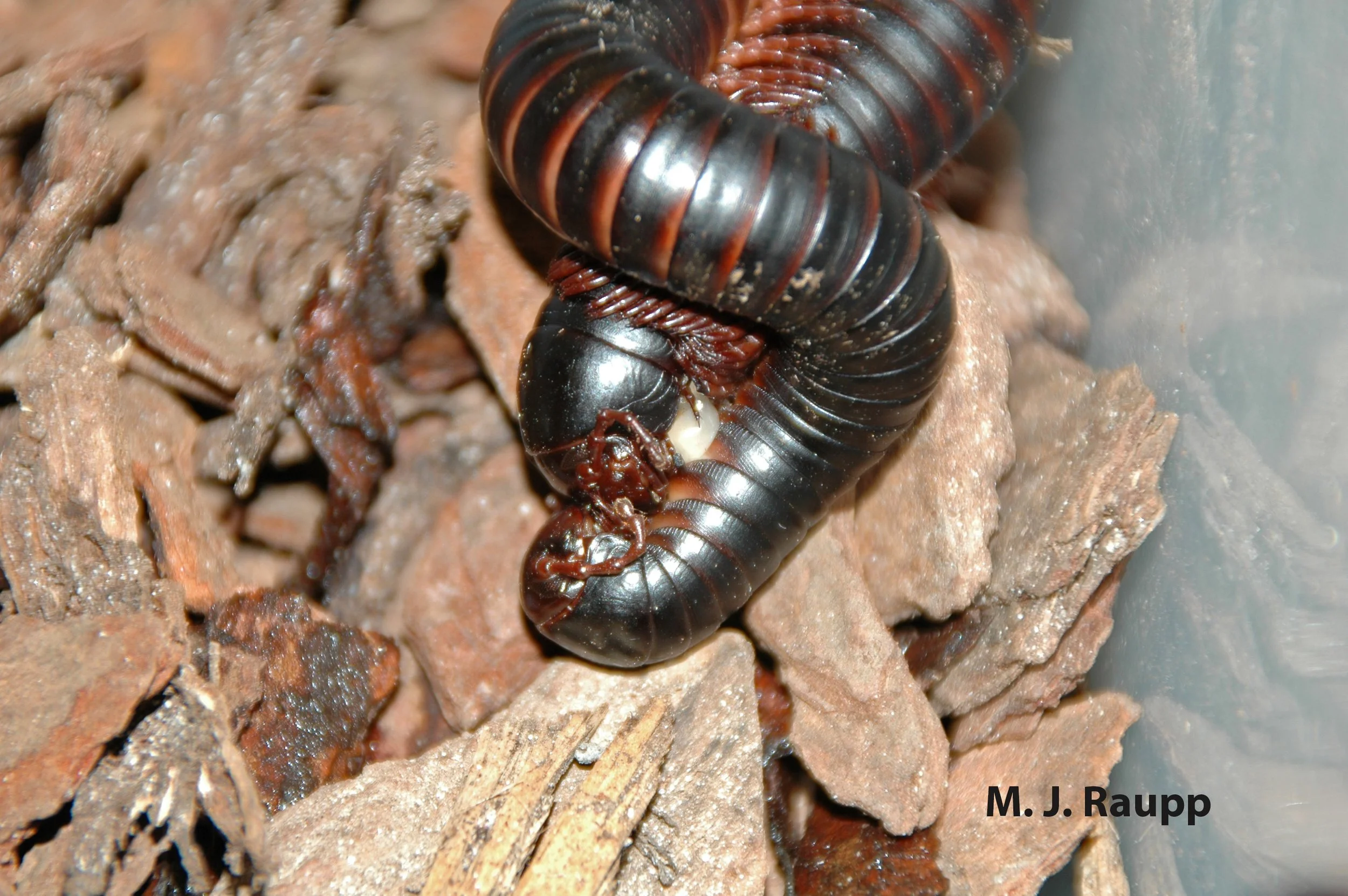
Do millipedes really snuggle?
Do they really have a thousand feet? Nah, they don’t really have feet, but they do have legs and the record number of legs for a millipede is somewhere around 750. However, most millipedes have fewer than 400 legs. Young millipedes have only a few body segments, each of which bears a single pair of legs. As millipedes molt and grow, body segments with two pairs of legs each are added. Millipedes live two to seven years and can produce hundreds of offspring during their lifetime. Millipedes do not bite or sting, but several species secrete noxious chemicals from glands lining the margins of their body.
On a stony forest trail, we happened upon two remarkable members of the millipede clan. The first was Narceus americanus-annularis, one of the true giants of the millipede world in North America. Its otherwise dull brown body was accented with beet-red legs and red bands encircling the body at each segment. These colors might serve as a warning of noxious defenses ready to be unleashed by the millipede. Unable to resist handling Narceus earned me an acrid reward of benzoquinones, foul smelling droplets of the millipede’s chemical defense.
The many legs of the millipede work in a wavelike fashion to propel these timid grazers as they search for organic matter to eat. Watch as it munches moss on the surface of a boulder. Nearby, another millipede dashes across a forest trail. Bright contrasting colors may warn predators not to mess with these chemically defended detritivores. Defensive compounds released by this millipede smell like almond extract. You might not want to handle this one.
A bit further down a trail, we encountered one of the flat-backed millipedes, perhaps Apheloria virginiensis. Blending in with the forest floor was clearly not this creature’s game as it sported lemon-yellow legs, alternating bands of yellow and black along the back, and pink-hewed margins. When plucked from ground, the smell of almonds filled the air and brought me back to my days of organic chemistry when benzaldehyde was the unknown compound on the lab practical. Benzaldehyde is the compound found in bitter almonds and is used as a flavoring in almond extract. Ah, but benzaldehyde is not the only compound found in Apheloria’s defensive secretion. The other more lethal moiety released by the millipede is hydrogen cyanide. Glad no one sniffed this millipede too deeply.
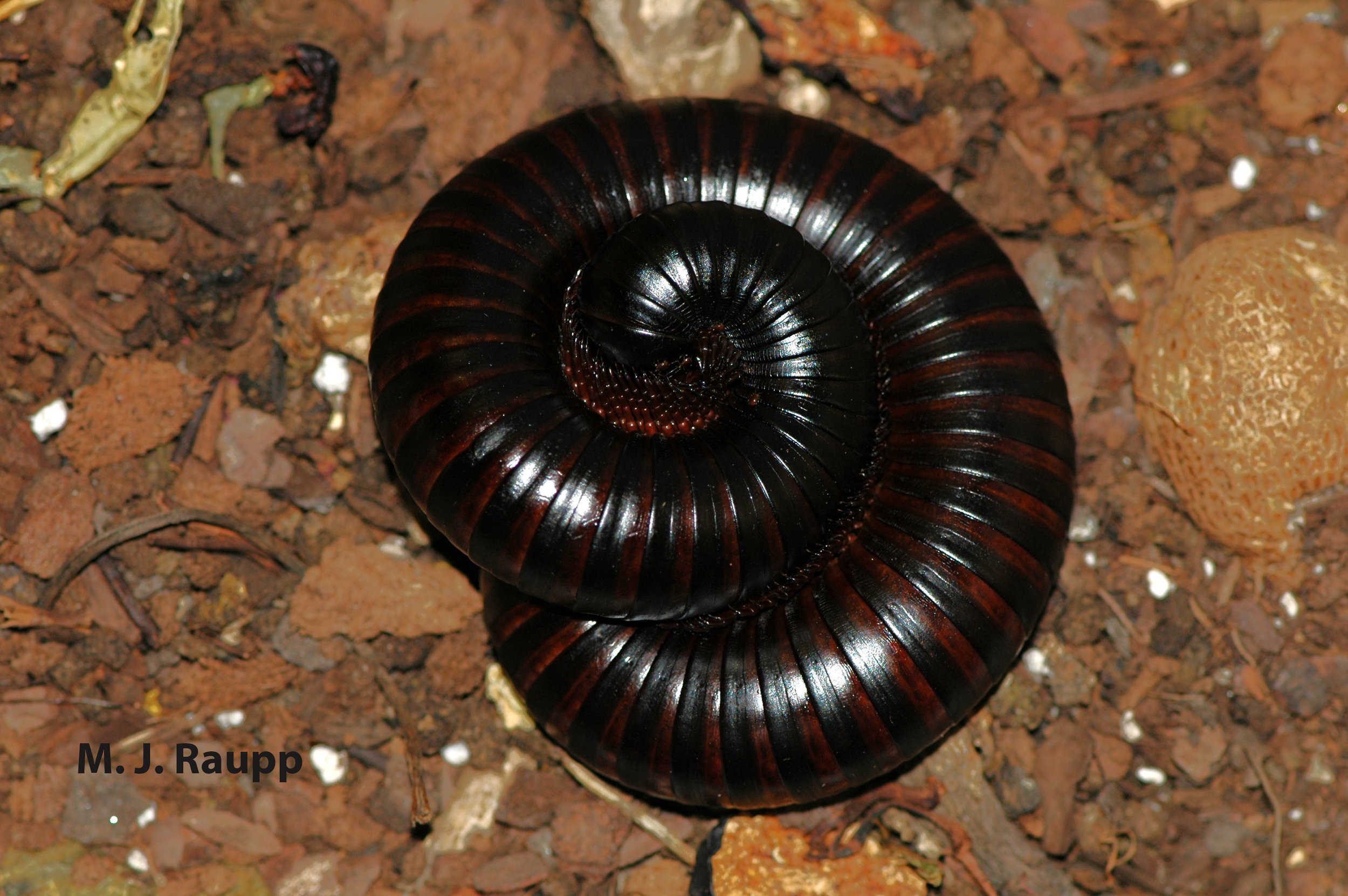
Curling into a defensive ball protects the tender underbelly of the millipede.
Millipedes, important recyclers of organic matter, are well-protected by potent toxins and irritants that could make a bird, lizard, or toad think twice about messing around with these denizens of the forest floor. As temperatures soar into the 90s, consider taking a hike on one of the beautiful shady forests in the DMV and be on the lookout for busy millipedes, recyclers of organic materials.
Acknowledgements
We thank the intrepid hikers of Maryland’s highlands, Erin, Ellie, Abby, Maggie, Jo, Paula, Laurie, and Kevin for providing inspiration for this episode. Thomas Eisner’s books “The Love of Insects” and “Secret Weapons” were used as resources for this story.















 English (US) ·
  French (CA) ·