

 8 hours ago
9
PROTECT YOUR DNA WITH QUANTUM TECHNOLOGY
Orgo-Life the new way to the future Advertising by AdpathwayCarbon dioxide injected deep underground does not simply sit in the pores of a storage reservoir. It reacts with the rock and the brines around it, and those reactions can change how the rock deforms and how easily fluids move through it. A new laboratory study of the Entrada Sandstone, a formation considered for carbon storage, reports that exposure to CO2-enriched fluid changed both the permeability of the rock and, most strikingly, the way its permeability responded to applied stress.
The research, published in the journal Geomechanics and Geophysics for Geo-Energy and Geo-Resources, was carried out by Jason D. Simmons of New Mexico Tech and colleagues, including Alex J. Rinehart, Andrew J. Luhmann, Dustin M. Crandall, Megan M. Rich, Shelby L. Isom, Dana Ulmer-Scholle, Jonathon R. Adams, Marissa Fichera and William Ampomah. The team set out to characterize the geochemical, mechanical and hydraulic sensitivity of the Entrada Sandstone to CO2 storage conditions.
The experiments used multiphysics high-pressure, high-temperature flow-through tests on two lithofacies of the sandstone. Each facies was reacted with two different synthetic reservoir fluids, one enriched in CO2 and one left unenriched, so the effects of CO2 could be isolated. While fluid flowed through the samples, the researchers simultaneously monitored permeability and deformation, and afterward they examined the rock with forensic petrographic characterization, X-ray computed tomography and petrophysical analysis.
The authors report that the hydrogeochemical evolution during their experiments produced changes in permeability at in-situ conditions as well as significant changes in the mean stress dependence of permeability before and after the experiments.
The most significant finding, according to the abstract, was that all samples appeared to lose a strong mean stress dependence of permeability after the flow-through experiments. In other words, the reacted rock no longer showed the pronounced sensitivity of permeability to stress that it had before reaction. This same result is listed among the study’s highlights, alongside the observation that measurable strain accumulated in the samples and their elastic properties changed over the course of the experiments.
The researchers attribute these changes to a combination of factors tied to each sample’s history. They relate the strain evolution, the changes in rock mechanical properties and the permeability evolution to the samples’ diagenetic history, meaning the alterations the rock underwent after it was originally deposited, and to the mechanical deformation and swelling behavior of the clay cement under H2O and CO2-H2O conditions. The fluid flow rate during the experiments also played a role in how the samples evolved.
Clays can swell when they interact with water and CO2-bearing fluids, and the study’s highlights state that diagenesis, clay behavior and flow rate together govern the evolution of sample strain, mechanical properties and permeability. The authors also note that small-scale heterogeneities influenced the hydraulic and mechanical property changes among nearby samples of each interval, meaning that even samples taken close together in the same rock layer did not behave identically.
For carbon capture, utilization and storage, the practical stakes are site characterization. The abstract notes that CCUS is one of the main technologies being deployed to reduce greenhouse gas emissions, and that although the number of operational facilities is quickly growing, guidance from the International Energy Agency suggests global efforts must be drastically increased for CCUS to become a critical component in reducing total emissions. A primary component of successfully increasing CCUS, the authors write, is site characterization, including an assessment of hydro-chemomechanical weakening to verify that a reservoir-caprock system is sufficient for long-term storage and to understand site-specific risks.
The study is a laboratory investigation of core samples under controlled high-pressure, high-temperature conditions, so its findings describe how the tested Entrada Sandstone samples responded in the experimental system rather than the behavior of a full storage site. The authors note that the published version is being shared early as peer-reviewed, accepted research, citable with a permanent DOI, and subject to further edits before the final Version of Record. Even so, the work adds a concrete data point for storage assessments: in these experiments, reaction with CO2-enriched fluid measurably changed permeability, strain and elastic properties, and removed the strong stress dependence of permeability that the samples originally displayed.
By tying those hydraulic and mechanical changes to diagenesis, clay cement behavior and flow rate, the study offers storage-site assessors a set of specific processes to watch for when evaluating whether a candidate reservoir and its caprock can hold injected CO2 over the long term.
Subject of Research: Laboratory study of how CO2-enriched fluid alters permeability, stress dependence and mechanical properties of Entrada Sandstone for carbon storage.
Article Title: Hydrogeochemical control on mean stress dependent permeability and mechanical response in eolian sandstone during reaction with CO2-enriched fluid
Article References: Simmons, J. D., Rinehart, A. J., Luhmann, A. J., Crandall, D. M., Rich, M. M., Isom, S. L., Ulmer-Scholle, D., Adams, J. R., Fichera, M., & Ampomah, W. (2026). Hydrogeochemical control on mean stress dependent permeability and mechanical response in eolian sandstone during reaction with CO2-enriched fluid. Geomechanics and Geophysics for Geo-Energy and Geo-Resources. https://doi.org/10.1007/s40948-026-01218-3
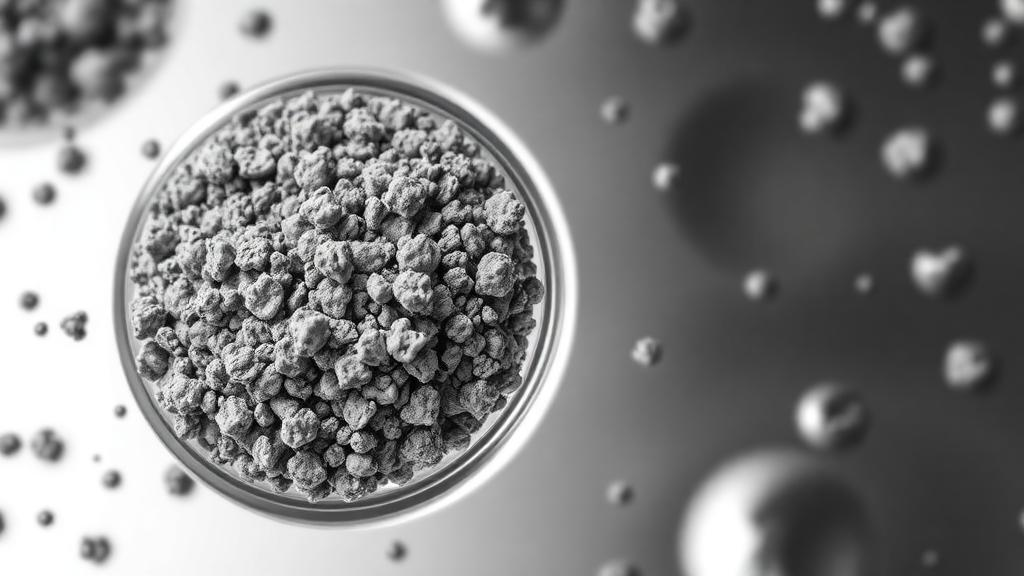
Image Credits: AI Generated
DOI: 10.1007/s40948-026-01218-3
Keywords: CO2 storage, Entrada Sandstone, permeability, mean stress dependence, hydrogeochemistry, clay cement swelling, CCUS, site characterization, HPHT flow-through experiments, rock mechanics, strain, elastic properties




















 English (US) ·
 French (CA) ·