

 2 hours ago
15
PROTECT YOUR DNA WITH QUANTUM TECHNOLOGY
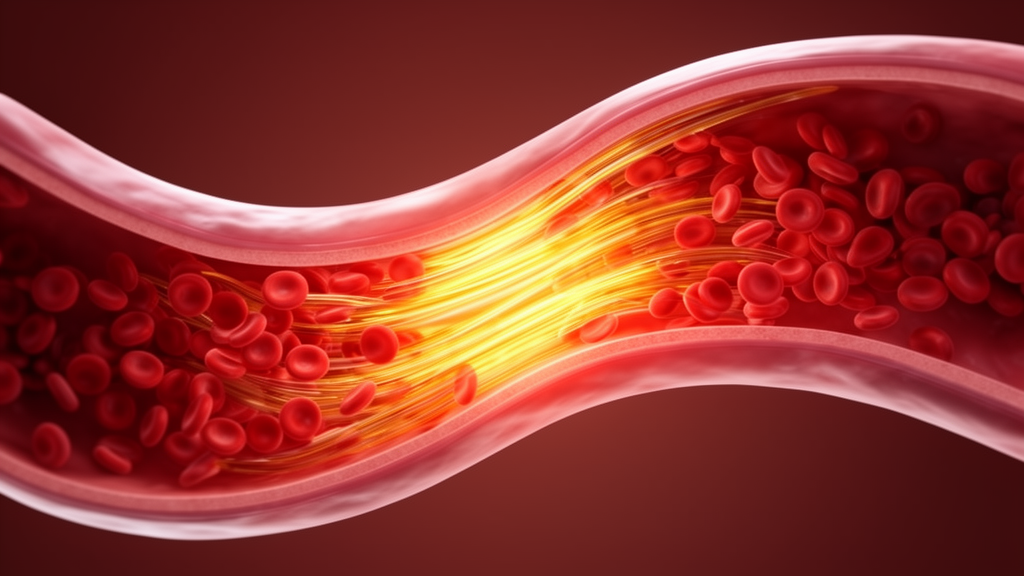
Orgo-Life the new way to the future Advertising by AdpathwayIntegrating non-traditional lipid indices with frailty measurements into composite scores was associated with an elevated hazard of incident cardiovascular disease and provided greater risk discrimination than lipid metrics alone among individuals at cardiovascular-kidney-metabolic syndrome stages 0 to 3, according to findings published in Cardiovascular Diabetology.
The prospective investigation evaluated 6,143 participants from the China Health and Retirement Longitudinal Study and 235,263 participants from the UK Biobank. All participants were classified at baseline as having cardiovascular-kidney-metabolic syndrome stages 0 through 3 and were confirmed to be free of clinical cardiovascular disease at cohort entry.
The study authors noted that non-traditional lipid indices have increasingly been examined as predictors of cardiovascular disease risk, while frailty reflects cumulative physiological decline. Because the potential prognostic benefit of combining these two complementary physiological dimensions had remained unexplored, the researchers constructed six lipid-frailty composite indices by pairing six non-traditional lipid markers with the frailty index.
The primary outcome across both cohorts was incident cardiovascular disease among participants without clinical cardiovascular disease at baseline. The researchers analyzed associations using Cox proportional hazards regression models, Kaplan-Meier curves, and restricted cubic splines, while mediation analyses assessed whether high-sensitivity C-reactive protein mediated the observed relationships. The predictive utility of the composite indices was further tested across five machine-learning models, accompanied by subgroup and sensitivity evaluations.
During a median follow-up of 9.0 years in the China Health and Retirement Longitudinal Study cohort, 1,142 participants, or 18.6 percent, developed incident cardiovascular disease. Across a median follow-up duration of 17.7 years in the UK Biobank cohort, 28,450 participants, representing 12.1 percent of the sample, developed incident cardiovascular disease events.
In fully adjusted multivariable models, each one-standard-deviation increase in the Castelli Risk Index I-frailty index composite was associated with a higher hazard of incident cardiovascular disease in both the Chinese cohort, with a hazard ratio of 1.18 and a 95 percent confidence interval of 1.12 to 1.23, and the UK Biobank cohort, with a hazard ratio of 1.30 and a 95 percent confidence interval of 1.29 to 1.32. Categorical tertile evaluations in the Chinese cohort revealed that, relative to participants in the lowest tertile, individuals in the middle and highest tertiles exhibited hazard ratios of 1.60 and 1.89, respectively, with similar graded associations documented in the UK Biobank.
Models incorporating the Castelli Risk Index I-frailty index composite achieved the highest predictive performance, yielding area under the receiver operating characteristic curve values of 0.634 in the Chinese cohort and 0.717 in the UK Biobank, outperforming models based on the corresponding lipid indices alone. Additionally, several evaluated lipid-frailty composite indices exhibited evidence of non-linear associations with incident cardiovascular disease outcomes.
Subject of Research: Cardiovascular disease risk prediction using lipid-frailty composite indices in CKM syndrome stages 0 to 3
Article Title: Association of lipid-frailty composite indices with cardiovascular disease risk in individuals with cardiovascular-kidney-metabolic syndrome stages 0–3: evidence from the UK Biobank and CHARLS
Article References: Yang, B. B., Zhu, Y., Xu, Y., Huang, Y., Feng, G., Wong, D. K. K., Xie, W., Shi, Q., Ning, B., Jia, M., Tu, K., Wang, H., & Zhou, J. (2026). Association of lipid-frailty composite indices with cardiovascular disease risk in individuals with cardiovascular-kidney-metabolic syndrome stages 0–3: evidence from the UK Biobank and CHARLS. Cardiovascular Diabetology. https://doi.org/10.1186/s12933-026-03362-2
Image Credits: AI Generated
DOI: 10.1186/s12933-026-03362-2
Keywords: cardiovascular disease, lipid-frailty composite indices, frailty index, cardiovascular-kidney-metabolic syndrome, UK Biobank, China Health and Retirement Longitudinal Study, CHARLS, Castelli Risk Index I, CRI-I-FI, incident cardiovascular disease, risk prediction, Cox proportional hazards models, machine learning, high-sensitivity C-reactive protein, non-traditional lipid indices, restricted cubic splines, area under the curve



















 English (US) ·
 French (CA) ·