

 5 hours ago
3
5 hours ago
3
PROTECT YOUR DNA WITH QUANTUM TECHNOLOGY
Orgo-Life the new way to the future Advertising by AdpathwayTwo light sail experiments designed and built by Cornell University students have completed their missions, and the team reports that gram-scale ChipSat spacecraft carried on the sails sent complete data packets from orbit to the ground. In its mission results announcement, Cornell described the ChipSats as the first spacecraft of their size to do so.
The experiments, Alpha CubeSat and Sailing to the Stars, are small. Each sail is only slightly larger than a pizza box. But they test pieces of a much larger idea: that thin sails pushed by light, possibly by powerful lasers someday, could carry tiny probes far beyond the solar system.
For now, the significance is less about a near-term trip to another star and more about how space hardware is becoming cheaper, lighter and more accessible. The projects relied on off-the-shelf electronics, 3D-printed parts and a worldwide network of volunteer radio operators to hear from the spacecraft.
Palm-Sized Spacecraft Phone Home From Low Earth Orbit
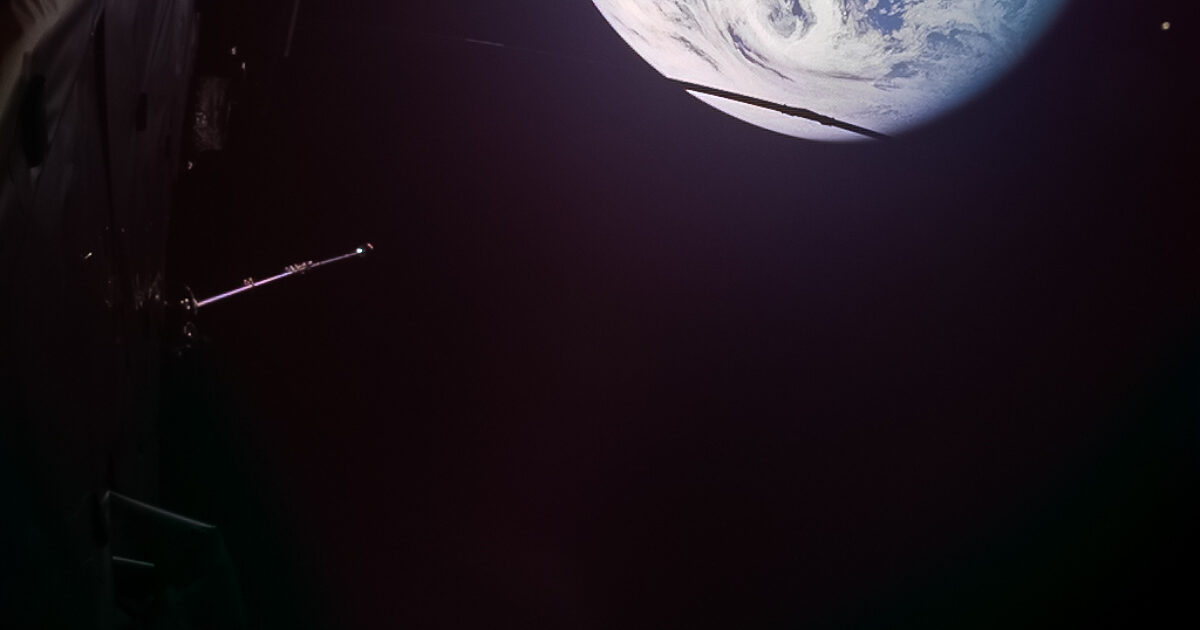
Alpha CubeSat launched to the International Space Station on Northrop Grumman's NG-23 cargo mission on Sept. 14, 2025, and was released from the station on Dec. 2, 2025, as part of a CubeSat deployment known as NRCSD-29, according to the team's Alpha CubeSat conference paper. The paper describes the flight as the first deployment of a free-flying light sail, and the team reports that all primary mission objectives were met.
After the sail deployed in low Earth orbit, amateur radio operators linked through the open-source TinyGS ground station network made contact with the ChipSat aboard. The sail itself did not last long, because atmospheric drag quickly ended its flight, Cornell said. The CubeSat carried on with secondary tests until it deorbited in May 2026.
Those tests included spin stabilization using only magnetic torquers, commercial off-the-shelf avionics, the first flight of a RockBLOCK Iridium modem, a fully 3D-printed chassis and what the team called the first holographic-image message plaques sent to space.
Joshua Umansky-Castro, the mission lead and a recent graduate of Cornell's aerospace engineering doctoral program, called the data transmission "a huge milestone that advances the state-of-the-art for the ChipSat platform."
Inside the Station: Testing How Sails Unfold
Sailing to the Stars, the companion experiment, did its work inside the station. Funded by the ISS National Laboratory in collaboration with Rhodium Scientific, it deployed six light sails in microgravity and recorded video and motion-sensor data so students could study how the sails unfurl. It reached the station on the SpaceX Crew-11 mission in 2025.
The team tested two deployer designs, both entirely 3D-printed from modular parts the students nicknamed CubeSat-LEGO. The deployers were spin-stabilized with reaction wheels taken from laptop hard drives and were commanded with TV remotes. The goal was to learn which release mechanism produced steadier motion. Results appear in a second paper on the station experiment.
Both papers were presented in August at the Small Satellite Conference at the Salt Palace Convention Center in Salt Lake City. Conference papers do not go through the same review process as journal articles, and these results describe engineering performance rather than a scientific discovery.
Verena Padres, a 2026 Cornell graduate who managed Sailing to the Stars, said it had been her goal since starting college "to work on something that would fly in space." She said she was grateful to have led the team from mission concept through launch.
The Distance Between a Pizza-Box Sail and Another Star
These flights demonstrated deployment, communication, and spacecraft control at a very small scale. They did not demonstrate laser propulsion, steering with sunlight, or a measurable orbit change driven by the sail. Cornell lists steering, orbit-raising and laser propulsion as goals for future ChipSat-sail launches.
Interstellar concepts such as Breakthrough Starshot envision laser arrays pushing gram-scale probes to a fraction of the speed of light. As a Universe Today report on the Cornell results notes, major hurdles remain before any such mission is possible, including space-based laser systems and materials able to survive the trip. No interstellar probe mission has been scheduled.
Still, small demonstrations test the building blocks. A probe that weighs grams rather than tons needs electronics that work at that size, sails that unfold reliably and a way to send data home. The Cornell ChipSats showed that the last of those can work, at least from low Earth orbit.
A Decade of Student Work Backed by a NASA Launch Program
Alpha's original concept came from a high school student through the Museum of Science Fiction's International CubeSat Design Competition. Cornell said more than 150 students have contributed to the projects since 2016, and more than half have gone on to intern or work in the aerospace industry. The work runs through the Space Systems Design Studio, led by Professor Mason Peck in the Sibley School of Mechanical and Aerospace Engineering.
Alpha flew through NASA's CubeSat Launch Initiative, which gives universities and other groups rides to space. Programs like this give U.S. students hands-on flight experience, and the hardware they test, from low-cost radios to spacecraft built on a single chip, can inform commercial and government missions.
Several questions remain open. Cornell has not announced a launch date for a follow-on mission, the team has not reported a measured push from sunlight on the sail, and the laser infrastructure that interstellar concepts rely on does not yet exist. Future flights that attempt steering or orbit-raising would provide the first real evidence that sails this small can be pushed and guided by light.
What Readers Want to Know
What did the Cornell light sail experiments accomplish?
Alpha CubeSat deployed a light sail in low Earth orbit, and its tiny ChipSat sent complete data packets to the ground, which Cornell says is a first for a spacecraft that small. Sailing to the Stars tested how six sails unfold inside the space station.
Did the sails use light to change their orbit?
No. The missions tested deployment, communication and control. Cornell lists steering, orbit-raising and laser propulsion as goals for future flights.
What is a ChipSat?
A ChipSat is a gram-scale spacecraft small enough to fit in the palm of a hand. On these sails, the ChipSats handle ground communications and are designed to provide steering capability.
How were the missions supported?
Alpha CubeSat flew through NASA's CubeSat Launch Initiative, while Sailing to the Stars was funded by the ISS National Laboratory in collaboration with Rhodium Scientific.
Were the results peer-reviewed?
The results were published as conference papers for the Small Satellite Conference, which are not reviewed the same way as journal articles.
Is a mission to another star planned?
No interstellar probe mission has been scheduled. Concepts such as Breakthrough Starshot remain long-term ideas that depend on technology not yet built.
© 2026 NatureWorldNews.com All rights reserved. Do not reproduce without permission.
















 English (US) ·
  French (CA) ·