

 1 year ago
204
1 year ago
204
PROTECT YOUR DNA WITH QUANTUM TECHNOLOGY
Orgo-Life the new way to the future Advertising by AdpathwaySouthmoor nature reserve has always belonged to water. Historically a mosaic of marsh and grazing, crisscrossed by narrow watercourses and used for watercress cultivation in the 19th century, it is now returning to the sea. In September 2020, the crumbling sea defences succumbed to a series of storms, flooding the reserve. At high tide, the sea now slips across the breached seawall, reclaiming the land, and over the past five years, the coastal plain has surrendered to saltwater and seaweed. The marsh isn’t vanishing – it’s becoming something else, something wilder.
It’s low tide when we set out to walk the perimeter path. In the shelter of the harbour, a flock of brent geese, newly arrived from the tundra of northern Siberia, call softly as they graze alongside teal and wigeon. Along the waterline, dunlin scurry at the feet of oystercatchers and redshanks, the waders’ bills stitching the intertidal mud in search of molluscs, worms and tiny crustaceans.
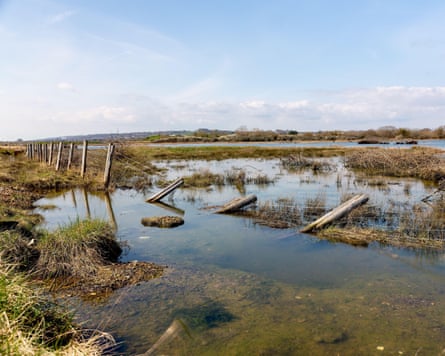
On the landward side, a cormorant perches on the semi‑submerged cattle fencing. Fronds of bladderwrack festoon the exposed barbed wire – evidence of the tide’s reach. Across the marsh, little egrets and grey herons stalk the shallow channels. A trio of black-tailed godwits forage at the edge of a brackish pool, while out on the open water, a pair of little grebes dive for prey, their buoyant bodies popping up like corks.
While some species have been lost – notably the southern marsh orchids, which once grew here in abundance – others cling on. A kestrel hovers overhead, its presence hinting at small mammals hidden in the tussocky grass. Linnets and goldfinches flit through the scrub, and from a patch of red-flushed glasswort, a skylark ascends in near vertical flight, filling the air with its liquid melody.
This ground-nesting bird has somehow found refuge on small islets of higher ground. The breeding season ended in September, but a post-moult second song peak in October isn’t unusual, especially on sunny days. Skylarks can be heard singing year‑round, but this noticeable surge is believed to occur as males establish winter feeding territories. Although numbers have fallen precipitously since the mid-1970s, Hampshire populations have recently shown encouraging signs of recovery. That they remain in this changing habitat is a testament to their resilience.

















 English (US) ·
  French (CA) ·