

 11 months ago
178
11 months ago
178
PROTECT YOUR DNA WITH QUANTUM TECHNOLOGY
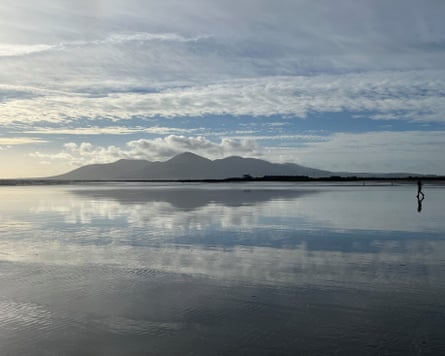
Orgo-Life the new way to the future Advertising by AdpathwayOut to sea there is a squadron of juvenile great black-backed gulls, each one dark as a witch’s cape against the tide’s limpid sheen. I turn my scope to match their flight, chasing them until they splash down at the edge of a messy raft of birds.
At first I just tick off the species: adult herring, common and great black-backed gulls, dipping their heads almost casually into the water; a gannet irritably wielding its sword-like bill at the mob; razorbills and guillemots in their seasonal tuxedos, diving down and popping up around the larger birds. Askance of the main fray, cormorants buck smoothly under the surface and more gulls tip from the sky. When a winter‑white black‑headed gull struggles back into the air with a silver rag hanging from its bill, I pull back my scope and finally realise what’s happening. I’m witnessing a feeding frenzy – a bait ball.
Fish often gather in shoals, providing many eyes to scan for danger, as well as cover within the crowd. Schooling – the coordinated movement of a shoal as it travels – may similarly reduce the risk of an individual fish becoming a predator’s meal. But a school can also attract the attention of multiple predators. Small fish, like sprat (Sprattus sprattus) or young herring (Clupea harengus), are known as forage or bait fish. In the Irish Sea, these are preyed on by larger species such as mackerel, cod or sea bass.
The fish predators largely hunt on an individual basis, and don’t necessarily cooperate, but they can be more successful when attacking as part of a group. If they surround a school of forage fish that has also been tracked by keen-eyed avian piscivores, the birds will join in the hunt by diving and swimming underwater. The besieged school swirls and flinches into a tight sphere – this is the bait ball. At last, driven from below by its attackers, or attempting to escape by the only available route, the bait ball spirals up through the water to smash against air’s wall.
I stare down the scope’s tunnel at the aftermath: a surface churning with fish and jostling with birds. Then quite suddenly, almost as if a wand has been waved, the birds drift apart over a slowly unwrinkling sea.















 English (US) ·
  French (CA) ·