

 11 months ago
154
11 months ago
154
PROTECT YOUR DNA WITH QUANTUM TECHNOLOGY
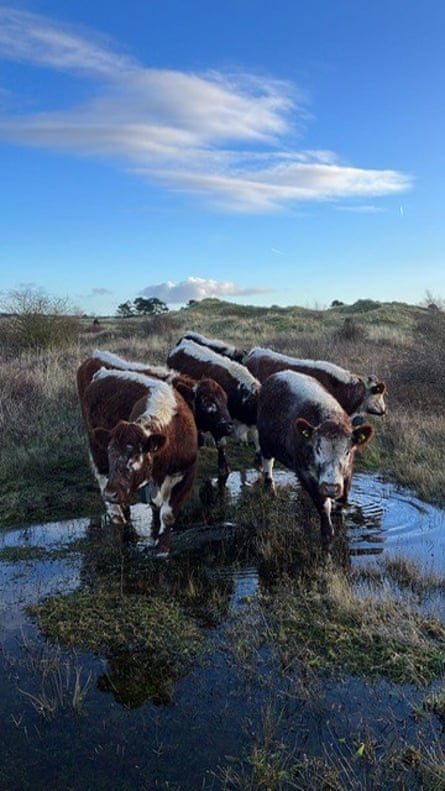
Orgo-Life the new way to the future Advertising by AdpathwayThey’re huddled at the entrance to their enclosure: a quartet of broad‑backed ruminants contemplating their winter lodgings. They arrived yesterday, when the dunes were under siege from wind and rain. But these are hardy cattle and there are plenty of hollows in which to shelter. This group might be here until April – there’s no rush to explore.
The council’s Green Sefton service has two winter-grazing enclosures over more than 228 hectares of the Ainsdale and Birkdale Sandhills nature reserve. English longhorns, on loan from the Lancashire Wildlife Trust, are used for conservation grazing to help manage the sand dune grassland and dune slack habitats. At other times of the year, herpetologists might encounter sand lizards, great-crested newts and natterjack toads. Today I’m visiting to view the cattle up close, to understand this project and its benefits.
On the footpath towards the Birkdale side of the reserve, airborne webs drift on a breeze, gilded by an unseasonably warm sun. Ahead, a buzzard rises effortlessly from a fence pole. One side of the path is awash with invasive sea buckthorn heaving with pale orange fruit. Behind, more berries: hawthorn and rowan, and wild rosehips. Food for the coming winter.
Around the reserve, laminated notices explain the presence of the cattle and remind visitors to keep their dogs on leads. QR codes provide location details in real time – the longhorns wear collars fitted with GPS trackers.
Using Nofence technology, rangers remotely move the cows around the huge enclosures, sending them to feed wherever fodder needs breaking up and pushing back. This helps control and prevent the spread of non-native species, while forging new stretches of open sand habitat, creating space for indigenous flora and fauna, including marsh and dune helleborines, early marsh orchid and grass of Parnassus.
I spy a white-striped back atop a low dune. Then a second, and a pair in a hollow, sniffing, nuzzling, chomping. None are horned, but all the same, they’re magnificent beasts and, admittedly, an unusual sight on this habitat. I see clover flowers, hawkweed and harebells underfoot. The buzzard swoops past. Coming to a marsh, I disturb some wintering snipe. They rise in a panic, zigzag overhead and disappear. When I turn back to the longhorns, they’ve vanished. The exploration has begun.
















 English (US) ·
  French (CA) ·