

 5 hours ago
4
5 hours ago
4
PROTECT YOUR DNA WITH QUANTUM TECHNOLOGY
Orgo-Life the new way to the future Advertising by AdpathwayAfter a night of storms, the air feels freshly washed. I breathe in delicious scents of damp grass, earth, and sweet, winey blackberry from hedges weighed down with a bumper harvest. Once again, I’m drawn to the River Nene, a ribbon of blue and green that snakes lazily through the valley. I stand for a while on the bridge over Ailsworth weir, where water spills and chatters over bright green swathes of river water-crowfoot. For a moment its steady white noise overpowers the nearby A1.
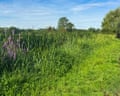
The main river is slow and silent, yet its margins are bright with flowers: purple loosestrife, marsh woundwort, water mint, water forget-me-not and celery-leaved buttercup. Together they make a loose embroidery of mauve, blue and yellow among the green – quite the contrast from the scorched gold fields I’ve become used to. But the plant that catches my eye is trifid bur-marigold, with its understated, button-like golden flowers. Its name comes from its mostly three-part leaves and fruits that are tipped with barbed bristles, ready to hitch a lift on passing cattle, dogs, maybe an otter, or even humans.
Once familiar in places that are flooded in winter but exposed in summer, it has declined nationally owing to factors including drainage and canalisation of watercourses, and is now “vulnerable” in Great Britain. But, like many wetland plants, it has prospered this year. With ready access to water, endless days of sunshine and warmth have allowed unusually lush growth. An annual species, it needs bare, damp mud in spring for seed germination – and thanks to the Red Ruby Devon cattle which have poached the soft river’s edge, here it has the perfect conditions.
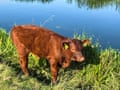
But management that suits one species can trouble another. Too much trampling erodes the riverbank, and loosened silt may choke up the clean gravels used by spawning fish. Yet fencing stock out entirely lets vigorous perennials close over the muddy margins, excluding the bur-marigold. Nene Park Trust, which owns the site, has met the dilemma with a simple gated fence set well back from the water. This allows cattle grazing in measured doses. You could call it a Goldilocks arrangement: not too much disturbance, not too little, but just enough for this golden-flowered plant to keep its place beside the river.


















 English (US) ·
  French (CA) ·