

 1 month ago
69
1 month ago
69
PROTECT YOUR DNA WITH QUANTUM TECHNOLOGY
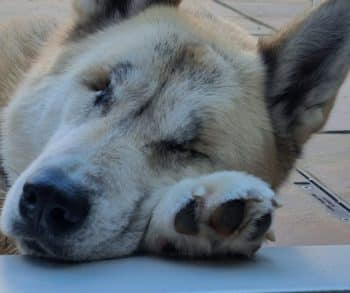
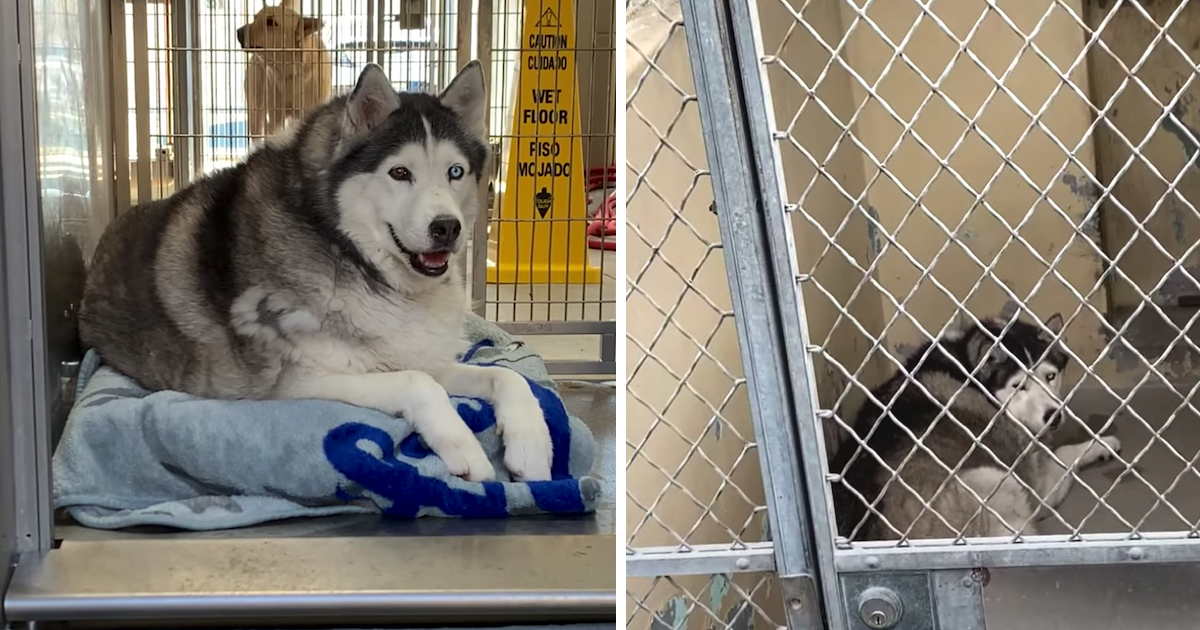
Orgo-Life the new way to the future Advertising by AdpathwayCookie had spent much of her young life navigating a world she could not see, relying on sounds, scents, and instinct to understand what was happening around her. The three-year-old Husky was tethered in a yard and being used to guard a site when RSPCA officers discovered her on New Year’s Eve. Although Cookie could not tell anyone how much she was hurting, the condition of her eyes immediately raised concerns. What rescuers initially saw as blindness would soon reveal a painful medical problem that had likely affected Cookie for much of her life.
 Credit: Instagram
RSPCA Animal Rescue Officer Sam Matthews became especially concerned after seeing Cookie’s enlarged eyes. She contacted a veterinarian for advice and learned that blindness was only part of the husky’s struggle.
Cookie’s movement was restricted by the tether, leaving her to navigate a confined environment largely through hearing and smell. Her previous owner said her eyes had always looked that way and had not sought veterinary treatment.
Veterinary experts determined that although Cookie could not see, her eyes could still cause considerable discomfort and pain. An independent veterinarian later certified that she was suffering, allowing Matthews to bring her into RSPCA care.
Cookie was taken to the RSPCA’s Finsbury Park Animal Hospital in north London. There, veterinarians diagnosed her with buphthalmia, a condition involving enlarged eyeballs, as well as glaucoma affecting both eyes.
The glaucoma had left Cookie blind. More importantly, her damaged eyes had become a continuing source of pain that needed to be addressed.
A Difficult Decision Gives Cookie Relief
Veterinarians and behavior specialists carefully considered the best treatment for Cookie. Removing both eyes from a dog that can still see would represent an enormous and sudden adjustment, but Cookie’s circumstances were very different.
RSPCA Chief Veterinary Officer Charlotte Beckett explained that Cookie had probably been blind since she was a puppy. Over time, she had already learned to experience her surroundings without relying on vision.
After careful consideration, the team decided that removing Cookie’s painful eyes offered her the best opportunity for a more comfortable life. The surgery meant she would no longer carry eyes that could not provide sight but could continue causing her suffering.
Cookie recovered well, and her personality quickly showed that blindness did not define her. She remained curious, confident, and eager to interact with the people around her.
Her story was later shared by the RSPCA ahead of International Blind Dog Awareness Day, offering an example of how dogs can adapt when given appropriate care and a safe environment.
Once Cookie had recovered from surgery, another important chapter of her life began.
Paul and Anna Regan, from Bracknell, Berkshire, had recently become foster carers after losing their beloved dog, Wilf. His death had left an enormous absence in their lives, and they initially believed they would never have another dog of their own.
Fostering seemed like a way to experience the companionship of a dog again while helping an animal prepare for a permanent family. They expected to care for a dog temporarily and eventually say goodbye.
Then they met Cookie.
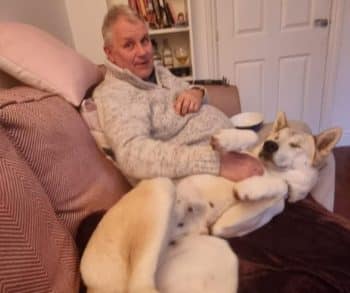
Paul and Anna knew she was blind before meeting her, but they were not prepared for the sight of her recent surgery. Cookie still had stitches where her eyes had been removed.
 Credit: Instagram
Yet Cookie herself did not approach them like a dog defeated by what she had endured. She confidently walked toward them and leaned into them for affection.
There was another unexpected connection. Cookie looked remarkably similar to Wilf, bringing memories of their beloved dog rushing back.
After learning more about Cookie’s past and understanding how much support she would need, Paul and Anna decided they wanted to help her. She had already been given another chance at life, and they were determined to help her learn what safety could feel like.
Cookie joined them in February after leaving Millbrook Animal Centre in Surrey. Before long, they realized that blindness was not the only challenge she faced. She appeared unfamiliar with ordinary home life and struggled when Paul and Anna left her alone. Cookie would howl and wait beside the door for their return, suggesting that separation was deeply unsettling for her.
The RSPCA’s clinical behavior team stepped in to guide the couple through the process. Rather than expecting Cookie to adjust immediately, they introduced periods of separation slowly. At first, Cookie was left for less than five minutes. Over time, those short absences were gradually increased until she could remain comfortable for just over two hours.
Paul and Anna also adapted their home to help Cookie move around safely and confidently. They added padding to doors and rearranged furniture so she could learn predictable routes through the house. Little by little, the unfamiliar rooms became Cookie’s territory. She learned where things were, where Paul and Anna would be, and most importantly, that they would always come back.
Her behavior began to reflect that growing sense of security. Cookie started seeking affection, nuzzling into her foster carers and settling comfortably beside them. She even developed a morning routine, sleeping in their bedroom before jumping onto the bed around dawn.
As Cookie became increasingly comfortable, something else was changing too. The couple who believed they were simply helping a foster dog realized they could no longer imagine their home without her. Paul and Anna officially adopted Cookie.
Cookie apparently made sure life with her would never become too predictable. Paul joked that the adoption went ahead even after she managed to steal around three kilograms of brisket from the side. Her playful mischief was another sign of how comfortable she had become. Cookie loved meeting other dogs, exploring her surroundings, and engaging with the people she trusted.
Paul described her as resilient, inquisitive, friendly, and remarkably unfazed by the challenges she faced. Despite everything Cookie had experienced, she approached her new life with enthusiasm. For Paul and Anna, letting her go to another family eventually became impossible. They had invested months helping Cookie learn how to feel secure, but affection had quietly grown alongside that work.
Cookie had originally entered their lives because she needed a second chance. In time, Paul and Anna realized the Husky had given them something equally meaningful in return.
 Credit: Instagram
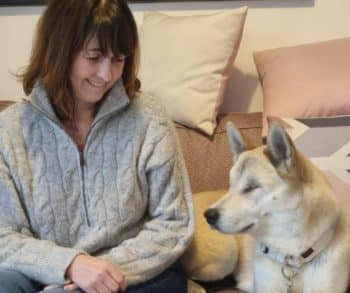
After losing Wilf, they had wondered whether they could open their hearts to another dog. Cookie showed them they could. The blind husky who once lived tethered outside now has a home she understands by heart. She knows the familiar sounds, scents, pathways, and people surrounding her, and she knows where to go when she wants affection.
Cookie may never see the home Paul and Anna created for her, but she has learned what it means to feel safe inside it. And for the couple who thought their days of loving another dog were behind them, Cookie became proof that sometimes a second chance can heal more than one heart.
This content was created with AI assistance and edited by the iHeartDogs team.
















 English (US) ·
  French (CA) ·