

Garden blooms today always seem more important than garden flowers tomorrow. But most gardeners are willing to cut back fading flowers in July to allow new, perfect blooms to grow in.
By July, a perennial garden in full bloom may be starting to fade a bit around the edges. Mainstay plants like roses, hydrangeas and dahlias may have blooms that are overblown, faded or wilting. It may be time for a haircut. Another name for a plant trim in July is deadheading. It’s a colorful term for snipping off blossoms to benefit the plant. In some cases, we deadhead to prevent or delay seed formation, but in July, the primary purpose of deadheading flowers is to get a second wave of blooms.
Grab your favorite pair of pruners (our Editor in Chief Melanie swears by her Felco 2 pruners that can be found on Amazon) and get snipping! Here are five plants to deadhead in July for repeat blooms all summer long.
1. Roses
(Image credit: Maryviolet / Getty Images)
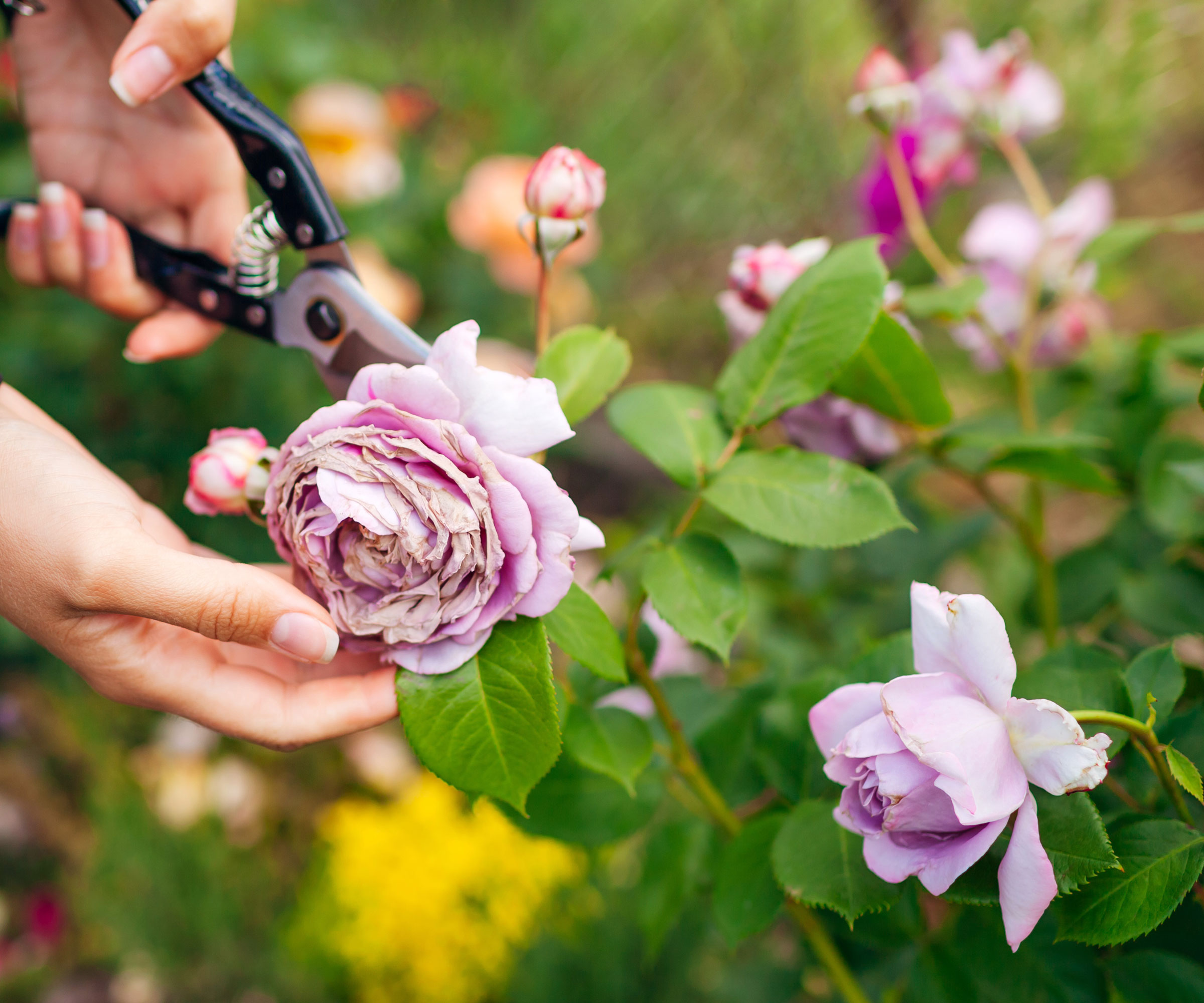
Let’s start with the queen of the flower garden – the rose bush. Despite their difficult-to-grow reputation, most of us have roses in our garden and still get those thrills when the buds open in spring. Deadheading roses is not a universal rule. If your roses drop their blooms and rebloom after that, they are termed “self-cleaning” and do not need deadheading.
But all the others do better with deadheading, not once, not twice, but regularly throughout the summer. You will doubtless see roses fading in July, and – assuming your species is not self-cleaning – deadheading is just the thing to keep your roses looking beautiful.
Deadheading roses is not a complex garden task. Use clean, sterilized pruners and make a cut on the diagonal just above a five-leaflet stem.
2. Salvias
(Image credit: Getty Images)
Unlike roses, salvias tend to spread, so, by July, you are more likely to have 30 blooms than 3. The flower spikes of this tough perennial provide a full-service dining area for a wide range of pollinators including the big three, bees, butterflies and hummers. But by July, the first crop of bright flowers are very likely on the decline.
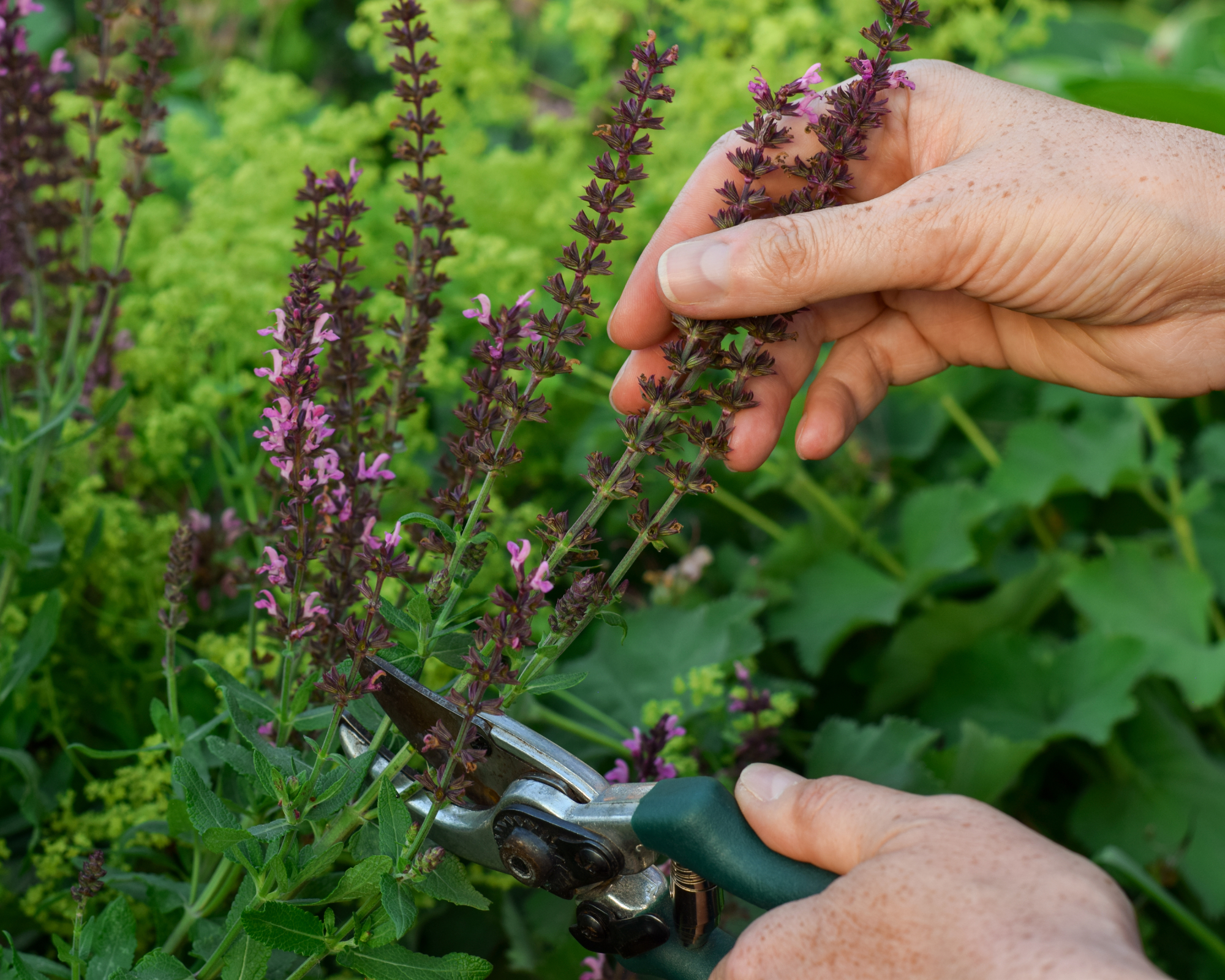
You want the salvia “blossom factory” producing the vibrant blue and purple blossoms, and deadheading your salvia is the key. Snipping now will not just keep the blossoms coming, it will also make the plant bushier, neater, and stop seed production.
Select declining, leggy, flopping or wilting flower spikes and prune them back with a sterilized pruner. Deadhead flower spikes by cutting the stems back. You want to take off most of the stem, making the cut just above a set of leaves.
3. Hydrangeas

(Image credit: Getty Images)
Are your hydrangeas reblooming? If so, you can expect more than one crop of flowers over summer, but that only works if you deadhead the faded flowers. But you don’t have to buy special cultivars to get reblooming varieties. The standard, super-popular bigleaf hydrangeas (think snowballs or lacecaps) bloom are reblooming (also called remontant) and so are mountain hydrangeas.
How does this work? These hydrangeas bloom on both old and new wood. The first flower on the wood produced the prior season. Then, once those flowers mature and fade, they bloom a second time on new, current-season wood.
Deadheading these flowers really does result in an entire new crop of gorgeous flowers. Using a sharp, clean pruner, snip off each fading blossom right above a new set of leaves. New buds will develop and mature in late summer, just as other garden flowers are calling it quits for the season.
4. Coneflowers
(Image credit: Shutterstock)
Coneflowers, also known by their genus name Echinacea, are staples of the perennial garden. They are so easy to grow it seems that they grow themselves. They are known as the top flowers for rank beginners since it is almost impossible to fail. These pretty, daisy-like blooms lor coneflowers, just seem eager to grow and the blooms can last most of the growing season.
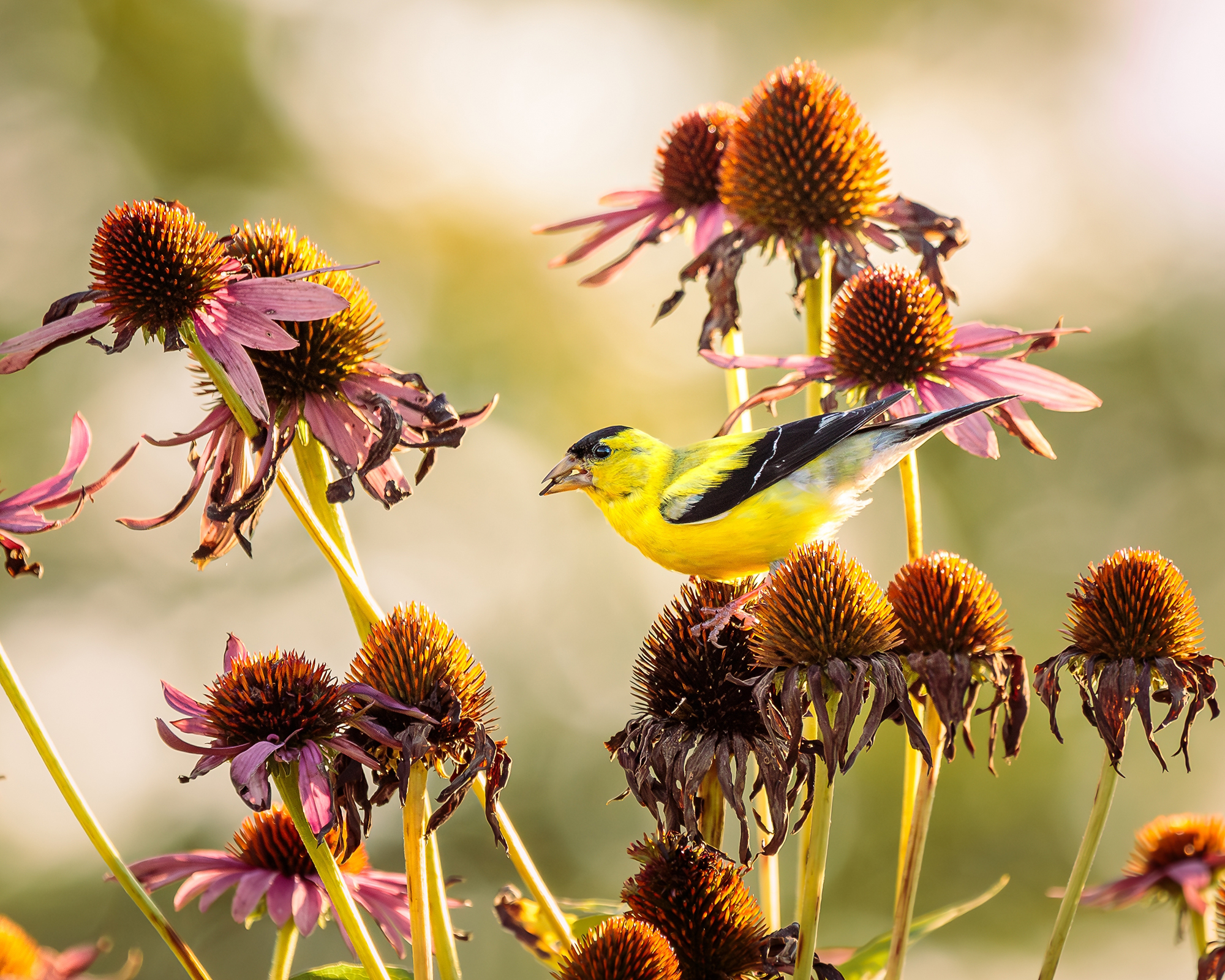
Since these colorful flowers do not usually fade in July, why should you consider deadheading? It relates to their eager ways. They reseed happily, even during summer, and can overpopulate the garden. July is a perfect time to nip this problem in the bud, so to speak. Deadheading coneflowers in July will prevent them from early reseeding.
Deadhead with sharp pruners, cleaned and sterilized. Take out the stems just above the first set of leaves and snip right above them. It’s better to deadhead in July than autumn, since the birds are happy to feast on the seeds of spent flowers in fall.
5. Dahlias

(Image credit: Amelia Martin / Shutterstock)
Dahlias might be the most beautiful summer flower you didn't know you needed! These big, lush flowers are total showstoppers and look amazing as cut flowers too. Dahlias bloom all summer long and only stop with the first night frost. The long flowering period makes these sun-lovers extremely popular.
But you can take dahlias for flower arrangements in July - and, at the same time - prolong the already long dahlia season. If the flowers are spent, call it deadheading. Pruning wilting dahlia flowers redirect the plant's energy into putting out more blooms. Otherwise, think of it as harvesting cut dahlia stems to enjoy in your home.
In either case, you’ll want to use sharp, sanitized pruners or gardening scissors. Make a diagonal cut down the stem just above a set of leaves. This type of trim allows the plant to produce new growth from the nodes, and, from that growth, even more blooms through the growing season.

















 English (US) ·
  French (CA) ·