

 1 month ago
77
1 month ago
77
PROTECT YOUR DNA WITH QUANTUM TECHNOLOGY
Orgo-Life the new way to the future Advertising by AdpathwayPsychiatric diagnosis may soon become less dependent on drawing rigid boundaries between disorders that frequently overlap in symptoms, biology and treatment response. A new study introduces a method called differential diagnosis–polygenic risk scoring, or DDx-PRS, designed to estimate the probability that an individual belongs to one of several clinically related diagnostic categories. Instead of asking only whether someone has an elevated genetic risk for schizophrenia, bipolar disorder or major depressive disorder, the approach compares those risks simultaneously and produces a probability profile across competing outcomes. A person’s result might indicate, for example, a 50% probability of schizophrenia, 25% for bipolar disorder, 15% for major depressive disorder and 10% for a control category. The researchers say this framework could eventually support clinical decision-making in situations where psychiatric symptoms do not fit neatly into a single diagnostic box.
The work addresses a central limitation of conventional polygenic risk scores. These scores summarize the combined influence of many genetic variants associated with a particular condition, usually by comparing affected individuals with unaffected controls. A high schizophrenia polygenic risk score can indicate increased genetic liability for schizophrenia, but it does not automatically reveal whether that liability is more specific to schizophrenia than to bipolar disorder or major depressive disorder. Psychiatric conditions share thousands of genetic associations, and the same variant can contribute to vulnerability across multiple disorders. As a result, a score developed for one diagnosis may be informative but not necessarily diagnostically discriminating. DDx-PRS was created to use this overlap as information rather than treating it as noise.
The method works by combining several genetic risk scores with the relationships among them. Those relationships are represented through a variance–covariance structure, a statistical description of how genetic liabilities for different disorders vary together. If genetic risk for schizophrenia and bipolar disorder is strongly correlated, the model accounts for that shared component while also evaluating the residual pattern that may distinguish one disorder from the other. In practical terms, DDx-PRS does not simply add up a person’s risk scores independently. It asks which diagnostic category best fits the entire multivariate genetic profile, given how those profiles behave across large populations. The model also incorporates prior clinical probabilities, meaning the estimated prevalence or expected frequency of each diagnostic category in the setting where the tool is used.
This Bayesian element is critical. A probability estimate is not determined by genetics alone; it also depends on the starting probability of each outcome. In a specialist psychiatric clinic, the prior probability of schizophrenia, bipolar disorder or major depressive disorder may differ substantially from that in the general population. DDx-PRS updates those starting probabilities using an individual’s genetic profile, producing posterior probabilities for each category. The result is therefore not a simple label and should not be interpreted as a genetic diagnosis. Rather, it is a calibrated estimate of how the available genetic evidence shifts the odds among competing possibilities. The model’s output could be especially useful when a patient presents with overlapping symptoms, an unclear illness trajectory or a family history involving multiple psychiatric conditions.
To test the approach, the researchers used data assembled by the Psychiatric Genomics Consortium, one of the largest international collaborations in psychiatric genetics. The training analyses drew on summary-level results from three large case–control genome-wide association studies covering schizophrenia, bipolar disorder and major depressive disorder. Across these studies, the numbers of cases ranged from 41,917 to 173,140, while the combined sample included 1,048,683 individuals. Genome-wide association studies scan the genome for variants that occur more frequently in people with a condition than in comparison groups. By using summary-level data rather than requiring access to each participant’s full genetic dataset, the researchers could estimate the cross-disorder genetic architecture while preserving a practical degree of data separation.
The model was then evaluated in held-out test data from different cohorts, a design intended to provide a more demanding assessment than testing on the same individuals used for development. The test sample contained 11,460 participants, with equal numbers representing schizophrenia, bipolar disorder, major depressive disorder and controls. Equal representation makes it easier to compare classification performance across categories, although it does not reproduce the prevalence of these conditions in the general population. The researchers also examined calibration, which measures whether predicted probabilities correspond to observed frequencies. If a group of people is assigned a 50% probability of schizophrenia, a well-calibrated method should find that approximately half of them actually belong to that category under the study definition. Calibration is essential for clinical interpretation because a highly discriminative score can still be misleading if its probabilities are systematically exaggerated or understated.
According to the study, DDx-PRS was well calibrated and showed statistical power consistent with simulation results. It also produced results comparable to alternative methods that require tuning data. Tuning typically involves using an additional dataset to decide how different predictors should be weighted or how classification thresholds should be set. Avoiding that requirement could make DDx-PRS more adaptable when independent tuning cohorts are unavailable, a common problem in psychiatric genetics and in populations that are historically underrepresented in research. The method’s performance reflects the fact that it models the covariance between disorders directly, allowing shared genetic liability to be separated from patterns that are relatively more characteristic of one diagnostic category.
One of the most striking findings emerged when the investigators examined people in the highest deciles of predicted diagnostic probability. Within these top-ranked groups, the proportion of individuals with the corresponding true diagnosis was considerably higher than the prior baseline probability. In other words, the method could enrich a population for people more likely to have a particular disorder, even though it could not provide certainty for any single individual. This distinction matters. A tool that increases the concentration of likely cases may have value for research recruitment, risk stratification, screening in carefully defined settings or prioritizing further clinical assessment. It does not mean that genetic probabilities can replace interviews, longitudinal observation, medical evaluation or professional judgment.
The potential clinical significance of DDx-PRS lies partly in the instability of psychiatric diagnoses over time. Symptoms such as depression, psychosis, impulsivity, sleep disruption and cognitive changes can occur in more than one disorder, while the full clinical picture may emerge only after months or years. Early treatment decisions can nevertheless have lasting consequences, and medications that are helpful for one condition may be less appropriate or carry particular risks in another. A probabilistic genetic profile could eventually contribute one piece of evidence to a broader diagnostic process, especially when symptoms are mixed or family histories are complex. However, the current findings do not establish that using DDx-PRS improves patient outcomes, changes treatment decisions safely or performs equally well across ancestries, healthcare systems and real-world clinical populations.
Important challenges remain before such a method could be considered for routine care. Polygenic scores are influenced by the ancestry composition of the datasets used to develop them, and prediction accuracy can decline when a model is transferred to populations that were poorly represented in the original studies. Diagnostic categories themselves are also imperfect biological entities, with substantial heterogeneity within each label. A person diagnosed with major depressive disorder may have a very different genetic and clinical profile from another person carrying the same diagnosis. In addition, prior probabilities must be selected carefully: applying a model calibrated in one population to another setting without adjustment could produce distorted posterior estimates. Privacy, informed consent, genetic counseling and the possibility of stigma would also need to be addressed.
The researchers present DDx-PRS as a framework for distinguishing related disorders, not as a replacement for psychiatric expertise. Its main advance is conceptual as much as technical: it treats diagnosis as a competition among plausible categories and calculates how a person’s multivariate genetic evidence changes the probability of each one. As genetic studies grow larger and become more diverse, the underlying covariance estimates may become more precise, potentially improving discrimination between overlapping disorders. For now, the study offers an important proof of principle. Genetic data may be most informative in psychiatry not when they are used to declare a single diagnosis, but when they are integrated probabilistically to clarify a difficult differential diagnosis and identify where additional clinical evidence is most urgently needed.
Subject of Research: A polygenic method for distinguishing among schizophrenia, bipolar disorder, major depressive disorder and control categories using shared and disorder-specific genetic risk.
Article Title: Distinguishing different psychiatric disorders using DDx-PRS
Article References: Peyrot, W.J., Panagiotaropoulou, G., Olde Loohuis, L.M. et al. Distinguishing different psychiatric disorders using DDx-PRS. Nature Genetics (2026). https://doi.org/10.1038/s41588-026-02684-x
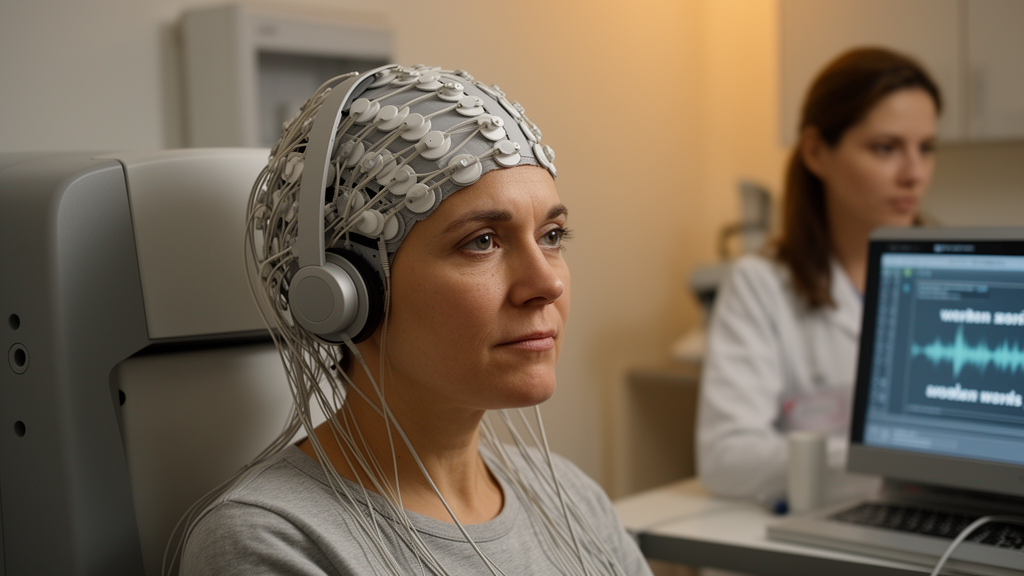
Image Credits: AI Generated
DOI: https://doi.org/10.1038/s41588-026-02684-x
Keywords: DDx-PRS, polygenic risk score, psychiatric genetics, schizophrenia, bipolar disorder, major depressive disorder, differential diagnosis, genome-wide association study, precision psychiatry, psychiatric disorders
Tags: clinical decision support in mental healthdistinguishing schizophrenia bipolar depressionfuture of psychiatric diagnosis methodsgenetic overlap in psychiatric conditionsgenetics-based mental health assessmentlimitations of traditional polygenic risk scoresoverlapping symptoms in mental health disorderspersonalized psychiatric diagnosis toolspolygenic risk profile analysispolygenic risk scoring in psychiatryprobabilistic approaches to psychiatric classificationpsychiatric disorder differential diagnosis




















 English (US) ·
  French (CA) ·