

 5 hours ago
10
5 hours ago
10
PROTECT YOUR DNA WITH QUANTUM TECHNOLOGY
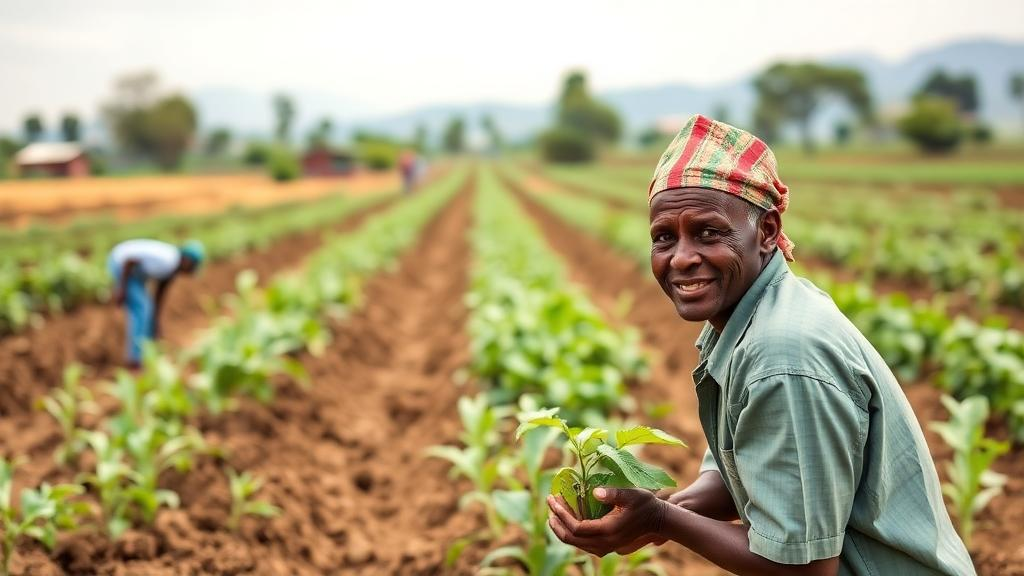
Orgo-Life the new way to the future Advertising by AdpathwayStar fruit, the tropical crop known scientifically as Averrhoa carambola, is prized for its distinctive star-shaped cross-section, sweet-sour flavor, and high content of vitamin C, fiber, and antioxidant compounds. Grown across Asia, America, and Africa, and increasingly cultivated in tropical and subtropical regions of Peru, the fruit carries real agricultural and commercial promise. Yet like many crops, it faces persistent phytosanitary threats that can quietly erode both yield and quality. A new study published in the Journal of Agriculture and Food Research shows that a well-chosen deep learning model can identify many of these threats from photographs alone, and that the best performer is not the newest or most complex architecture, but a classic one: ResNet50.
The diseases and pests attacking carambola are formidable. Anthracnose, driven mainly by fungi of the genus Colletotrichum, produces necrotic lesions and rot on leaves, branches, flowers, and fruits, thriving in the warm, humid conditions typical of the tropics. Early blight, caused by Alternaria species, marks leaves with circular dark spots and triggers premature defoliation, weakening plants and cutting production. On the pest side, stem borers, leaf-invading insects, grasshoppers, stink bugs, and fruit borers all take their toll. The economic stakes are high because visible symptoms often appear only when it is too late for effective intervention, which is precisely why researchers have been searching for tools that can catch problems earlier and more reliably.
Traditional disease management relies heavily on agrochemicals and constant manual monitoring, and both approaches carry well-documented drawbacks. Pests can develop resistance, chemical use pollutes soil and water, and farmers face health risks from exposure. Manual scouting, meanwhile, is demanding, error-prone, and often too slow to enable preventive action. Deep learning offers an alternative: convolutional neural networks can automatically detect and classify diseases from images, cutting analysis time, reducing operating costs and human error, and recognizing complex visual patterns even under variations in lighting and image quality. Integration with mobile devices and drones has already pushed these techniques toward real-time crop monitoring in other crops.
What has been missing, the authors argue, is a systematic comparison of established architectures applied specifically to carambola. Previous studies have demonstrated impressive results elsewhere: a Fusion Vision Boosted Classifier combining VGG19 and LightGBM reached 97.6 percent test accuracy on rice leaf diseases; a YOLOv8n model detected seven tomato diseases with 96.5 percent mean average precision after hybrid data augmentation expanded a dataset from 737 to 6,696 images; ResNet50 achieved 97 percent accuracy on potato leaf disease classification and 90.85 percent on cauliflower; and in sugarcane, EfficientNet-B7 and DenseNet201 reached 99.79 and 99.50 percent respectively on a dataset of 6,748 images. But no prior work had evaluated deep learning models on the Carambola Disease Recognition Dataset, leaving a genuine gap for this understudied crop.
To fill it, the research team, drawing on a public dataset from Mendeley Data, started with just 559 original images spanning nine classes: healthy fruit, healthy leaf, stem borer damage, anthracnose, leaf insect pest damage, early blight, grasshopper damage, stink bug damage, and fruit borer damage. Through data augmentation techniques including shifting, flipping, zooming, shearing, brightness enhancement, and rotation, the dataset was expanded to 3,913 images. Critically, the augmented images were used exclusively during training, while validation and testing relied only on original photographs, a design choice that prevents data leakage and ensures an unbiased measure of how models perform on genuinely unseen examples.
Seven pre-trained convolutional neural network architectures were then evaluated under identical conditions: EfficientNetB0, EfficientNetB7, EfficientNetV2-S, ResNet50, VGG16, DenseNet121, and InceptionV3. Each was fitted with a custom classification head consisting of a GlobalAveragePooling2D layer to compress features, a dense layer of 256 neurons with ReLU activation, a dropout layer deactivating 40 percent of neurons to curb overfitting, and a nine-neuron softmax output producing class probabilities. Training proceeded in two phases: first with the base network frozen so only the classifier learned, then with fine-tuning that unlocked the pre-trained weights. Class weights were computed with Scikit-learn to penalize errors on minority classes, since some categories contained as few as 12 original images while others held more than 200. The Adam optimizer and categorical cross-entropy loss drove learning on a workstation with an NVIDIA RTX 4060 Ti GPU, and a five-fold stratified cross-validation scheme preserved class proportions across folds to yield robust, averaged performance estimates.
The verdict was clear. ResNet50 achieved the highest average accuracy at 92.8 percent, with an F1-score of 92.7 percent and a standard deviation of just 1.9 percentage points across validation folds, indicating strong stability. VGG16 followed at 91.2 percent and DenseNet121 at 91.1 percent, while the more modern EfficientNet variants trailed: EfficientNetB0 at 90.3 percent, EfficientNetV2-S at 88.7 percent, and EfficientNetB7 at 88.5 percent. InceptionV3 landed at 90.0 percent. Computational cost told a similar story. ResNet50 trained in roughly 162 seconds total, about 32 seconds per fold, whereas EfficientNetB7 required over 630 seconds, or 126 seconds per fold, nearly four times longer for worse accuracy. The confusion matrix showed the model classifying healthy leaves and healthy fruits with particular reliability, though some confusion persisted between visually similar pairs such as stink bug and borer damage, and between healthy leaves and healthy fruits.
Data augmentation proved helpful but not universally so. ResNet50, VGG16, and DenseNet121 all posted consistent gains when trained on augmented data, with ResNet50 rising from 91.0 to 92.8 percent accuracy. EfficientNetB7, however, actually declined from 90.1 to 88.5 percent, a reminder that augmentation strategies interact with architecture in ways that resist one-size-fits-all assumptions. The authors suggest this may reflect transformations that were not optimized for each model. The broader lesson, consistent with earlier cauliflower research, is that more complex architectures do not automatically outperform simpler ones when datasets are small or highly variable within classes. ResNet50’s residual skip connections, which allow information to bypass layers and mitigate the vanishing gradient problem, appear particularly well suited to extracting robust features under these constrained conditions.
Placed alongside comparable studies, the carambola result holds up well. ResNet50’s 92.8 percent sits between the 90.85 percent reported for cauliflower and the 97 percent achieved on potatoes, a notable feat given the tiny and imbalanced starting dataset of 559 images. The authors also emphasize practicality: while ResNet50 is not the lightest model available, its ratio of accuracy to computational cost makes it a viable candidate for agricultural environments with limited hardware, unlike heavier systems that struggle to run in rural settings. They note that lightweight architectures such as MobileNet, ShuffleNet, and EfficientNet-Lite, designed specifically for smartphones and embedded devices, were outside the scope of this baseline comparison but represent a promising next step for real-time field deployment.
The study is candid about its limits. The dataset, even augmented, may not capture the full variability of real-world conditions such as changing light, occlusions, and different disease stages, and the severe class imbalance, with some classes holding as few as 12 samples, may bias models toward majority categories. The models were also evaluated under controlled experimental conditions rather than validated in actual fields, so their practical robustness remains unproven. Future work will focus on expanding the dataset, exploring generative techniques such as GANs and diffusion models to synthesize realistic samples, measuring inference time and memory use for edge deployment, and conducting field validation. If those steps succeed, the payoff could be substantial: earlier, automated disease detection in carambola could reduce agrochemical use, minimize economic losses, and strengthen productivity for growers in Peru and across the tropics, turning a modest dataset into a working shield for a vulnerable crop.
Subject of Research: Deep learning classification of diseases and pests in star fruit (Averrhoa carambola) using image recognition
Article Title: Disease Detection in Averrhoa Carambola using image recognition techniques with deep learning models
Article References: Vargas Mahaney, A. A., Córdova Puma, S. A., & Pérez Vera, Y. (2026). Disease Detection in Averrhoa Carambola using image recognition techniques with deep learning models. Journal of Agriculture and Food Research, 31, Article 103331. https://doi.org/10.1016/j.jafr.2026.103331
Image Credits: AI Generated
DOI: 10.1016/j.jafr.2026.103331
Keywords: star fruit, Averrhoa carambola, deep learning, ResNet50, convolutional neural networks, plant disease detection, data augmentation, transfer learning, agriculture, Peru, anthracnose, computer vision

















 English (US) ·
  French (CA) ·