

 5 hours ago
10
PROTECT YOUR DNA WITH QUANTUM TECHNOLOGY
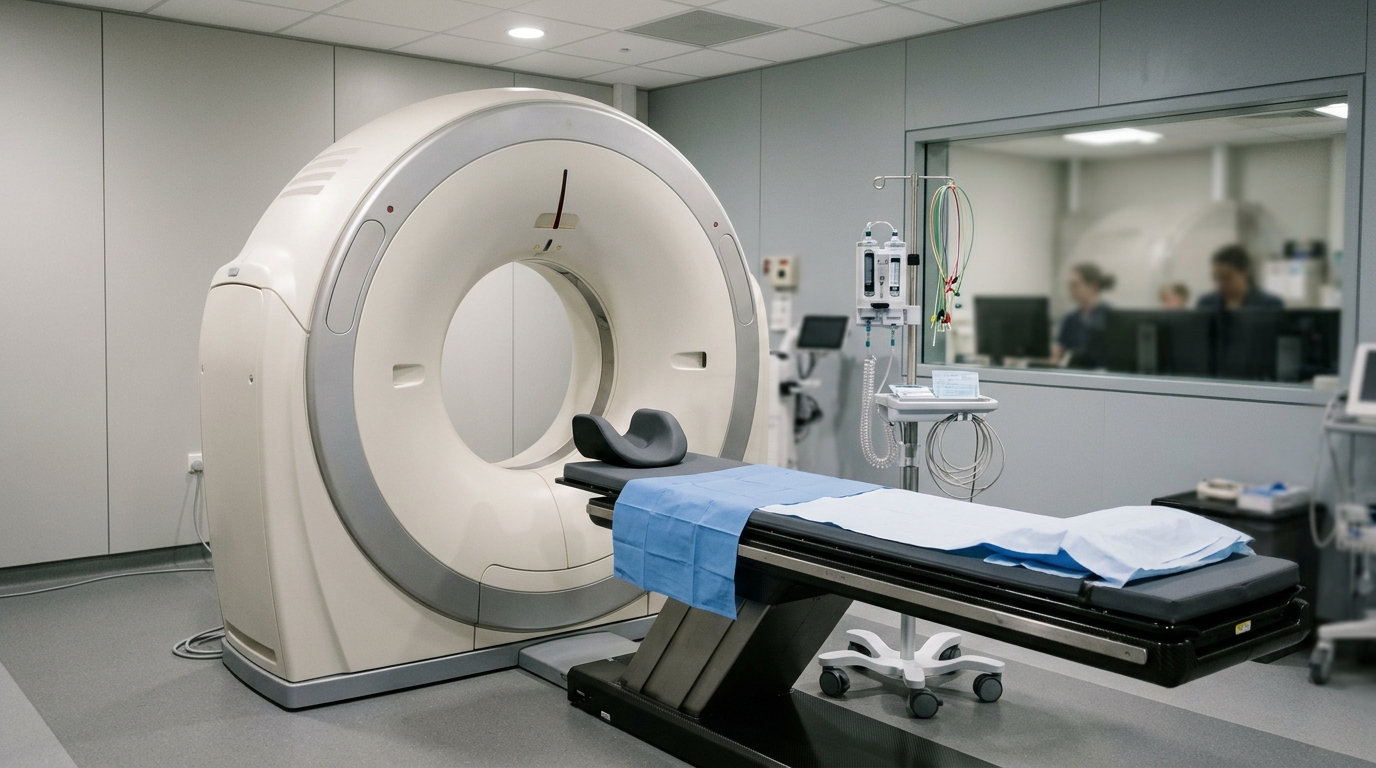
Orgo-Life the new way to the future Advertising by AdpathwayA computational framework combining Recurrent Residual U-Net segmentation and a Dense Spiking Neural Network achieved an overall classification accuracy of 95.619 percent in distinguishing normal and abnormal kidney conditions from computed tomography images, according to a study published in the International Journal of Computational Intelligence Systems.
The researchers addressed critical diagnostic challenges in kidney disease assessment, identifying kidney diseases as major global health concerns where early and accurate diagnosis remains vital for effective treatment and improved patient outcomes. While computed tomography imaging serves as a valuable clinical tool, accurate disease classification has been limited by complex anatomical kidney structures, variable disease manifestations, and constraints in existing diagnostic models.
To overcome image noise that degrades diagnostic quality, the experimental pipeline initiates image processing by applying Gaussian filtering to computed tomography scans. Following this noise reduction step, the framework isolates relevant anatomical structures using a Recurrent Residual U-Net segmentation architecture.
The segmentation model integrates a specialized hybrid loss function combining Dice Loss and Weighted Binary Cross-Entropy to enhance boundary identification. This hybrid formulation was developed to directly improve segmentation accuracy across the segmented kidney regions before feature extraction.
To expand data diversity and prevent model overfitting, the workflow incorporates multiple image augmentation techniques, specifically applying padding, rotation, and translation to the segmented scans. The pipeline then executes feature extraction across the augmented data to capture discriminative kidney characteristics required for downstream evaluation.
Classification is performed using a novel Dense Spiking Neural Network architecture, constructed through the fusion of Deep Spiking Neural Networks and DenseNet. The integrated network categorizes scans into normal and abnormal classes, with abnormal classifications specifically identifying renal tumors and renal cysts.
In experimental evaluations, the proposed framework demonstrated a True Positive Rate of 96.718 percent and a True Negative Rate of 94.818 percent. Additional statistical metrics confirmed robust predictive capability, yielding a Matthews Correlation Coefficient of 95.918 percent, a Cohen’s Kappa of 94.992 percent, and an overall F1-score of 95.020 percent.
The authors reported that these evaluation results confirmed the effectiveness of the integrated segmentation and classification framework, demonstrating superior diagnostic performance compared to existing approaches evaluated for kidney disease classification from computed tomography scans.
Subject of Research: Kidney disease classification from computed tomography images using spiking neural networks and recurrent residual segmentation
Article Title: A Novel Loss Function Based R2U-Net for Region Segmentation and Dense Spiking Neural Network Enabled Kidney Disease Classification
Article References: Subbanaidu, N., & Ramprasath, M. (2026). A Novel Loss Function Based R2U-Net for Region Segmentation and Dense Spiking Neural Network Enabled Kidney Disease Classification. International Journal of Computational Intelligence Systems. https://doi.org/10.1007/s44196-026-01670-9
Image Credits: AI Generated
DOI: 10.1007/s44196-026-01670-9
Keywords: Kidney Disease, Computed Tomography, Dense Spiking Neural Network, DenseNet, Deep Spiking Neural Networks, R2U-Net, Image Segmentation, Dice Loss, Weighted Binary Cross-Entropy, Gaussian Filtering, Data Augmentation, Renal Tumors, Renal Cysts, Medical Image Classification, Matthews Correlation Coefficient, Cohen's Kappa

















 English (US) ·
 French (CA) ·