

 2 months ago
96
2 months ago
96
PROTECT YOUR DNA WITH QUANTUM TECHNOLOGY
Orgo-Life the new way to the future Advertising by AdpathwayWhat does a kestrel make of the dog sniffing in the long grass below? Why does an exhausted salmon pause before a weir? How will an otter experience the rumble of a passing train?
Eighteen people have spent six weeks swimming, slithering and soaring as otters, salmon, earthworms, red deer and kestrels in an attempt to better document the risks for wild animals in our human-dominated landscape.
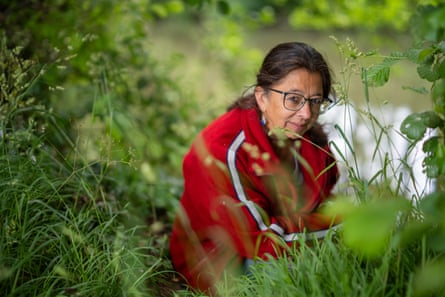
The volunteers were trained to experience distinctive animal “umwelts” and report back on the reality of being a non-human animal trying to survive around the River Tone in Somerset, England.
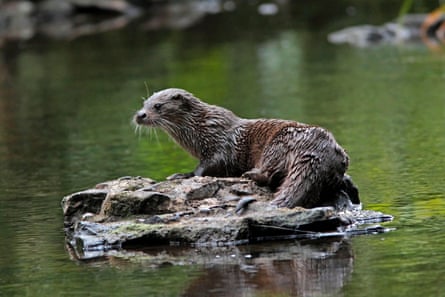
Anita Roy, a nature writer, chose to be an otter in what she called the “revolutionary” Risks Beyond Human Eyes research study. “Otters are apex predators, playful and fierce. I like their style,” she said. “The whole point was not to go out and see an otter but to be in the world as if you had taken that imaginative leap into otterhood, and see what happened.”
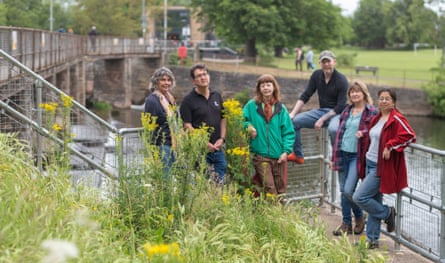
In the pioneering study – conducted by the University of the West of England and the Accelerator for Systemic Risk Assessment (ASRA), funded by the Ecological Citizen(s) Network – participants were given a detailed scientific briefing about the sensory powers of their chosen “animal collaborators” and trained to undertake exercises in the wild.
Encouraged to use a single key sense, they were advised by social anthropologists on the research team not to interpret, explain or evaluate, but simply to describe their experiences. By “de-centering” human understanding, they were told they might allow another understanding to come through, before they reported their oral testimonies back to researchers.
Roy said she began her life as an otter by scanning the riverbank for suitable places to deposit her spraint. “Assessing the landscape for a suitable place to poo isn’t something I normally do,” she said.
Because otters sense so much through their whiskers and paws, she was encouraged to pay attention to vibrations. She was struck by the thundering disturbance caused by trains on the nearby railway line that would disorientate her otter during fish-hunts.
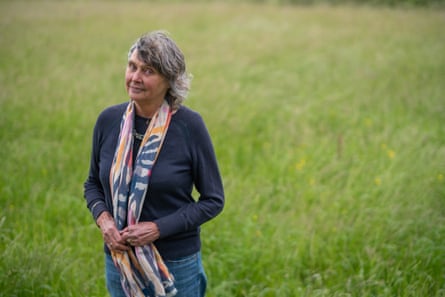
She and another volunteer, Helen Lawy, who sought to experience the world as a kestrel, became newly aware of the ubiquity of dogs. “People stick to the path but dogs are rooting around all the time,” said Lawy. “That’s a massive issue we all need to face up to. Everybody is always wanting open access everywhere – I came to the conclusion that kestrels would probably like some areas left alone, with nobody there.”
“Sitting by the riverbank for two hours, there were probably 15 dogs that came past and jumped in the river or played around,” added Roy. “If I had been a human, I would have said: ‘Dogs in the river is a major problem for otters, with flea treatments entering the water.’ As an otter, the testimony came out absolutely viscerally: ‘I hate dogs!’ I was really taken aback. When you are ‘inside’ the animal, the whole experience is extremely emotional.”
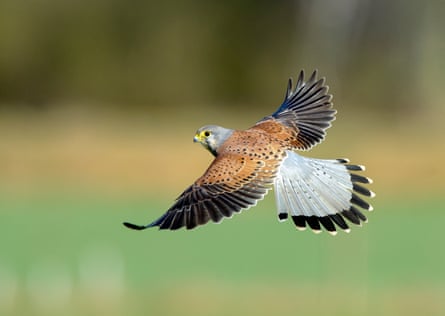
Lawy, who is the chair of the Friends of Longrun Meadow, a community green space beside the River Tone, said she was attracted to living as a kestrel by the appeal of being “free”. She did not try to fly – “I thought that might be a step too far” – but imagined her kestrel-self searching for long grass where she could hunt for voles and mice. “When you look at a landscape through a kestrel’s eyes, you realise there’s very little opportunity for them to feed. Far from being free, the kestrel was reduced to looking for disjointed little strips of land.”
James Grischeff, the director of nature recovery at Somerset Wildlife Trust, who volunteered to step into the mind of an earthworm, said: “I’ve been a nature conservationist for a very long time and my training has been in soils, but this project did a lot more than I expected – it really made me get under the skin of worms. It was fascinating, it wasn’t exactly a trance but there was a moment where you went: ‘OK, that’s how these worms interact with the environment.’”
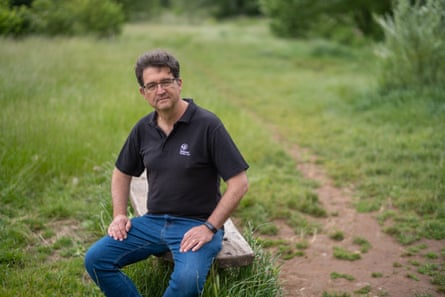
Phil Tovey, the director of nature-centric approaches at ASRA and a former soldier, said the testimonies they received from the “as-otter”, “as-kestrel” and others were rather like civilians caught in a war zone who struggled to find food, safety or shelter. “We heard that access was deeply stressed. When the volunteers gave their testimonies they were on the verge of tears. They took it so seriously but none of them dramatised it.”
Roy said she was almost crying when a fellow volunteer described how his salmon-self was too weary to leap up a fish-run constructed to supposedly help salmon around the weirs on the River Tone. “We mostly think of nature as biodiversity, a concept, but this made it so personal, so emotional and so horrific,” she said. “It was hard to feel how we’ve made the world a really hostile place for all these individual creatures. When that’s you, you really feel it. It was quite galvanising.”
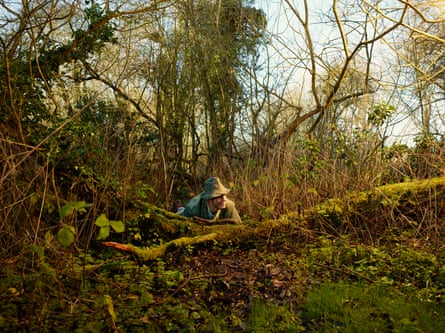
The project reflects a growing interest in the rights of nature movement and the burgeoning More-Than-Human Life programme, and follows innovative thinkers such as Charles Foster, whose pioneering book Being a Beast documented him living as a fox, red deer, badger and swift.
The study will be written up for academic journals, but Tovey said its second phase – a plan to revitalise the wild River Tone – would hopefully trigger local action.
“We should definitely do more of this kind of work,” he said. “Animals are here, active and shaping the very ground that we live on. We have to find a way to acknowledge them, and not in an abstract or performative way,” he said. “We need to accept that we live in a multispecies society, as our Indigenous brothers and sisters know.”
Roy added: “We’re already living in a multiverse, it’s right on our doorstep and yet [through our destruction of nature] we’re trying to make it into a monoverse.”



















 English (US) ·
  French (CA) ·