

PROTECT YOUR DNA WITH QUANTUM TECHNOLOGY
Orgo-Life the new way to the future Advertising by AdpathwayWhile the focus of my recent visit to Portugal was to watch seabirds, there’s a lot more to see there than shearwaters and petrels. The Algarve has a number of impressive estuaries that attract great numbers of migrant waders. Many winter there, while others use them as a refuelling station as they move south to wintering grounds in Africa. Almost all the waders that occur here I can see at home in England, but in Portugal the light is invariably better, while the birds are often more approachable and easier to photograph.
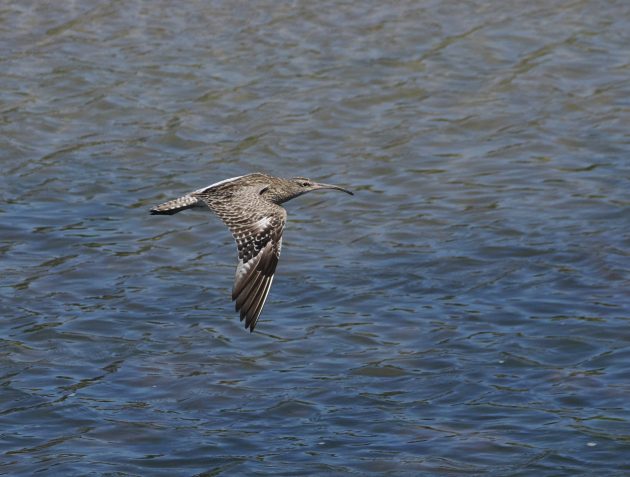
Whimbrel: next stop Africa?
I’ve had few sightings of Whimbrels in England this autumn, but I more than made up for this by close encounters I enjoyed on the western part of the Ria Formosa, close to Faro airport. (You soon get used to low-flying planes coming in to land). Though most of the birds were feeding on the saltings, my best views were of single individuals feeding on the verdant greens of the adjacent golf course – golf is big business in the Algarve.
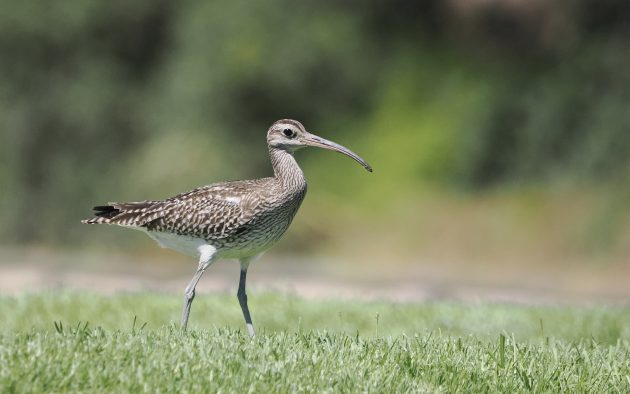
Whimbrels on the golf course
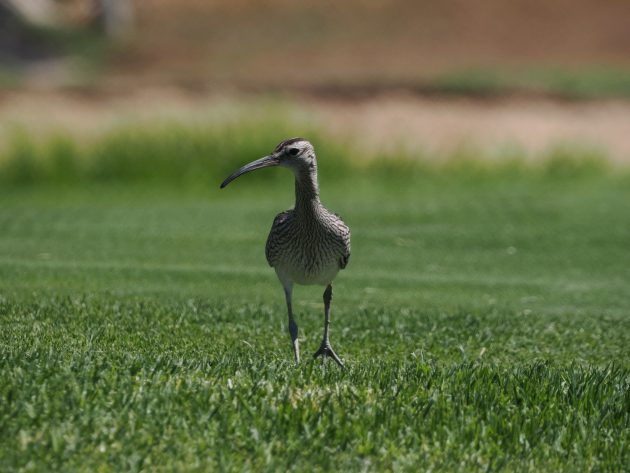
A close cousin of the larger Curlew, Whimbrels have a huge range. They are very rare breeding birds in Britain, and the birds we see on passage are mostly from Iceland, Scandinavia and western Siberia, and these are also the birds that migrate through Portugal. These Whimbrels have a distinctive white rump, just like a Curlew. In contrast, North American Whimbrels have a dark rump. The latest AviList recognises them as two different species: Eurasian Whimbrel, Numinous phaeopus, and the Hudsonian Whimbrel Numinous hudsonicus. Incidentally, though the taxonomists may have split them, the two birds sound the same and (apart from the rump) have no other obvious differences. The wonderful rippling call of the Whimbrel is a constant backdrop when birding along the Ria Formosa.
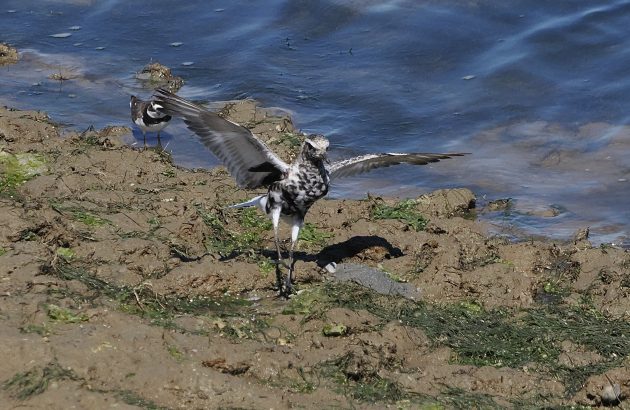
Grey Plover (above and below), moulting out of summer plumage
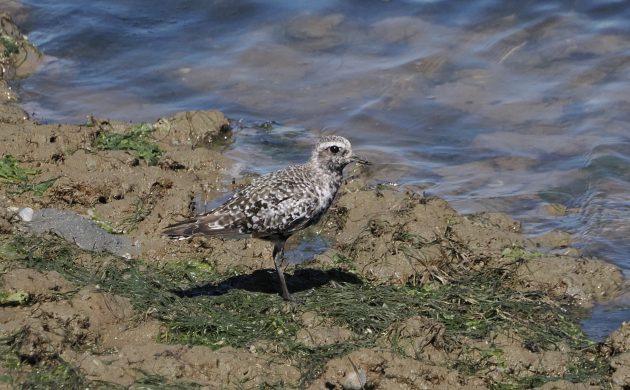
There were other familiar waders here, too – Redshank, Turnstone, Sanderling, Dunlin, Greenshank, Grey Plover (with several still in their breeding finery, and living up to their North American name of Black-bellied Plover), Ringed Plover and Kentish Plover. The last bird is the only one that doesn’t occur in England, except as a scarce migrant, though it bred until a century ago.
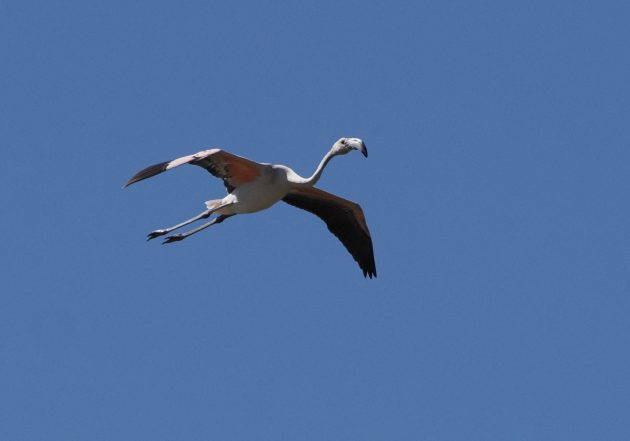
A juvenile Great Flamingo (above) and juvenile Spoonbill below
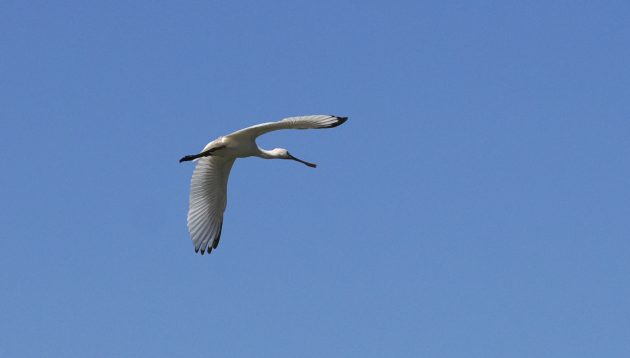
Birding the Ria Formosa is always productive, and there were plenty of other birds to be enjoyed, ranging from Glossy Ibises to a single juvenile Greater Flamingo. Ospreys can often be seen fishing here, but I was a little disappointed to only see a single bird which didn’t come close enough to have its portrait taken.
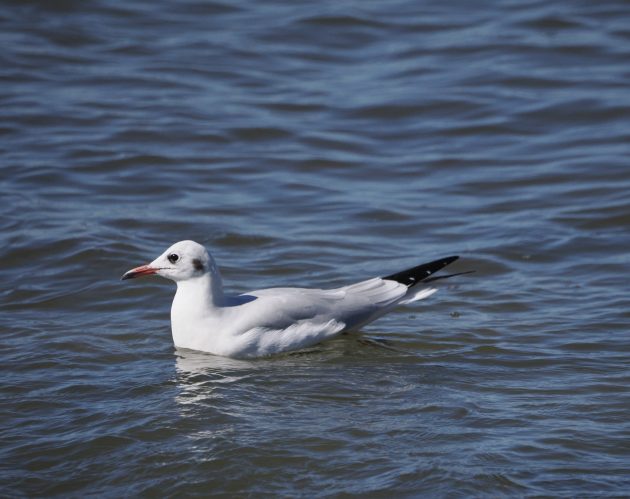
Black-headed gull (above) and Slender-billed Gull (below)
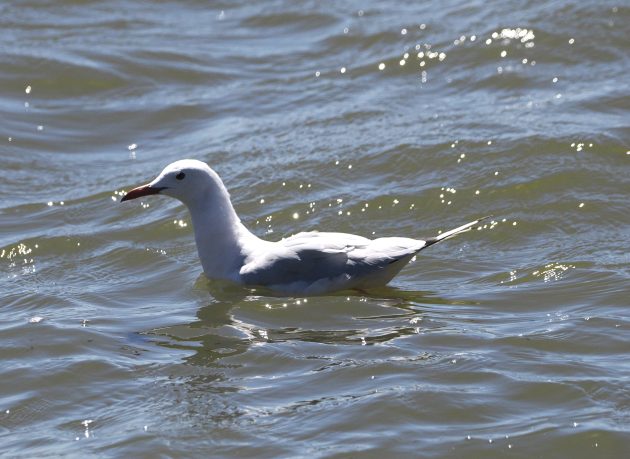
The variety and numbers of gulls was impressive: the birds we saw included Yellow-legged, Lesser Black-backed, Black-headed, Mediterranean, Audouin’s and Slender-billed. The latter would be easy to overlook and dismiss as just another Black-headed, but it has a different jizz about it, thanks to its longer neck and longer beak. It’s a bird that is rarely recorded in Northern Europe.
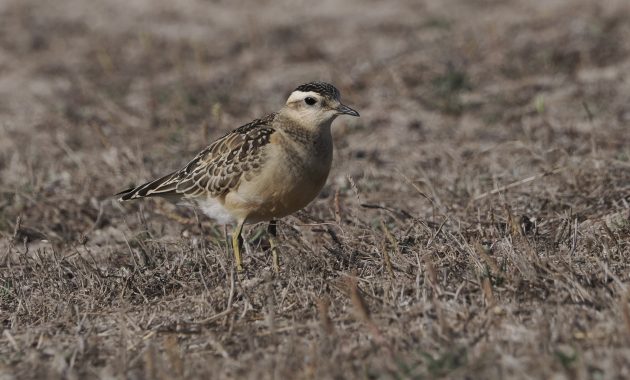
Dotterel, a regular migrant in south-west Portugal
A couple of days later our pelagic excursion was postponed because of the wind, so we ventured inland, to Vale Santo, in search of one of the region’s special autumn birds: Dotterel. We found them, too, a trip of three. Perfectly camouflaged, they would have been easy to overlook as they sheltered from the wind behind clumps of vegetation. We hadn’t heard of any other sightings this autumn, so finding the birds was very satisfying. (Vale Santo is close to Sagres, the most south-western town in mainland Europe.)
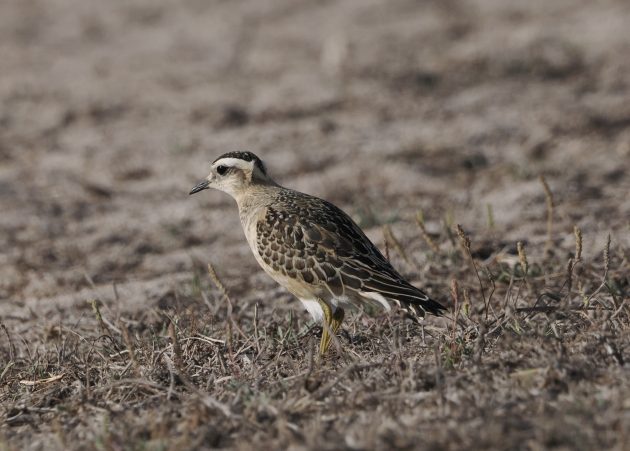
Dotterel are scarce migrants in England – there’s a small and declining breeding population in the Highlands of Scotland. They’re not birds I see often, so it was a special treat to come across them. The birds we found were typical of their species, as they were tame and approachable, even coming closer as we sat down to watch them. They were one of the highlights of the trip.
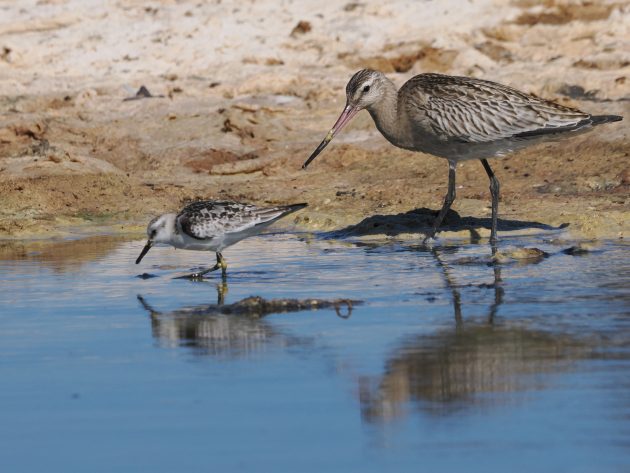
Customers at the same fuel station: a Sanderling with Bar-tailed Godwit on the Praia do Martinhal
Later the same day we checked out the Praia do Martinhal, an attractive beach to the east of Sagres. I’d never been there before, but I had read that it usually had a small lagoon behind the beach which attracts waders. We soon found the shallow, tiny lagoon, but despite its small size it had attracted an interesting variety of waders. There was a single Bar-tailed Godwit, along with a Little Stint, a Redshank and a Sanderling. Curiously, there was just one individual of each species.
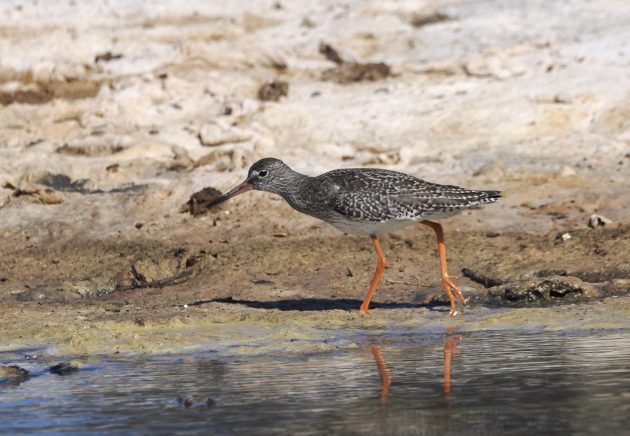
Redshank. This is an adult
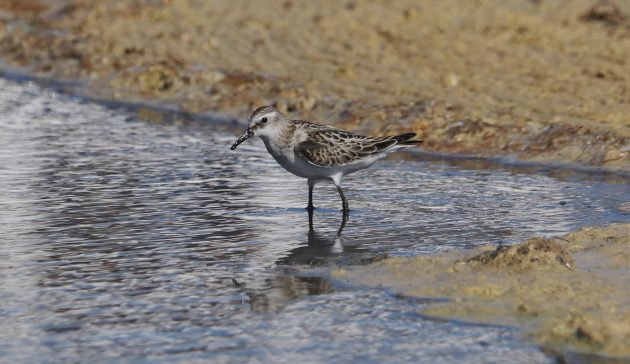
Ageing waders is interesting: the godwit had darkish-brown upper parts, making it a juvenile, as an adult would have looked much more grey. The Little Stint was an adult – in the autumn we tend to see more juveniles than adults. The Redshank was also an adult, while the Sanderling was a juvenile. All four must have flown huge distances to reach Portugal. The Sanderling had probably travelled the farthest, as these birds nest high in the arctic, close to the North Pole, while the godwit and the stint had most likely flown from Siberia. The least travelled of the quartet would have been the Redshank, though it may well have originated in Iceland, some 2000 miles away.
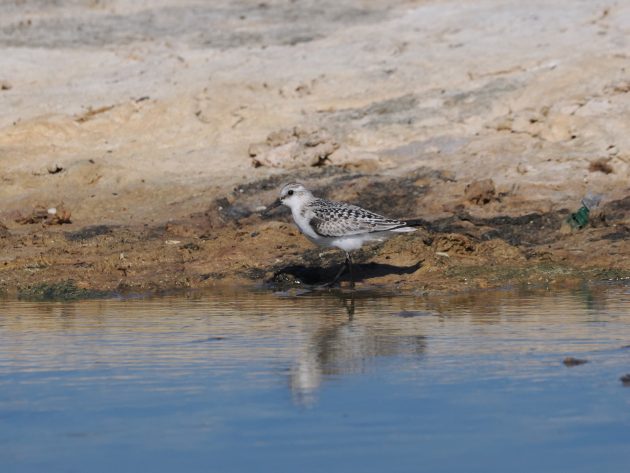
Sanderling (above) and Little Stint (below)
All were high-mileage birds, and they may well have been refuelling before heading to wintering grounds as far away as South Africa. Mixing with globe trotters is always a fascinating experience, and it had been a real privilege to watch these birds at such close range.
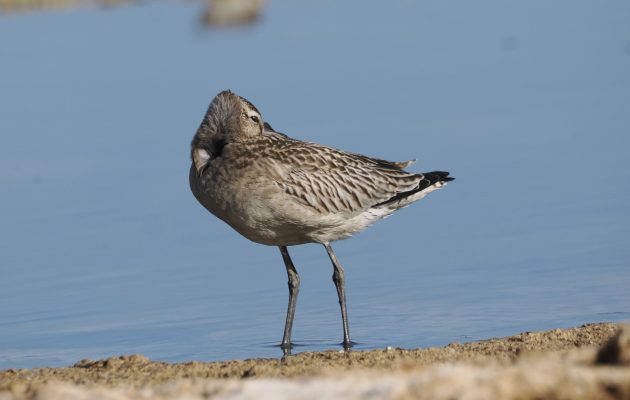
Bar-tailed Godwit: time for a nap

















 English (US) ·
  French (CA) ·