

 5 months ago
131
5 months ago
131
PROTECT YOUR DNA WITH QUANTUM TECHNOLOGY
Orgo-Life the new way to the future Advertising by Adpathway
Published on March 17th, 2026 | by Emily Keeble
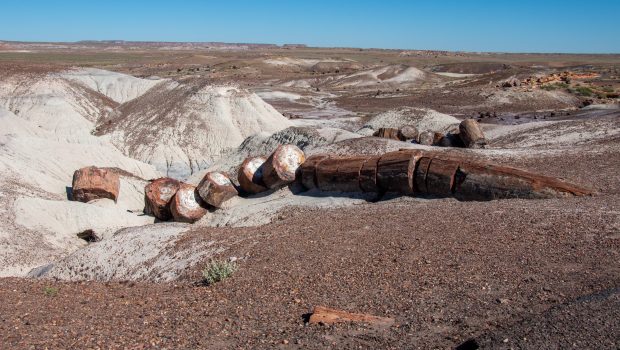
Petrified Forest National Park in northeastern Arizona, USA is a hub for Triassic palaeontology and has exposures representing 20 million years of the Late Triassic Chinle Formation. Visitors marvel at the colourful fossilised trees from which the park takes its name, but a whole host of animals called these swampy forests home 225 million years ago.
In this episode, we talk to Dr. Adam Marsh, lead palaeontologist at the National Park. We explore the history, geology, and palaeontology of Petrified Forest, along with exciting research centred around specimens from the park. Research is ongoing, with many groups of palaeontologists working on Petrified Forest specimens, and we hear about directions it might go in the future.
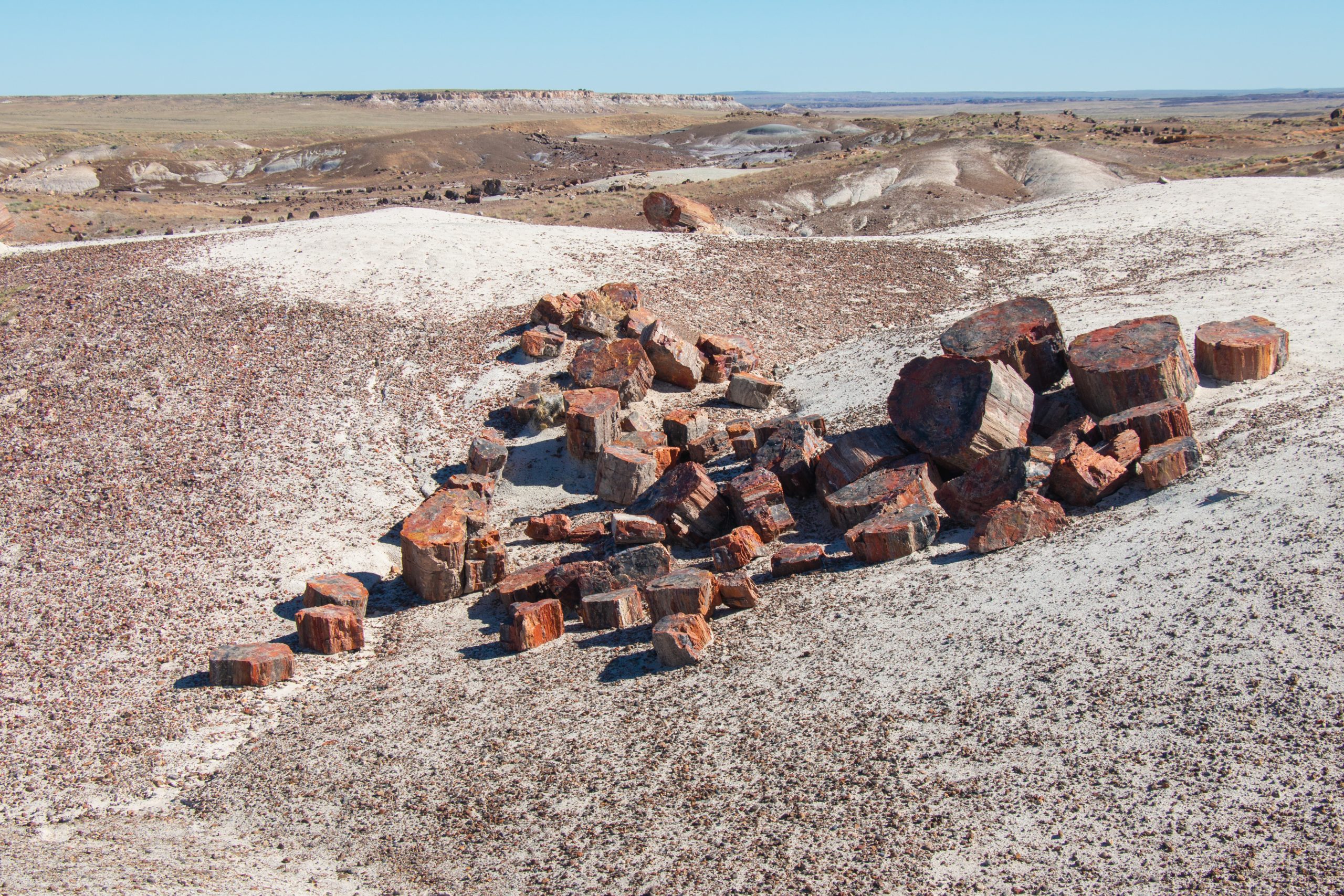 Petrified trees and wood are extremely common in the park. Silica from volcanic ash has replaced the wood with quartz. The colours come from the recrystallisation of that quartz and the introduction of different minerals. Image: E. Keeble
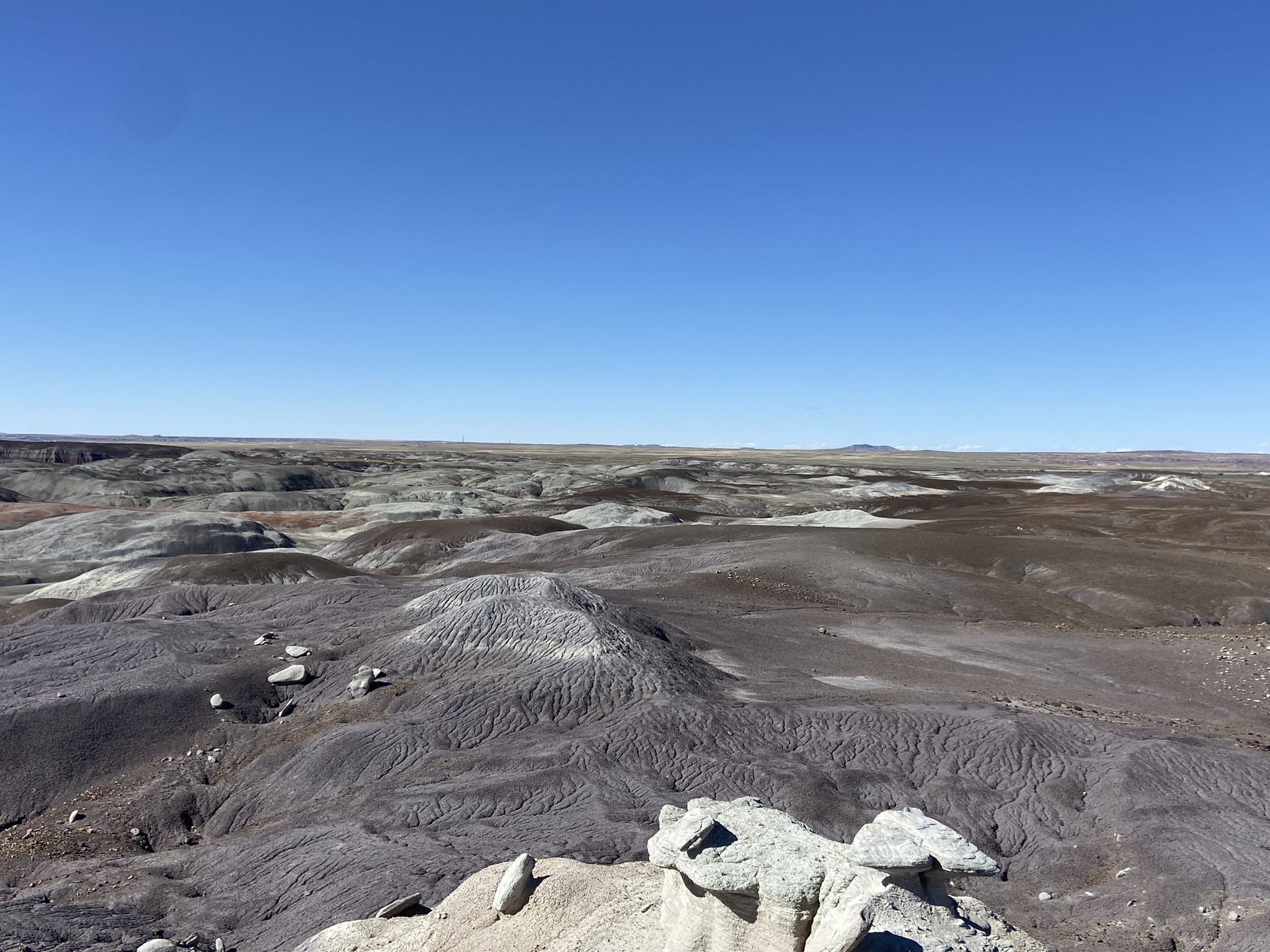 The park contains badlands that are bursting with fossils. The sediments in Petrified Forest National Park are full of bentonite, which expands when wet and contracts when dry, pushing fossils to the surface. Image: NPS/A. Marsh
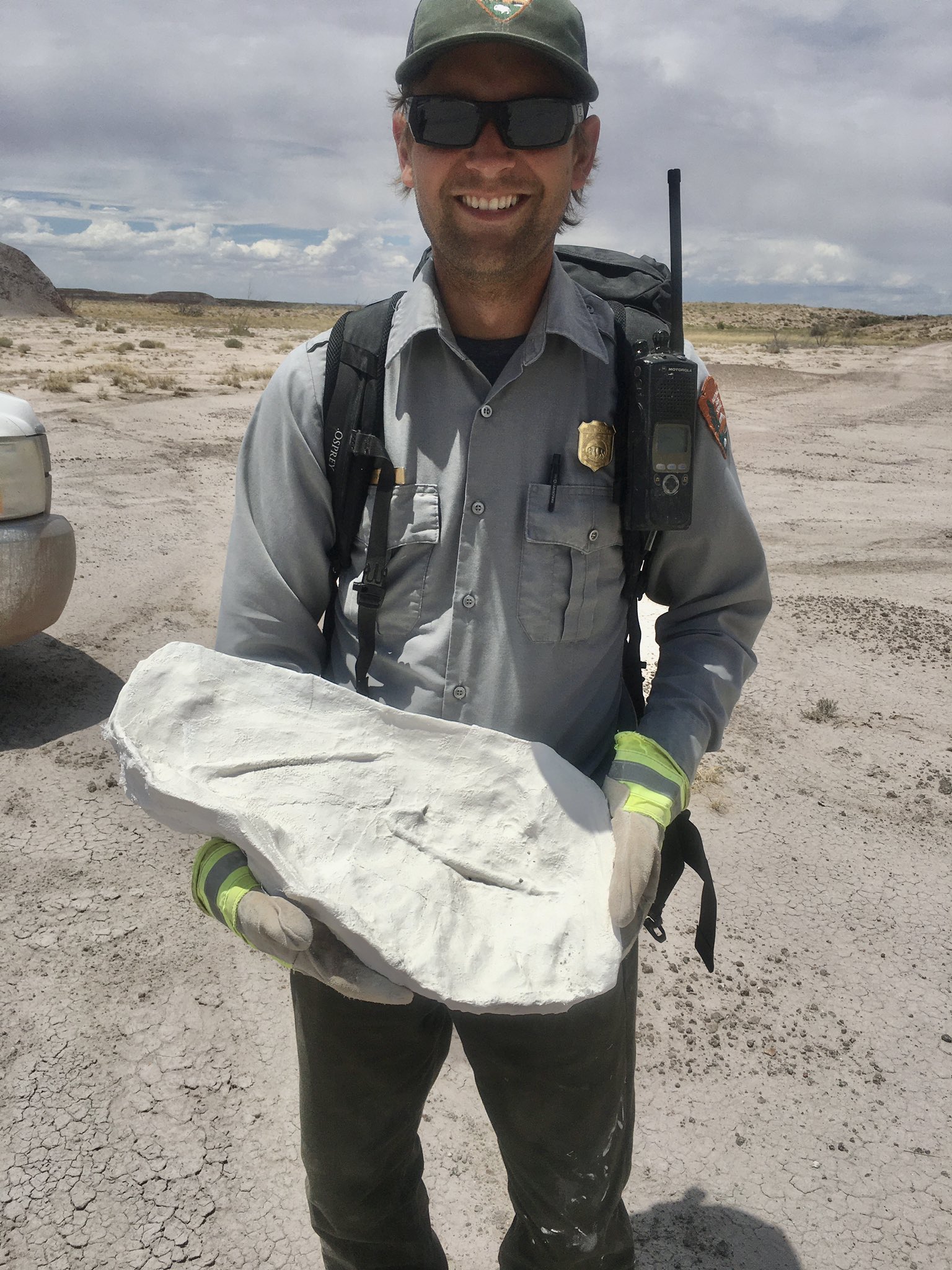 Interviewee Adam Marsh holds a jacket after collection in the park. Image: NPS/A. Marsh
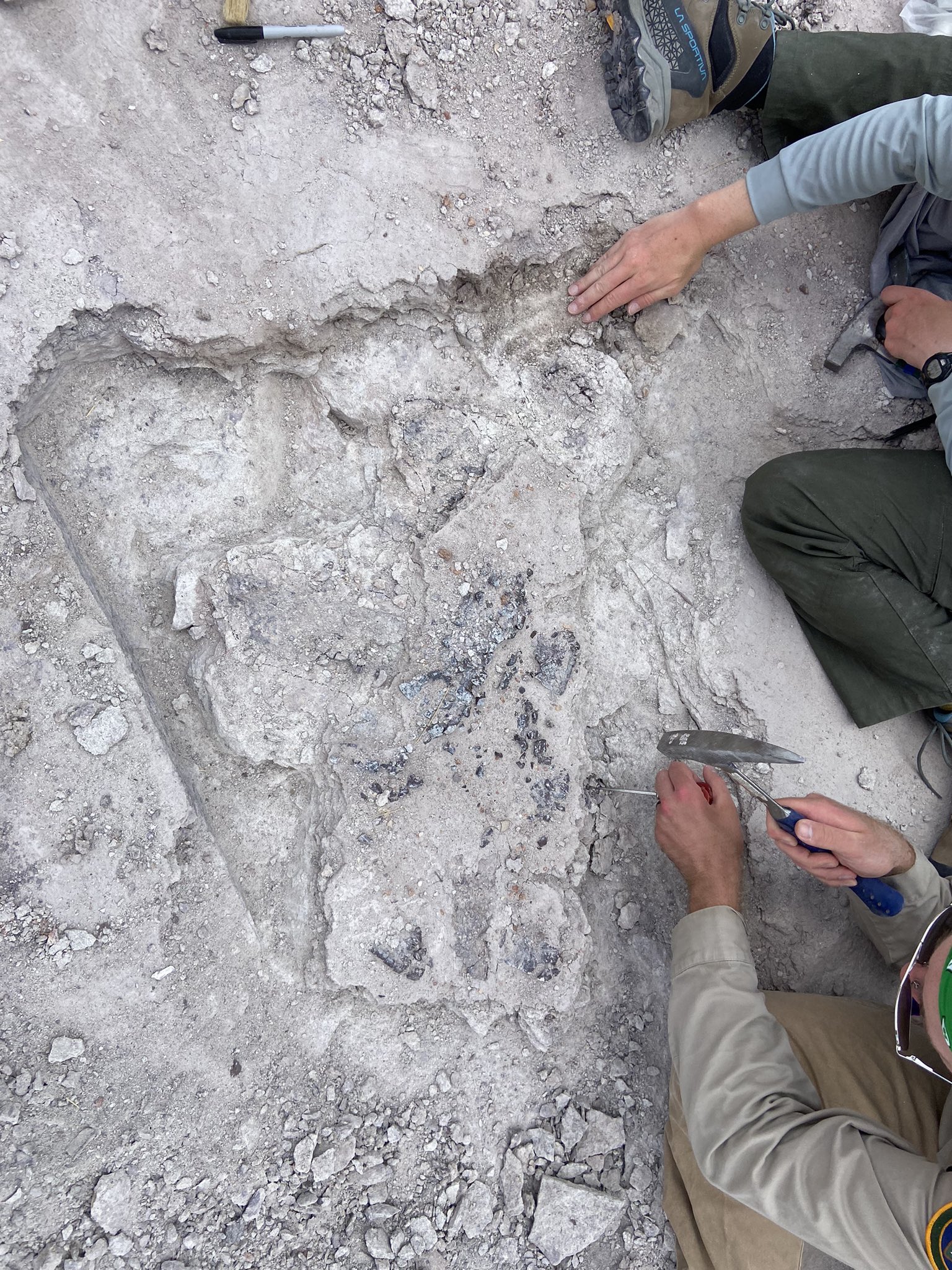 A typical dig in Petrified Forest. Image: NPS/A. Marsh
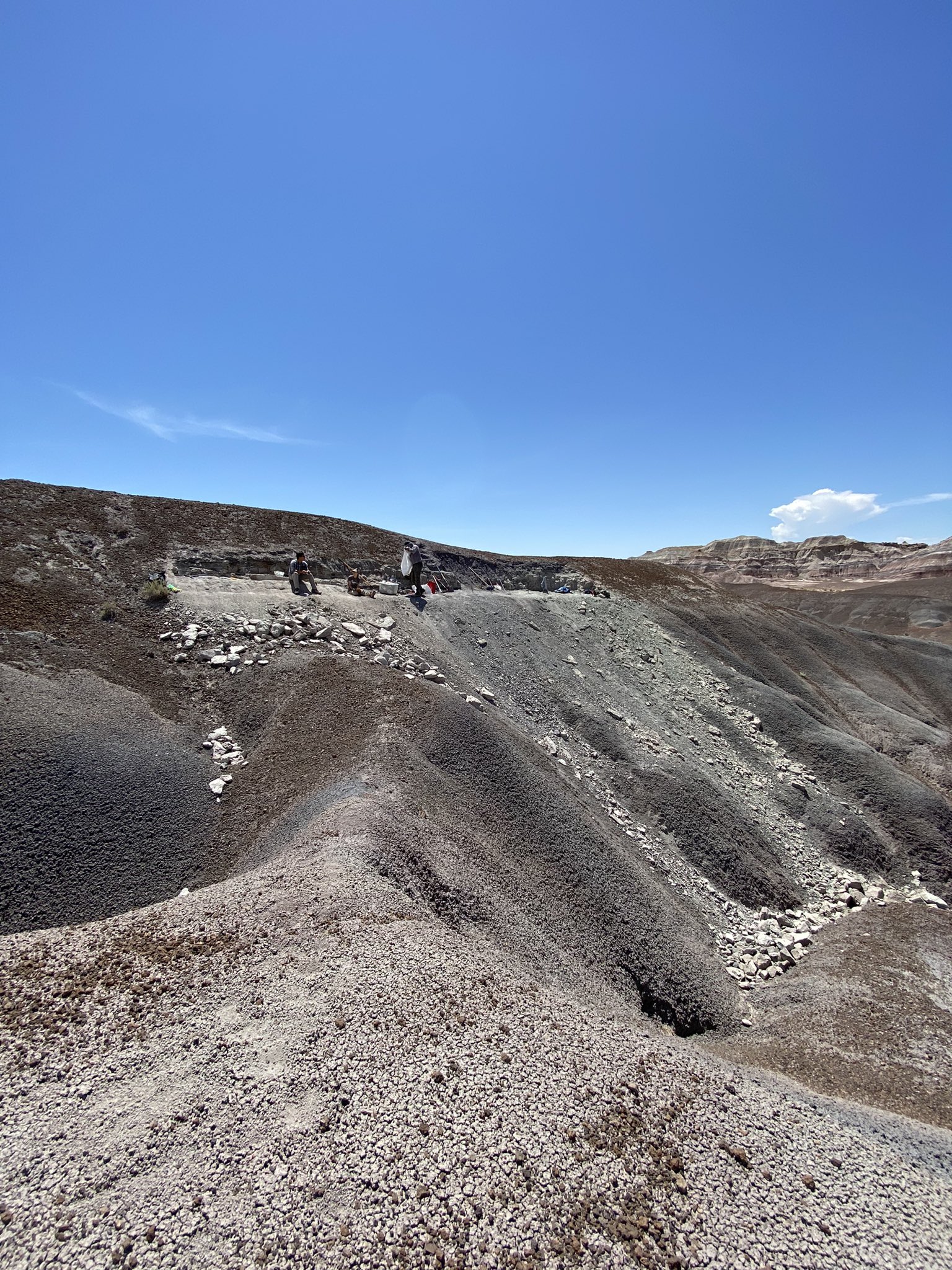 A quarry – you can see discarded rocks that have been dug out trailing down the hillside. Image: NPS/Adam Marsh
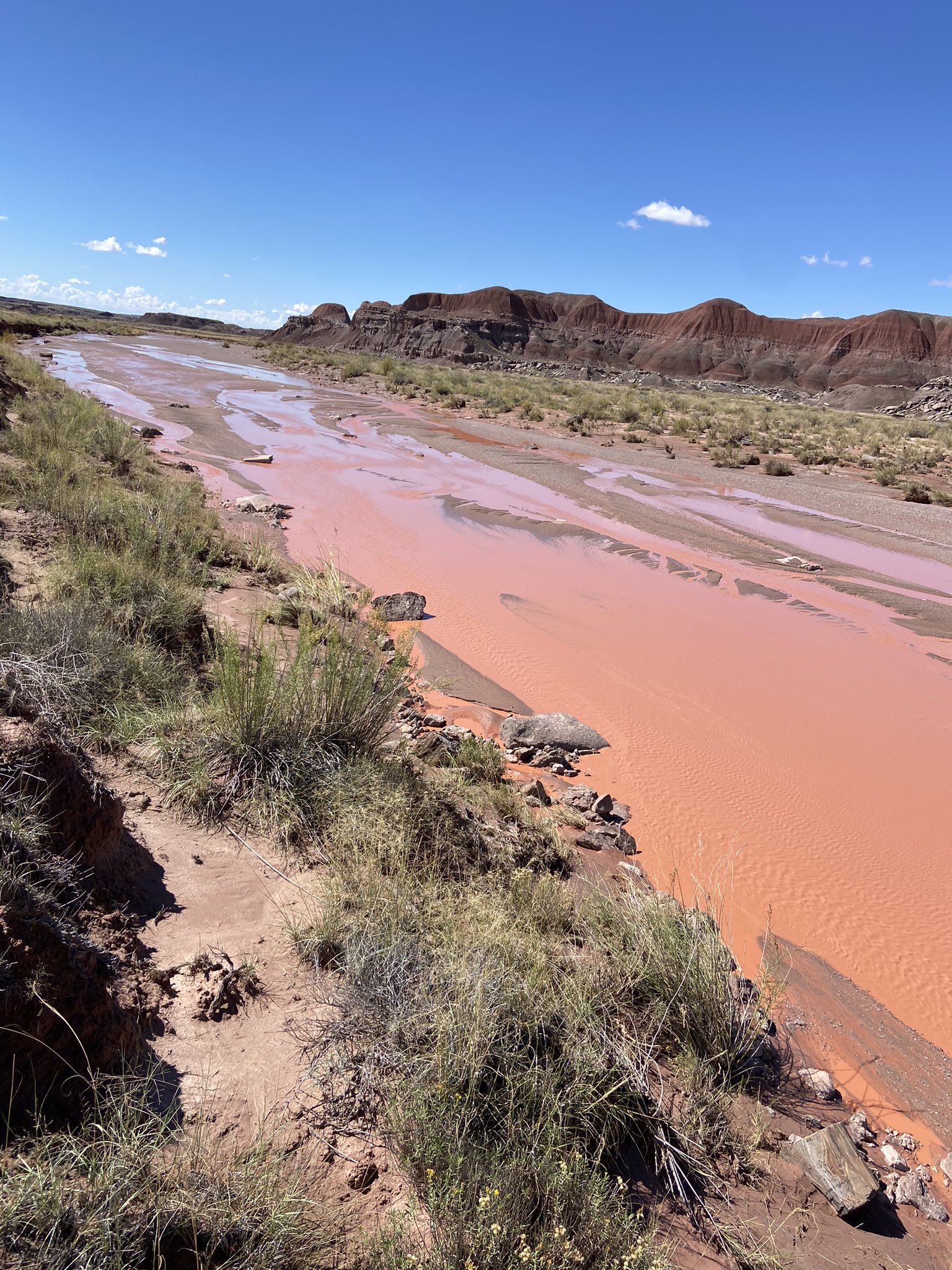 The Puerco River, which gives its name to Puercosuchus (below), rarely flows as a river throughout Petrified Forest and spends most of the year a dry riverbed. Image: NPS/A. Marsh
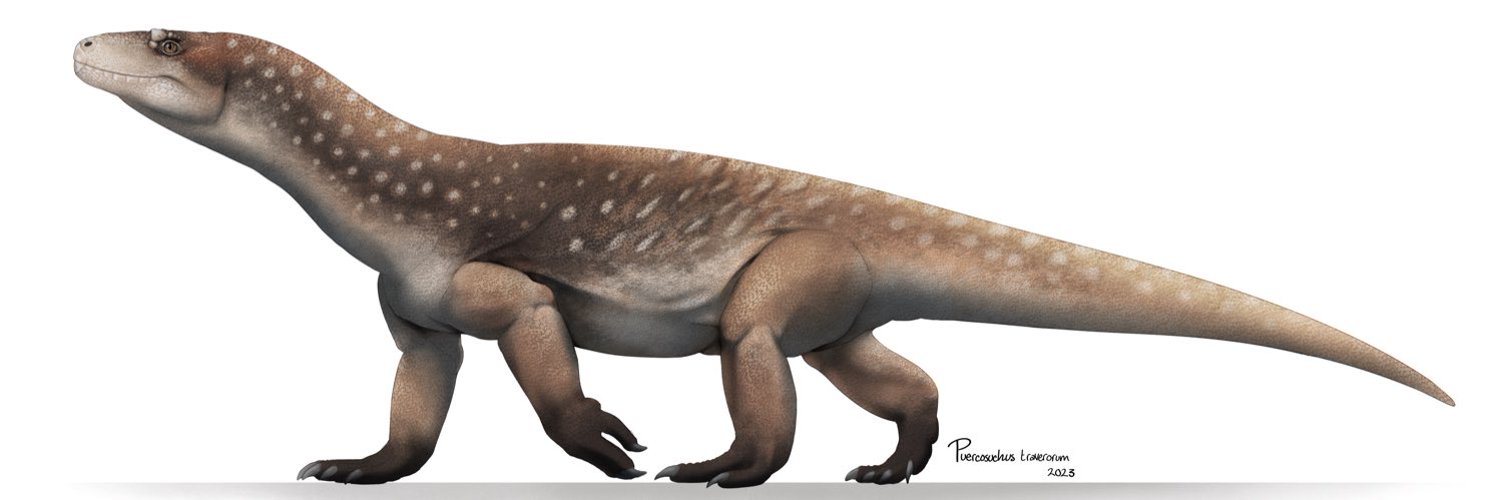 One of the animals known from Petrified Forest, Puercosuchus, an azendohsaurid allokotosaur, described in Marsh et al. 2022. Image: Megan Sodano
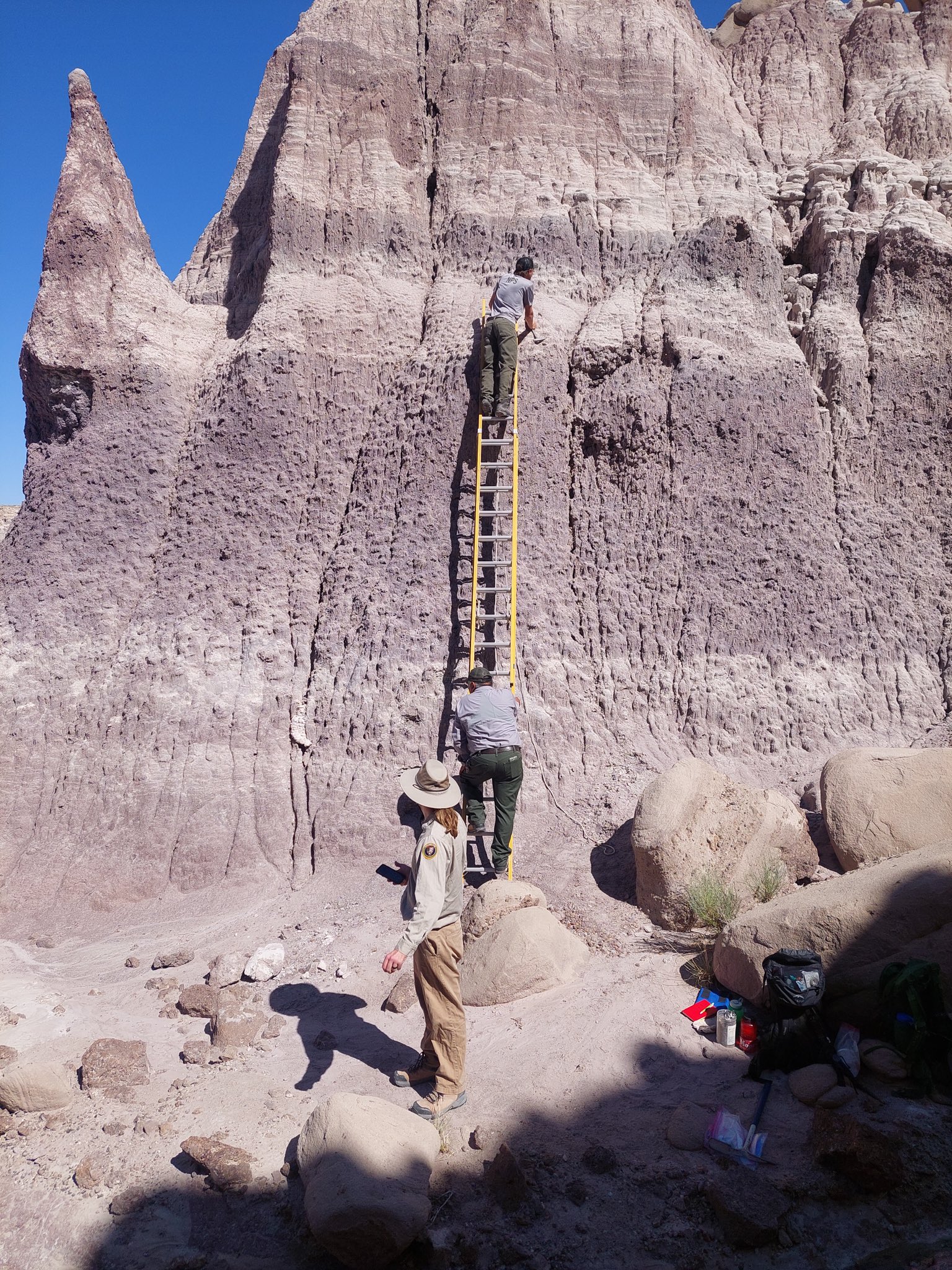 Adam at the top of a ladder in search of rauisuchid skull bones. Sometimes fossils are found in far from ideal places. Skull pieces were initially found at the base of the cliff and followed upwards. Image: NPS/A. Marsh
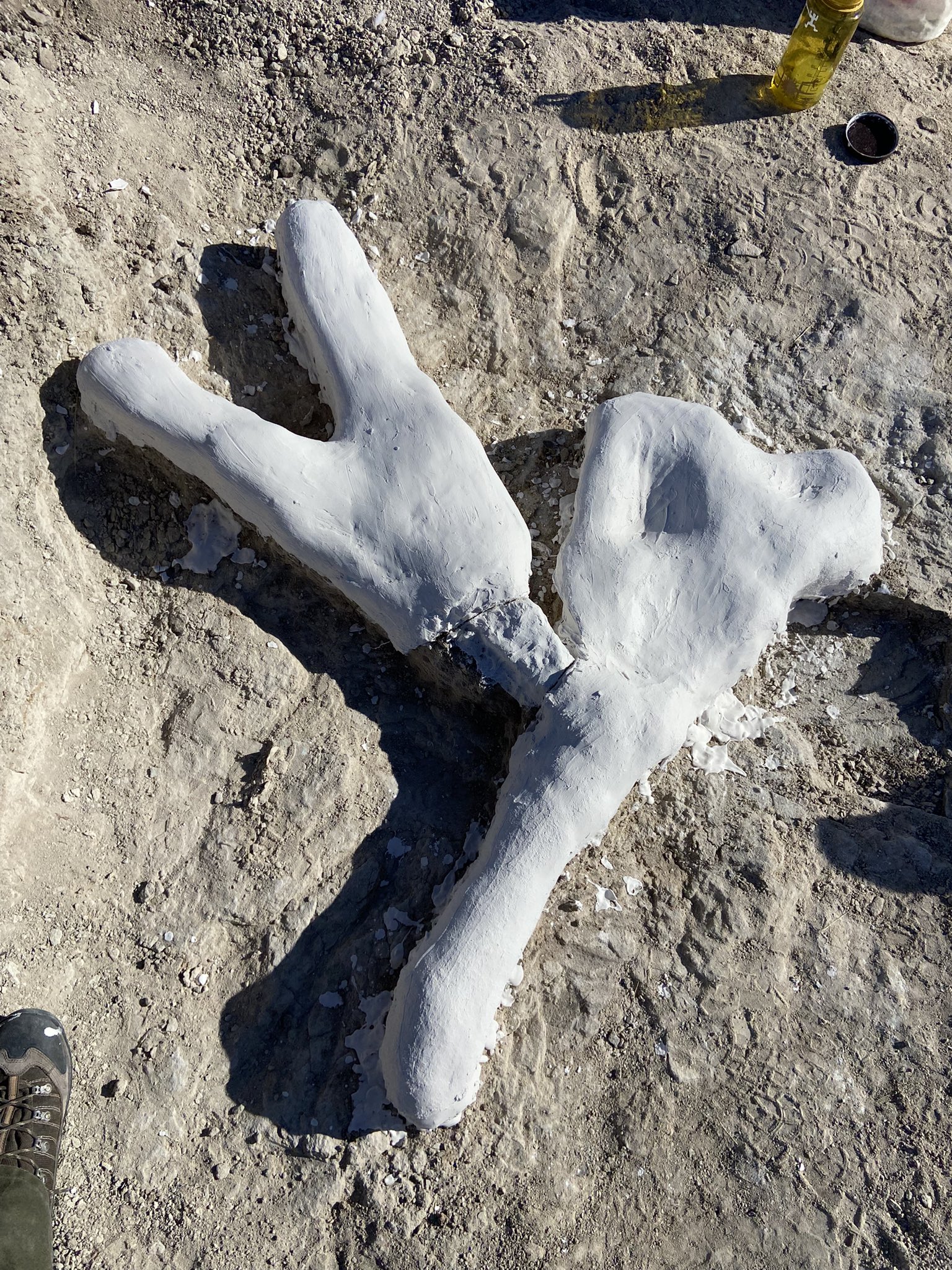 Jackets containing a phytosaur skull found at the park. Phytosaurs were large crocodile-like reptiles, the teeth of which are very common in the Chinle Formation. Image: NPS/A. Marsh
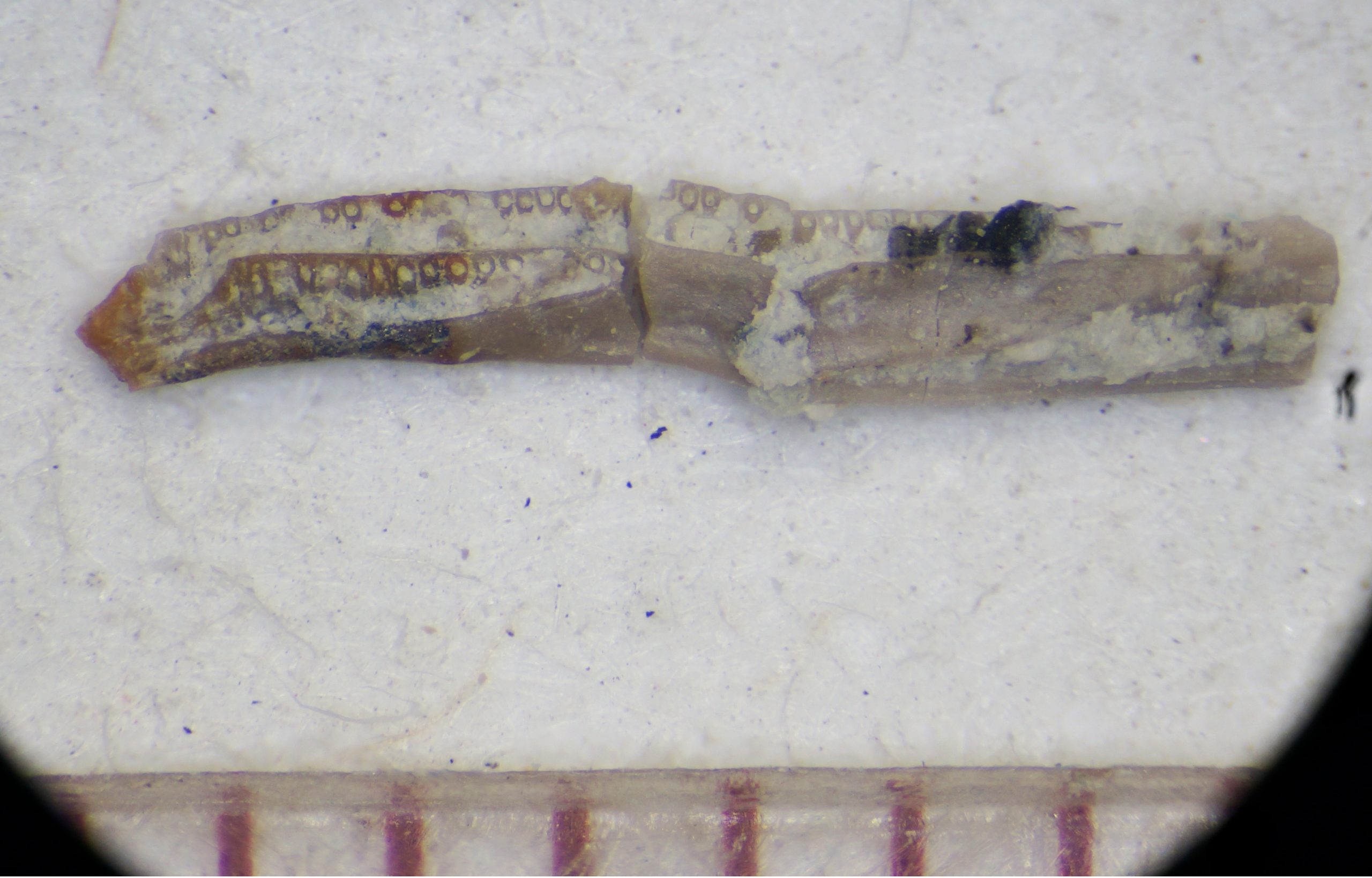 At the other end of the size scale for fossils, the lower jaw of the caecilian Funcusvermis, described in Kligman et al. 2023. The park has many prolific microvertebrate sites where very small fossils are common. We previously interviewed lead author, Ben Kligman about this discovery in episodes 151/152. Image: NPS/A. Marsh
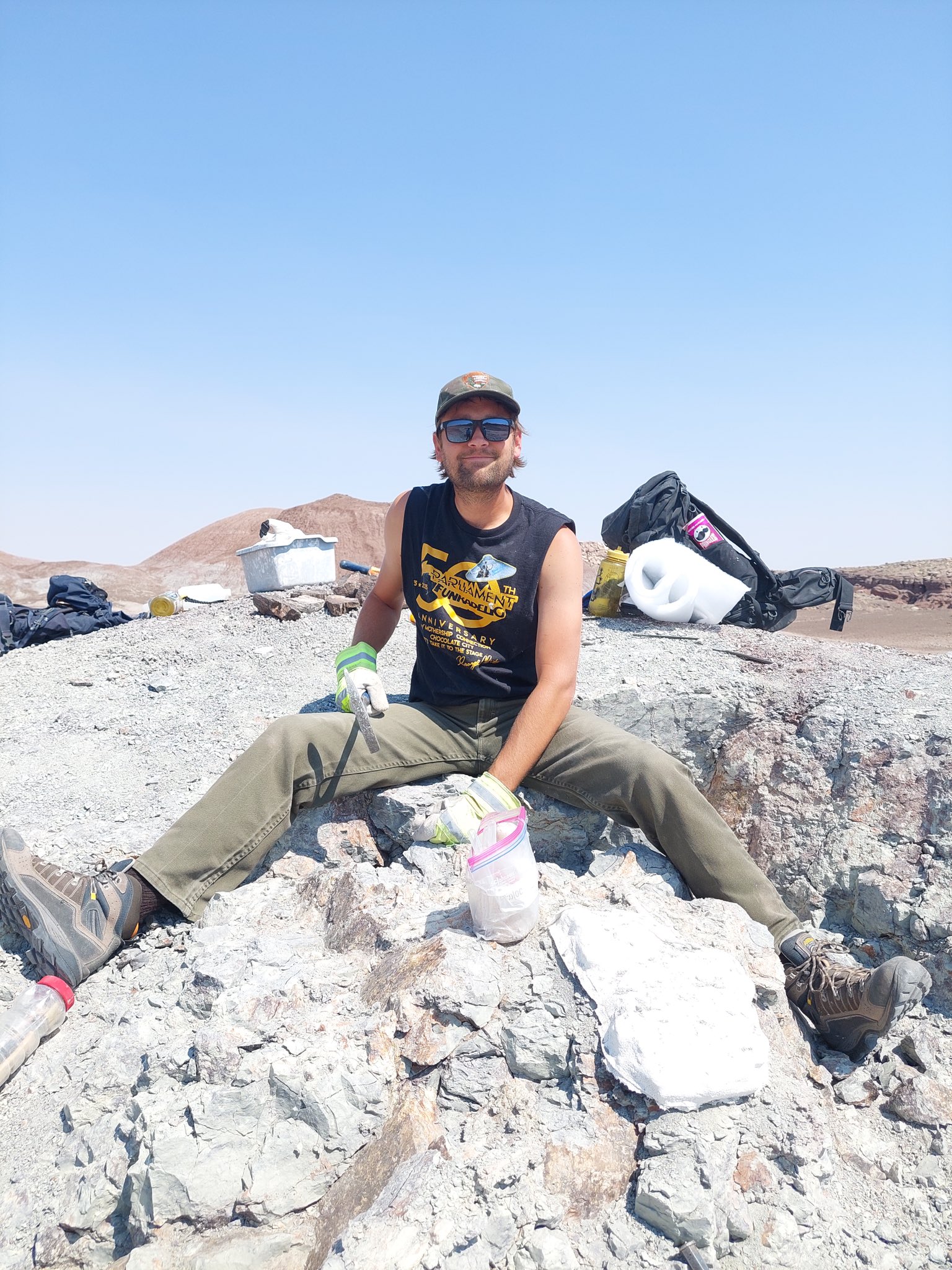 Adam Marsh sits at a quarry in the park. Image: NPS/A. Marsh
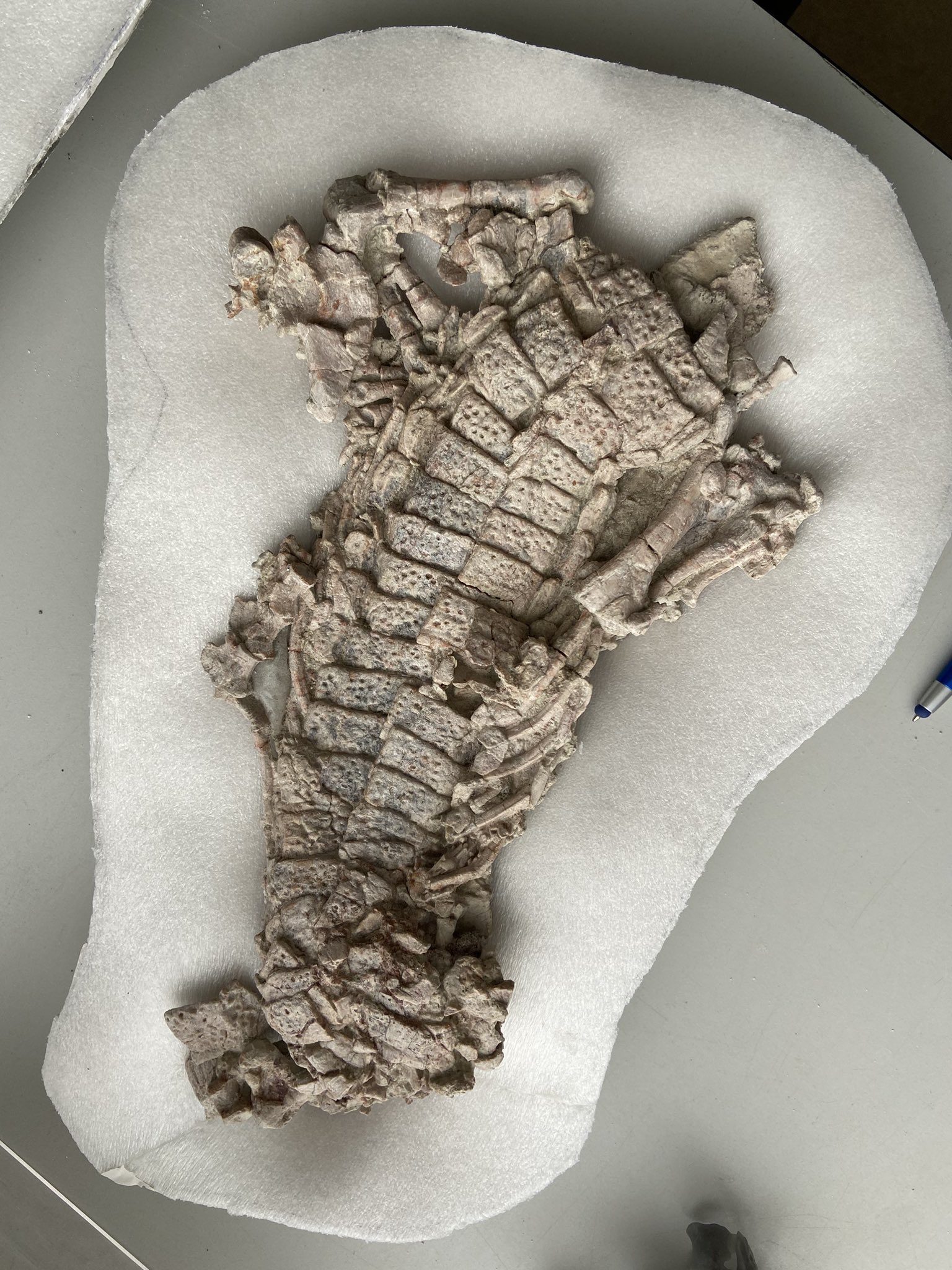 The preservation of fossils in the Chinle Formation can be excellent, as seen here in this Revueltosaurus specimen prepared onsite. Revueltosaurus was a relatively small, heavily armoured pseudosuchian related to aetosaurs. Image: NPS/A. Marsh
Kligman, B.T., Gee, B.M., Marsh, A.D., Nesbitt, S.J., Smith, M.E., Parker, W.G., Stocker, M.R. 2023. Triassic stem caecilian supports dissorophoid origin of living amphibians. Nature 614(7946):102-107. doi: 10.1038/s41586-022-05646-5.
Marsh, A.D., Parker, W.G., Nesbitt, S.J., Kligman, B.T., Stocker, M.R. 2022 Puercosuchus traverorum n. gen. n. sp.: a new malerisaurine azendohsaurid (Archosauromorpha: Allokotosauria) from two monodominant bonebeds in the Chinle Formation (Upper Triassic, Norian) of Arizona. Journal of Paleontology 96(90):1-39. doi:10.1017/jpa.2022.49
Tags: Allokotosaur, Arizona, Forest, Funcusvermis, Phytosaur, pseudosuchian, Puercosuchus, Rauisuchid, Triassic















 English (US) ·
  French (CA) ·