

 1 month ago
82
1 month ago
82
PROTECT YOUR DNA WITH QUANTUM TECHNOLOGY
Orgo-Life the new way to the future Advertising by Adpathway

Published on August 17th, 2026 | by David Marshall
The Cambrian Explosion is one of the most significant events in evolutionary history. Classically, it describes the sudden appearance of complex fossils (including all major animal groups) at the beginning of the Cambrian Period. Before then it was thought that only relatively simple single-celled or multicellular life existed. We now understand this event to be a lot more nuanced, recognising many of the geological biases at play and having discovered complex fossils in the earlier Ediacaran Period. Many researchers therefore consider the term ‘Cambrian Radiation’ to be a better representation of the event.
Whether an explosion or a radiation, determining the events of the Ediacaran and Early Cambrian and their causes is a constant area of palaeontological research. Numerous drivers behind this event have been hypothesised ranging from oxygen availability and nutrient cycling to an arms race between predators and prey. It is likely that no single factor will be identified as an underlying cause, but the relative extent to which each contributed to the event will be debated for many years to come.
In this interview, we are joined by Dr Julien Kimmig, Staatliches Museum für Naturkunde Karlsruhe, Germany, who recently authored a study on the coprolites of the Early Cambrian, the evolution of guts, and the influence the ‘Cambrain Fecal Revolution’ may have had on the wider Cambrian Radiation.
 Within the modern marine carbon cycle, the processes driven by biological activity are often referred to as the ‘biological pump’. These biological processes are incredibly important for how carbon is cycled and is the foundation of the whole marine food web. Within this cycle, particulate organic carbon (POC) represents all small organic remains such as detritus and faecal material. Whilst this POC represents a modest 2.3 gigatonnes of material at any time, around 50 gigatonnes can be cycled each year, meaning POC has the highest turnover rate of any organic carbon pool on the planet. In some environments, faecal matter can account for 100% of all POC, though the average amount is typically below 40%. Regardless, faecal matter still represents a significant proportion of the biological pump and understanding how and when animals first started to produce it is a key part in understanding the evolution of global carbon cycles through time.
 It is reasonable to assume that the origin of faecal matter would coincide with the first appearance of metazoans (animals) in the fossil record. We are now fairly confident that many of the organisms from the Ediacaran biota, such as Kimberella (pictured), are animals. In fact, we even have evidence that some specimens preserve traces of gut content. Despite this, no coprolites (fossil excrement) are known before the Cambrian Period. Given that the identity of many Ediacaran organisms remains problematic, it can be difficult to ascertain whether these (potential) animals had the requisite anatomy to produce faecal matter and in a way that can be fossilised and recognised at a coprolite. Image credit: Oleg Kuznetsov CC BY-SA 4.0.
 The most convincing examples of Ediacaran animals with a gut anatomies potentially capable of producing faecal matter are the cloudinomorphs. These animals produce a funnel-in-funnel external shell and possess a through-gut stretching from end to end. If true, they would be closer related to us than to other basal groups such as jellyfish or sponges. The image above demonstrates the position of the gut (dark red) and the fossilisation process. The video below shows how the specimens were micro-CT scanned and how a 3D reconstruction was built up from interpretations of hundreds of 2D X-ray slices. Credits: Schiffbauer et al. 2020. Discovery of bilaterian-type through-guts in cloudinomorphs from the terminal Ediacaran Period. Nat Commun 11, 205. CC BY 4.0.
 The image above shows how many coprolite-producing sites are known from each series/stage of the Cambrian Period and their locations. Whilst coprolites are found as soon as the Cambrian begins, the number of fossil sites remain relatively low. By examining the entirety of the Cambrian coprolite record in this way, Kimmig and Bicknell were able to characterise the evolution of guts and faecal matter through time.
 In the first series of the Cambrian Period, the Terreneuvian, possesses very few coprolite-yielding sites and the relative size and diversity of coprolite forms remains low. This likely represents the lack of larger animals with more advanced digestive tracts at this time.
 Small carbonaceous and phosphatic micro-coprolites, like those above, are the only forms encountered in the Terreneuvian. The carbonaceous forms are often flattened strings of subcircular faecal pellets that are below 2mm in length. They are preserved in a variety of shapes including straight and coiled forms. Since they don’t contain the remains of other animals, it is assumed they were likely produced by deposit-feeding organisms grazing the sea floor sediments.
 Phosphatic microcoprolites include three-dimensional pellets which can occur in a variety of forms including individual pellets, trails and burrows. Similar to the carbonaceous microcoprolites, these were likely formed by deposit feeders.
 By Series 2 of the Cambrian, many more coprolite-yielding sites are known and there is an increase in the size, complexity and abundance of coprolites. These sites include the first konservat-lagerstätten (sites of special preservation of fossils) that preserve the first large and relatively complex animals. Because of these sites, we are able to observe that modern trophic dynamics (feeding strategies) are more or less established by Series 2 and we are better able to identifying potential producers for each coprolite type. However, the effort put into collecting and studying material from these lagerstätten could introduce a human bias given the relatively limited attention offered to the earlier Terreneuvian sites.
 There are a variety of different macroscopic coprolite groups appearing in Series 2. These can often contain the remains of other animals, thus giving us direct evidence of some of the earliest metazoan (animal) food webs. This example from the Emu Bay Shale contains the remains of trilobites.
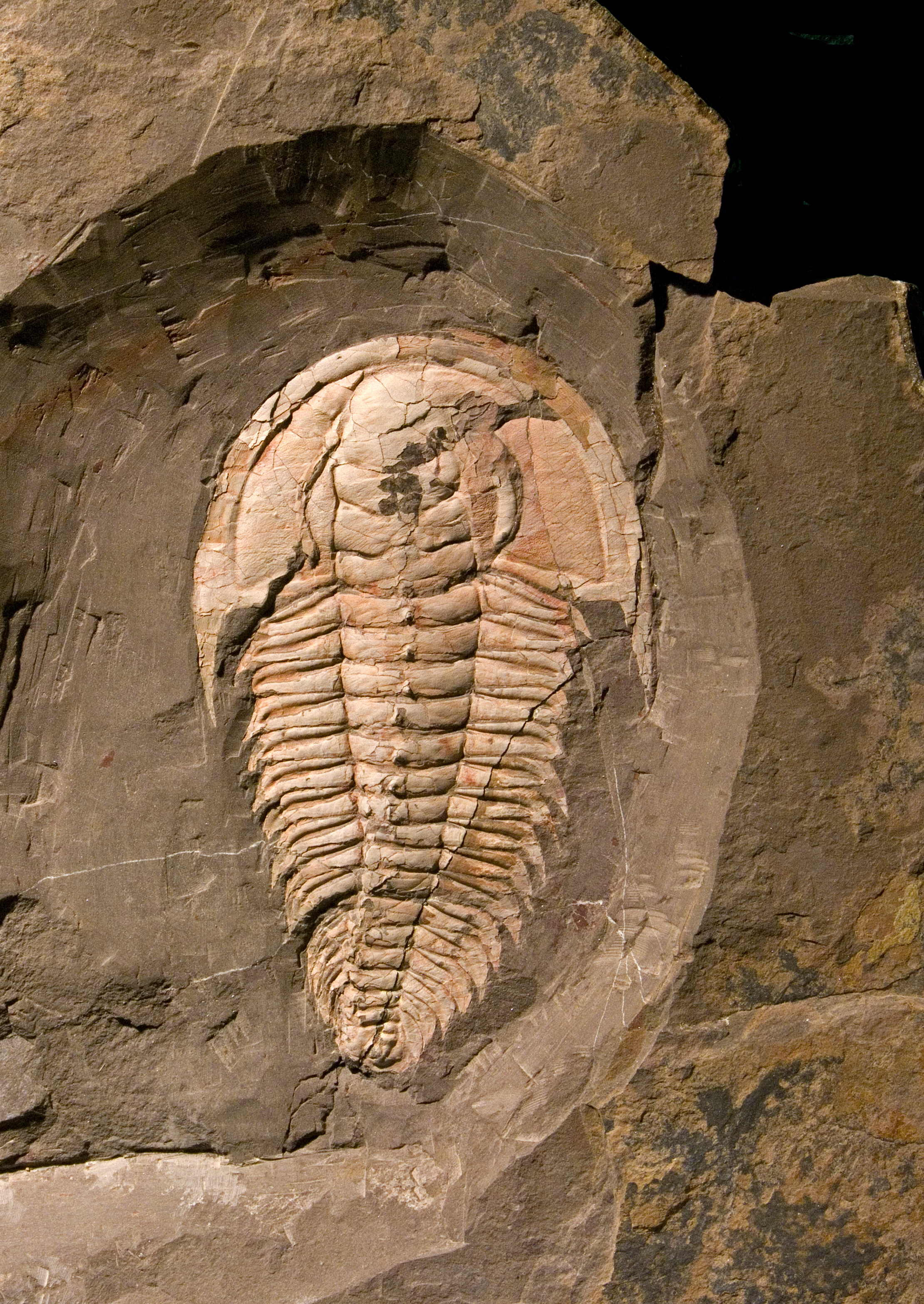 A possible producer of this coprolite could be the relatively large trilobite Relichia rex. This trilobite is known to have strong, robust legs with large spines at their bases that would have been used to crush other animals it encountered on the sea floor. Whilst other large predators, such as Anomalocaris are known from Emu Bay, their nektonic (free swimming) lifestyle means that their coprolites would likely contain other nektonic prey such as bivalve arthropods. The coprolites of these nektonic predators are much rarer. Whilst it’s a now lot easier to reason who the producer of any given coprolite might be, there is still little direct evidence. Fortunately, by this time, we begin to find animals with their gut contents preserved in situ (i.e. still inside the gut), these are termed ‘cololites’ and together with coprolites and any other fossil produced from the digestive system of an animal are called ‘Bromalites’.
 Phosphatic microcoprolites in Series 2 also include those formed of shelly material. These will often contain the remains of one type of organism such as worm sclerites (armour), bivalve arthropod exoskeletons and brachiopod shells. It is thought that these coprolites were probably produced by smaller predators or scavengers such as arthropods or worms.
 By the Miaolingian, marine shelf communities were well established and were producing a lot of faecal matter.
 We have some excellent evidence of trophic systems from this time, particularly from the priapulid worm Ottoia prolifica. This worm lived in the sediment, is abundant in many Cambrian lagerstatten (such as the Burgess Shale) and often has its gut preserved. There are therefore numerous examples of cololites preserved revealing the kinds of material that Ottoia was eating. In the image above, there are clear examples of hyoliths (cone shaped shells)(A-H), brachiopod shells (I-K), agnostids (L, M) and trilobites (N-P). Image credit: Vannier, J. 2012. Gut Contents as Direct Indicators for Trophic Relationships in the Cambrian Marine Ecosystem. PLoS ONE, 7, 12. CC BY 4.0.
 With so many specimens and so much direct evidence, the diet of animals like Ottoia can be fully defined and even compared between different sites. The table above shows the number of specimens with specific gut contents from the Raymond Quarry (RQ+RT) and Walcott Quarry (WQ+WT) showing proportional differences in their diets. Image credit: Vannier, J. 2012. Gut Contents as Direct Indicators for Trophic Relationships in the Cambrian Marine Ecosystem. PLoS ONE, 7, 12. CC BY 4.0.
 Looking at the data as a whole, it’s clear that there is a link between the appearance of different animal groups and the appearance of coprolites. Given that an animal can produce faecal material multiple times a day, but only ever one corpse, it’s unsurprising that the appearance of coprolites can marginally predate the appearance of the potential producers in the fossil record. The evolution of coprolites can therefore serve as a proxy for the evolution of guts and entire trophic systems through the Cambrian.
 So we now have a better grasp of evolution of faeces through the early Cambrian, what’s the significance? This is all to do with nutrient availability and cycling. Particulate organic carbon (POC) transfers carbon and other nutrients from the surface to deeper waters. This provides resources for epifaunal and infaunal animals (i.e. those living on and in the sea floor sediments respectively). These, in turn, bioturbate (mix up) the sediments, introducing oxygenated waters and creating new ecological niches. This movement of POC also is a driver for the biological pump. By understanding the evolution of faecal material in the early Cambrian, we better understand the evolution of the biological pump and the marine carbon cycle. This would have had global significance and so is an important factor when considering the cause of the Cambrian Radiation.
 Dr Julien Kimmig, Staatliches Museum für Naturkunde Karlsruhe.
Tags: anomalocaris, Burgess Shale, Cambrian explosion, Coprolite, diet, Dietary ecology, Ecology, Emu Bay, environment, Lagerstatten, Nutrients, palaeoecology, Palaeoenvironment, Paleoecology, Trilobite


















 English (US) ·
  French (CA) ·