

 9 hours ago
16
9 hours ago
16
PROTECT YOUR DNA WITH QUANTUM TECHNOLOGY
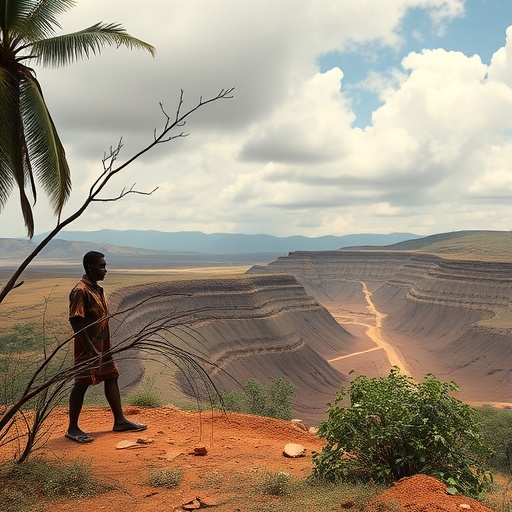
Orgo-Life the new way to the future Advertising by AdpathwayEthiopia grows far more grain than its population needs for a healthy diet, yet produces only a fraction of the fruits, vegetables, pulses, and nuts that national and international dietary guidelines recommend, according to a new national-scale analysis published in the Journal of Agriculture and Food Research. The study, led by Ruth Bekele Mijena of Wageningen University & Research together with colleagues at the Ethiopian Public Health Institute, is the first to systematically compare Ethiopia’s entire domestic crop production against both the country’s newly launched food-based dietary guidelines and the planetary-health benchmark of the EAT-Lancet Commission. Its findings reveal a food system calibrated for calories rather than nutrition—and quantify an unexpected opportunity: capping surplus cereal output alone could free up roughly 5.38 million hectares of cropland, about 34 percent of the nation’s cultivated land, for more nutrient-dense crops.
The researchers set out to answer a deceptively simple question that had never been addressed at the national level: does Ethiopian crop production actually supply enough food, in the right proportions, to support a healthy diet as defined by the Ethiopian Food-Based Dietary Guidelines (EFBDG), introduced in 2022, or by the EAT-Lancet reference diet? Ethiopia is Africa’s second most populous country, home to roughly 130 million people, and its food system is overwhelmingly cereal-based. Staples such as teff, wheat, maize, barley, and sorghum supply about 70 percent of the nation’s calories, and 96 percent of rural households rely on cereal-dominated diets with low intakes of fruits and vegetables. Only 14 percent of children under two, 15 percent of adolescents, and 20 percent of women of reproductive age consume the minimum recommended number of food groups, and about 55 percent of Ethiopians cannot afford a healthy diet at all. Compounding the picture, cultural and religious fasting practices of the Ethiopian Orthodox tradition steer much of the population toward plant-based diets for more than 200 days a year, making the composition of domestic crop production unusually consequential for nutrition outcomes.
To build their assessment, the team compiled the most recent consistent national dataset available, covering the 2021 agricultural year. They drew on records from the Ethiopian Statistics Service encompassing smallholder farms during both main cropping seasons—the Meher season from September to February and the Belg season from March to August—as well as commercial farms. In total, smallholders cultivated 14.7 million hectares in the Meher season and 2.1 million in the Belg, while commercial farms, concentrated in cash crops such as coffee, tea, chat, and cotton, covered about one million hectares. The researchers converted production figures from quintals into kilograms, classified every reported crop into the food groups used by the EFBDG, the ESS statistical system, and the EAT-Lancet diet, and then calculated how much of each food group would be needed to meet guideline-recommended consumption for every age-and-sex subgroup of the population, using demographic data from the U.S. Census Bureau.
The technical treatment of nutrient supply was deliberately conservative and detailed. Production weights were converted to edible portions using factors from the Kenyan food composition table, and nutrient contents per 100 grams of raw crop were taken from the USDA food composition database, with values for uniquely Ethiopian foods such as kocho—a fermented bread-like staple made from enset—drawn from the earlier Ethiopian food composition tables. Because micronutrients are lost during cooking, the team applied USDA retention factors to convert raw-crop nutrient supplies into the amounts actually available in commonly consumed forms, such as boiled beans. Nutrient requirements were then aggregated across the population using harmonized average requirements, with energy values of 1,250 kilocalories per day for young children, 2,300 for school-age children and the elderly, and 2,700 for adults. Recognizing the phytate-heavy, low-animal-source-food character of Ethiopian diets, the researchers assumed low iron bioavailability of just 5 percent and low zinc bioavailability, and they ran the analysis against both the Estimated Average Requirement (EAR), which captures the needs of half the population, and the Recommended Dietary Allowance (RDA), which covers 97.5 percent.
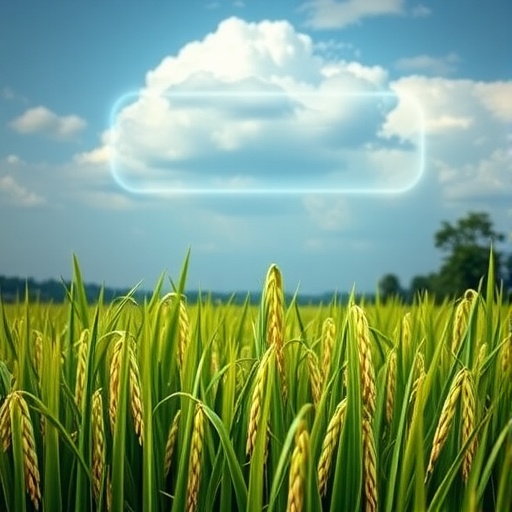
The results expose a striking asymmetry. Of the roughly 17 million hectares of cropland devoted to food crops, 12 million hectares—68 percent—were planted with cereals, which produced about 32 teragrams of food, or 52 percent of total output. Pulses took 11 percent of the land, cash crops 9 percent, oilseeds 6 percent, root crops just 3 percent, and vegetables and fruits a combined 3 percent. Root crops punch far above their land share, contributing 14 percent of production from 3 percent of the area, while fruits occupied a mere 1 percent of cropland and contributed 2 percent of the food supply. Enset, a perennial banana-relative cultivated in home gardens across the southern highlands, accounted for 10 percent of food production without competing for dedicated cropland, since it is typically intercropped.
When production was compared with the EFBDG recommendations, the “grains, roots, and tubers” group showed an 89 percent surplus—45 teragrams produced against 24 required. Every other plant-based food group fell short. Pulses covered only 54 percent of the recommended amount, vegetables 38 percent, fruits a dismal 20 percent, and nuts and seeds 85 percent. Under the EAT-Lancet reference diet the pattern was even more lopsided: whole grains were produced at 379 percent of the recommended level and starchy roots and tubers at a remarkable 610 percent, while vegetables covered just 14 percent, fruits 16 percent, tree nuts and peanuts 8 percent, and unsaturated oils 49 percent. Legumes were the only exception, narrowly exceeding the EAT-Lancet target at 111 percent.
Nutrient accounting told a consistent story. Aggregate crop production was sufficient to meet the population’s energy needs, and 14 of the 18 nutrients examined were available in adequate supply relative to the EAR. But four fell short: vitamin A was the worst gap, with only 14 percent of the EAR met—just 11 percent of the RDA—followed by vitamin E at 53 percent of the EAR (42 percent of the RDA), energy from fat at 72 percent, and calcium at 96 percent of the EAR and 78 percent of the RDA. At the other extreme, magnesium, fiber, and phosphorus were produced at roughly five times the EAR. Cereals and pulses dominated the overall nutrient supply, while fruits and vegetables, despite their tiny production volumes, contributed the bulk of vitamin C through crops such as guavas and peppers. Root crops contributed meaningfully to vitamin A, vitamin B6, and vitamin E—not because carrots, potatoes, and taro are exceptionally rich in these nutrients, but because they are grown in enormous volume.
The most policy-relevant finding emerged from a modeling scenario in which cereal production was capped while still fully meeting the nation’s energy requirement. Under that constraint, cereal output could drop from 32 teragrams to 16—nearly halved—freeing 5.38 million hectares, about 34 percent of Ethiopia’s cropland. Even after this reduction, 13 of 18 nutrients would remain in sufficient supply, though the existing deficits in fat, calcium, vitamin A, and vitamin E would deepen, and riboflavin would tip into a marginal 5 percent shortfall against the EAR. The authors stress that the feasibility of such a shift depends on agroecological conditions, water availability, market dynamics, and farmers’ adaptive capacity, none of which the model captures.
Why does Ethiopia overproduce cereals in the first place? The study traces the pattern to decades of policy prioritizing caloric self-sufficiency: improved cereal seeds, subsidized mineral fertilizers, and market-oriented surplus production have all reinforced the cereal pipeline. Meanwhile, growers of non-cereal crops face missing improved seeds, limited irrigation and mechanization, poor credit access, weak post-harvest infrastructure, and fragmented market linkages. Traditional gender roles in farm decision-making, limited nutrition literacy, and insecure land tenure—which discourages investment in perennial fruit trees—add further friction. The authors argue that closing the gap requires more than agronomy: investment in storage, transport, and market infrastructure, financial incentives and crop insurance for diversified farmers, and stronger institutional coordination of Ethiopia’s still-underimplemented nutrition-sensitive agriculture strategy. They also highlight home gardens and enset-based agroforestry systems, already widespread in Ethiopia, as proven, scalable pathways to dietary diversity; studies cited in the paper show home gardens can lift household dietary diversity from four or five food groups per week to six or more.
The research carries important caveats. It accounts only for plant-derived nutrients, so shortfalls in calcium, vitamin A, and vitamin E may be partially offset by animal-source foods that Ethiopians do consume. Total production was used as a proxy for availability, ignoring seed use, feed, losses, and trade, which likely overstates actual nutrient supply. And the cropland reallocation scenarios are theoretical rather than agronomically validated. Still, the study’s central message is unambiguous: dietary energy sufficiency is not food sufficiency. As Ethiopia’s population continues to grow, redirecting even part of its vast cereal surplus toward pulses, vegetables, fruits, and oilseeds could simultaneously close critical micronutrient gaps, improve resilience against crop failures through diversification, and—according to parallel global modeling work—ease pressure on land, biodiversity, and fertilizer use. For a country whose diets currently fail much of its population, the map toward a healthier food system, the authors conclude, may already lie beneath its own overplanted wheat and teff fields.
Subject of Research: Whether Ethiopia’s national crop production supplies enough food and nutrients to support healthy diets as defined by the Ethiopian Food-Based Dietary Guidelines and the EAT-Lancet reference diet
Subject of Research: Agriculture
Article Title: Gaps between Ethiopian crop production and the needs of a healthy diet
Article References: Mijena, R. B., Maasen, K., Van Zanten, H., Croijmans, L., Brouwer, I. D., & Groot, J. C. J. (2026). Gaps between Ethiopian crop production and the needs of a healthy diet. Journal of Agriculture and Food Research, 31, Article 103267. https://doi.org/10.1016/j.jafr.2026.103267
Image Credits: AI Generated
DOI: 10.1016/j.jafr.2026.103267
Keywords: Ethiopia, crop production, healthy diet, EAT-Lancet diet, food-based dietary guidelines, nutrient adequacy, cereal surplus, cropland reallocation, vitamin A deficiency, nutrition-sensitive agriculture, food systems, dietary diversity
Cite Scienmag News
APA MLA Chicago
Alan Morgan. (September 10, 2026). Ethiopian crop production falls short of healthy diet requirements. Scienmag. https://scienmag.com/ethiopian-crop-production-falls-short-of-healthy-diet-requirements/
Copy citation Download RIS
Tags: agricultural land use Ethiopiacereal surplus Ethiopiacomparison of Ethiopian diet with EAT-Lancet benchmarkscropland optimization EthiopiaEAT-Lancet diet comparison EthiopiaEthiopia dietary guideline implementationEthiopia food security challengesEthiopia’s food security and nutrition challengesEthiopian crop production analysisEthiopian food system and dietary guidelinesEthiopian food system nutritionfruit and vegetable deficiency Ethiopiahealthy diet dietary guidelines Ethiopiaimpact of surplus cereal crops on croplandland use efficiency in Ethiopian agriculturemismatch between cereal production and nutrient diversitynutrient-dense crop opportunitiesnutrition-focused agriculture in Ethiopiaopportunities for increasing fruit and vegetable production in Ethiopiapotential for crop diversification in Ethiopiarole of agricultural policy in improving Ethiopian dietsustainable crop production Ethiopiasustainable land management and crop diversification

















 English (US) ·
  French (CA) ·