

 1 month ago
71
1 month ago
71
PROTECT YOUR DNA WITH QUANTUM TECHNOLOGY
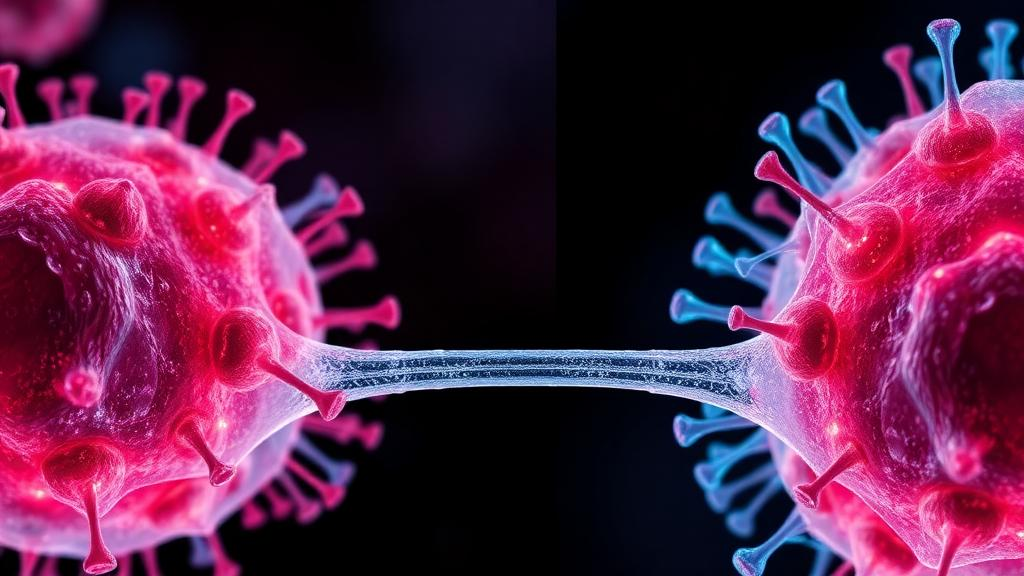
Orgo-Life the new way to the future Advertising by AdpathwayA study from researchers at the Texas A&M College of Veterinary Medicine and Biomedical Sciences has identified a previously unrecognized way viral infections can weaken cells: the accumulation of excessive RNA can directly impair mitochondria, the organelles responsible for producing most of a cell’s usable energy. The findings, reported in the Proceedings of the National Academy of Sciences, show that RNA buildup during poxvirus infection can reduce mitochondrial respiration even before the cell mounts a major immune response. The result suggests that RNA regulation is connected not only to gene expression and antiviral defense, but also to the fundamental process by which cells convert nutrients into energy.
The research focused on poxviruses, a family that includes the viruses responsible for smallpox and mpox. Like all viruses, poxviruses depend on host cells for the molecular resources needed to replicate. They redirect cellular machinery toward the production of viral proteins and genetic material, generating large quantities of RNA in the process. Some of that RNA is messenger RNA, or mRNA, which carries instructions for making proteins. Other RNA molecules may form double-stranded structures, known as double-stranded RNA or dsRNA, that are commonly associated with viral infection and can trigger powerful immune defenses. Under normal conditions, cellular degradation systems prevent these molecules from accumulating to harmful levels.
The new study indicates that when RNA disposal cannot keep pace with RNA production, the excess material can interfere with mitochondrial function. Mitochondria generate adenosine triphosphate, or ATP, through a process called oxidative phosphorylation. In this process, electrons pass through a series of protein complexes embedded in the inner mitochondrial membrane, creating a proton gradient that drives ATP synthesis. Disruption of this system can deprive the cell of energy while also increasing the risk of abnormal metabolic activity and cellular damage. According to the researchers, excess RNA reduced the ability of infected cells to maintain normal respiration, suggesting that RNA accumulation is itself a threat to the organelle’s energy-producing machinery.
Scientists have long recognized that RNA degradation is essential for controlling protein production, removing defective transcripts and limiting the activation of antiviral immune pathways. The Texas A&M team found evidence that this quality-control process has an additional role: preserving the bioenergetic capacity of the cell. When RNA molecules accumulated during poxvirus infection, mitochondrial damage occurred even when the researchers separated mitochondria from the broader cellular environment and exposed them directly to RNA. That experiment was important because it indicated that the damage could not be explained solely by immune signaling from the infected cell.
The finding was unexpected in part because mRNA is a normal and indispensable component of healthy cells. Every cell produces and degrades mRNA continuously, using it as a temporary set of instructions for building proteins. The researchers found, however, that an excessive concentration of mRNA could also contribute to mitochondrial dysfunction, alongside the more familiar effects of dsRNA. This distinction broadens the range of RNA species that may become harmful when cellular clearance systems are overwhelmed. It also suggests that the biological consequences of RNA accumulation may depend not only on whether the RNA is foreign, but on its quantity, chemical properties and location within the cell.
The researchers propose that RNA’s negative electrical charge may play a role in the damage. Mitochondria maintain an electrical gradient across their inner membrane, and that gradient is central to ATP production. If negatively charged RNA accumulates near mitochondrial surfaces, it could potentially disturb local electrostatic conditions or interact with proteins and membranes involved in respiration. Such interactions might affect the electron transport chain or the membrane potential required for ATP synthesis. This explanation remains a hypothesis rather than a demonstrated mechanism, and the team is continuing to investigate how RNA physically associates with mitochondria and which components of the respiratory system are most vulnerable.
The work also highlights a possible evolutionary tension between viruses and their host cells. Poxviruses produce substantial amounts of RNA but must keep infected cells alive long enough to complete replication. If viral RNA were allowed to accumulate without restriction, the resulting mitochondrial failure could destroy the host cell before the virus had produced enough progeny. The researchers suggest that poxviruses may therefore rely on cellular and viral RNA-cleanup pathways to maintain a workable balance. RNA degradation could help infected cells retain enough energy to support viral replication, turning a cellular defense and maintenance system into a resource that the virus also exploits.
The implications may extend beyond acute viral disease. RNA accumulation has been observed in several pathological settings, including certain cancers, neurodegenerative disorders and conditions associated with aging. These diseases involve different biological processes, but impaired RNA processing or degradation could create a common route toward mitochondrial stress. Because mitochondria influence metabolism, inflammatory signaling and cell survival, even a partial decline in mitochondrial respiration could amplify other disease mechanisms. The study does not establish that excess RNA causes mitochondrial damage in every such condition, but it provides a framework for testing whether defective RNA homeostasis contributes to cellular energy failure outside viral infection.
The findings may also be relevant to the development of RNA-based medicines and vaccines. Therapeutic mRNA must enter cells in sufficient quantities to produce a useful protein, while avoiding excessive innate immune activation and other forms of cellular stress. Modern formulations use chemical modifications and delivery systems to improve stability and control how RNA is distributed, but the new results suggest that mitochondrial responses should also be considered. Understanding how cells recognize, localize and degrade large RNA molecules could help researchers design treatments that maintain therapeutic activity without overwhelming RNA quality-control pathways. The study does not indicate that approved mRNA vaccines cause the mitochondrial effects observed during experimental RNA accumulation; rather, it identifies a biological mechanism that may inform the optimization and safety assessment of future RNA technologies.
The researchers say the results reshape the relationship between RNA metabolism and cellular energy production. RNA has traditionally been studied as an intermediary between genes and proteins, as a regulator of immune responses and as a molecular signature of infection. The Texas A&M study adds mitochondrial respiration to that list of processes influenced by RNA homeostasis. By showing that excess RNA can compromise energy production independently of a major immune reaction, the work points to a direct cellular vulnerability that may be shared by viral infections and other diseases involving RNA imbalance. Further experiments will be needed to determine which RNA species are most damaging, how mitochondria detect or bind them, and whether restoring RNA degradation can protect respiration and improve the survival of infected cells.
Subject of Research: Cells
Article Title: Perturbation of RNA homeostasis impairs mitochondrial respiration during poxvirus infection through excess RNA accumulation
Web References: Proceedings of the National Academy of Sciences study; DOI: 10.1073/pnas.26051941
References: Yang Z. et al., “Perturbation of RNA homeostasis impairs mitochondrial respiration during poxvirus infection through excess RNA accumulation,” Proceedings of the National Academy of Sciences, published 26 May 2026.
Image Credits: Texas A&M University
Keywords: poxvirus, viral infection, RNA accumulation, messenger RNA, double-stranded RNA, mitochondria, mitochondrial respiration, RNA degradation, cellular energy, mRNA therapeutics
Tags: antiviral defense mechanisms related to RNAcellular energy metabolism disruption during virusesdouble-stranded RNA and immune response activationenergy drain caused by viral infectionsmitochondrial impairment during viral infectionmitochondrial respiration inhibition by viral RNApoxvirus infection and host cell energyRNA buildup effects on cell energy pathwaysRNA regulation and mitochondrial functionRNA’s impact on cellular energy productionviral manipulation of host cell metabolismviral RNA accumulation



















 English (US) ·
  French (CA) ·