

PROTECT YOUR DNA WITH QUANTUM TECHNOLOGY
Orgo-Life the new way to the future Advertising by AdpathwayIntroduced and non-native birds (and animals) are a major problem around the world: here in England, several of the birds I see almost every day are non-native, but have been here so long I tend to take them for granted. Pheasant, Red-legged Partridge and Canada Goose all come into that category. The Romans are thought to have introduced the Pheasant some 2000 years ago, while the Canada Goose has been with us for nearly 500 years, the Red-leg for just a couple of centuries.
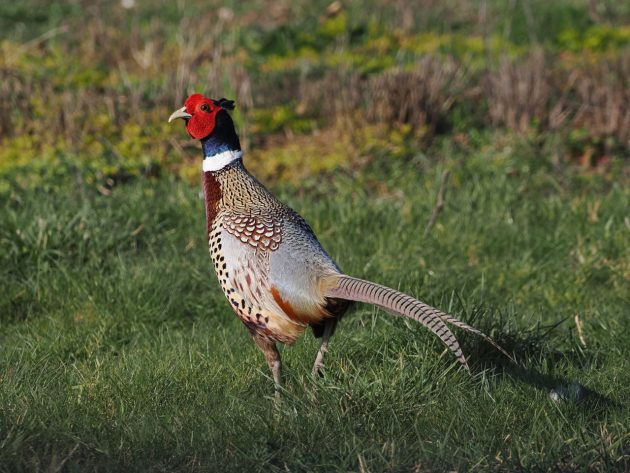
Pheasants are said to have been introduced to Britain by the Romans 2000 years ago
There was a time in Victorian England when it was highly fashionable to introduce exotic birds and animals. There was even an organisation promoting it: The Society for the Acclimatisation of Animals, Birds, Fishes, Insects and Vegetables within the United Kingdom. Often known simply as The Acclimatisation Society, it was formed in 1860, the brainchild of a certain Francis Trevelyan Buckland. His idea wasn’t new, for one of the principal objectives of the Zoological Society of London, on its foundation 34 years before, had been “to introduce new and useful animals to Britain”.
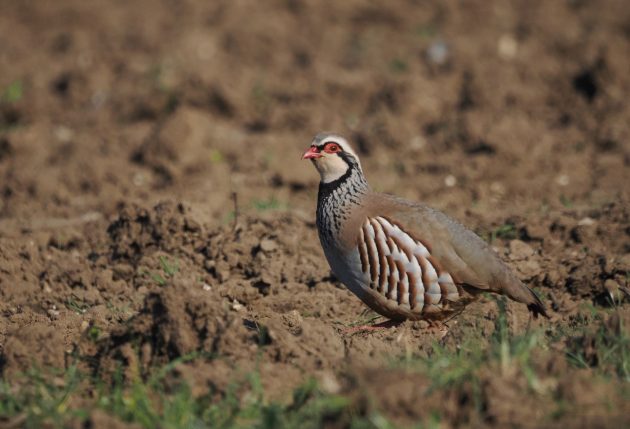
Millions of non-native Red-legged Partridges are released for shooting in Britain every year
Buckland enjoyed distinguished support for his new Society, recruiting the Duke of Newcastle as its president, and several lords, viscounts and MPs as vice-presidents. Intriguingly, Buckland regarded the animals he hoped to introduce to Britain as something other than ornamental: their qualities on a plate were also of considerable concern to him. When he lectured at the Society of Arts in November 1860, he suggested that American Bison, Reindeer,Wapiti, kangaroos, Eland and Elk would all make suitable candidates for acclimatisation here.
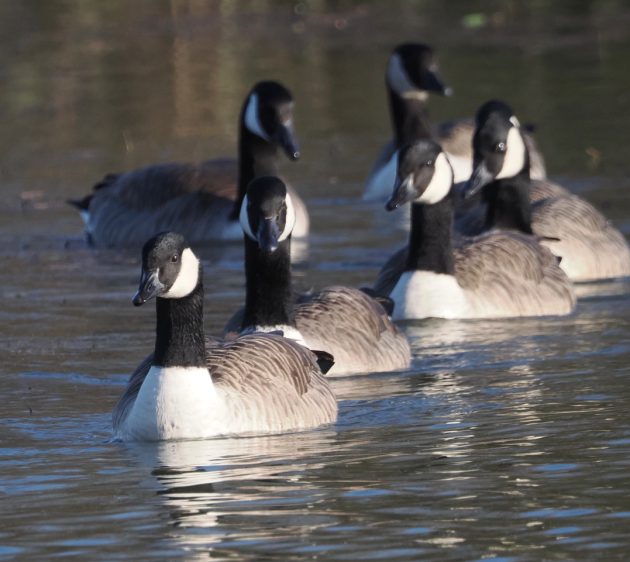
The first Canada Geese were introduced to King Charles II’s wildfowl collection in St James’s Park in about 1665
The Society flourished only briefly, but in the space of just five years it imported all sorts of extraordinary and unsuitable animals. These ranged from Wombats to wild sheep, plus an equally diverse variety of birds such as Prairie Grouse from North America, Brush Turkeys from Australia and Fireback Pheasants from Asia. Like the Society, none survived for long.
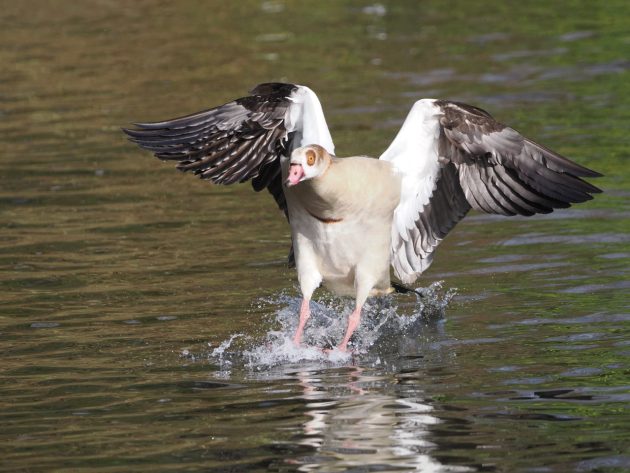
Egyptian Geese were introduced to England at least 200 years ago. They now breed in most west European countries, including Spain and the Netherlands
However, though the Society may have faltered and died, there were many Victorian gentlemen who had both the means and the land to conduct their own experimental introductions. Step forward the wonderfully eccentric Squire Charles Waterton, pioneer naturalist, conservationist and adventurer, who was the first to import Little Owls to Britain. He turned down these diminutive owls into his park at Walton Hall in Yorkshire in 1842-43, believing that they “would be peculiarly useful to the British horticulturist”. They soon disappeared.
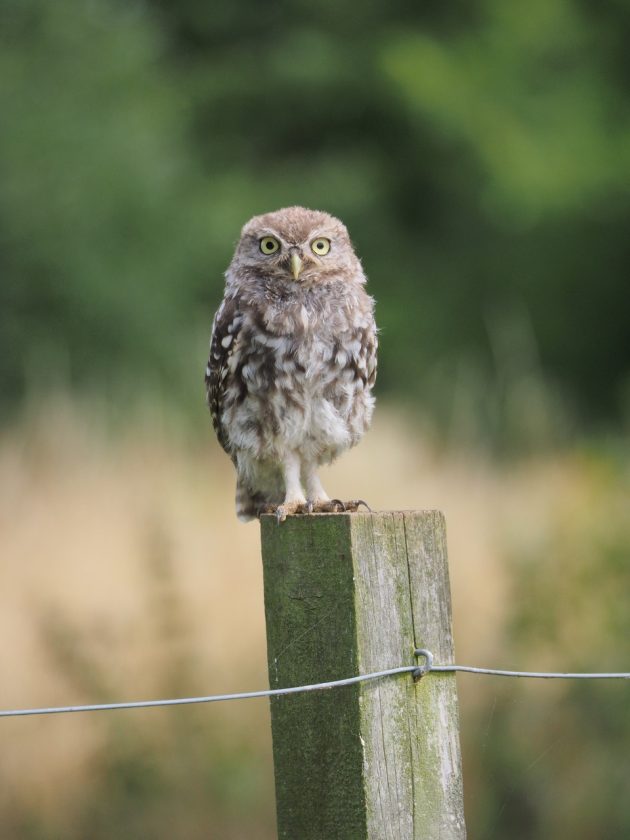
Though widespread in continental Europe, Little Owls are not native to Britain, but were introduced in the 19th century
E.G.B.Meade-Waldo was not put off by Waterton’s failure, and he started releasing Little Owls in his park at Stonewall, near Edenbridge in Kent, in 1874. He thought that the owls would “rid belfries of sparrows and bats and fields of mice”. They failed to do either, but they did start to breed in the wild.
However, successful though Meade-Waldo was, the man usually held responsible for adding the Little Owl to the British list was Lord Lilford, who for several years released numbers of imported owls into his park near Oundle in Northamptonshire. By the end of the 19th century they were so well established that they started spreading to neighbouring counties. For many years the Little Owl was known, appropriately enough, as Lilford’s Owl.
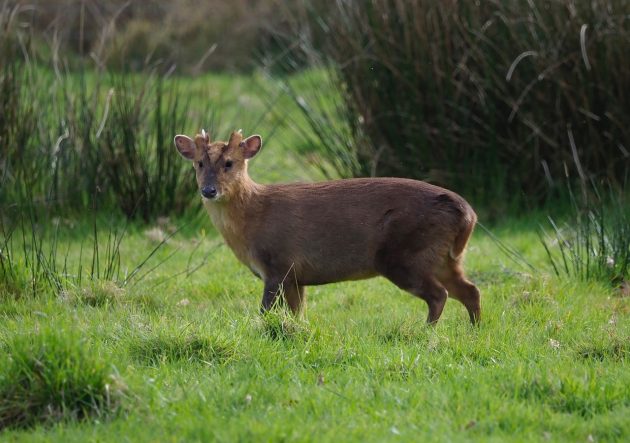
The list of distinguished gentlemen who attempted to establish exotic birds and animals on their estates is a long one, including many members of the British nobility, such as the Earl of Fife, Lord Tweedsmouth, Lord Breadalbane, Lord Powerscourt and the Duke of Bedford. It was the latter (Herbrand Arthur Russell, the 11th Duke) who was the most successful of the lot, and he takes the credit for a number of ill-judged but long-lasting introductions. He played a major role in establishing the North American Grey Squirrel, and was certainly responsible for introducing Reeves’s Muntjac deer from China. He probably never intended that the Muntjac should stray out of his park at Woburn, and for many years the deer remained close to their release spot. But in 1922 the first escapees were seen outside the park: a hundred years later the Muntjac had become the most numerous deer in Britain.
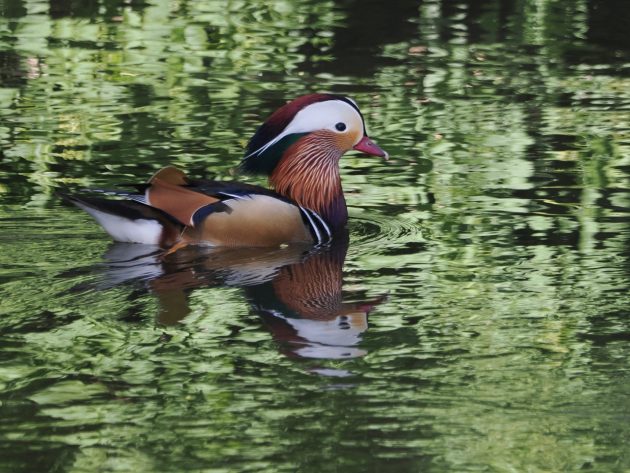
Mandarin Ducks are unusual in that they do not appear to have had any negative impact on native wildlife
While the 11th Duke may be best remembered for the mammals he liberated, he also played his part in several bird releases, ranging from Golden and Lady Amherst’s Pheasants to Mandarin Ducks. No doubt there were other species that he tried to establish but failed to do so. And while we may blame him for the animals he released, he should also be remembered for playing a vital role in saving Père David’s deer from certain extinction by establishing a breeding herd of these critically endangered animals at Woburn.
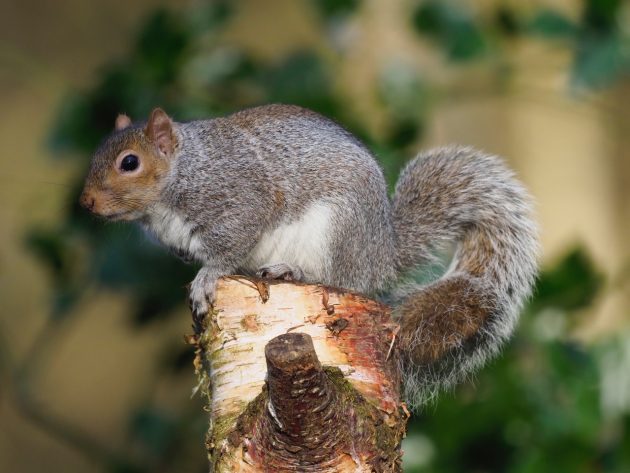
The UK populations of both Grey Squirrels and Reeves’s Muntjac deer (below) are numbered in millions, while their impact on the environment has been hugely detrimental
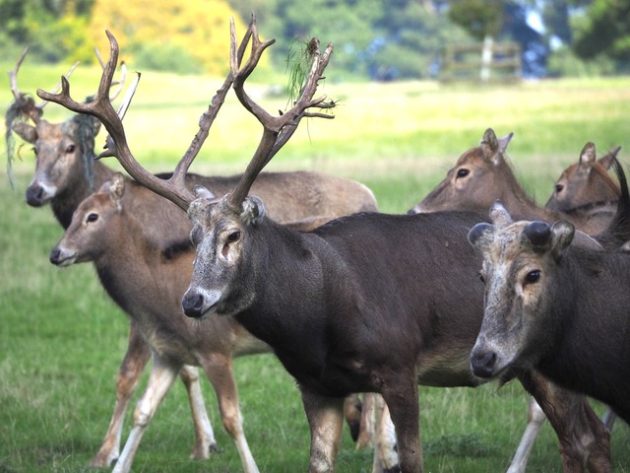
Chinese Père David’s deer were saved from extinction by the 11th Duke of Bedford at his park at Woburn in England
It is impossible to trace the origins of all feathered aliens. There are now many thousand ring-necked parakeets living in the suburbs of London. How they became established remains a mystery, and no-one has ever come up with a more positive answer than “escapes from captivity”. My favourite story is that a flock were used as extras in the 1951 film The African Queen filmed at Sheperton Studios, close to London. When filming was finished the birds were released, but no-one thought they would survive the winter. They were clearly wrong.
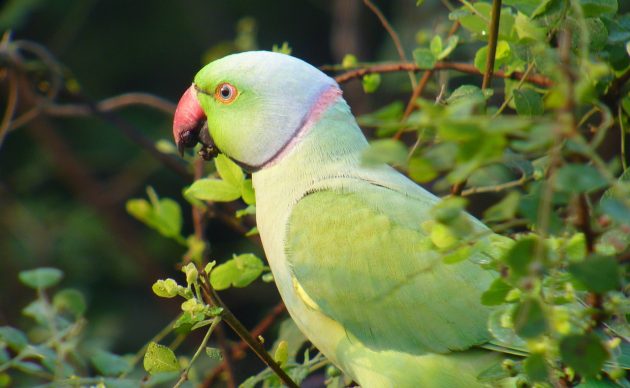
Ring-necked Parakeets are now noisy residents in many European cities. This individual was photographed in India
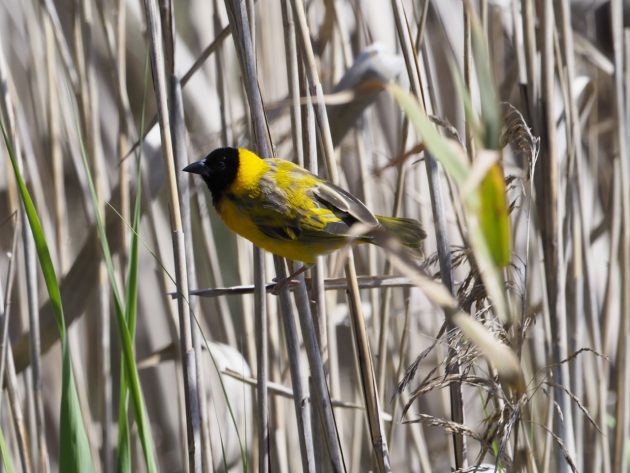
Black-headed Weaver, an African species now resident in southern Portugal, where this bird was photographed
Just in case you are wondering, Britain is not the only European country with an abundance of alien birds. African Waxbills are common in much of southern Spain and Portugal, many European cities have populations of Ring-necked Parakeets, while several Spanish towns have other species of parakeets, too. The Red-billed Leiothrix is now quite common in some areas of Portugal, Spain, France and Italy, with a population numbering in thousands. In southern Portugal you can find colonies of Black-headed Weavers, the Netherlands has a growing population of Egyptian Geese, while in the Portuguese capital, Lisbon, you can find Crested Mynahs, a Chinese species. Sacred Ibises from Africa are firmly established in both France and Italy – the French are struggling to manage their numbers with culling and egg sterilisation. Meanwhile, Indian House Crows (below) regularly arrive in Europe as stowaways on ships – that’s one bird we most certainly don’t want here.
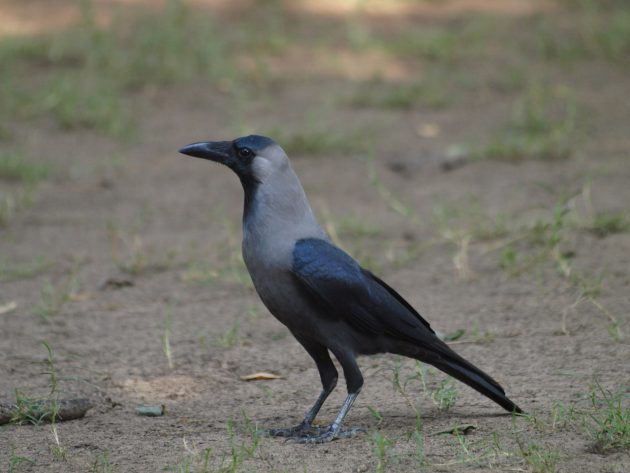
Indian House Crows have yet to become established in Europe. They are now numerous in East Africa, where they pose a considerable threat to native birds
















 English (US) ·
  French (CA) ·