

 3 weeks ago
24
3 weeks ago
24
In the Philippines, a negosyo often begins with something simple.
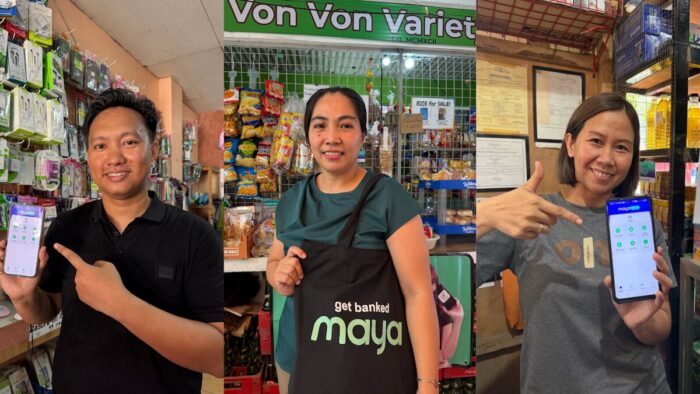
Three Filipino Entrepreneurs Building Their Negosyo One Step at a Time
It could be a sari-sari store in front of the family home, a small mobile-load business, or a few shelves stocked with products that neighbors regularly need.
There is rarely a dramatic moment when a small business suddenly becomes successful. More often, growth happens gradually—one customer, one product, and one investment at a time.
For Ma. Christine Vito, Mohammad Hadji Mahmod, and Von Bindolo, building a business meant starting with what they had and finding ways to make it work.
Their stories are different, but all three understand a familiar reality of Filipino entrepreneurship: sometimes, a relatively small amount of capital can make a meaningful difference when it is put toward the right needs.
Their journeys also reflect something bigger than business numbers. Their stores have become part of their communities, providing everyday services while helping support their families and, in some cases, their children’s futures.
Christine’s Journey From Sari-Sari Store to Mini Grocery
For Ma. Christine Vito, entrepreneurship began almost by accident.
After completing an internship at a shipping company, she gained experience selling dry goods. The experience eventually sparked an interest in running a business herself.
Christine and her family first opened a small store in Boracay Island. When the property where the business was located was sold, they had to start again somewhere else.
This time, they settled in Sebaste, Antique, where they opened a sari-sari store.
Like many small businesses, the store became more than just a place to buy everyday necessities. It became a convenient stop for community members.
During the pandemic, when many businesses were forced to close or scale back, Christine’s store continued operating. Customers increasingly came in not only for goods but also for services such as mobile load, bill payments, and cash-in and cash-out transactions.
The growing demand meant Christine also needed to keep more products in stock.
That was when she received her first Maya Advance offer for PHP 10,000.
She admits that taking out a loan initially made her nervous. But instead of using the money for personal expenses, she put it toward additional inventory.
“Noong una, natakot akong kumuha ng loan, pero dahil sa Maya Business, nagkaroon kami ng puhunan para tuloy-tuloy na mapalago ang negosyo namin.”
(At first, I was afraid to take out a loan, but through Maya Business, we had the capital to continuously grow our business.)
The decision became part of a longer process of reinvesting in the store.
Since that first PHP 10,000 loan, Christine has used more than PHP 3 million in Maya Advance loans.
Today, the small sari-sari store has evolved into a mini grocery store, complete with a kitchen and a mini warehouse. The family has also acquired a vehicle to help with the business.
For Christine, however, the transformation did not happen overnight.
It was built through a series of small decisions that gradually scaled the business.
Mohammad’s PHP 1,000 Starting Point
Mohammad Hadji Mahmod’s story began with an even smaller amount.
After years of working as an OFW, Mohammad returned home to help with his family’s business on Boracay Island.
In 2023, he began using Maya Business for services that included mobile load, bill payments, and cash-in and cash-out transactions.
His first Maya Advance offer was for PHP 1,000.
For some entrepreneurs, PHP 1,000 might seem too small to make a significant difference. Mohammad saw it differently.
He used the money for his mobile-load business, allowing him to continue providing the service while gradually building up his working capital.
The important part, he says, was making the money work.
As his business continued to operate, Mohammad gained access to additional working capital. Over time, he has utilized more than PHP 2.2 million in Maya Advance loans.
The money has helped him maintain daily operations, expand his offerings, and explore other opportunities for the family business.
“Hangga’t may Maya Business, mas kampante akong patuloy na palaguin ang negosyo ng pamilya namin.”
(As long as we have Maya Business, I feel more confident continuing to grow our family business.)
But perhaps the more interesting part of Mohammad’s story is not how much his business eventually achieved.
It is where he started.
His experience illustrates a practical lesson familiar to many small-business owners: waiting for the perfect amount of capital may mean missing an opportunity. Sometimes, the more useful approach is to work with what is available and build from there.
Von’s Family Store and a Business That Grew With Her
Von Bindolo’s connection to small-business life started before she took over her family’s sari-sari store.
While working in Manila, she discovered Maya Business through Facebook and began selling mobile load to earn additional income through commissions.
When she eventually returned to Boracay, she took over the family store from her mother.
The business became especially important when the pandemic brought tourism in Boracay to a near standstill.
For an island whose economy is closely connected to tourism, the disruption was enormous. Yet local residents still needed basic goods and everyday services.
Von continued serving customers through mobile load, bill payments, and cash-in and cash-out services.
Her first Maya Advance loan was PHP 20,000.
She used the additional capital to keep investing in the store at a time when maintaining a small business was already difficult.
“Malaking bagay kahit maliit lang ang puhunan, lalo na kapag ginagamit mo para madagdagan ang paninda at mapagsilbihan nang mas maayos ang mga suki. Unti-unti, nakita ko rin na kaya palang lumago ang negosyo namin.”
(Even a small amount of capital can make a big difference, especially when you use it to add more products and serve your regular customers better. Little by little, I also saw that our business could really grow.)
Since then, Von has utilized more than PHP 2.6 million in Maya Advance loans.
The additional working capital has helped her reinvest in the business, including the purchase of an e-bike for daily operations.
The business has also taken on a deeply personal role. Its growth has helped support her child’s education.
What began as a sari-sari store passed down from one generation to the next has become part of Von’s own story as an entrepreneur and a parent.
More Than Just a Store
The three stories have different settings and circumstances, but there is something distinctly Filipino about all of them.
A small store can serve several purposes at once.
It can be a source of income for a family, a place where neighbors catch up, and a convenient stop for everyday necessities. It can provide services that make life easier for community members.
For Christine, the sari-sari store eventually became a mini grocery.
For Mohammad, a small mobile-load operation became another way to contribute to the family’s business.
For Von, the store she inherited from her mother became a business she could continue developing for the next generation.
In each case, growth was closely tied to the people around them.
The customers who regularly visited their stores helped shape what products and services they offered. Their families provided support. Their businesses, in turn, became part of their communities.
The Reality of Growing a Filipino Negosyo
There is a tendency to think of entrepreneurship in terms of big milestones: opening a second branch, buying new equipment, hiring employees, or reaching a particular sales figure.
But small-business growth often looks much less dramatic.
It can mean having enough inventory when customers need it.
It can mean adding a new service because people in the neighborhood keep asking for it.
It can mean buying an e-bike to make daily errands easier or finding a way to keep the family business going through difficult economic conditions.
These may seem like modest improvements individually.
Together, they can change the trajectory of a business.
Christine, Mohammad, and Von each used additional capital for practical needs. As their businesses developed, those investments created room for bigger opportunities.
Their experiences are a reminder that entrepreneurship isn’t always about making one bold move.
Sometimes, it is about making the next sensible move.
Building a Business One Step at a Time
The journeys of these three entrepreneurs also offer a more grounded view of what it means to grow a negosyo in the Philippines.
Starting small does not necessarily mean thinking small.
Christine began with a sari-sari store and eventually built a mini grocery.
Mohammad started with PHP 1,000 and continued finding ways to grow the family business.
Von inherited a modest family store and gradually turned it into a business that helps support her family’s needs and future.
Their stories show that capital is only one part of the equation.
There is also persistence, an understanding of customers, the willingness to adapt, and the ability to reinvest when opportunities arise.
For aspiring entrepreneurs, that may be the most valuable takeaway.
You don’t always need to begin with a big business plan or a large amount of money. Sometimes, you begin with a simple idea, a small amount of capital, and a willingness to keep going.
And from there, you build.
Disclosure: This feature was prepared from information provided by Maya. Maya Philippines, Inc. and Maya Bank, Inc. are regulated by the Bangko Sentral ng Pilipinas.
Follow and subscribe to OutofTownBlog.com on Facebook , Twitter, Instagram, Pinterest, and YouTube for more Travel-related updates.
Read:





















 English (US) ·
  French (CA) ·