

 1 month ago
74
1 month ago
74
PROTECT YOUR DNA WITH QUANTUM TECHNOLOGY
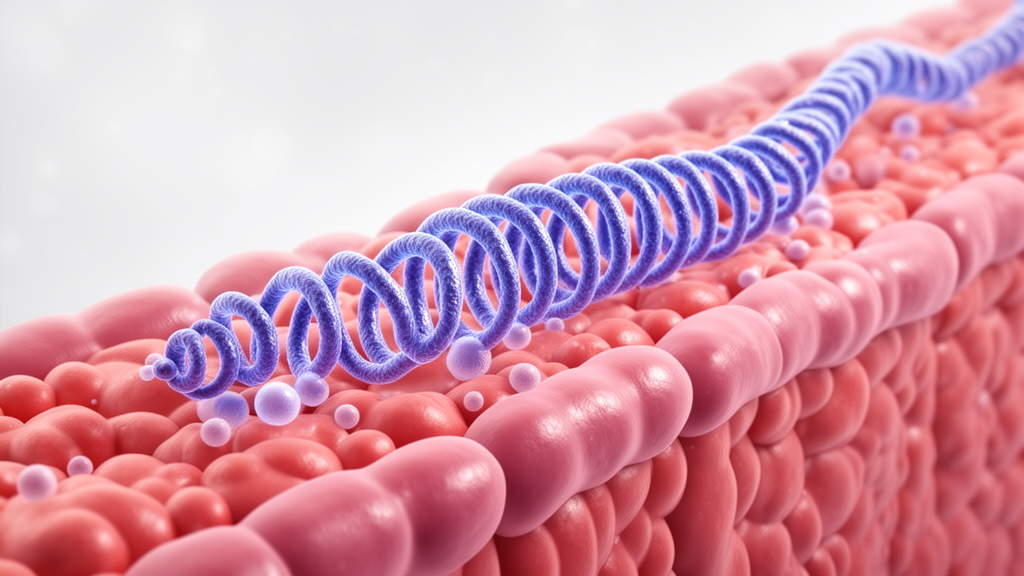
Orgo-Life the new way to the future Advertising by AdpathwayA hybrid nanomaterial that combines gallium nitride, iron oxide and the electrically active polymer polypyrrole has shown an unusually wide optical band gap, suggesting a possible route toward low-loss optical coatings and specialized optoelectronic components. The material, developed by researchers working with the Centre for Nanoscience and Technology at Jawaharlal Nehru Technological University in Hyderabad, India, was designed to give scientists more control over how nanoscale defects, porosity and electronic states interact inside a composite. By changing both the amount of gallium nitride-doped ferrite and the concentration of polypyrrole, the team produced samples whose measured and calculated properties changed dramatically. The most striking result was an optical band gap of approximately 5.25 to 5.87 electronvolts in the polypyrrole-containing composites—far wider than the reported values for bulk gallium nitride or iron(III) oxide alone. The findings point to a material whose optical response can be tuned through composition rather than relying on a single semiconductor.
Gallium nitride is already one of the most important wide-band-gap semiconductors in modern technology. Its direct band gap of roughly 3.4 electronvolts allows it to interact with ultraviolet and blue light, while its high breakdown voltage, strong critical electric field and good thermal conductivity make it attractive for high-power electronics, light-emitting diodes and laser systems. Iron oxide, particularly hematite or α-Fe₂O₃, has a narrower band gap and offers a different combination of optical, magnetic and chemical properties. Polypyrrole, meanwhile, is an intrinsically conducting polymer built around a conjugated π-electron system. Unlike a conventional ceramic semiconductor, it can be processed as a flexible organic material and its electronic behavior can be altered by oxidation, disorder, chain arrangement and interactions with neighboring particles. Combining these three components creates interfaces where charge transfer, lattice strain and defect states can reshape the way the material absorbs light.
The researchers first prepared the gallium nitride-doped ferrite using a sol-gel process. In this method, chemical precursors are transformed into a liquid-like sol and then into a gel containing the desired elements distributed on a molecular scale. Subsequent drying and processing produces a chemically homogeneous nanostructured powder. The compositions examined included Ga₄NFe₉₆O₃ and Ga₁₂NFe₈₈O₃, representing different levels of gallium nitride incorporation into the iron-oxide-based host. The ferrite powders were then combined with polypyrrole through an impregnation procedure. Polymer loadings of 3, 10 and 30 percent by weight were selected to represent low, intermediate and high concentrations. Each mixture was dispersed in methanol, stirred at 40 °C for two hours and dried for a day at room temperature. This approach allowed the polymer to adsorb onto and between the ferrite nanoparticles, although the researchers observed that the highest loading could also promote polymer accumulation.
To determine how the structure changed, the team used X-ray diffraction, a technique that identifies crystalline phases by measuring how atomic planes scatter X-rays. The width of diffraction peaks can provide an estimate of crystallite size through the Debye–Scherrer relation, while broader peaks may also reflect lattice defects and dislocations. The samples displayed semi-crystalline patterns consistent with a composite containing both ferrite and polypyrrole contributions. In the Ga₄NFe₉₆O₃ series, the estimated dislocation density increased from 6.93 in the undoped ferrite to 47.63 at 30 percent polypyrrole, while the calculated porosity fell from 0.8404 to 0.633. The authors interpret this trend as evidence that polymer–ferrite interactions can fill or constrict voids while simultaneously introducing structural disorder. The higher-gallium series behaved differently: its dislocation density declined from 32.6 to 13.51 as the polymer content rose, while porosity increased from 0.8933 to 0.9486. Such opposite trends underline how sensitive nanoscale structure can be to the precise chemical composition.
Porosity is not simply an incidental feature in these materials. It describes the fraction of a solid occupied by voids, and it affects density, mechanical stability, thermal transport, dielectric behavior and the movement of charge carriers. In a nanoparticle composite, pores may form because particles do not pack perfectly, because polymer chains separate grains, or because the synthesis leaves behind spaces between agglomerates. Dislocations—line defects in a crystal lattice—can similarly alter local strain and create electronic states within the band gap. These states may trap electrons or holes, change recombination pathways and modify optical absorption. The study calculated porosity from the relationship between bulk density and X-ray density, rather than measuring individual pores directly. That makes the reported values useful for comparing samples, but they should be understood as model-dependent estimates of the overall structure, not as a complete map of the pore network.
The optical experiments used ultraviolet-visible spectroscopy across wavelengths extending from approximately 200 to 1,000 nanometres. The ferrite samples absorbed strongly near 233, 276 and 410 nanometres, with the shorter-wavelength features attributed largely to ligand-to-metal charge-transfer processes involving oxygen 2p states and iron 3d states, alongside iron-ion ligand-field transitions. In simpler terms, photons can promote electrons between orbitals associated with oxygen and iron, producing distinct absorption bands. Once polypyrrole was added, the characteristic peaks shifted: features near 250 nanometres moved to roughly 254–258 nanometres, while peaks near 290 nanometres appeared around 295–299 nanometres. The researchers associate the latter response with polypyrrole and argue that the shifts reflect electronic communication between the polymer and ferrite. A broad feature around 430 nanometres, present in the unmodified ferrites, was absent from the composites, possibly because its absorption overlapped with the polymer’s optical response.
The reported band gaps were extracted using Tauc plots, a standard method for estimating the energy required to move an electron from a valence band or localized state into a conduction band. The optical absorption coefficient is combined with photon energy, and the linear portion of the resulting curve is extrapolated to determine the intercept corresponding to the band gap. For the unmodified ferrites, the extracted values were 1.38 electronvolts for Ga₄NFe₉₆O₃ and 0.86 electronvolts for Ga₁₂NFe₈₈O₃. After polypyrrole incorporation, the values rose to 5.87, 5.63 and 5.45 electronvolts in the first series at 3, 10 and 30 percent polymer, and to 5.34, 5.25 and 5.39 electronvolts in the second series. The authors attribute this widening to interface strain, changes in defect-related states, altered carrier localization and quantum-confinement effects as the relevant dimensions approach the exciton Bohr radius. However, these are optical estimates obtained from extrapolation, not direct measurements proving that every region of the composite possesses a uniform 5-electronvolt electronic band gap.
Polypyrrole also altered the composites’ refractive and dielectric behavior. The estimated refractive index of the ferrite rose from 3.069 to 3.531 as the gallium-containing composition changed, but values for the polymer hybrids were lower, generally between about 1.88 and 1.96. Reflectance followed a similar pattern, falling from 0.2585 and 0.312 in the two unmodified ferrites to approximately 0.09–0.105 in the composites. Lower reflectance and refractive index could be valuable in antireflective coatings, where minimizing the amount of light bouncing from a surface is essential. The calculated dielectric constants also declined sharply after polymer addition, from 9.418 and 12.46 in the ferrites to roughly 3.53–3.85 in the hybrids. These values were derived from optical relations involving the refractive and extinction coefficients, so they should be treated primarily as comparative indicators of optical response rather than universal bulk constants applicable at every frequency.
The study found that increasing the polypyrrole fraction did not produce a simple, monotonic improvement in conductivity. In the Ga₄NFe₉₆O₃ composites, optical conductivity rose at intermediate loading before falling at 30 percent, while the second composition showed a similar non-linear pattern. The authors suggest that excessive polymer can obstruct direct contact between ferrite particles and reduce the efficiency of interfacial charge transport. This is a familiar challenge in nanocomposites: adding a conductive phase can create new pathways, but too much of it may cause aggregation, disrupt the inorganic network or increase disorder faster than it improves connectivity. All samples had metallization-criterion values below one, which the researchers interpret as consistent with semi-crystalline, non-metallic behavior. The results therefore describe a material family with tunable optical and structural characteristics, not a substitute for highly conductive metals or a ready-made electronic device.
The researchers say the combination of defect engineering, nanoscale porosity and polymer–semiconductor interfaces could eventually support applications in antireflective coatings, ultraviolet optoelectronics, electromagnetic components and energy-related devices. The work’s immediate contribution is a composition-property map showing that the same polymer can have different effects depending on the gallium content of the ferrite host. Before practical deployment, the unusually high optical band-gap estimates and the predicted dielectric and conductivity values will need independent confirmation using complementary methods, including direct electrical measurements, microscopy, compositional analysis and spectroscopy beyond the ultraviolet-visible range. Device-level tests would also be needed to establish stability, processing compatibility and performance under heat, voltage and illumination. Even with those questions unresolved, the study highlights why hybrid materials can behave very differently from the ingredients used to make them: at the nanoscale, interfaces are not passive boundaries but active regions where defects, strain and electronic states can rewrite the material’s response to light.
Subject of Research: Gallium nitride-doped ferrite–polypyrrole nanocomposites and their structural, optical, dielectric and charge-transport properties
Article Title: Optical parameters of gallium nitride doped ferrite–polypyrrole nanocomposites
Article References: R. Indrakanti, V. Brahmaji Rao and C. Udaya Kiran, “Optical parameters of gallium nitride doped ferrite–polypyrrole nanocomposites,” Journal of Materials Science: Materials in Electronics (2020)
Image Credits: AI Generated
DOI: 10.1007/s10854-020-02872-3
Keywords: gallium nitride, ferrite nanocomposites, polypyrrole, optical band gap, X-ray diffraction, porosity, dislocation density, optoelectronics
Tags: Advanced Functional PolymersDoping Effects on Optical PropertiesGallium Nitride–Ferrite DopingHybrid Nanomaterials for PhotonicsIron Oxide–Gallium Nitride InteractionLow-Loss Optical CoatingsNanoscale Defects ControlNanostructured Optical MaterialsPolypyrrole NanocompositeSemiconductor NanocompositesTunable Optoelectronic MaterialsWide Optical Band Gap


















 English (US) ·
  French (CA) ·