

 4 days ago
7
4 days ago
7
If you think about how Filipino families used the internet at home 10 or 15 years ago, the difference is pretty remarkable. Back then, having a decent connection usually meant being able to browse the web, check emails, chat with friends, and occasionally watch a video without waiting forever for it to load. Today, the internet has become so deeply woven into everyday life that it is difficult to imagine a modern household without it. In many homes, several smartphones, laptops, tablets, smart TVs, gaming consoles, security cameras, and other devices are connected throughout the day, often without anyone giving much thought to how much the household actually depends on the connection.

My Home as a Digital Hub
Today, I can barely imagine my home without a reliable internet connection. I have multiple connected devices, and my work requires me to stay online throughout the day. Most of the time, I don’t even think about how much I depend on the Internet.
I rely on it for work, entertainment when I want to relax and watch my favorite series, communicating with family and friends, shopping online, managing my home, and, most importantly, earning a living.
That’s why I’ve started thinking differently about choosing a home internet plan. It’s no longer enough for me to ask whether a connection is available or how much it costs each month. I need to ask whether it can actually keep up with the way I live.
My Home as a Digital Hub
I’ve realized that almost every part of my home has become connected in some way.
In the morning, I start my day with my favorite cup of coffee in the dining area while checking emails and daily tasks. My bedroom doubles as a home office where I write and develop strategies for my projects, and as a relaxation area to watch my favorite movies or TV series before bed.
Technology has become part of my daily routines.
I don’t consider my home particularly “high-tech.” I simply have the devices I need and use them when necessary. But when I add it all up, I realize just how much my household depends on the internet.
My Internet has quietly become the backbone holding all of this together.
My Home as My Office
Since I started my blog in 2003, I’ve been working from home.
Remote employees, freelancers, entrepreneurs, online sellers, consultants, and digital professionals like me may spend most or part of our workday connected to cloud platforms, messaging apps, video conferencing services, and other online tools.
My room becomes a remote office at 9 a.m., complete with a laptop, coffee, headphones, and other devices often running in the background. This is where a reliable connection becomes especially important. If your job requires you to attend video meetings, upload files, collaborate online, or access cloud-based applications, internet connectivity is no longer just a nice-to-have. It is part of your workspace.
The same applies to people who run businesses from home. An online seller may need to respond to customers, process orders, upload product photos, and manage social media. A content creator may be editing and uploading large video files. A freelancer might be working with clients in different time zones.
For these households, choosing the right internet service can directly affect how comfortably they can work from home.
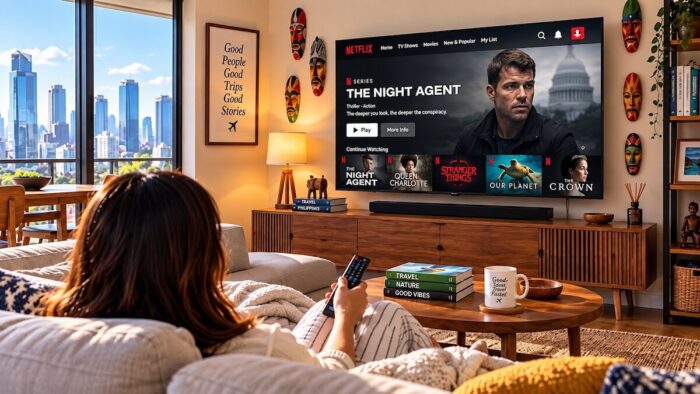 Streaming at Home
Streaming Has Changed How I Enjoy Time at Home
After spending time on the treadmill or doing some light exercise, I like to slow down and cool off while watching music videos, catching an exciting tennis match, or discovering interesting short films on YouTube.
It has become one of my favorite ways to unwind. Whether I’m listening to music, following a thrilling tennis rally, or getting absorbed in a creative short film, streaming has become part of how I relax and enjoy my time at home.
Staying Close to Family From Anywhere
There’s another reason reliable connectivity matters to me: family.
Like many Filipino families, I have relatives living in the province. Video calls have become part of our ordinary family life.
The internet has made distance feel a little less distant.
For me, that emotional connection is just as important as work and entertainment at home. A reliable home connection enables me to stay connected with my loved ones even when we can’t be together.
Video conversations may seem routine now, but they represent one of the most meaningful changes brought by the internet. Distance does not necessarily mean being completely disconnected anymore.
The Cheapest Isn’t Always the Best Deal
Price will always matter to me, especially for groceries, transportation, utilities, and everything else in my monthly budget.
But I’ve realized that the cheapest internet plan isn’t automatically the best value. At the same time, I don’t want to pay for the most expensive plan available if I don’t actually need it.
The smarter approach is to look at the entire package. Consider how many people use the internet at home, how many devices are connected, the daily activities that require an internet connection, and what additional services the plan includes.
For me, I make sure that the money I spend on my home essentials provides practical value. That’s why I learned to look for a smart package deal to get more value while spending less.
Finding the Right Fit
Before choosing a broadband plan, it is worth taking a realistic look at what happens in your home on a normal day. Start by considering how many people are online at the same time, particularly during the evening when everyone is usually home.
Then count the devices. You may be surprised to discover just how many smartphones, computers, tablets, televisions, consoles, cameras, and other gadgets are connected.
After that, think about what everyone is actually doing. Are there people working remotely? Are the kids attending online classes? Does someone regularly stream movies in high resolution? Is there a serious gamer in the family? Does someone create videos or upload large files for work?
These details can give you a much better idea of what your household needs than simply choosing a plan based on speed alone.
Goodbye, Digital Chaos
The ideal home internet experience is quite simple. You I should be able to use my connection without constantly thinking about it.
In other words, the internet should fit into my life rather than become another thing I have to manage.
That may be the biggest difference between simply having internet and choosing connectivity that fits the way your household actually lives. Good connectivity should make everyday life easier, whether you are working, streaming, staying in touch with family, or simply relaxing at home.
This is what caught my attention about PLDT Home Fiber Unli All plans. Instead of treating internet, mobile data, landline calls, and entertainment as separate household expenses, the plans bundle these services into one package.
With options such as Fiber Unli All 1899 and 2599, households can get fiber internet together with landline calls, Smart mobile data, and entertainment from HBO Max and Cignal. For someone like me who uses connectivity throughout the day for both work and leisure, having these services bundled together makes practical sense.
For Filipino families considering an upgrade, the decision ultimately comes down to what works for their home. The right plan should give everyone enough room to work, study, stream, play, communicate, and stay connected without constantly competing for the Wi-Fi.
And perhaps that is what saying goodbye to digital chaos really means. It isn’t about having the fanciest gadgets or choosing the fastest internet simply because you can. It is about choosing a plan that fits the way you live and gives you more value from the services you already use.
Make the Smart Choice with the new PLDT Home Fiber Unli All plans.
Follow and subscribe to OutofTownBlog.com on Facebook , Twitter, Instagram, Pinterest, and YouTube for more Travel-related updates.
Read: PLDT Home Brings Fiber Internet to Camotes Island, Opening New Digital Opportunities




















 English (US) ·
  French (CA) ·