

 10 hours ago
13
PROTECT YOUR DNA WITH QUANTUM TECHNOLOGY
Orgo-Life the new way to the future Advertising by AdpathwayAstronomers not involved in the University of Warwick study that identified the first known green star say the work is an intriguing new way to look at white dwarfs, though one cautioned it may not add new understanding of how these dead stars work. The lead author, meanwhile, expects a roughly tenfold increase in white dwarf spectra from upcoming surveys, which could raise the number of known green white dwarfs from one or two to perhaps 10 or 20, according to CNN reporting carried by WMAR.
Those reactions shift the story from a single oddity to a question astronomers can test: is green truly a fluke, or a rare but repeatable outcome of what dead stars swallow? For anyone who has looked up and wondered why stars come in red, orange, white and blue but never green, the answer begins with ordinary physics.
The study remains based on modeled color — not photographs. No white dwarf is close or bright enough for anyone to see its color directly, and the green result still rests on a single star.
Physics Keeps Ordinary Stars From Looking Green
Most stars behave like what physicists call blackbodies, objects whose glow depends almost entirely on temperature. A blackbody does not emit a single color. It emits a broad, smooth spread of light across the spectrum, with a peak that shifts as temperature changes.
That is why no ordinary star appears green. According to Las Cumbres Observatory, a star whose light peaks in the green also emits plenty of red and blue, and our eyes blend all of those colors into white. The Sun is the best example, since its output peaks near green-yellow wavelengths, yet it looks white from space.
Cooler stars tilt their output toward red and look orange, while the hottest stars look pale blue. Warwick's lead author, Dr. Mark Hollands, described this as stars acting like "perfect radiators," with green simply missing from the temperature scale.
A Dense Atmosphere Breaks the Rule
White dwarf WD J1330+6435 escapes that rule because of what it has eaten. As Nature World News previously reported, the star's color comes from sodium in debris from its planetary system, along with calcium and lithium.
The key is density. In the coolest white dwarfs, the atmosphere can reach about 1 gram per cubic centimeter, roughly the density of water, according to the University of Warwick. Under that pressure, sodium absorbs light across a broad band of yellow, orange and red wavelengths, carving those colors out of the star's glow. What remains looks chartreuse green in the team's models.
"Imagine standing on a planet and looking up at a green star," Hollands said in the university's release.
The same physics produces the study's second standout. WD J1011+2845, about 48 light-years away, has carbon lifted from its core to its surface, where carbon molecules push nearly all of its light beyond 600 nanometers and give it a deep salmon-pink tone. The team says it may be the reddest star ever recorded.
Outside Astronomers Weigh the Approach
Agnès Kim, an astrophysicist and physics professor at Penn State Scranton who was not involved in the work, said the study relies on existing data and may not add new understanding of white dwarfs themselves, but described the approach as intriguing and said she loved that some would look green if people could see them up close, CNN reported.
Adam Burgasser, an astronomy professor at the University of California San Diego who was also not involved, said the green star's large amount of accreted material made him want to study it further. He added that the study's classification scheme, based on temperature and atmospheric properties, could help astronomers organize data and test whether color tracks composition.
Those comments mark the evidence clearly. The study is a modeling analysis of published spectra from 151 white dwarfs within about 65 light-years, run through a model of human color vision. It found five unusual colors, two yellow and three pink, plus the separately highlighted green star, suggesting about one in 30 white dwarfs could look unexpectedly colored. It did not directly image any of them.
Bigger Surveys Could Turn a Curiosity Into a Category
The next test depends on data — and a lot more of it. Hollands told CNN he plans to keep analyzing white dwarf spectra as new surveys reach farther into the galaxy, and he expects about a tenfold increase in white dwarfs with spectra. If green appears at a similar rate, that could mean 10 to 20 known examples rather than one.
There is also a correction to popular belief buried in the work. Warwick notes that people often picture white dwarfs as blue, but that impression comes from survey bias, since hotter, bluer white dwarfs are brighter and easier to detect. In a representative nearby sample, the median color temperature was about 6,800 Kelvin, which looks white, and co-author Boris Gänsicke said the average white dwarf really is white.
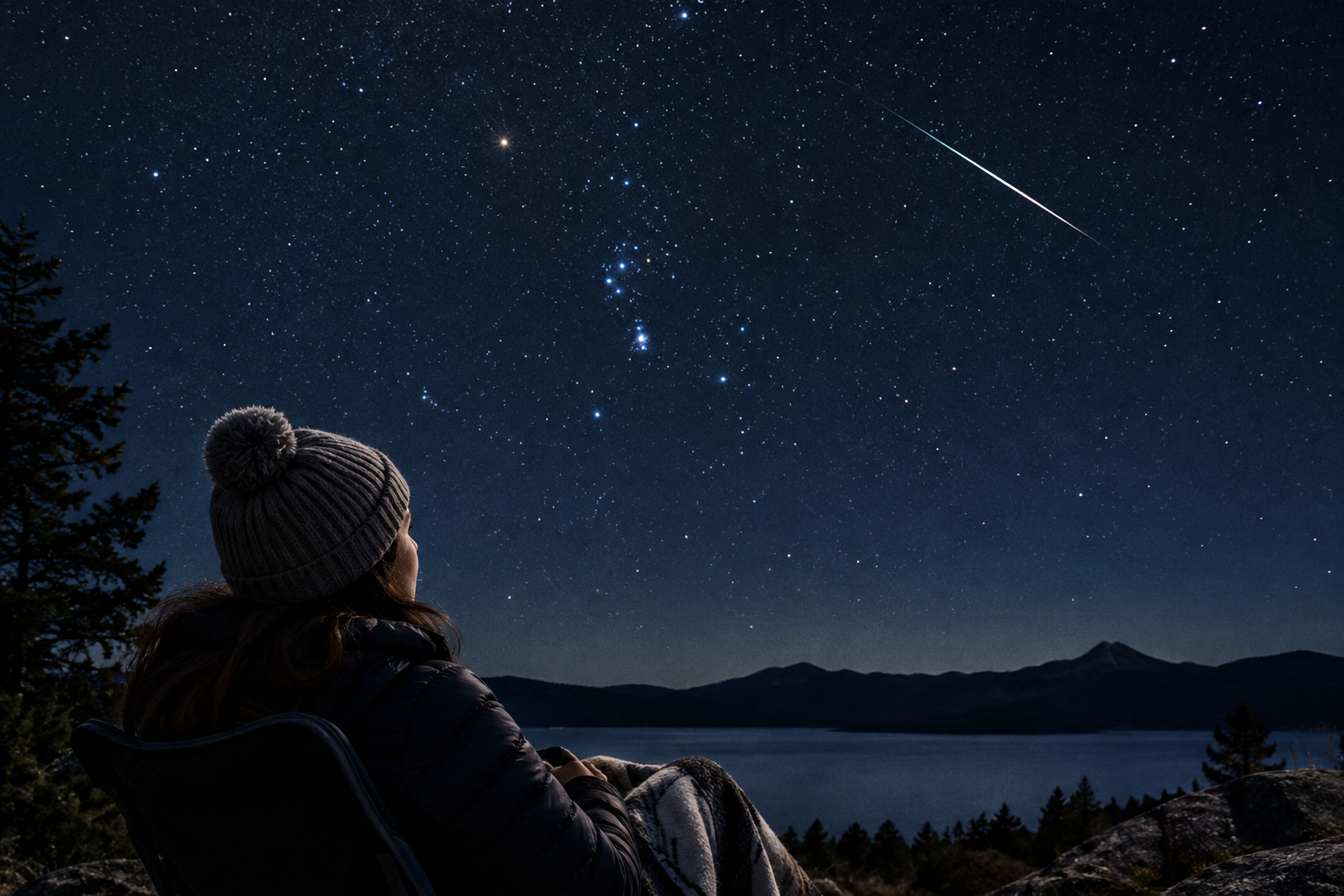
For stargazers, the practical takeaway is simple. None of these stars can be seen with the naked eye or a typical backyard telescope, and any viral claim of spotting a green star in the night sky is unrelated to this research. Nature World News will follow up as new survey results are published.
The bottom line: physics keeps ordinary stars from looking green, one dense, sodium-laced white dwarf appears to break that rule, and independent astronomers now say the real test is whether bigger surveys find more.
What Readers Want to Know
Why are there no green stars?
Stars emit a broad mix of colors. A star whose light peaks in green also gives off lots of red and blue, which our eyes combine into white.
Why does WD J1330+6435 look green?
Its extremely dense atmosphere contains sodium from planetary debris, which absorbs yellow, orange and red light and leaves a greenish glow.
Has anyone photographed the green star?
No. Its color is a prediction from its spectrum and a model of human color vision.
What is the salmon-pink white dwarf?
WD J1011+2845, about 48 light-years away, whose surface carbon molecules shift its light toward red, possibly making it the reddest star on record.
What do independent astronomers think?
Penn State Scranton's Agnès Kim called the approach intriguing but said it may not add new physical understanding, while UC San Diego's Adam Burgasser said the classification scheme could help organize data.
Could more green stars be found?
The lead author expects about a tenfold increase in white dwarf spectra, which could yield perhaps 10 to 20 green examples.
© 2026 NatureWorldNews.com All rights reserved. Do not reproduce without permission.




















 English (US) ·
 French (CA) ·