

 1 hour ago
7
1 hour ago
7
PROTECT YOUR DNA WITH QUANTUM TECHNOLOGY
Orgo-Life the new way to the future Advertising by AdpathwayCarbamazepine has been a cornerstone of epilepsy treatment for decades, appearing on the World Health Organization’s Model List of Essential Medicines and prescribed to millions of patients worldwide. Yet the drug carries a stubborn pharmaceutical flaw: it barely dissolves in water. Classified as a Biopharmaceutical Classification System Class II compound, carbamazepine permeates biological membranes readily but dissolves so slowly and inconsistently in the gastrointestinal tract that a large fraction of each dose passes through the body unabsorbed. Patients consequently need relatively high oral doses, exceeding 100 milligrams per day, to reach therapeutic plasma levels, and the drug’s extensive hepatic metabolism shortens its half-life further, compounding the problem of overuse.
A research team led by Ruiping Kong and Jie Dai has now reported a solvent-free solution to this long-standing solubility problem. Writing in the open-access journal Results in Chemistry, the investigators describe how simple mechanical grinding, known as mechanochemical activation, can lock carbamazepine into supramolecular complexes with two natural carriers: arabinogalactan, a branched polysaccharide harvested from larch trees, and disodium glycyrrhizate, the water-soluble sodium salt of the saponin glycyrrhizic acid derived from licorice roots. The resulting formulations transformed the drug’s crystalline structure into an amorphous state and raised its oral bioavailability in rats nearly fivefold compared with the free drug suspension.
The choice of carriers was deliberate. Arabinogalactan, with a molecular mass of 14 to 20 kilodaltons, is biocompatible, hydrophilic, and known to adhere to cellular membranes, suggesting it can modulate membrane permeability. Glycyrrhizic acid presents a different architecture: its amphiphilic structure pairs two hydrophilic glucuronic acid residues with a hydrophobic aglycone, allowing it to self-assemble into stable dimers and micelles in water. These micellar arrangements can swallow hydrophobic drug molecules into their cores, dramatically improving solubility and stability. The disodium salt offers practical advantages over its parent compound, including lower viscosity and better aqueous solubility without gel formation, making it particularly attractive for formulation work.
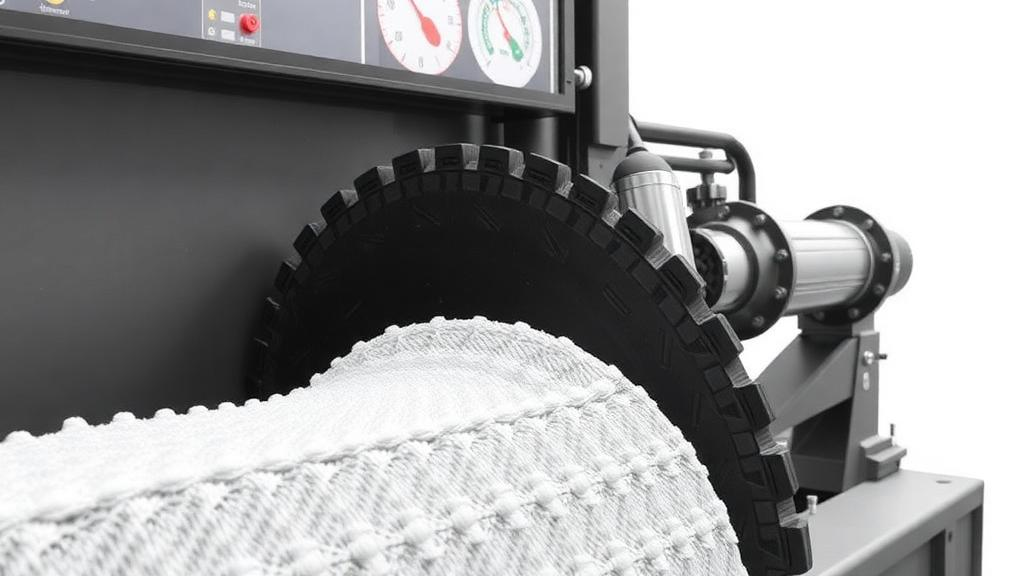
The manufacturing method itself is a key part of the story. Instead of dissolving the drug and carrier in organic solvents, the team loaded carbamazepine and either excipient at a fixed 1:10 mass ratio into a roll mill containing 22-millimeter steel balls, operating at 157 revolutions per minute for periods ranging from 2 to 24 hours. Mechanochemistry has gained momentum in the pharmaceutical industry as a green chemistry technique because it eliminates hazardous solvents, avoids melting, reduces undesirable by-products, and lowers production costs, all while frequently improving the dissolution behavior of poorly soluble molecules. The milling process proved gentle on the drug itself: high-performance liquid chromatography confirmed that the carbamazepine content of the processed complexes remained close to 100 percent of the theoretical value, indicating minimal degradation during treatment.
Solubility testing revealed striking gains. Unprocessed carbamazepine dissolved at only about 0.30 grams per liter, but the milled carbamazepine-arabinogalactan complex reached 0.89 grams per liter after 16 hours of grinding, a nearly threefold improvement. The glycyrrhizate system performed even better: after just 4 hours of milling, solubility climbed to 2.82 grams per liter, roughly 9.4 times that of the raw drug. Physical mixtures prepared by simple hand blending showed only modest gains, confirming that the mechanical energy, not merely the presence of the excipients, drives the transformation. Dissolution studies in phosphate buffer mirrored these results, with the milled glycyrrhizate complex releasing 95 percent of its cargo within 30 minutes, compared with a maximum of about 45 percent for pure carbamazepine after a full hour.
A battery of analytical techniques illuminated what the grinding had accomplished. Powder X-ray diffraction showed the complete disappearance of carbamazepine’s characteristic crystalline peaks in the milled complexes, evidence that the drug’s orderly lattice had been disrupted into an amorphous form. Differential scanning calorimetry corroborated this, with the drug’s two endothermic melting peaks vanishing from the thermograms of processed samples. Infrared spectroscopy revealed hydrogen bonding between carbamazepine’s amino groups and the side chains of arabinogalactan, while the glycyrrhizate spectrum suggested that weaker hydrophobic and van der Waals forces hold that assembly together. Scanning electron microscopy captured the physical transformation visually: the irregular block-like crystals of pristine carbamazepine gave way to smaller, irregularly shaped particles after milling.
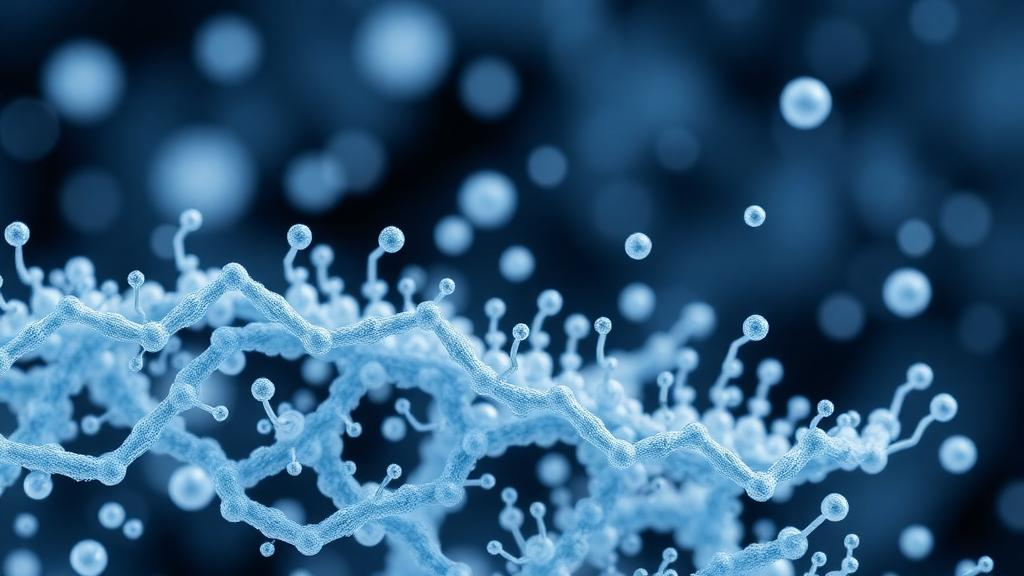
Perhaps the most visually compelling result came from the glycyrrhizate system in water. Dynamic light scattering measured an average micelle diameter of 277 nanometers with a polydispersity index of 0.416 and a zeta potential of approximately minus 13.7 millivolts, while transmission electron microscopy revealed smooth, spherical micelles averaging around 100 nanometers. Phase solubility analysis classified the curves as AL-type, indicating 1:1 stoichiometry between drug and carrier, and the stability constants for the glycyrrhizate complex, reaching over 7,000 per mole at 42 degrees Celsius, far exceeded those of the arabinogalactan system. All calculated free energy changes were negative, confirming that complexation occurs spontaneously and is thermodynamically favorable.
Computer simulations and biological assays then connected the molecular picture to pharmacological outcomes. One-hundred-nanosecond molecular dynamics simulations using the GROMACS package showed both complexes reaching equilibrium within about 10 nanoseconds and remaining stable, with carbamazepine either encapsulated in the micellar structure or bound to arabinogalactan side chains. Energy decomposition confirmed that van der Waals and electrostatic interactions stabilize the assemblies, and a reduction in solvent-accessible surface area indicated tighter molecular packing that excludes water. In a parallel artificial membrane permeability assay, the milled glycyrrhizate complex crossed the synthetic membrane far more readily than free carbamazepine, an effect the authors attribute to improved solubility at the absorption boundary layer, the nanoscale surface area of micellar particles, and glycyrrhizate’s reported ability to interact with cholesterol in lipid bilayers and increase membrane fluidity. The arabinogalactan complex, by contrast, did not improve permeability, likely because its larger molecular size hinders membrane penetration.
The in vivo pharmacokinetic study in male Sprague-Dawley rats delivered the headline result. After a single oral dose equivalent to 30 milligrams per kilogram of carbamazepine, both complexes produced peak plasma concentrations nearly five times higher than the free drug, rising from 3.351 micrograms per milliliter to 8.747 for the arabinogalactan complex and 7.854 for the glycyrrhizate complex. Total drug exposure, measured as the area under the plasma concentration-time curve, increased from 15.934 to roughly 82 micrograms times hours per milliliter for both formulations, with statistical significance. The authors propose several contributing mechanisms: the amorphous state enhances wettability and dispersibility, the mucoadhesive properties of polysaccharides prolong residence at absorption sites, and inhibition of P-glycoprotein efflux pumps may reduce drug expulsion from intestinal cells. Glycyrrhizate micelles may even facilitate brain delivery through clathrin-mediated endocytosis, a tantalizing prospect for an antiepileptic drug that must reach the central nervous system.
Stability, the Achilles heel of amorphous formulations, held up under accelerated conditions. After three months of storage at 40 degrees Celsius and 75 percent relative humidity, both complexes retained their initial drug content, while unprocessed carbamazepine degraded from 99.8 to 89.4 percent. Solubility remained essentially unchanged, and X-ray diffraction detected no recrystallization, indicating that the two natural carriers act as effective crystallization inhibitors. The authors caution that the work remains at an early stage: the scalability of the milling process, long-term stability, and comprehensive toxicological evaluation all require further investigation before these amorphous formulations can reach patients. Still, the demonstration that a one-step, solvent-free grinding process can quintuple the bioavailability of an essential epilepsy medicine using larch and licorice derivatives offers a compelling template for reformulating the many other poorly soluble drugs that challenge modern pharmacology.
Subject of Research: Mechanochemical preparation of carbamazepine complexes with arabinogalactan and disodium glycyrrhizate to improve solubility and oral bioavailability
Article Title: Preparation, characterization, and evaluation of the complexes of carbamazepine with polysaccharide arabinogalactan and saponin disodium glycyrrhizate produced by mechanochemical activation
Article References: Kong, R., Huangfu, L., Zhou, M., Zheng, Z., Feng, J., Chen, Q., & Dai, J. (2026). Preparation, characterization, and evaluation of the complexes of carbamazepine with polysaccharide arabinogalactan and saponin disodium glycyrrhizate produced by mechanochemical activation. Results in Chemistry, 31, Article 103959. https://doi.org/10.1016/j.rechem.2026.103959
Image Credits: AI Generated
DOI: 10.1016/j.rechem.2026.103959
Keywords: carbamazepine, epilepsy, mechanochemistry, arabinogalactan, glycyrrhizic acid, drug solubility, bioavailability, amorphous formulations, micelles, pharmacokinetics, green chemistry, drug delivery
















 English (US) ·
  French (CA) ·