

 3 weeks ago
19
3 weeks ago
19
PROTECT YOUR DNA WITH QUANTUM TECHNOLOGY
Orgo-Life the new way to the future Advertising by AdpathwayTwo of NASA's flagship observatories examined the same patch of sky at the same time, and part of what came back was a surprise. Researchers using the Hubble and James Webb Space Telescopes together on distant solar system bodies found fewer small objects than some planet formation models had predicted, and found that the colors of the smallest objects follow the same patterns as those of their larger relatives.
NASA announced the joint Hubble and Webb results on September 8, alongside two complementary papers published that day in The Astronomical Journal. NASA says it is the first time the two telescopes have been used jointly to study Trans-Neptunian Objects, and that some of the objects studied are among the smallest and faintest of their kind ever directly seen.
These bodies matter because of what they represent. In the early solar system, a disk of dust and pebbles orbiting the Sun came together into planetesimals, the solid building blocks of planets. Beyond Neptune, NASA says, the next stage, in which planetesimals merge into full-sized worlds, never happened, leaving a frozen population of them behind.
Two Telescopes, Two Kinds of Light, One Target
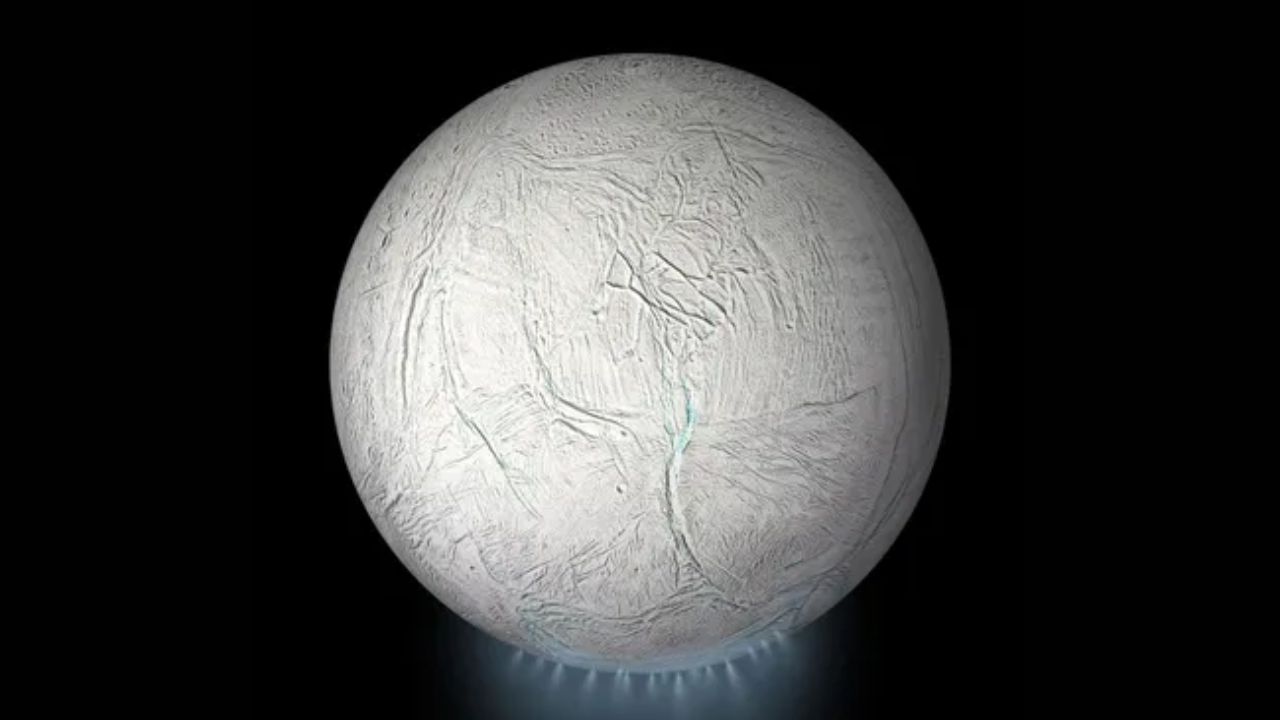
A Trans-Neptunian Object is a small, faint, icy body orbiting the Sun beyond the orbit of Neptune. NASA notes that most are more than 100 million times dimmer than objects visible to the unaided eye. Even to Hubble and Webb, they appear only as points of light.
Pairing the telescopes made the faintest targets usable. Teams led by doctoral candidates at the University of Victoria in Canada, working under the guidance of the National Research Council of Canada, and at Northern Arizona University in Flagstaff observed one patch of sky simultaneously. Hubble recorded the objects in visible light, and Webb recorded them in infrared.
NASA says the project would not have been possible without both observatories. Colors across visible and infrared wavelengths act like a fingerprint of surface composition, and the combined data gave the teams colors, sizes, and orbits for the same objects.
The survey covered two dynamically distinct populations. Dynamically cold objects remain on their original, relatively circular orbits near the plane of the solar system. Dynamically hot objects formed between the present locations of Uranus and Neptune and were pushed outward when the outer giant planets migrated early in solar system history, leaving them on highly elliptical orbits that carry them in and out of that plane.
Twenty-Seven New Objects, the Smallest About Three Miles Across
Webb discovered 27 new, remarkably dim TNOs in what NASA calls the deepest TNO survey to date. The smallest measured about 3 miles, or 5 kilometers, in diameter, roughly five times smaller than what the most sensitive ground-based telescopes can detect.
NASA offered a comparison for the faintest of them: seeing it is equivalent to standing on Earth and spotting a small swarm of fireflies on the Moon.
The unexpected part was the count. Researchers found fewer of these very small bodies than some planet formation models led them to expect. Because the number of objects at each size is one of the main observational checks on how planetesimals formed, a shortfall at the small end gives theorists something concrete to test against.
Webb's data also let the teams measure size distributions for the two populations, and the distributions came out surprisingly similar. University of Victoria doctoral candidate Marielle Eduardo, who led the size distribution study, said planetesimal formation appears to produce similar sizes whether the surrounding disk was hot or cold, dense or fluffy, which suggests the process is insensitive to disk conditions.
Collisions Were Expected to Change These Surfaces
Before these observations, astronomers thought small TNOs in both populations would have undergone many collisions that changed their surfaces compared with larger TNOs.
The observations did not show that. The small bodies look like their larger counterparts, and both populations appear to have kept roughly the colors they formed with, changing little since the birth of the solar system.
Northern Arizona University doctoral candidate Anastasia Morgan, who led the color and composition study, said it is fascinating that "the smallest objects are somehow 'remembering' and preserving the history" of how they were made. Co-author David Trilling of Northern Arizona University said the dynamically hot objects retain a signature of where they were born, even though their orbits have been scrambled since.
NASA offers two possible explanations and says the teams have not settled on either. There may have been fewer collisions than expected, or the objects may somehow retain their primordial, pre-collision compositions. The teams are still working on the question.
Reading the Evidence Without Overreaching
This is peer-reviewed work, which puts it on firmer footing than a conference abstract or preprint. The color and composition study and the size distribution study both appear in The Astronomical Journal.
The limits are also clear. The new sample is 27 objects discovered in a single patch of sky, and a shortage of small objects in one field is not automatically a shortage across the whole Kuiper Belt. The two explanations for the preserved colors are competing hypotheses, not findings. The results add constraints that planet formation models will need to accommodate rather than overturning established theory.
The idea that these objects remember their origins is NASA's shorthand for a physical result, not a claim about memory. The measurable finding is that the colors of small objects still match those of larger ones formed under the same conditions.
Where the Work Goes Next
The survey builds on Webb's growing record in the outer solar system, including high-quality spectra of more than 75 TNOs collected in the telescope's first two years of science operations. Observing additional fields would be the direct way to test whether the shortfall of small objects holds across a wider area.
For readers, the takeaway is straightforward. Astronomers treat the Kuiper Belt as a record of how the solar system was assembled; the joint use of two very different telescopes made its faintest members measurable, and the new result raises a question about small-body counts rather than settling one. Nature World News will follow further observations and any independent analysis that tests the size distribution finding over a wider survey area.
What Readers Want to Know
What is a Trans-Neptunian Object? A small, faint, icy body that orbits the Sun beyond Neptune's orbit. Most are more than 100 million times dimmer than objects visible to the unaided eye.
What did the researchers find? Twenty-seven newly discovered dim TNOs, fewer very small objects than some planet formation models predicted, and colors on small objects that follow the same patterns as those of much larger ones.
Why use two telescopes at once? Hubble is sensitive in visible light and Webb in infrared. Observing the same patch of sky simultaneously gave the teams color, size, and orbit data that NASA says neither telescope could have provided alone.
How small is the smallest object they saw? About 3 miles, or 5 kilometers, across, roughly five times smaller than the detection limit of the most sensitive ground-based telescopes.
Has this been peer-reviewed? Yes. Two complementary papers were published in The Astronomical Journal on September 8, 2026.
Does this change what we know about how planets formed? It constrains existing models rather than replacing them. The shortfall of small objects and the preserved surface colors are results that theory now has to accommodate.
What remains unresolved? Why collisions have not visibly altered the surfaces of small TNOs. Researchers have not determined whether there were fewer collisions than expected or whether the objects retain their original compositions despite them.
© 2026 NatureWorldNews.com All rights reserved. Do not reproduce without permission.


















 English (US) ·
  French (CA) ·