

 1 month ago
67
1 month ago
67
PROTECT YOUR DNA WITH QUANTUM TECHNOLOGY
Orgo-Life the new way to the future Advertising by Adpathway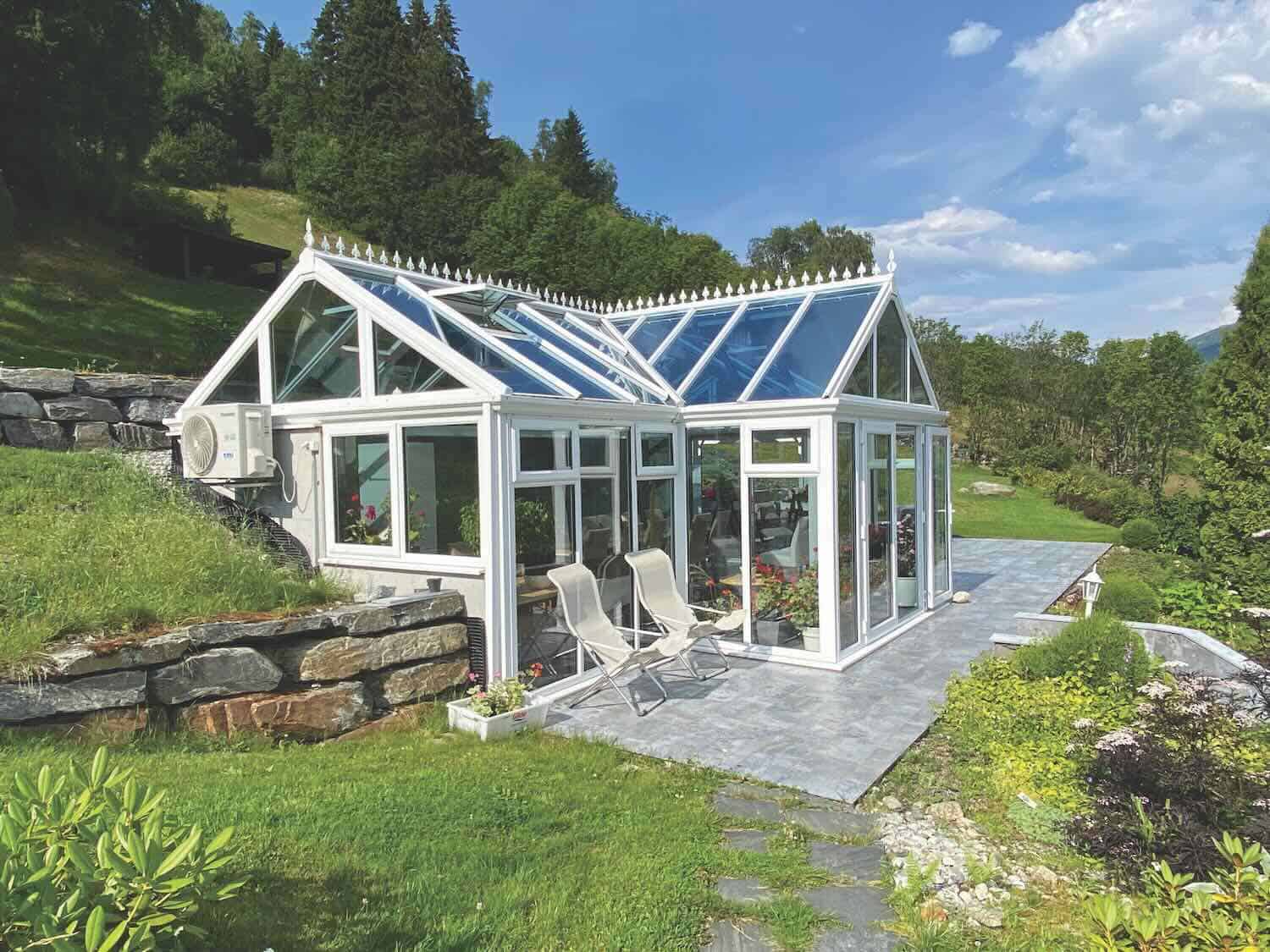 IS A GREENHOUSE in your future? I’ve never had one, and I have always been not-so-secretly jealous of friends who do—whether to propagate their seedlings in late winter into spring, or grow more tropicals and other “houseplants” than fit in their house, or who knows what.
A new book by horticulturist Leslie Halleck called “Home Greenhouse Revival: Growing Year-Round Foliage, Flowers & Food” (affiliate link) is a tempting look at what can be accomplished inside a backyard greenhouse, and details which architectural style, building materials and mechanical systems match which climate regions – and also match the particular kinds of plants you wish to grow.
Leslie, a self-described “professional plant geek who is good at botanical business,” has worked in many facets of the horticulture industry since receiving her masters in horticulture from Michigan State University. Her consultancy company, Halleck Horticultural, offers support to green industry businesses, plant entrepreneurs and home growers alike, and since 2020 she’s been teaching online courses in horticulture, botany and business through UCLA Extension.
Plus: Comment in the box near the bottom of the page for a chance to win a copy of the new book.
(Photo above by JLY Gardens; photo below of Leslie by Leslie Halleck.)
Read along as you listen to the Aug. 31, 2026 edition of my public-radio show and podcast using the player below. You can subscribe to all future editions on Apple Podcasts (iTunes) or Spotify (and browse my archive of podcasts here).

‘home greenhouse revival,’ with leslie halleck
Download file | Play in new window | Duration: 00:26:30
Subscribe: Apple Podcasts | Spotify
Margaret Roach: Hi, Leslie. How are you?
Leslie Halleck: I am so happy to be here with you again. It’s been a while since we chatted.
Margaret: I know. [Laughter.] I watch all your Instagram stuff and read your blog and see what you’re up to and so forth. So from a distance, but yes, not in person.
Leslie: Well, that’s nice to hear. It’s great to be here.
Margaret: Yeah. I wanted just to start by saying what made you want to write this book and why does the title have the word “revival” in it, a.k.a. “Home Greenhouse Revival”?
Leslie: Yes. So as usual, I was approached by my current publisher to write this topic. There are a lot of books by hobbyists and influencers out there these days, but sometimes you need a credentialed plant geek to write on a particular topic [laughter]. And that’s what Cool Springs Press tapped me. And that’s kind of how I’ve gotten roped into all my books, is that sometimes it’s tough to find someone with the education, background, credentials, and experience, but also has a public-facing presence and who also writes. And so I just kind of encompass those things. And because I have a master’s degree in floriculture, flower physiology and greenhouse production, environmental controls, they tapped me on the shoulder and said, “Hey, would you do this?” And it had been a little while. I had taken a break and I though, O.K., I think I’m ready to birth another one of these babies. I like the creative process.
And I chose this title and used the word revival for two reasons. One, I think greenhouses are having another moment. They’re having a resurgence in interest, partly because I think they’re so much more accessible to people these days. There’s so many manufacturers out there offering so many new options that just weren’t available to people even 10 years ago. So I think as an embedded trend, gardening never goes away in our culture, but things come and go in popularity. And I felt like greenhouses were due for another moment. So revival speaks to that. But there’s also a lot of folks out there who have tried and failed, tried and struggled, and you see a lot of abandoned greenhouses in backyards that are now used as storage sheds [laughter] because they just couldn’t get it to work because they didn’t know what they didn’t know.
So it’s twofold. I think greenhouses are having a moment and a comeback for many important reasons. And I also hope to encourage folks that maybe gave up on their greenhouse to hit the reboot button and revive it. [Below, the traditional small starter home greenhouse that all too often becomes a storage shed. Photo by Christina Salwitz.]

Margaret: Yeah. Well, and I think you have fairly recently relocated pretty much across the country, what from Texas to the Pacific Northwest? You’re in Oregon now. Did you have a greenhouse in Texas? Do you have a greenhouse where you are now, or is there one in the plan?
Leslie: So the irony of my situation is I did not know I was going to be uprooting my entire life, leaving it behind and moving across country when I was writing this book. So I have now landed in Oregon, completely starting over from scratch.
Margaret: Wow.
Leslie: So I suppose I don’t have a greenhouse at the moment. I have the perfect spot for a greenhouse, which is part of the reason I bought the property that I’m on. But I have to start all over from scratch. So in a way, it’s kind of a fun opportunity is that I’ll be doing this again along with my readers of this book. And I haven’t quite decided exactly what I’m going to do yet. So on the one hand, it’s frustrating that I can’t jump into showing people and videoing things in my greenhouse with this book, but at the same time, I get to start over completely from scratch right along with them and figure out what I want to do, which is essentially how I’ve laid out my book.
I’ve worked with a number of different types of greenhouses in Texas. It’s different. Greenhouse growing in hot southern climates is different than growing in northern cold climates. So I will be taking that revival journey along with all of my readers. So I’m hoping to maybe turn that into a fun thing that I’m having to start all over again [laughter] from the beginning.
Margaret: Yeah. And as you point out in the book in many different ways, it’s a decision and a process that deserves contemplation. There are many things to think about. And the new book is like a handbook and it covers every geeky, nerdy detail of how you measure the light and the proper irrigation methods and fertilization and outsmarting pests and so many different things—glazing materials and everything.
But instead of getting into that nitty-gritty right away, I wanted to first walk together through the journey of becoming a greenhouse owner, which is again where you are again right now in your life. So if I’m considering, oh, I might want to do this finally, the first decision is not about the eventual design: Oh, I want it to be this tall and have this many whatevers, a Gothic style versus a blah, blah; wood versus metal or vice versa.
It’s not about that right away about the finished structure and what it’ll look like, but it’s about what I want to grow, I think you point out in the book, isn’t it? [Photo below: Shutterstock.]

Leslie: Absolutely. And I think so many people starting out on their greenhouse journey get really pulled into the logistics of the build and the aesthetics and the materials, all of which are important. Don’t get me wrong. And as you say, I go into all of those things in the book. But in so many of the other greenhouse books out there, I mean that’s their primary focus. Where that sends people down the wrong path is that you can spend all of this time choosing the style, the build, the glazing, all of this stuff, and then you get to the end and realize this isn’t going to create the environment I need to grow what I wanted to grow in the first place.
You have to take a plant-centric approach to making greenhouse decisions first. Think about your climate, your region, your weather, what the extremes are, and then what is it you really hope to grow and harvest? Are you going to do cut flowers? Do you just want to jumpstart seedlings? Are you overwintering tropical orchids? Are you trying to do many different things at the same time?
You need to get to know the plants you want to grow, what their environmental requirements are, and then reverse-engineer that decision back to the type of greenhouse and materials and equipment that it’s going to take to create that. And what you might end up with is a very different type of greenhouse than you thought you wanted to begin with.
I can’t tell you how many very expensive greenhouse builds that I’ve been brought in after the fact to consult on, only to have to tell people this is not going to do what you thought it was going to do. And that’s a big bummer. But as a certified professional horticulturist, I tend to get called in on those kinds of things once things aren’t working.
And then I have to be the person that says no or delivers the bad news or says you’re going to have to spend a lot more money to retrofit this to do what you want to do. And so that’s the biggest trip-up for people is not taking into account the plants first, what environment they need, and then what greenhouse configuration can create that environment. I think that’s the most important thread through the conversation that I’m creating in this book.
Margaret: Right. And in the book you have, I think it’s more than 75 plants that you go into and talk about their particular needs and where they fit in the spectrum of greenhouse possibilities, having to do with temperature and light levels and all kinds of things. And sometimes even space. If you want to grow vining tomatoes [laughter], if you want to grow things that are bigger versus smaller, or they’re going to make… It’s very different than if you want to have a lot of benches for thousands of seedlings. It’s just different.
Leslie: Right. And a lot of folks end up wanting to do those things simultaneously, and very quickly find out that their space or configuration or the shape isn’t adequate for what they want to do. So I really encourage people to sit down and be thoughtful.
Not that your plan won’t change along the way. Maybe as you get good at something, you decide you want to do something different and now you might have to alter, or you might have to put up another smaller greenhouse with different conditions. But if you don’t take the plants into consideration first, then you can go down the wrong path.
And I think, again, this is where “Home Greenhouse Revival,” I try to differentiate. I get very specific about actually how to grow all of these plants. You’re never going to hear “bright diffuse light” from me. That phrase is never going to come out of my mouth. It’s never going to be in one of my books, because it’s not relevant and it’s not useful.
When you are growing in controlled environments, you need specifics. So I’ve given you at least 75 very detailed plant profiles, but what you’ll see are little nuggets at the end of those profiles I tell you grow the same. Because you know I have a word count limit in these books. I never get to include every… And there’s so many other plants that after the fact, I’m like, “Dang it, I wish I’d gotten that in there.” But I do a “grow the same” and I list a bunch of other plants that I didn’t have room for.
Margaret: Right. So it’s really many more than 75.
Leslie: Yeah, it’s many more. And then you use the similar growing instructions I’ve given you for the primary plant you can use for all of those additionally. So I mean, I have tried to hit as many plants as I could squeeze into the book from all of your standard crops to lots of unusual exotics as well.
Margaret: Right. It was interesting for me to look at the facts that I think maybe I knew somewhere in my brain, but not consciously top of mind. I mean, just that, for instance, the different shapes of buildings that you could create, the roof line, the proportions—from a geodesic dome to a traditional little shed kind of shape—they’re not just about their looks, because some of them work better in certain regions and certain climates. If you have a snow load or you don’t have a snow load, or if you’re a very hot place or not a very hot place—and glazing materials similarly. There were many ahas in there like that.
But there are some things that everybody needs: You need a flat space to put one of these on no matter which one you end up with.
So if we’re starting our adventure and we’re thinking, “Could a greenhouse be for me?” I mean, where do we start? You have a list of companies in the back that I think create, I don’t know if you call them kits or not.
Leslie: Yes.
Margaret: Do I start there or do I start… Where do we begin? [Photo below, Christina Salwitz.]
 Leslie: So you begin with the plants and your climate and you start there and then it’s like, okay, now I need to get into the physical logistics of what I’m going to build. Yes, a lot of people don’t realize that the shape of the greenhouse and the structure can vary by region. So if you have heavier snow loads, something like a gambrel-shaped roof can handle the heavier snow loads better. If you are in a very, very cold climate, geodesic domes, for example, tend to lose less ambient heat than other shapes. Taller greenhouses with higher ceilings, it’s much easier to manage temperature control and to cool those greenhouses than a smaller greenhouse. A lot of this is counterintuitive. You think a smaller greenhouse is going to be easier to manage.
Margaret: Cozy. It’s going to be cozy. [Laughter.]
Leslie: But that’s actually harder to manage the environment. It has to be vented more often.
So that’s harder. So you have to really think about all of those things. And so those are going to differ depending on where you are.
What’s not really going to differ is some of the fundamental structural things. Yes, do you have a flat area that can accommodate the size of greenhouse you want that isn’t on sinking sandy soil? What kind of foundation do you need to build for it depending on the soil, how heavy the materials are that you’re using?
And then orientation is also a really important consideration. Generally, you want the ability to run the long side of the greenhouse facing south. So your pitch runs east-west without a lot of obstructions. Your winter sun angle’s going to be lower. So if you’ve got a bunch of trees on that side, you could find yourself without really any direct sun in the winter on that greenhouse.
So you really need to think about location, orientation and obstructions: shade from the house, shade from trees. Or if you’re in a really cold climate and you’re trying to just use passive solar without heating, then you may be better off building a lean-to up against a building that’s insulated with just southern exposure and no obstructions. So all of those placement, orientation—do you have a place for water to drain? Can you get water and power to your greenhouse? All of those logistics are in the book, but those are kind of the considerations that everybody has to make regardless of where you are.
Margaret: Right. And I mean, I think you mentioned in the book that in winter, you were just talking about you can’t be shaded by a lot of trees and so forth, but you need to have six hours of sun a day, I think is the desired amount or something.
Leslie: Ideally.
Margaret: Even in winter. I mean, so we have to think about, we can’t go out in the middle of August or something and go, “Oh, well, that’s a sunny spot six hours a day.” No, because the sun angle is so different. We just have to really, really think very consciously and carefully about the possibility. And I think the other thing that you said about is the piece of ground that is not just flat, but also is it sort of stable, good drainage? What happens when there is weather and so forth on that space? What happens there [laughter]?
Leslie: Right. And a lot of folks may have very limited options. They may have a very small backyard and you need to work with what you have. A lot of people have very shaded smaller backyards. And so I’m going to tell you, well, that’s what grow lights are for. And I think that’s another big misconception for people. And we don’t need to get into all the tech stuff there; it’s all in the book. And you can go back to my book, “Gardening Under Lights,” if you want to deep dive on grow lights. But people have the notion that because a greenhouse lets a lot of light in and it’s transparent, that you never need supplemental lighting. And that’s not necessarily the case, whether it be for extending that winter photoperiod or getting enough light intensity on those seedlings or those tomatoes that you have in the greenhouse when it’s cooler. You generally need more light in winter than you may have, depending on what your growing goals are.
Margaret: Yes. And I have friends who, even in a Southern location—Southern part of the United States I mean—who, because they want to start their tomatoes and their whatever early, they have grow lights inside their greenhouse in that February period and March period. Yeah, absolutely.
Leslie: And most commercial greenhouses are all using supplemental lighting. That’s pretty standard. And so I think that’s an aha for a lot of people. And so they won’t run power to the greenhouse and then they realize, “Boy, I thought I was going to be able to grow these amazing seedlings in January and February in my greenhouse, but there’s just not enough light.”
Margaret: So how small is too small would you say from what you know about greenhouse? For a person to begin, and again, it’s probably dependent on the plants, but there’s probably some spaces that are unmanageably small. Do you have a size that you feel is the beginning of a good size?
Leslie: Well, I think a lot of people, just out of affordability and what used to be mostly available, those little 6 by 8 greenhouse kits are what a lot of people start out with. And those are the ones that usually end up getting used for storage.
Now this is not to say that if you have a small space and that’s all the space you can accommodate, as long as you plan for exactly what you’re going to grow in there, I mean, that’s a great spot for growing a few trays of seedlings and overwintering some marginally tender plants or perennials or things like that. If you’re mindful of that and you plan that space, you can still use a little six by eight greenhouse for very specific purposes.
Just don’t assume you’re going to be able to do everything you want to do in a tiny little space like that. Because remember, other stuff takes up space: benches, a water sink or whatever else is in there, and then all of a sudden you have a lot less room for plants than you thought you did. And I think that that’s one of the biggest regrets for most greenhouse enthusiasts is that they almost always wish they went bigger from the start.
Something to consider is if you’re in a cold climate and you’re using passive heating, like big water barrels to hold heat for the nighttime, boy, that takes up a lot of room and you got to plan for that before you even have plants in the greenhouse.
I don’t generally like to encourage people to go any smaller than 10 by 12. Even that is going to get tight on you pretty fast, but you also just have to work with the space you have. When I’m thinking greenhouses, of course, my mind because I also am so much in the commercial production world, is I don’t really want a greenhouse shorter than 30 feet long, 30 feet wide [laughter]. But not everybody can do that or has the space for that. But think about if a greenhouse is only 8 feet wide and you’ve got benches, all there’s going to be room for is a little aisle for you to walk through the middle, and you just have to be O.K. with that and plan for it.
So think about ergonomics, think about all the other stuff that goes in the greenhouse plus all the plants that you want to try to fit in there. And then obviously work within your budget, whether you’re DIYing or buying a kit or having it built, and you’ll have to compromise there as best you can. But you can go very small and you can do things with the little mini-greenhouses that you can put up against the house, but it’s just you have to modify your expectations about what you can fit.
Margaret: So again, there’s a list of companies that make, and again, I guess the word is kits in the back of the book. But do I start by… I mean, I don’t know how to build a greenhouse and I don’t know if my contractor that could help me redo my kitchen would know how to build a greenhouse. It’s not the same kind of person. I don’t call that person. So what do I do? Who’s my best resource? [Photo below, Christina Salwitz.]
 Leslie: So I squeezed as many resources as I could into the back of the book. So you have a lot of quality kit providers from much more utilitarian to much fancier. Many of those kits are DIY. They provide very detailed instructions on how to put them together. I usually recommend you find a local contractor, shed builder. The greenhouse companies will often have contractors that work in your area. There are also lots of local greenhouse manufacturers and builders that obviously I couldn’t list in the book because that just depends on where you are.
So I usually recommend teaming up. If you buy a nicer kit that you feel is going to be harder for you to do, make sure you tie in with a local contractor or local greenhouse builder to help you with that. A lot of times, a really good handyman, a really good contractor who builds sheds and things like that can come help you put that kit up.
But you also want to, before you do that, check your local laws, permitting, setbacks. Do you need permits for electricity? If you’re not building a permanent foundation, usually not. If you’re putting in a permanent foundation, you might need a permit. I’ve seen a lot of folks have to take their greenhouses down after they’ve built them because the neighbor calls code, it’s a code violation, and now you’ve wasted a ton of time and money. So also make sure you know all of your local laws. But the companies I’ve provided are a great place to start. Also look in your area for local greenhouse builders, and sometimes you can work in conjunction.
Margaret: Because I feel like I would want to talk it through with someone before I made any decisions.
Leslie: Absolutely.
Margaret: And again, because there’s so many things about which shape is right for my region and which glazing material and which, which, which systems and all those things.
And last minute, I just want to say: When you do figure out where yours is going to go in Oregon there, your new greenhouse, what’s the group of plants or what is it that you want to have in it? What’s your plant that leads your decision?
Leslie: So I’m always a hybrid and I call myself an everything-ist. I love to grow everything. And so for me, reigning myself, editing down, is usually the challenge, but I grow a lot of food, so I’ll be doing, of course, a lot of starts, my own starts. I like to grow unusual tropical fruits, so I’ll probably be doing some over-wintering of that. I love to grow alpine strawberries, which are the most tasty strawberries you want to grow. And they’re day-neutral, so they’re a lot easier to grow than a lot of other strawberries, and I’ll teach you about that in the book. I will probably do unusual herbs. I might be doing some saffron crocus. I’ll probably be sticking some orchids out there because I go through different plant obsessions. So I’ll probably be either zoning my greenhouse or maybe putting up two separate smaller greenhouses so that I can have different environments. I haven’t quite decided yet.
Margaret: Well, I’ll be looking forward to seeing that [laughter], especially what happens. But Leslie Hallock, the new book is called “Home Greenhouse Revival.” And it’s good to talk to you again. And it’s kind of a fun thing now. If you get me into trouble, I can call you and yell at you. Is that right [laughter]?
Leslie: Sure. Okay. If you have any questions or you decide you want to go down this path, you just give me a holler and I’ll help you out.
Margaret: I’m teasing you, but yes. And thank you so much. Talk to you again soon.
Leslie: [Laughter.] All right, thanks. Have a good one.
enter to win a copy of ‘home greenhouse revival’

Do you have or have you ever had a home greenhouse? Any desire to?
No answer, or feeling shy? Just say something like “count me in” and I will, but a reply is even better. I’ll pick a random winner after entries close at midnight Tuesday, Sept. 14, 2026. Good luck to all.
(Disclosure: As an Amazon Associate I earn from qualifying purchases.)
prefer the podcast version of the show?

MY WEEKLY public-radio show, rated a “top-5 garden podcast” by “The Guardian” newspaper in the UK, began its 17th year in March 2026. It’s produced at Robin Hood Radio, the smallest NPR station in the nation. Listen locally in the Hudson Valley (NY)-Berkshires (MA)-Litchfield Hills (CT) Mondays at 8:30 AM Eastern, rerun at 8:30 Saturdays. Or play the Aug. 31, 2026 show using the player near the top of this transcript. You can subscribe to all future editions on iTunes/Apple Podcasts or Spotify (and browse my archive of podcasts here).















 English (US) ·
  French (CA) ·