

 2 months ago
88
2 months ago
88
PROTECT YOUR DNA WITH QUANTUM TECHNOLOGY
Orgo-Life the new way to the future Advertising by Adpathway
Ajit Niranjan
That’s all for now – thank you all for taking the time to write in, and sorry to those of you whose questions didn’t get answered today. Europe is in for another achingly hot summer and we have colleagues across the continent fleshing out what it means, why it’s happening and what we can do about it. Stay safe!
You can get the best of our environment journalism delivered straight to your inbox with the Down to Earth newsletter. Sign up here in one click.
Key events
Is the repsonse to this heatware 'different'?
Lewizzle asks: This year feels different in terms of media coverage and government responses, even though heatwaves have increasingly become a recurring feature. Is that simply because of the unprecedented geographical scale and intensity of this year’s heatwave, or are there other factors at play?
Ajit: It feels different to me too and I think frequency, intensity and awareness all play a role. Because there is widespread understanding of the science of climate change - and the link to heatwaves is more immediately obvious than it is to floods or hurricanes - people are better placed to join the dots. Couple that with the intensity (I had never experienced back-to-back days of 39C heat till this weekend) and the frequency (a couple of awfully hot years are within recent memory) and it’s harder to dismiss the current discomfort as an outlier.
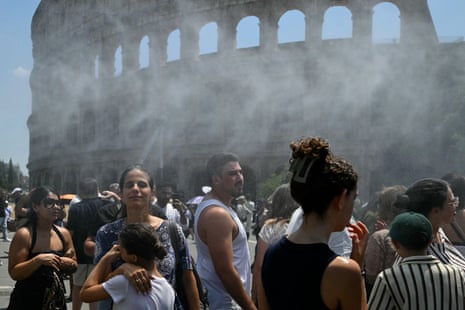
Should countries be better prepared for extreme heat?
Our own Jakub_Krupa asks: As we worry about the second wave of the heatwave hitting France and others late this week, should we expect the authorities to be better prepared for what’s coming? Or are there natural limits as to how much you can prepare for it and manage the heat, given how extreme it is?
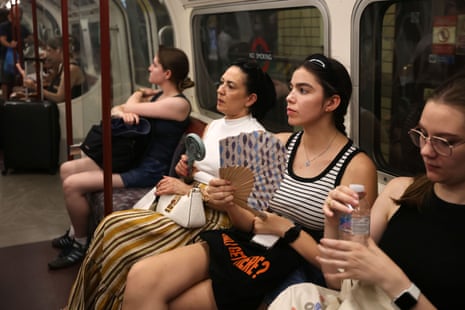
Ajit: Yes and no. Scientists have found that heatwaves that strike earlier in the year are more dangerous because people have not yet adapted their behaviours to hotter weather. Anyone who felt compelled last week to buy a handheld fan, install external shutters or search for a nearby cooling centre will be one step better prepared when the next heatwave hits.
As for authorities, you would hope they have learned, though the actions they can take in the short-term will be more about better preparing healthcare systems - and altering things like work and school hours - than actions to reduce the heat itself.
That said, the frustration is growing. Just yesterday, a group of 26 leading French scientists published an open letter in Le Figaro responding to Emanuel Macron’s claims that France could not have adapted to this heat. While we have been warning about these risks for over 30 years, this heatwave proves that France is not prepared for today’s climate, let alone tomorrow’s,” they wrote. “Public policies are still relying on past records, when they should have been anticipating future records.

Is this as bad as it gets this summer?
bookishlondonlesbian asks: Do you know if it’s likely to get even worse in July, or is this the worst we’ve seen this summer?
Ajit: A second heatwave may hit parts of western Europe later this week, though likely much shorter and covering a smaller area. Some places have not really seen a break – as one example, Seville is forecast to have 41C highs for the next seven days straight. But in general, Europe’s heatwaves are at their worst in July and August, and it’s not yet clear what the rest of the summer will bring.

What can be learned from European cities?
Juglans asks: What can London and major urban heat islands learn from other European cities?
Ajit: Paris has taken huge steps to plant trees and tackle car culture, reducing both the amount of heat generated by a city (because fewer machines burn fossil fuels) and the amount that gets trapped there (because there is less concrete absorbing the heat). But Paris made those transformative changes from a fairly rubbish starting point. Compared to cities like Copenhagen, Amsterdam and Vienna, there’s still a huge amount more the French capital can do.
The big levers that mayors can pull to reduce the urban heat island effect are turning concrete and tarmac into green spaces that are rich in plant life. Reducing car dependency is a powerful way to get there, as it reduces the land needed for roads, but so is building dense housing and rewilding brownfield sites. Rivers are also an overlooked solution in cities that have channeled them underground.
Is air con the answer?
eammonmcc asks: The answer to a very unexpected and very unwelcome jump to temperatures to the high 30s or low 40s for most people around me has been to turn the AC up another two notches and talk about absolutely anything but climate. Such people are going to be in a state when and if there are extended power cuts. Was there ever such a huge elephant in the room?
Ajit: The heightened risk of blackouts is certainly a concern and one of many reasons experts are wary of blanket adoption of air conditioning in homes – particularly in countries where simple renovations to increase shading could dramatically slash temperatures. But when it comes to protecting vulnerable groups – for instance, in hospitals, care homes, schools and on public transport – there is plenty of support for the strategic use of air conditioning. The European branch of the World Health Organization recommends nuanced adoption, arguing that air-con is “not a sustainable societal solution” but “remains crucial” for those at increased risk of high temperatures.
Do people from hot countries deal with it better?
Purposeful asks: I used to work construction in the Deep South of the USA where we were required to wear steel-toed boots, jeans, long-sleeved shirts and a helmet. I was also a bike messenger in Washington DC. It wasn’t unusual to have the temps in the +38 range. No AC, except in the government buildings. I live in Sweden now with my daughter and she is confident in her belief that people who grew up with heat just deal with heat better. Yes or no?
Ajit: That sounds tough! I’m not sure there’s any science on this but people I know who’ve emigrated from a hot country to a cold one have said they find the heat here in Europe harder to deal with because of the lack of infrastructure. Just yesterday, a friend said the 46C heat she experienced in Australia earlier this year was not nearly as bad as the 39C heat that hit Berlin this weekend.
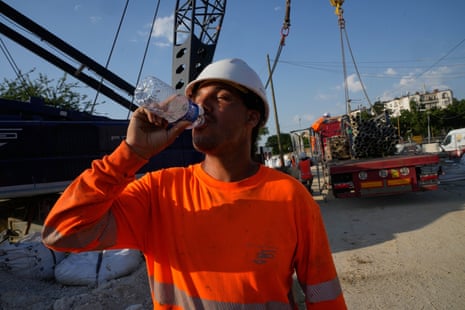
Do 'record' headlines convey the urgency?
sloth_101 asks: Most reports still talk about this issue in terms of “records”? Technically, that might be correct but it feels like it’s missing the urgency of the matter. “Records” are meant to be broken. These records clearly are not. Isn’t there a better way to describe it? For example, how “climate change” is often replaced with “climate emergency” or “climate breakdown”?
Ajit: I had never thought about it like that before but I can see how it can be read that way. It is partly a limitation of the language and partly an issue of accuracy. Ideally, I would spell it out – “Germany has been hit by heat it has never seen before” – but, because we are talking about measurements since records began, rather than over a longer period of history. I prefer to speak of “record-breaking” heat. The urgency can still be conveyed by describing the damage that hot weather does to our bodies and stating the death toll, which comes to tens of thousands of people across Europe in a typical summer. Each year heat kills 10 ten times more people than murderers in Europe.
How will climate affect far-right views on immigration?
TaketheL asks: Given the heatwaves impacting Europe this year, I am concerned that far right political figures will hijack and shift the blame of climate meltdown on immigrants. How do you think the far right will use the issues of climate warming to embolden further anti-immigration sentiment?
Ajit: So far there has been fairly little evidence of this happening. Far-right parties talk a lot about migrants and climate, but almost exclusively as separate issues. One recent exception is Switzerland, where a referendum this month on capping the country’s population at 10 million people linked the impact of migration on the Alpine nation’s natural resources, but the link here was more about environmental degradation than climate breakdown.
Some data suggests migrants tend to pollute about as much as the native-born population – flying more but driving less - so there is no obvious avenue by which they would hold foreigners responsible for increased temperatures. What seems more likely is that, as temperatures rise to intolerable levels in North Africa and the Middle East, increased migration to Europe will force far-right parties to confront the paradox that the migration they want to stop will be exacerbated by the fossil fuel pollution they support.
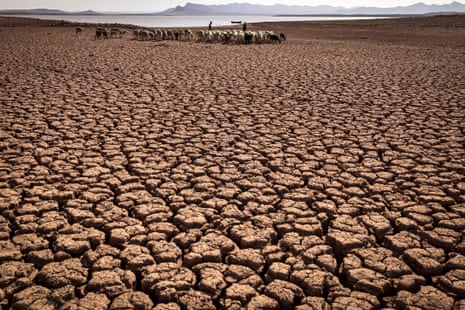
Why are the media not holding politicians to account?
Cornucopiist asks: For decades politicians have denied climate change, then minimised it, denied their country’s impact and denied the public support for climate measures, then framed climate measures as bad for “the economy” … At every single step there has been clear evidence of politicians in charge choosing corporate profits over human lives and quality of life. Why are the media not confronting them?
Ajit: Many journalists – including my brilliant Guardian colleagues – have done, and continue to do, exactly this. We are also not alone: excellent climate journalism that holds politicians accountable can be found everywhere from big financial outlets such as Bloomberg to niche publications such as Carbon Brief and Climate Home News. If you find sources of news you trust and value, supporting them can help them do more.
But I take your broader point that the public would be better informed if politicians were pressed more on climate costs – particularly, in my view, in primetime TV broadcasts and radio bulletins. There are some structural explanations for this - the journalists interviewing politicians are typically political experts rather than subject specialists, for one – but much could be improved if the industry simply demanded higher standards of scrutiny around the claims that politicians make.
Is there a way out of this mess?
AnCom52 asks: have a simple question – is there a realistic way back, or, to be more precise, a way out of this mess? Considering the current political climate (pun not intended), reluctance to act etc … I understand it is maybe hard to answer question such as this.
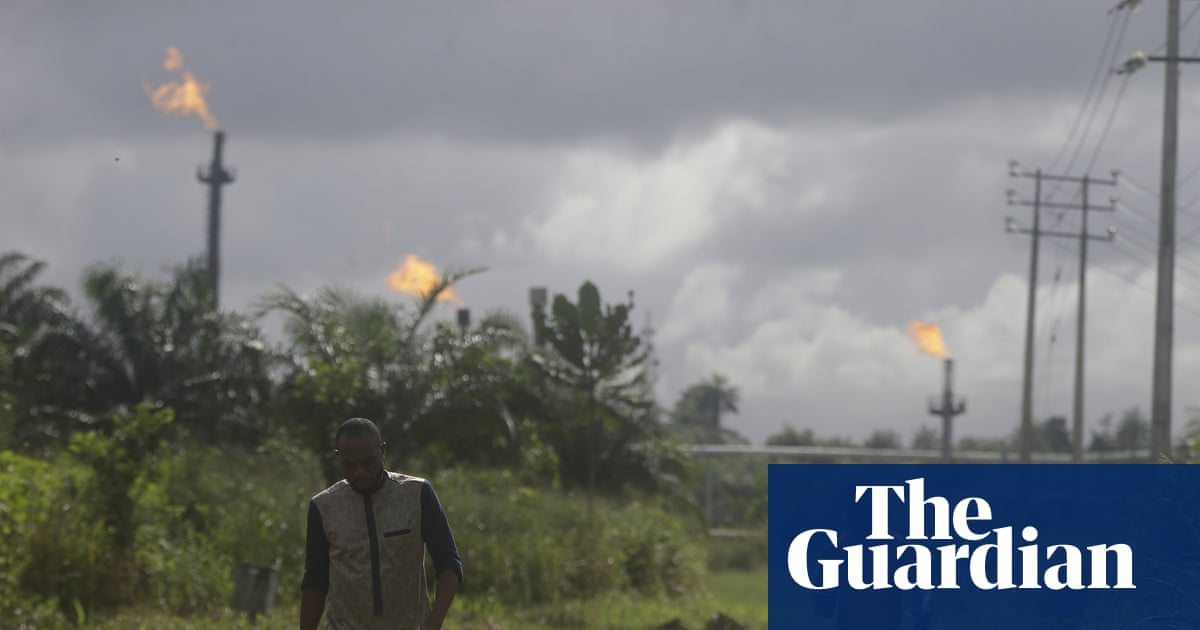
Ajit: To stabilise temperatures at a still-not-safe level, the world must stop burning fossil fuels, protect and restore nature, and actively suck some carbon out of the atmosphere. Most of that can be done with behavioural changes and technologies that are already fairly cheap – think solar panels, electric cars, batteries and heat pumps – but some things like planes and many factories are still open questions.
Is a shift likely to happen in the current political climate? Certainly not as fast as scientists have shown it would need to happen to avoid extreme suffering. Still, the prices of some clean alternatives have fallen so fast that it would take active political will to stop them – and while we are seeing examples of this, it seems likely to slow the transition rather than derail it altogether.
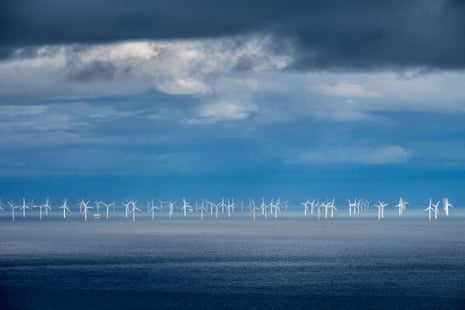
Why are so many surprised by the heat and ignoring warnings of the future?
eammonmcc asks: This current brain-poaching heat is being treated as a surprise by many – there’s nothing surprising about it as this and worse has been predicted for years. Why are so many ignoring the warnings? And why do western governments and political movements peddle fairytales about it? It can’t all be because the fossil fuel industry is controlling the agenda.
Ajit: I share your bewilderment at the surprise some people and politicians have expressed in the last week. Still, it’s worth saying we have made some meaningful progress on heat even as temperatures have risen. Europe was hit by a horrific heatwave in 2003, with 70,000 heat-related deaths that summer. Scientists think if a heatwave of similar strength were to hit today, the death toll would be about 75% smaller. They can’t easily isolate the causes weakening the temperature-mortality relationship, but experts point to a mix of early warning systems, heat action plans and people adapting their behaviour when temperatures rise.
More broadly, though, I think you’re right that there’s much more going on than just fossil fuel industry influence on public debate. We are now at a point where active denial of climate change is in the single digit percentages across western Europe, yet far-right parties who engage in exactly that are polling well above 20%. In most cases, the dominant centre-right parties in those countries are actively campaigning to weaken existing climate ambition, though outside the UK they have refrained from calling to abandon net zero emissions targets.
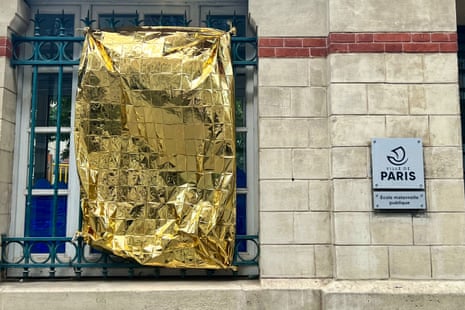
Do we have to rely on billionaires?
Woodworm20 asks: Almost all of the climate “solutions” on offer, so far, have involved yielding complete power over to a handful of billionaires [some] with extreme views and no notion of what life and community is for the other eight billion people. As we are almost certain to resort to the cheapest option of geoengineering our way forward, do you have any practical solutions that don’t involve a global autocracy?
Ajit: Climate action does not require a greater level of corporate capture or autocratic governance than the fossil fuel status quo - and the solutions on offer today already come from a broad range of actors. Autocracies are building wind turbines and solar panels in poor countries, publicly traded companies in democracies are getting state support to capture carbon from cement plants, cities are turning car parking into bike lanes, and individuals are swapping steak for tofu. All of these are important actions in scientific roadmaps to clean the economy by the middle of the century.
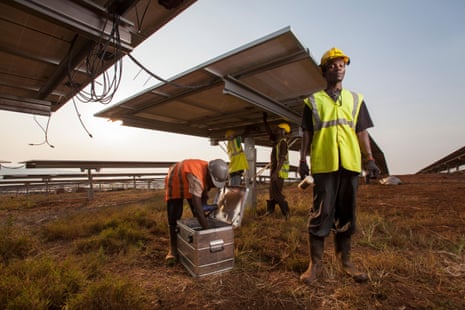
Is the climate pushing politics rightwards?
SFischer157 asks: Does the current swing to the right have its root cause in the climate crisis (social media and other factors like the pandemic aside)? People don’t want to change their lives, when clearly we need worldwide, coordinated, radical change to reduce emissions. It feels hopeless and as an individual I feel powerless to do more than I already do (mostly vegan, try not to fly more than once per year, e-bike for commuting to not use the car).
Ajit: I don’t think there’s evidence to suggest it’s a root cause, but I have wondered a lot whether it contributes. If you scroll through the social media feeds of far-right leaders in most western European countries, their top topic is migration/crime and the second is typically climate/energy. Yet if you speak to their voters, at least in Germany, where I live, it quickly becomes clear that opposition to climate policy is at most a minor issue.
That paradox is reflected in polling data. How can it be that less than 10% of the public denies the science of climate change, yet far-right parties who do so consistently get more than 20% of the vote? The obvious answer is that people are voting for them for the core issue of migration, not climate. But what is less clear is why these parties spend so much time bashing climate action. There are plausible suggestions that it plays well to fossil fuel lobbies many are linked to. A more convincing theory, I think, is that the far right sees itself as having already won the fight over migration – now it needs new battlegrounds to differentiate itself from mainstream parties.
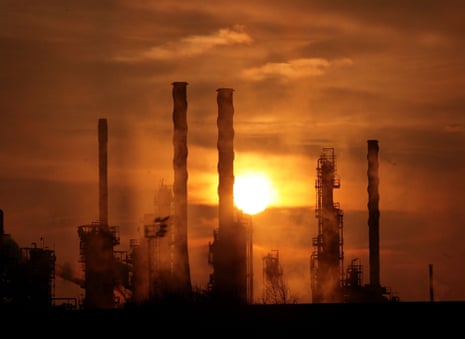
Would the heatwave have been worse if El Niño was in full swing?
Emperorob17 asks: Would this heatwave have been even more extreme had El Niño already fully developed?
Ajit: Not necessarily. El Niño – a natural warming weather pattern in the Pacific associated with violent weather - brings hotter global average temperatures. While this helps some heatwaves reach punishing new heights, the effects on European summer are harder to predict. Analysis from Copernicus suggests temperatures in June and July in El Niño years are not significantly different from their monthly averages over the last half century. It’s a different story for August and September, though, when much of Europe is considerably hotter.
It’s worth adding that, so far, scientists I’ve spoken to are more worried about the timing of El Niño than its likely strength. This year it’s striking when fuel and fertiliser prices are high, foreign aid budgets have been gutted, and many poor countries are either in debt distress or at high risk of it.
Which countries have responded best to the heat?
Magpie74 asks: Which countries that you have reported from – that might not be historically used to extreme heat – have made the best efforts to mitigate it? And what has the response been like to the heat where you are based?
Ajit: One of my favourite solutions is in Denmark, where 1,700 volunteers at a senior citizens association take turns calling up older people for welfare checks. The system has been running for decades and, while it wasn’t set up to deal with extreme heat, it is a powerful way to deal with one of the biggest health effects of hot weather. Older people are massively overrepresented in heat-related death tolls. Perhaps the single most powerful piece of advice in a heatwave is to check in on people who live alone.
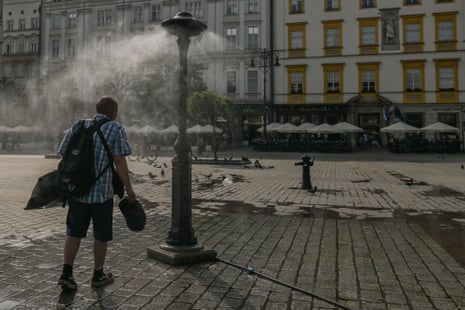
Here in Berlin, which hit 39C both days this weekend, the response has been mixed. On the way home from an air-conditioned museum I visited with friends on Saturday, we saw the police deploy riot control water cannon to cool people down as the city broke its temperature record. Shortly after, we passed a group of men on a “beer cycle tour” who were drinking alcohol while cycling around in the baking heat. There are many aspects of climate breakdown that may leave you feeling hopeless, but there are also plenty of things we have agency over.
Welcome to the Conversation
Many European countries, including Germany, France, Czechia, Poland and Hungary have experienced their hottest days ever. The UK and others have suffered their hottest ever day in June.
Over the past week Ajit Niranjan, alongside the rest of our environment team and network of reporters, has been following this extreme heat wave as it headed east across the continent. Today, Budapest is expected to hit 40C and other parts of eastern Europe have issued red warnings for extreme heat.
Ajit answers your questions live now.















 English (US) ·
  French (CA) ·