

 2 days ago
16
PROTECT YOUR DNA WITH QUANTUM TECHNOLOGY
Orgo-Life the new way to the future Advertising by AdpathwayA comparison of 163 ant genomes has found that the ant lineages carrying the most "jumping genes" are also the ones with the most species alive today. The study also traced independent bursts of jumping-gene activity in the ancestors of the biggest ant groups to the early Paleogene, shortly after the asteroid impact that ended the age of dinosaurs about 66 million years ago. The research, led by Lukas Schrader of the University of Münster in Germany, was published in Science Advances.
The team also tied that genetic activity to an expansion of odorant-receptor genes, the molecular toolkit ants use to smell. Because ants navigate, recognize nestmates, and run their colonies almost entirely by chemical signals, the authors suggest the burst may have helped fuel their spread into thousands of new species. That is a hypothesis built on a pattern, and the study shows an association rather than proof that jumping genes caused the diversification.
The question matters beyond insects. Scientists studying how life rebounds after global upheavals are trying to understand why some groups bounce back and branch out while others vanish. Ants, with more than 15,000 known species, turn soil, spread seeds and prey on other insects on every continent except Antarctica, so their history is a useful case study.
Mobile DNA That Copies Itself
Jumping genes, formally called transposable elements, are stretches of DNA that can move or copy themselves to new spots in a genome. For decades they were treated as "genomic parasites" that multiplied without helping their host and sometimes caused harm. Researchers now increasingly see them as a source of raw material for evolution, because new copies can disrupt, duplicate or rewire nearby genes.
Most copies in a genome are inactive leftovers, so a large count does not mean the elements are moving today. What the Münster-led team measured was the history of that activity. By comparing genomes from 163 species spanning 12 of the 16 living ant subfamilies, they reconstructed transposable element activity across roughly the past 100 million years, according to a University of Münster release.
A Genomic Burst After the Impact
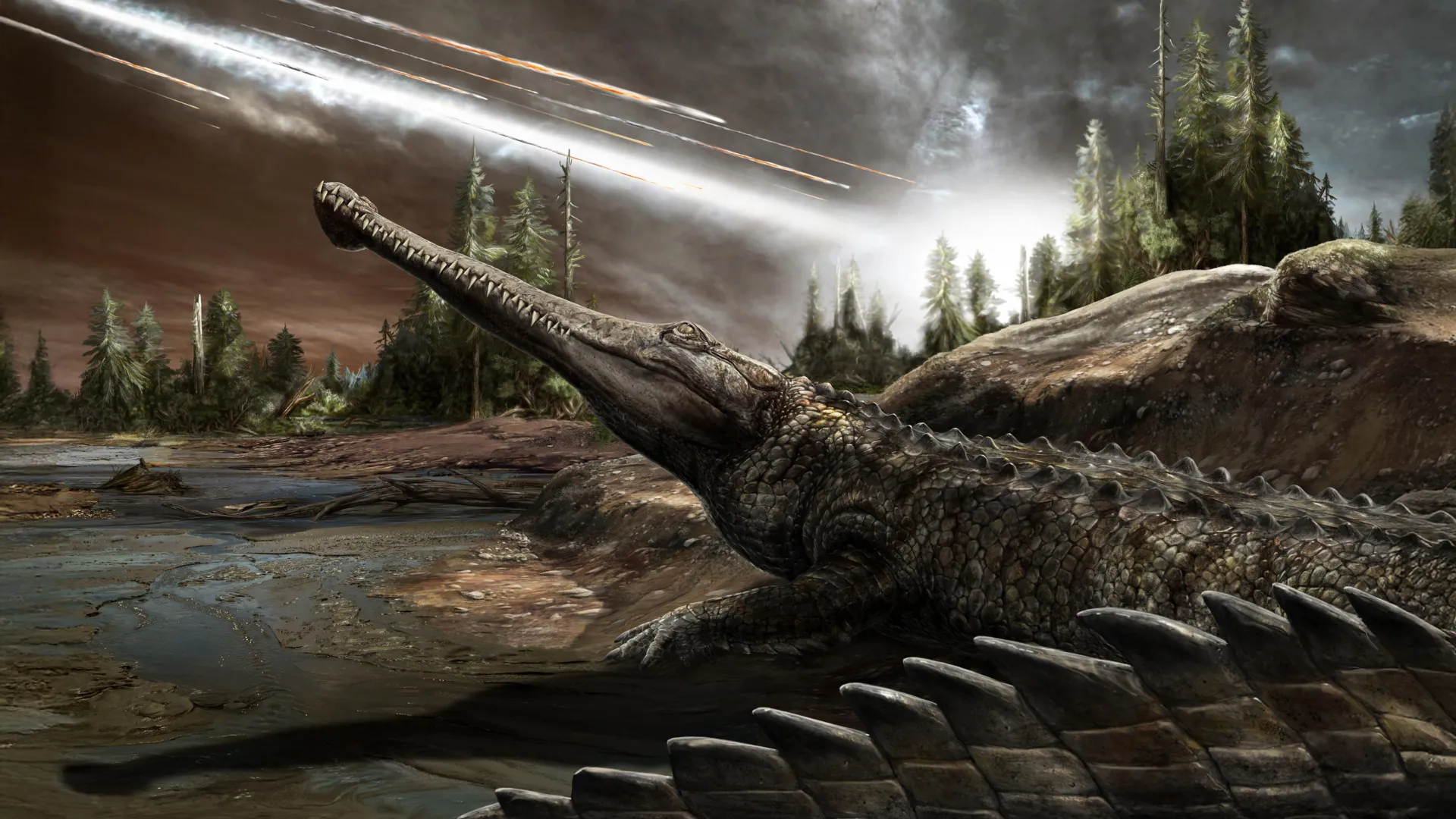
Ants first appeared somewhere between about 140 million and 168 million years ago, but they did not rise to ecological dominance until after the asteroid strike, according to BBC Wildlife's Discover Wildlife. The new genome comparison found that the ancestors of today's largest ant groups each experienced their own burst of jumping-gene activity in the early Paleogene, just before those lineages split into thousands of species.
The lineages that carry the most transposable elements today are also the most species-rich. Schrader described transposable elements as "the genomic mechanism that connects these ecological upheavals" to the ants' rapid diversification. Similar bursts have been linked to periods of fast species formation in other animals, including bats and primates, according to the university.
The asteroid's aftermath reshaped forests, food webs and climate, opening space for survivors to occupy new niches. The study does not show exactly how that environmental stress would have triggered genome activity. It shows that the timing of the bursts and the timing of the ants' diversification line up closely.
That matching timeline was reconstructed from the genomes themselves rather than from fossils. Bursts of this kind are typically dated by measuring how far related jumping-gene copies have diverged from one another, an approach that carries its own margin of error. Fossil ants from the early Paleogene are scarce, so independent checks on the exact timing remain limited.
The Sense of Smell Behind Colony Life
The most specific link in the paper involves odorant receptors, the proteins that let ants detect chemical cues. The team found that jumping-gene activity was connected to the expansion of these gene families, which are essential to colony life. More receptor genes could, in principle, allow finer chemical communication, sharper nestmate recognition and new ways to find food.
That pathway is plausible because duplicated genes can take on new jobs over time. It still has to be tested species by species, and the study does not show that every receptor gain improved communication or explains why one ant group outpaced another. The research was funded by the German Research Foundation, and no industry funding was reported.
Correlation, Not Proof
The central limitation is stated plainly by the study design: it is a comparative genomic analysis that finds a pattern across lineages. It shows that more jumping genes and more species go together, and that the bursts came first. It does not establish that the jumping genes produced the new species, and other factors, such as new habitats or food sources after the extinction, could also be involved.
Genome sampling is another constraint. Four of the 16 living subfamilies were not included, and species-rich groups tend to be better studied, which can influence comparisons. The finding is best read as strong support for a hypothesis — one that experiments and additional genomes can now test directly.
For U.S. readers, the study does not change any guidance on household ants or pest control. Its value is scientific: it offers a concrete, testable explanation for how one of the planet's most successful animal groups recovered and expanded after a planetary catastrophe — and a reminder that recovery from such events takes millions of years.
The next steps are likely to involve sequencing more ant genomes, especially from the missing subfamilies, and examining whether specific odorant-receptor copies trace back to transposable element activity. The bottom line is that ants' genomes appear to have become unusually active right when the world was rebuilding, and the most active lineages became the most diverse, though the case for cause and effect is not yet closed.
Related NatureWorldNews.com Coverage
Feather Preserved in 66 Million Year Old Dinosaur Dung Offers a New Clue to Bird Survival
Twelve New Segmented Trapdoor Spiders From Guizhou Push an Ancient Genus to 55 Known Species
What Readers Want to Know
What are jumping genes?
They are DNA sequences, called transposable elements, that can move or copy themselves within a genome. New copies can alter nearby genes.
What did the ant study find?
Across 163 ant genomes, the lineages with the most jumping genes have the most species today, and their ancestors showed bursts of jumping-gene activity shortly after the asteroid impact about 66 million years ago.
Did jumping genes cause ants to diversify?
Not proven. The study shows a strong association and matching timing, but it does not establish cause and effect.
Why are odorant receptors important?
Ants rely almost entirely on smell to navigate and coordinate colonies. The study linked jumping-gene activity to the expansion of these receptor genes.
Does this affect how homeowners deal with ants?
No. The research concerns evolutionary history and does not change pest-control guidance.
What comes next?
Researchers can test the idea by sequencing more species, especially from the four subfamilies not sampled, and tracing specific receptor genes to jumping-gene activity.
© 2026 NatureWorldNews.com All rights reserved. Do not reproduce without permission.


















 English (US) ·
 French (CA) ·