

 5 hours ago
2
5 hours ago
2
PROTECT YOUR DNA WITH QUANTUM TECHNOLOGY
Orgo-Life the new way to the future Advertising by AdpathwayI LOOK AROUND the garden and I see it happening everywhere, on so many different plants: seed is forming. Seed is the start of most everything we grow, yet most of the seed we gardeners and even more important the nation’s farmers plant originates elsewhere—often very far away from our home soil—and many of us who garden know relatively little about seed except how to order more for the coming growing season and sow it.
Now, while there’s perhaps still time to save some for next year or to share with a friend, and well before the seed catalogs arrive loaded with temptations galore, I thought it a good time to think about where our seed comes from, and reflect on how we gardeners can each do our small part to support a healthy seed system.
I met today’s guest, Bill Braun, when I was working on a recent “New York Times” garden column about seed saving. Bill is an organic seed farmer and co-founder of the non-profit Freed Seed Federation in Dartmouth, Mass., which describes itself as a “farmer-run nonprofit dedicated to the preservation, adaptation, and diversification of place-based seed”—in his case, specifically seed for the Northeast U.S. I asked him to remind us of some of the ways we gardeners can get to know the seed better.
Read along as you listen to the Sept. 21, 2026 edition of my public-radio show and podcast using the player below. You can subscribe to all future editions on Apple Podcasts (iTunes) or Spotify (and browse my archive of podcasts here).

getting to know the seed, with bill braun
Download file | Play in new window | Duration: 00:27:02
Subscribe: Apple Podcasts | Spotify
Margaret Roach: How are you, Bill? Oh, got a little seed out there in the field, do you, and drying in various places? [Laughter.]
Bill Braun: Indeed.
Margaret: Yeah, up to your neck in seed.
Bill: [Laughter.] Buried in abundance. It’s a wonderful problem there.
Margaret: Yeah, that’s good. Well, I thought we could take a couple minutes, a few minutes, to sort of talk bigger-picture philosophy, etc., before we drill into some of the basic how-to’s of some seed saving for those of us who maybe could do a little bit last-minute seed saving.
You posted a short video recently on YouTube [top of page] that reminded me of lessons that another seed steward like yourself imprinted on me long ago, sort of some buzzwords, that seed is “alive, self-replicating and adaptive.”
And in your video you say, “If those who are growing the food are also caring for the seed that grows that food, the seed grow better. They learn, they adapt, they co-evolve with us.”
So I thought we could sort of tell people a little bit about how important that really is, what that means.
Bill: Yes. Wonderful. Well, far from being an anthropomorphism, seed is very much alive. And the very thing you described—which was very nice that I said that [laughter]—was essentially just a circular return to this co-evolutionary tango that humans and plants have been engaged with for millennia. From a certain philosophical, spiritual framework, this was a pact: I care for you and in turn you care for me, and we depend on each other. And that has birthed virtually everything that we are fortunate enough to eat, and those of us who are farming and gardening to grow, which also even the limitations of the current seed system and the comparably limited biodiversity within our seed that we find ourselves with now, a big catalyst for the work that we do, still has this ancestry there.
And there’s a sort of historic memory, historical recovery of memory there, that just participating in growing seed and honoring the seed as, like you said, central to how we grow and the heart and soul of how food is grown and how ultimately we relate to earth through the growing of food is not just a worthwhile endeavor. It grounds us and centers us and creates an entire new language for being in the garden in a new context to have a deeper understanding.
Margaret: And I mean in the last, what is it, the last century, is it, that we’ve lost like 90 percent of the genetics of our food crops? Isn’t it some horrific idea like that? And then here we are marching at 1,000 miles an hour into all new conditions and with this fast-changing climate and the seed has to hurry up and learn how to cope with that really, really, really fast as well. So there’s a lot of pressures, aren’t there, from many directions?
Bill: A lot of pressures. Yeah. And therein lies the miracle of seed. With all this pressure, like you described, this dramatic loss of agrobiodiversity, if we are to label it as such, that’s come from seed-company consolidations, from uniformity and industrialized seed systems and the like, it’s amazing that we’ve become so disconnected in one sense. But in the other sense, there’s always a reason to hope when you’re growing seeds and you’re planting seeds, because you’re believing in a future. And seed’s power to adapt is one of its many teachings and ultimate testimony to how incredible plants are and how much this original relationship, this pact, has allowed both of us to flourish in its best iterations. And so there’s always a way to bring that abundance back. We’ve not reached that kind of turning point despite a dramatic, dramatic loss of what we had a century ago.
It’s in a sense never too late. I mean, that’s the wonder of thinking about something like corn, with its center of origin in Mexico, now being grown on every continent except Antarctica. I mean, this is the amazing power of plants to be adaptable and resilient, if we do our part and hold our end of the bargain and we care for them as they care for us.
Margaret: And so that’s the kind of work that Freed Seed does and other entities, nonprofit entities, and also some for-profit seed companies, organic seed companies and so forth around the country and probably the world. You say that the three tenets of your work at Freed Seed are “preservation, adaptation, and diversification.” So you’re working to push back against this [laughter], the bad-news part, and have hopeful outcomes, too, yes?
Bill: Yeah, very much so. Heeding the famous quote that the best way to fix a broken system is to render it irrelevant. It’s not simply just sticking our fingers in the dam and trying to fight the tide, but to engage in this work meaningfully in such a way as to render what feels necessary and inevitable now irrelevant because of its flourishing.
Well, first we use the threefold pillars as you described, practically speaking, because a friend in the corporate world said, “Speak in threes; you talk too atmospherically.” [Laughter.] And so we had to distill what we were doing into something also in sense of how it mirrors the temporality of a seed. When anyone holds a seed in their hand and just kind of steps back and thinks about, like you said, this living being in our hand, it’s in a way past, present, and future all collapsed into this moment.
It’s what has been, what is latent there, and what could become. And I think we’ve taken our pillars honoring that sense of collapsing temporality into the present moment by saying we want to preserve what’s already out there. We want to adapt what is within our possibilities legally and geographically and so forth.
And then we want to pick on sort of an overused saying: I think we want to work to care for “the heirlooms of the future,” and not just the heirlooms of the future in the sense of a really good-tasting tomato that’s as good as what Grandma and Grandpa grew or as good as what the catalogs are offering for heirlooms, but a true heirloom in the sense that it’s a seed that’s embedded in a community, that a community cares for, and that has enough of what our shared dear friend and my mentor, John Navazio, called a good constitution.
That when we’re thinking about diversity, it’s not just diversity of varieties that is the return that we seek, it’s also the inherent diversity within these varieties because essentially a variety is a population of a particular plant that resembles itself enough that we can say that’s a ‘Cherokee Purple’ tomato or that’s a ‘Scarlet Nantes’ carrot.
So having that inherent diversity in there is absolutely crucial, too, to make these truly heirlooms of the future because they can continue to adapt and co-evolve, continue this dance with us so that the grandchildren’s grandchildren still have enough of that good constitution that plants and humans can co-adapt with one another.

Margaret: Right. And so I mean, I’ve seen on the Freed Seed website a couple of examples. I think for instance, you have, I think I saw a picture of ‘Ronny’s Red’ okra. So an okra—this is from memory, so I might get it a little wrong—it’s an okra that’s adapted to growing in the North, right? It’s like been here, you’ve had it here for a while or whatever, so it’s adapted, yes?
Bill: Yes. I’m so glad that you cited ‘Ronny’s Red’ as an example because in one sense it’s every seed saver’s dream. And in another sense, it really underlies and underscores the urgency of why seed saving matters on any scale. Ronny Bramwell, in short, was a now good friend who lives in Westport, which is adjacent to Dartmouth, and where Freed Seed Federation originated, and my wife and I still continue to live and farm.
Ronny came to one of our seed-school sessions in the wintertime and bestowed upon us because he was so happy with what he was hearing and impressed by the distillation of the nuts and bolts of how to save seeds from so many things, every seed saver’s dream, which was this medicine bottle of okra seeds.
And I said, “My goodness, are you growing okra in the North and saving seeds? Isn’t this wonderful?”
Because for a number of reasons when we as commercial farmers with our vegetable farm were trying our hand at okra, it was exemplary in the sense that there was very limited commercial varieties available and they were largely Southern-adapted, and we could do some fancy acrobatics in the farm to get them to produce well. But here was somebody who was quietly in his backyard for half a century adapting this okra to the Northeast, and not doing it for commercial reason or not doing it for any other reason than it was a staple part of his diet, and he just did it largely of necessity. [‘Ronny’s Red’ in flower, below; processing seed-filled okra pods, above.]
Margaret: Right. He loved it. [Laughter.]
Bill: Right, because he loved it and he cared. And now fortunately there’s been an okra revival, friends of ours from Ujamaa and Southern Exposure Seed Exchange and others have gone so deep with this incredible diversity of okra that still persists in gardens and farms largely throughout the South.
And we were able to bring this Northern-adaptive variety of okra to them and celebrate it because one of the reasons it’s so special is it has this somewhat long lost trait of not only just being a red okra in general, but also being able to start its flowering and fruiting process when it’s about knee-high. So this is an okra that you can direct-sow into the ground in early June and by mid-July it’s already producing fruit, which was not our experience with other okra.
Why again, this was so exemplary was Ronny said to us with a particular urgency in his voice that he’s now 89 and he said, “Had I not met Freed Seed Federation, I don’t know where this would’ve gone.” He doesn’t have heirs.
There are other community members who aren’t necessarily interested in okra. So as our friend Frank Morton has said, it’s one more that just gets relegated to the dustbin of history because there weren’t hands to catch it and plant it.
 Margaret: Yeah. And there’s so many incredible stories from cultures elsewhere. And as you say, some person who loved okra who’s been doing this himself and now it’s saved and so forth. So we as gardeners, we can kind of plug in, I think, to the idea of joining the movement in little ways. And the way I think I’ve always believed I try to do it, maybe my seed shopping ethics or my seed ethics or whatever, is I can learn to save some seed myself, but also I can make the choice to spend my seed dollars every single year at regionally appropriate, farm-based organic seed companies that are doing the kinds of things you just talked about: that are caring for these important seeds so that they don’t go to the dust bin of history.
And when I say farm-based, it’s because surprise, surprise, everybody’s probably heard me say this a million times, but most seed companies don’t grow the seed [laughter].
It’s like, oh my God, they don’t have farms. The big ones especially I think, and the seeds are coming from places that are nowhere like my backyard. The climate, the soil, anything is nothing like my backyard. And if it’s not organic, it’s nothing like my backyard that way, either. It’s expecting to be cared for in a way that I’m not going to care for it. So I want really adapted seed. I want it as local as I can get it. So to get to know those regional providers of organic farm-based seed, etc.
I mean, I feel like that’s what we can do as gardeners. So that’s just a couple of thoughts. I don’t know if there are any others that we want to get out to people before we sort of… I want to make sure that we talk then about some seed-saving ideas that might even work at this late date to get people started and excited about connecting in that way with seed.
Bill: Well, you made some really excellent points and I’d just like to play off of a couple of them. First point being around what does it mean to be regionally adapted? This is the seed learning, like you had mentioned before, in place; that when a seed is grown in situ—in the same environment that it is to be grown for food—then the seed continues to adapt as it’s always done.
When we think about purchasing seed from local seed companies, we are fortunate in the Northeast as some elsewhere in other parts of the country are also fortunate, to have some very ethically driven seed companies that are farm-based seed companies and are doing excellent work as seed companies.
And what it means to have an organic seed, whether it’s from a large company or just a company that you don’t know, not only is that seed not necessarily grown in our region and well-adapted to our region as place-based seed has been so spread out by the one-size-fits-most industrialized approach to seed breeding and growing, but also what does it mean to have organic seed?
And the requirement, which I think this is another thing that many gardeners don’t realize when they’re reading their seed catalogs—like is the seed grown by the seed company?—also, what does it mean to have organic seed? For a seed to be certified organic, the requirement is to be grown on an organic farm for one year.
Margaret: Oh!
Bill: That does not mean that the seed is adapted to organics necessarily. In some cases, in some very notable cases, seed is bred for organics and is certified organic seed. But there are many certified organic seeds on the market that were bred in systems that do not resemble organic seed-growing conditions, but were able to be grown on an organic farm. So it’s not to say that suddenly we have to just renounce all certified organic seed by a long shot. I think we just have to sort of take it with a grain of salt like we do with so many things.
I think you really put your finger on the crux of it, which is in the same way that we say know your farmer, well, know your seed company, and what is the transparency? Do they list themselves and other farms as growers? What are their conditions and so forth? That’s where the seeds are being cared for.
So just to drive home that point, and I also like to add to that, that no size is too small. I mean, some of the best seed-growing has been done by gardeners with postage-stamp-size gardens in their backyard without any recognition. That’s I think much of history, aside from the collective farming that’s happened, that’s been the staple of cultures for millennia, that somebody should never be discouraged because they say, “I only have a really small garden. I only have a couple of pots on my patio.”
Every engagement with seed saving is important and meaningful, and it’s a moment where any effort is really shaping how the future of seed goes and ultimately how people eat, what they have access to, what has been grown and cared for, what’s out there. So we all have a role to play if we have a little space to cultivate.
Margaret: O.K., so here we are, it’s late in the season, but there’s probably some stuff out there in your own backyard. And we’re not like seed farmers here yet [laughter], we gardeners, but are there easy pickings, so to speak? Things like I believe that the good guidance, and what we talked about in the “New York Times” story that we did, is that we want to save seed from open-pollinated things, not from hybrids. So that’s one thing, but where should we look around and say, “Hey, maybe I could save this or that or the other thing?” What would be at this time, do you think, in someone’s garden, things that would be good beginner experiments to try?
Bill: Yeah, one of the things I love so much about, of the many things I loved about the “Times” piece that you did was introducing it as you’re looking in your garden and suddenly there’s a bolted lettuce plant, and that could either be discouraging because you missed that opportunity to harvest [laughter], or it could be an opportunity for saving seed. And I think this time of year especially, there are a number of plants that are producing seeds, and if we put our seed goggles on [laughter] as we enter the garden and not see lost opportunities of that arugula that bolted or that lettuce that went past us or something that is on its way out, but see, well, is there a vessel in there somewhere? Is there an opportunity to gather seed, and what does that mean?
So this time of year when I look out at the window as we’re speaking and look onto the seed farm, I see definitely some bolted lettuce that we’re still harvesting seeds off of. I see things like radicchio also, which some may or may not have growing in their garden, and that’s a little more of a challenge, but seeds around. Dry beans, absolutely. I see tomatoes, I see peppers, I see eggplant. We just pulled in our haul of winter squash. These are all vessels for seeds. There are pods or fruits on all of these at this time of year that have viable seed. Some people are familiar growing things like winter squash or peppers or watermelons, and the seeds are pretty evident. You’re scooping them out or spitting them out as you’re harvesting them. Well, just pay a little extra attention and spit the best watermelon seeds into a little colander and give them a rinse, and then you have next year’s watermelon that if you do that for a few years, you’ll have better watermelon. It’s as simple as that.
 Margaret: With some of them, there’s more of a risk or less of a risk that they will have cross-pollinated and not be the exact same thing as the parent plant next time, next generation. I mean, some things are a little more promiscuous than others out there in the garden [laughter]. And so sometimes if I have too many different certain species of cucurbits, of squash, especially, if I were to save it, I’m like, “No, I don’t think so because I realize I have a zucchini and I have the species pepo that may have crossed with it and maybe I’m going to get something funky.” Yeah, like a pumpkin and a zucchini or something may have a little mishap there.
But generally speaking, I can go out, and again, assuming this isn’t a hybrid thing, I can go out and I can save tomato seed and I can save these other things. Which things are the riskier or not so risky? I mean, lettuce is pretty safe, yes? Is it pretty safe?
Bill: Lettuce is pretty safe, and generally looking at seeds through “Is it a selfer or is it a crosser?” is a very good indication of what makes garden scale and what its risk of cross pollination is if you’re growing others of the same species.
Now, it is a continuum. I think too often it’s introduced in seed teachings as a binary, because there are self-pollinating plants that, like you said, are quite promiscuous and you’d think, well, just because this fava bean is self-pollinating, it’s going to stay in its lane. I’m growing, I don’t know, for those wonderful gardeners who are growing four or five varieties of favas, bless you, but those can cross rampantly with one another. Ditto with things like eggplant. They are self-pollinators, but they have a tendency to cross. So if you’re growing one variety of a particular crop species, that’s a good place to start.
And then getting a little Google search or some of the material that’s available through Organic Seed Alliance or on our website or some of the wonderful seed manuals that are out there, just getting a sense of, well, if that’s a self-pollinator, I can generally say that self-pollinators need smaller populations. So I think one of the things that we’ve talked about before together and was in the article as well, was there’s a difference between getting good seed after saving seed for one or two or three years and varietal maintenance, which is a longer-term commitment.
Margaret: Right, which is what you’re doing.
Bill: Exactly. And so with varietal maintenance, there’s more considerations of not reaching a genetic bottleneck somewhere down the line, but that’s not a concern to the gardener who says, “I have one lettuce plant that’s bolting,” or “I have a couple dried beans on the vine still.” There’s no reason to not save those seeds. And in some cases, if you get across with those, it could be a happy accident that leads to a new variety. That’s how many new varieties are born. So generally speaking, to answer your question, self-pollinated plants with smaller populations are the best place to start. Doesn’t mean you can’t save seed of others too, but then there are strategies and tips and tricks to keep in mind.
Margaret: O.K. So we just have another minute or two left. You just mentioned the Organic Seed Alliance; they have a guide on their website. People can look up whether their thing is an outcross, how promiscuous their plant is [laughter] and so forth if they want it. And you also have a series of your Seed School videos that I’ll give a link to if people want to dig even deeper into the subject matter.
What are you harvesting right now? What’s the big thing that’s going on there right now?
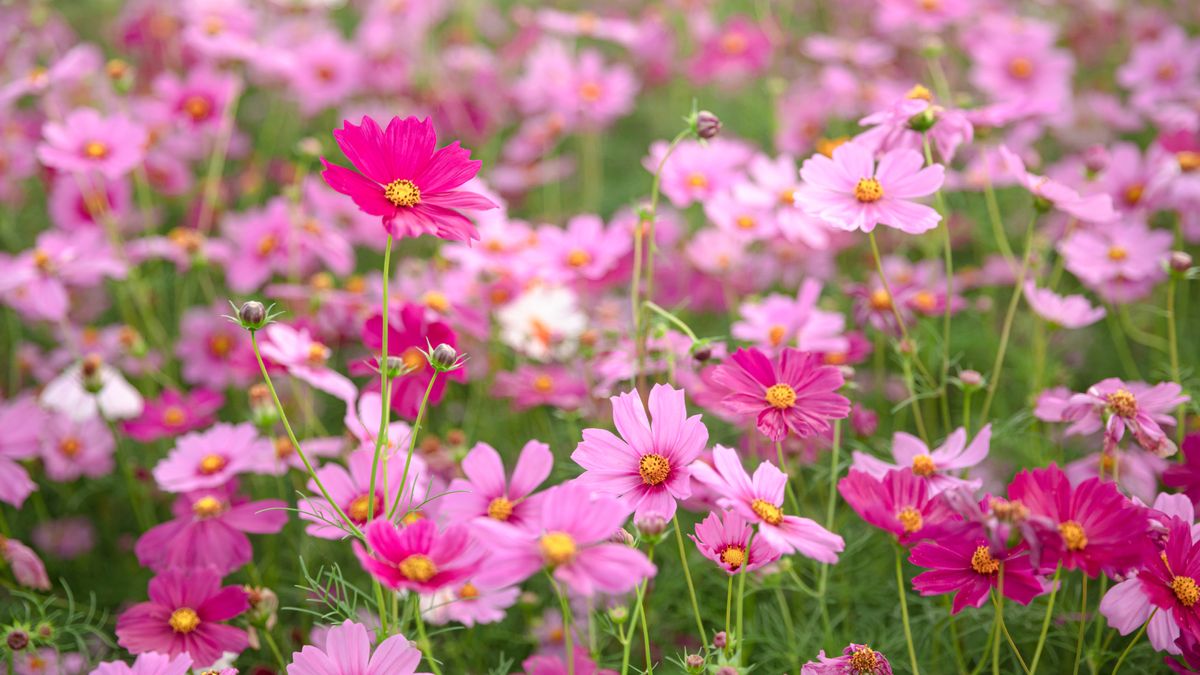
Bill: Oh, we just stepped out of the field harvesting some flower seeds, dahlias and cosmos, which has been lovely, as well as beans. We are fortunate enough to be entrusted with some really wonderful beans that we are participating in the rematriation back to tribes of origin. So it’s something we take very seriously and it’s a joy to be out in different plots all around the farm and harvesting these incredible diversity of beans that are there and knowing that they’re sending themselves back home, and we’re just sort of the conduits for that.
So that’s been at the helm for us, and of course some lettuce seed, like you mentioned before, though 3 inches of rain yesterday has made that a bit complicated today.
Margaret: Oops!
Bill: That’s a tomorrow project.
Margaret: I remember in the “Times” story, real quick, that you also told that if I had any spring sown cilantro that I’d forgotten about and not pulled, that that would maybe be setting seed now and that I could do that and have coriander as well as cilantro seeds for next year, but coriander for spices.
Bill: The ways that seeds give and give and give, and it’s fun to think of that, too, with something like a grain or a coriander or a spice that the flavor and the food is also the seed.
Margaret: Yeah. Well, Bill Braun from Freed Seed Federation in Massachusetts, I’m so glad to have met you, and I’ll give the link also, as I said, to the “New York Times” story [gift link to that] that we did together for even more detail. And I’m just so glad to keep learning about the seed, and thank you so much for the work that you’re doing. Obviously, I’ll give people information about Freed Seed so that they can learn more about you. So thank you, and I’ll talk to you again soon, I hope.
Bill: Thank you. It’s been a pleasure. I’m grateful for all you do.
(All photos and video from Freed Seed Federation.)
prefer the podcast version of the show?

MY WEEKLY public-radio show, rated a “top-5 garden podcast” by “The Guardian” newspaper in the UK, began its 17th year in March 2026. It’s produced at Robin Hood Radio, the smallest NPR station in the nation. Listen locally in the Hudson Valley (NY)-Berkshires (MA)-Litchfield Hills (CT) Mondays at 8:30 AM Eastern, rerun at 8:30 Saturdays. Or play the Sept. 21, 2026 show using the player near the top of this transcript. You can subscribe to all future editions on iTunes/Apple Podcasts or Spotify (and browse my archive of podcasts here).














 English (US) ·
  French (CA) ·