

 14 hours ago
1
14 hours ago
1
PROTECT YOUR DNA WITH QUANTUM TECHNOLOGY
Orgo-Life the new way to the future Advertising by Adpathway IN THE INTRODUCTION to her latest book “A Forest Language,” Hannah Fries acknowledges a fascination with the words we use to talk about trees—organisms she calls the backdrop of her life. From our human vocabulary of forest ecology and botany Hannah has collected some of her favorite arboreal terms to fill the new volume, ones referred to in its subtitle as “Words That Illuminate the Astonishing World of Trees.”
Do you know pitch from sap, for instance, or heartwood from sapwood? What’s a burl, a snag, a nurse log, a lenticel? In “A Forest Language,” Hannah brings to life the many layers of meaning she found within each word in its own little essay, and she is here today to talk trees.
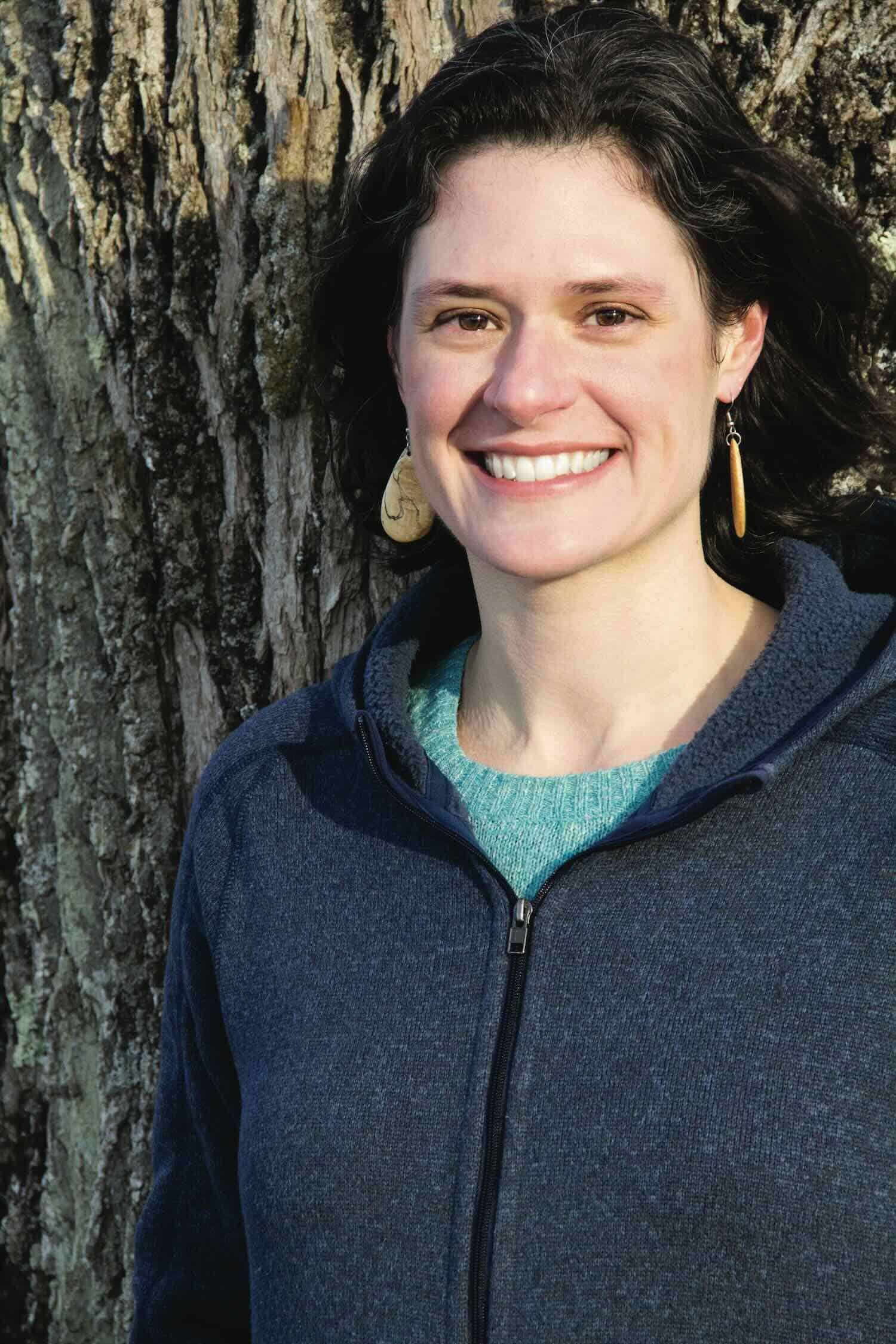
Hannah grew up among the trees of New Hampshire and now lives in western Massachusetts. She is a poet, an executive editor at Storey Publishing, and the author of an earlier inspirational book about trees called “Being with Trees.” (Affiliate link.) (Photo of Hannah, below, by Susan Quinn.)
Plus: Comment in the box near the bottom of the page for a chance to win a copy of “A Forest Language” (affiliate link).
Read along as you listen to the Sept. 28, 2026 edition of my public-radio show and podcast using the player below. You can subscribe to all future editions on Apple Podcasts (iTunes) or Spotify (and browse my archive of podcasts here).
the vocabulary of trees, with hannah fries
Download file | Play in new window | Duration: 00:26:58
Subscribe: Apple Podcasts | Spotify
Margaret Roach: Welcome, Hannah—and we’re in a similar area; we’re almost neighbors, actually, which was fun to find out when I learned about your book and learned about you. And as I mentioned, you say in the introduction to the new book, “A Forest Language,” that you’ve always lived among trees. So you’re not from a sort of urban concrete jungle background or anything, I infer [laughter]. But between this new book and your 2022 book, “Being With Trees,” it sounds like they have a big role in your life, and tell us a little bit about that and the brief origin story of the latest book.
Hannah Fries: That’s true. I grew up in New Hampshire among trees, not in a really rural, out-of-the-way place, outside of Concord. But as we know, most of New England is covered with trees and there are woods behind my house that I could wander in and play in, and I love to climb trees in my yard. So they’ve always been there for me and kind of captivated me throughout my life. This particular book came from… Actually, the inspiration came from a gift that my husband gave me. He’s a forester, so there’s a –
Margaret: [Laughter.] Speaking of trees.
Hannah: Yes. We share that love for trees. He gave me a few years ago a pair of earrings that were created by an artist reflecting on the concept of crown shyness. And they came with this little card that explained crown shyness. And I thought how cool that this little piece of art has been made from these very evocative words, this term.
And that made me think of, there’s a book edited by Barry Lopez and Debra Gwartney called “Home Ground” [affiliate link], where they ask a number of well-known nature writers to write fresh definitions of landscape terms. And I thought, wow, what if you did that for words related to trees and forests? There’s so many wonderful words related to trees and forests and their ecology and often sort of poetically evocative, too. So that was my jumping off-point for that.
Margaret: And so I guess I have to ask, what is a shy crown? [Laughter.]
Hannah: Yeah, so crown shyness [illustration, top of page] is this wonderful term that describes how… This is easier to see in some kinds of forests than others, but basically the crowns of the trees, of different trees grow right up to each other, but not over each other. So you see this on the cover of the book actually. It creates these little rivers between the puzzle pieces, the little rivers of sky.
Margaret: Beautiful. O.K.
Hannah: Yes, it’s a really beautiful thing to see.
Margaret: They respect each other’s boundaries, don’t they then, in a way?
Hannah: They do seem to do that, and it’s a little bit uncertain exactly what is happening there, why they do it, but I love those mysteries, too.
Margaret: Yeah. And you’re making me think of course, but they’re down below the surface of the ground, they’re connected a lot of times there. Do you know what I mean? Yeah. So that’s kind of beautiful as a contrast.
Hannah: It is.
Margaret: So yeah, I mean, there are familiar words, too, like sap and resin were two of the words. As familiar as trees are, there’s always more to learn. And even some of those words like sap and pitch, I guess you used pitch, which is synonymous with resin. I mean, start there because they’re not the same thing.
Hannah: Right. They aren’t, although they’re the kinds of words that people sometimes use interchangeably. But I think the easiest way to remember it is that sap is actually liquid-y. It’s not sticky. So we make maple syrup out of the sap of maple trees. It flows. If you’ve seen it drip from a tap on a tree, it’s almost like water. Whereas pine pitch, if you think of pine pitch and stuff that’s on the pine cone, super-sticky. So the pitch plays more of a role in the tree’s immune system. The sap is what’s flowing through the tree to bring water, but also the sugars from the roots. So yeah, they’re actually very different substances.
Margaret: I think in the book you say that—talking about making maple syrup as you said—and that sap is mostly water. I think you say it’s maybe 98 percent water or something. Whereas our human blood is, I think you also say more like 50 percent water. So it’s very watery, the sap [laughter], and that it comes from the upward-flowing force in the tree, because obviously things flow up and down in the tree, are conducted up and down. But this comes from the upward flow, which would be the xylem, right? Not the phloem, but the xylem.
Hannah: From the roots, and in the springtime, changes in pressure, especially with the sugar maples, cause that sort of rush of sap up the tree. And that’s something we do at my home, is capture that sap to make something sweet.
Margaret: I loved when you also, with the entry about pitch, about the pitch or resin, you talk about tree first aid, and in fact that not only does it serve to help the trees to heal in some ways, but it’s also been proven to have some wound-healing capabilities. I think it’s Norway spruce resin or something, one of the species?
Hannah: Yes. That was one of those interesting facts that I came across when I was researching—and it makes sense. That’s I think the case in other herbalism practices where the antimicrobial properties that plants use for their own defense actually turn out to be useful to humans, too, and have properties that can be useful to us for the same purposes. And I love finding those parallels.
Margaret: Yeah. So then two liquids, different, that we just talked about, and then two kinds of wood, two words about the wood: heartwood and sapwood. So what about those, the sort of distinction, and when do they occur in the life of the tree and so forth?
Hannah: Right. So the heartwood is at the very center of the tree. And if you’ve ever seen a stump that’s been sawn off, so you can clearly see the growth rings, you’ll often see a change in the color. There’ll be a darker color in the center, the center rings, and then a lighter color on the outer part of the stump, the outer rings. And the center rings that are usually that darker color, that’s the heartwood.
And the heartwood is actually not made of currently living cells. So the sapwood is the living wood of the tree where that draws, like we were talking about, the sap; it flows through the sapwood of the xylem. And you might have seen also a tree that appears to be hollowed out, but is still alive. And I think that’s a really fascinating thing to see a tree that you wonder how can that tree be alive? It looks completely rotted out on the inside. Well, that’s because it’s lost its heartwood. The heartwood has rotted, but it’s still alive because the sapwood is bringing it the nutrients that it needs.
Margaret: Yeah. So when a tree is young, it’s I guess at very first all sapwood, isn’t it? I mean, before it forms any heartwood, wouldn’t it be all sapwood, I guess?
Hannah: I think so.
Margaret: Mostly, at least certainly mostly. That would be the dominant thing. I mean, not that you would cut open a one-inch diameter tree, but you know what I mean? There wouldn’t be that big, dark sort of central area as conspicuous in a cross-section.
I know you mentioned in the book you have some old apples that are hollow like that. I have them too, very old apple trees. And I mean, it’s just nothing in the middle [laughter], but they fruit and they do everything. It’s hilarious.
Hannah: They keep going. Yeah, it’s amazing.
Margaret: Yeah, the sapwood is where it’s at, I guess [laughter].
Hannah: And in some species, the heartwood is actually rot-resistant and can be used for things like posts or anything you’re going to stick in the ground that you don’t want to rot easily. You want this particular species that have very rot-resistant heartwood because of the certain chemicals that are focused there.
Margaret: Right. So there’s lots of other… I mean, there’s so many words in the book, but there are some things we’ve all seen, but maybe we didn’t understand what they were like. One that I always love when I see them, there’s one down the road from me, one big tree has a big old burl, like a big knobby blob on the side of it [laughter]. And it’s like, well, what’s a burl? We know it, but we don’t really know it. What’s a burl? [Illustration of a burl, below.]
 Hannah: Oh yeah. Burls are marvelous. They usually form when there has been some kind of small damage to a tree and it disrupts the growth so that it turns into this knot of buds that kind of grow together and the wood forms this sort of swirl. You see woodworkers use it.
Margaret: Beautiful, yes.
Hannah: It makes this swirl pattern sometimes, and you don’t know what that pattern’s going to be until if you happen to cut off a burl from a fallen tree or something—not good to do for it to a living tree, of course. But yeah, it’s not something that harms the tree, the burl itself.
Margaret: No, and it looks like some kind of tumor. I hate to use a word like that, but you know what I mean? That’s what it looks like. I mean in our human association, it’d be like, “Oh my goodness, look at that growth. That’s scary. Uh-oh, that’s something bad.” But it’s not. It’s fascinating. And as you say, inside them, it’s incredibly beautiful.
And then another thing we’ve probably all seen—and I love it here because when the winter begins to fade, but there’s still snow on the ground and things are frozen—is something called a thaw circle.
Hannah: Yes, that was a word I loved learning as well, because it’s always one of those first signs that it is warming up a little bit. Those, in springtime, those sort of… I’m trying to think. There’s another word that.
 Margaret: Where everything just melts around the sort of root zone of the tree [illustration above].
Hannah: Yeah. Around the base of the tree, it makes almost a little well. And that’s actually because of the sun reflecting off the darker bark of the tree. It begins to warm that area a little bit. And I think of it as being the beginning of sap time, too. It seems to be around the same time that it’s going to be time to tap the trees. And it can be a place where the first spring ephemerals start to come up, because it’s just a little microclimate where it’s a little bit warmer.
Margaret: Yes, yes. And it’s so interesting, because if you look out in a field where there are a number of trees, or like an orchard for instance, where there’s some older apples or whatever, the whole place can be covered in white except these circles around those trees [laughter]. And it’s just like: “How did you do that?” But as you’re saying, so the darkness of the trunk or whatever absorbs the sunlight, warms up and creates a bit of an electric blanket of a radiator [laughter].
Hannah: Yeah, just enough.
Margaret: Yeah. It’s amazing. And I imagine the roots down below probably, as they start to activate, they’re probably warmer in temperature as well. I don’t know, but you know what I mean.
Hannah: Yeah, I don’t know, but that makes sense, that everything is just starting to stir.
Margaret: Yeah, it’s fascinating. It’s so beautiful. And then there was one that I’ve seen, but I didn’t even know there was a word for it, gemel, which is like twins.
Hannah: Like Gemini.
Margaret: Yeah. Two trees that have grown together. Tell us about gemels [laughter] [illustration below].
 Hannah: Yes. I had to choose between the word gemel and inosculation because that’s the other word for it, but probably a more commonly used scientific word, but I really liked the connection to twins and Gemini with the word gemel. What that is when parts of two trees fuse together. So you might see now and then where two branches from two different trees have rubbed together, and after a while, they’ve joined. So basically they’ve wounded each other until the wound wood starts growing around that place and fuses them together. And that can happen at the branches.
It can happen where two trunks even are rubbing each other or even roots. There’s some right on my property where these roots kind of extended over a stone wall and they appear to be one root, but they’re from two separate trees. It’s such a wonderful thing, and I can’t help, one of those ones that I can’t help make a metaphor from. It’s like you don’t even have to try. The metaphor just is there [laughter].
Margaret: Yeah. It’s like this fusion of souls. Right [laughter].
Hannah: And you think about the people you’re closest to who maybe you live with or grew up with, and how sometimes you rub each other the wrong way, and yet you’re sort of fused together for life because of your shared experience, and maybe you’ve healed in a way that brings you closer actually. So that was when I just couldn’t help it. I’d really try to let the science stand for itself, but also I’m a poet and a human [laughter].
Margaret: She couldn’t control herself, folks [laughter].
Hannah: Yeah. And sometimes it’s just there. You don’t even have to try. So I hope that by describing something in a hopefully graceful way, that those connections come out as well.
Margaret: Well, and there were even words about trees that are not in their sort of prime-of-life stage, but that are still critical members of the environmental community and should be appreciated as such, but a lot of times people don’t and they go to clean them up or erase them. Like nurse log is another phrase in the book, another word in the book [illustration below].
 Hannah: Yes. I found so many words that led me into this idea of death and life in the forest and how gray the space is between. There’s not a clean line between life and death often. And it made me wonder even if it’s productive to think of life and death as separate when you have something like a nurse log, a fallen tree where it’s become a nursery for new saplings, for all this moss that has grown over it, for plants that are growing on it, and using that rotting log as nutrients.
And there’s snags, the standing dead trees, which we talked about the heartwood getting hollowed out. A snag may have a living branch on it. It’s hard to say when is this tree actually dead, or is it just moving into its next life in a way, where all these creatures are able to move in. And eventually it becomes dust, the stuff of the forest floor. But even that is so full of life, from the microbial to the mycorrhizal networks of fungi, to all the little insects and creatures. So I really love that about this project.
Margaret: Yeah. If we don’t let the sort of trees that are aging and then going into that stage toward death, if we don’t let them age in place, if we don’t let them become snags and eventually nurse logs [laughter]—and not to say you should let them fall on your house, I’m not suggesting anything crazy and dangerous. I’m talking about sensibly. If you don’t do that, we don’t have any soil, either. Do you know what I mean? I mean, that’s how we build soil. And if the duff layer that you just talked about, if we don’t let leaves fall and accumulate and degrade, deteriorate, all the little creatures that do that work, if we don’t let that process happen, what do we have?
Hannah: Right. And being married to an ecological forester, I do know a lot of this truth that we need, in a forest, trees at all stages to have a healthy forest. And sometimes people think, “Oh, this patch of woods by my house is so messy. There’s logs on the ground.”
Margaret: I know, I know. “I have to clean up. I have to clean up.”
Hannah: Yeah, “We need to clean up the woods.”
Margaret: Right. And I’m like, you should see my place. I have trees, dead trees everywhere on the ground. [Laughter.] I love it. I love it. I mean, I try to put them in places where it’s not a visual distraction. In other words, if it can lay down in one direction or another, I try to prod it where no one’s going to trip over it or anything. You know what I mean? Sure. But yeah, but still I celebrate them. I love them.
Hannah: And you can even have an arborist—say you do have a tree that’s endangering your house or something—arborists will often cut trees higher up, like 10 feet up or something. So you’ve basically created a snag for somebody to move into.
Margaret: Because even a high stump has a lot of environmental value. So in the last couple of minutes, real quick, I wanted just to talk about my favorite tree word of all, and also the word that many serious, serious tree people I know consider their favorite word: marcescence.
Hannah: Ah, yes.
Margaret: So tell us what marcescence is.
Hannah: That is a good one for going into the fall season here, too. It’s another one of those things that you might have noticed but not have a word for. And I promise you, when you have a word for it, you will notice it more, because that’s what language does for us. That’s one of the things that I wanted to do with this book.
So you might’ve noticed that in the fall, many, many deciduous leaves fall to the ground as we know, and we’re raking them and raking them, but some trees hold on to their leaves a little longer. Beech trees do; a lot of oak trees do. And so these are those leaves that are, they’re kind of crackly and brown, but they’re still hanging onto their branches deep into the wintertime. Yes, they’re the ones that when the snow falls, you hear that little dry ticking sound. Those are the marcescent leaves, and they’ll often stay until new buds start swelling and forcing finally those leaves to fall off.
Margaret: Right. And there’s many theories about—no one knows for sure, I don’t think—but there’s many theories about are they protection against browsing in the wintertime on those dormant buds in the twigs because they’re dry and unpalatable. Do they serve that way? Or is the fact that they drop later when the nutrients that they can provide on the ground level can be utilized by the tree that’s about to wake up? Is it feeding itself at the time it needs to? All kinds of wonderful theories.
But anyway, but yeah, so the book is “A Forest Language: Words That Illuminate the Astonishing World of Trees.” We’ve been talking to Hannah Fries. But there’s lots more words in the book, that’s for sure, and a little essay with each one. So I’m glad to meet you, neighbor [laughter].
Hannah: Thank you, likewise.
Margaret: And I hope we’ll talk again before too long. Thank you.
Hannah: Thank you so much for having me. It’s been a joy.
(All illustrations by Henrike Lendowski.)
enter to win a copy of ‘a forest language’

Is there one tree-related word that you like best?
No answer, or feeling shy? Just say something like “count me in” and I will, but a reply is even better. I’ll pick a random winner after entries close at midnight Tuesday, Oct. 6, 2026. Good luck to all.
(Disclosure: As an Amazon Associate I earn from qualifying purchases.)
prefer the podcast version of the show?

MY WEEKLY public-radio show, rated a “top-5 garden podcast” by “The Guardian” newspaper in the UK, began its 17th year in March 2026. It’s produced at Robin Hood Radio, the smallest NPR station in the nation. Listen locally in the Hudson Valley (NY)-Berkshires (MA)-Litchfield Hills (CT) Mondays at 8:30 AM Eastern, rerun at 8:30 Saturdays. Or play the Sept. 28, 2026 show using the player near the top of this transcript. You can subscribe to all future editions on iTunes/Apple Podcasts or Spotify (and browse my archive of podcasts here).
















 English (US) ·
  French (CA) ·