

 1 month ago
63
1 month ago
63
PROTECT YOUR DNA WITH QUANTUM TECHNOLOGY
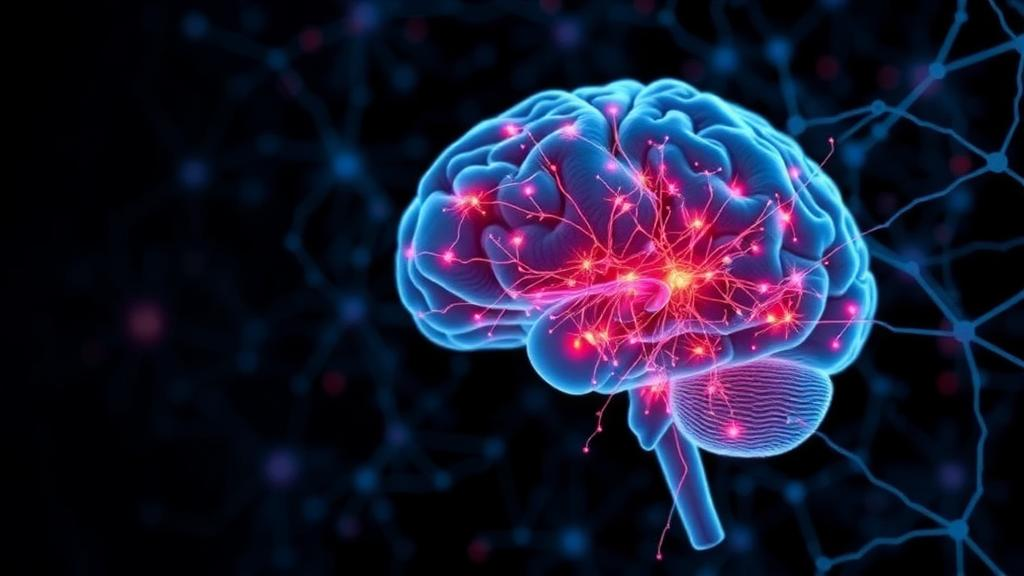
Orgo-Life the new way to the future Advertising by AdpathwayMcGill University researchers have developed a more efficient way to build artificial intelligence systems that can recognize when they may be wrong. Their approach, called a Singular Bayesian Neural Network, is designed to give AI something it has long lacked: a more meaningful estimate of its own uncertainty. Instead of producing a prediction with the same apparent confidence whether it is analyzing familiar information or encountering something completely new, the system can indicate when its answer deserves caution. The advance could help make AI safer in settings ranging from medical diagnosis and content moderation to autonomous vehicles and software agents capable of acting on behalf of users. As AI systems move into decisions with real-world consequences, knowing when not to trust a prediction may become just as important as improving the prediction itself.
“Artificial intelligence systems now play a central role in daily life, from medical diagnosis and content moderation to autonomous driving and AI agents that act on our behalf,” said Mame Diarra Touré, lead author of the research and a PhD candidate in McGill’s Department of Mathematics and Statistics. “As these systems take on more responsibility, they need to become more trustworthy. They should recognize when they are uncertain, rather than giving confident answers in situations where they may be wrong.” The study was supervised by David A. Stephens, a professor in the same department. Their work focuses on a central problem in modern machine learning: how to make neural networks not only accurate, but also capable of communicating the limits of their knowledge.
Most neural networks are trained to identify patterns in large datasets and then use those patterns to generate predictions. A conventional model might classify an image, forecast a value or answer a question by returning one result, sometimes accompanied by a confidence score. However, that score does not always represent genuine uncertainty. A model can be highly confident while facing data that differs substantially from anything in its training set. This is especially dangerous because an unfamiliar case may not produce an obviously poor answer; instead, it may produce a plausible but incorrect one. In safety-sensitive applications, the difference between “the model predicts this outcome” and “the model predicts this outcome, but with substantial uncertainty” can determine whether a human expert intervenes.
Bayesian neural networks are designed to address this weakness. Rather than treating every internal parameter of a neural network as a single fixed number, they represent those parameters probabilistically. In practical terms, the network considers a range of possible internal settings and uses that distribution to estimate how much its prediction could vary. This can help distinguish between uncertainty caused by limited or noisy data and uncertainty that arises because the input itself is unfamiliar. A system evaluating a clear, common medical image might produce a narrow range of likely outcomes, while an unusual image could generate a much broader distribution. That information can guide decisions about whether to request more data, defer to a specialist or stop the system from acting automatically.
The challenge is that conventional Bayesian neural networks can be extremely expensive to operate. Modern neural networks may contain millions or billions of parameters, and representing probability distributions for those parameters requires additional memory and computation. Training can become slower, and deploying the resulting model can demand hardware and energy resources that are unavailable in many real-world settings. These costs have limited the use of uncertainty-aware methods, even as AI systems have grown larger and more influential. The McGill researchers sought to preserve the statistical advantages of Bayesian modeling while reducing the amount of information the system must store and process.
Their solution is based on what they call a singular Bayesian neural network. The method does not treat every component of a large neural network as equally important for uncertainty estimation. Instead, it uses a more structured representation that concentrates Bayesian treatment in a lower-dimensional or strategically selected part of the model. This allows the system to capture meaningful variation in predictions without assigning a separate, computationally demanding probability distribution to every parameter. The approach is “singular” because the underlying uncertainty representation can focus on particular directions or components of the model rather than spreading computational resources uniformly across the entire network. The result is a compact approximation of Bayesian behavior that can remain practical at larger scales.
In one experiment, the researchers’ method used approximately 33 times fewer parameters than a commonly used approach for estimating uncertainty in AI systems. Fewer parameters can translate into reduced memory requirements, lower computational demand and potentially lower energy consumption during both training and deployment. The reduction is particularly significant because the cost of uncertainty estimation is often an obstacle to placing advanced AI models on devices or in services with limited resources. At the same time, the researchers report that their system maintained strong predictive performance, suggesting that efficiency did not require sacrificing the model’s ability to make useful predictions. The key promise is not simply a smaller network, but a better balance between accuracy, uncertainty and practical deployment.
The technology could eventually support a more cautious generation of AI applications. In a hospital, an uncertainty estimate might flag a scan for review by a radiologist instead of allowing an automated system to provide an apparently definitive interpretation. In an autonomous vehicle, it could signal that road conditions or an object on the roadway differ from the situations represented in the training data. In content moderation, it might identify posts that require human judgment rather than applying an automatic label. For AI agents, uncertainty could become a trigger for asking the user a clarifying question, seeking additional information or requesting authorization before taking an action. These safeguards would not eliminate errors, but they could make errors easier to detect before they cause harm.
The researchers are now exploring how to automate the identification of the neural-network components that matter most for a particular task. Different applications may depend on different features, patterns or internal representations, and manually deciding where to focus uncertainty estimation may limit the method’s flexibility. An automated process could identify the most informative portions of a model and allocate Bayesian resources there, allowing the approach to adapt to different datasets, architectures and AI tools. Such a development could make uncertainty-aware modeling more accessible to researchers and engineers who do not want to redesign an entire system from the ground up. It could also help determine whether a model is operating outside the conditions represented in its training data, a problem often described as detecting distribution shift or out-of-distribution inputs.
The study, “Singular Bayesian Neural Networks,” by Mame Diarra Touré and David A. Stephens, was presented at the Forty-Third International Conference on Machine Learning, known as ICML 2026. The work reflects a broader shift in AI research toward systems that are not only powerful, but also transparent about their limitations. A prediction that includes a reliable measure of uncertainty can help users decide when to trust automation, when to collect more evidence and when to bring a human into the process. As AI becomes embedded in medicine, transportation, communication and everyday software, the ability to say “I am not sure” may prove to be one of the most important capabilities an intelligent system can have.
Subject of Research: Computational simulation/modeling
Article Title: Singular Bayesian Neural Networks
News Publication Date: 6-Jul-2026
Web References: Mame Diarra Touré; David A. Stephens; Singular Bayesian Neural Networks; ICML 2026
References: Mame Diarra Touré and David A. Stephens, “Singular Bayesian Neural Networks,” presented at the Forty-Third International Conference on Machine Learning (ICML 2026).
Keywords
Artificial intelligence, machine learning, Bayesian neural networks, artificial neural networks, uncertainty estimation, trustworthy AI, computational modeling
Tags: AI systems with built-in uncertainty awarenessAI uncertainty estimation in neural networksapplications of AI safety in critical domainsautonomous vehicle safety and AI confidenceBayesian neural networks for AI safetycontent moderation and AI uncertainty detectionhuman review triggers for AI predictionsimproving AI transparency and accountabilityMcGill University AI research breakthroughsreliable AI decision-making in healthcaresingular Bayesian neural networks for AI risk assessmenttrustworthiness of AI systems in real-world applications



















 English (US) ·
  French (CA) ·