

 2 days ago
17
PROTECT YOUR DNA WITH QUANTUM TECHNOLOGY
Orgo-Life the new way to the future Advertising by AdpathwayA pale, finger-shaped fungus that grows from the roots of Chinese cork oak trees in southwestern China has been described as a new species, new genus and entirely new fungal family. Named Dianjunus rex and nicknamed D-Rex, it produces fruiting structures up to 50 centimeters (about 20 inches) tall and weighing up to 2.2 kilograms (about 4.9 pounds), the tallest known among the sac fungi, researchers reported in Frontiers in Fungal Biology.
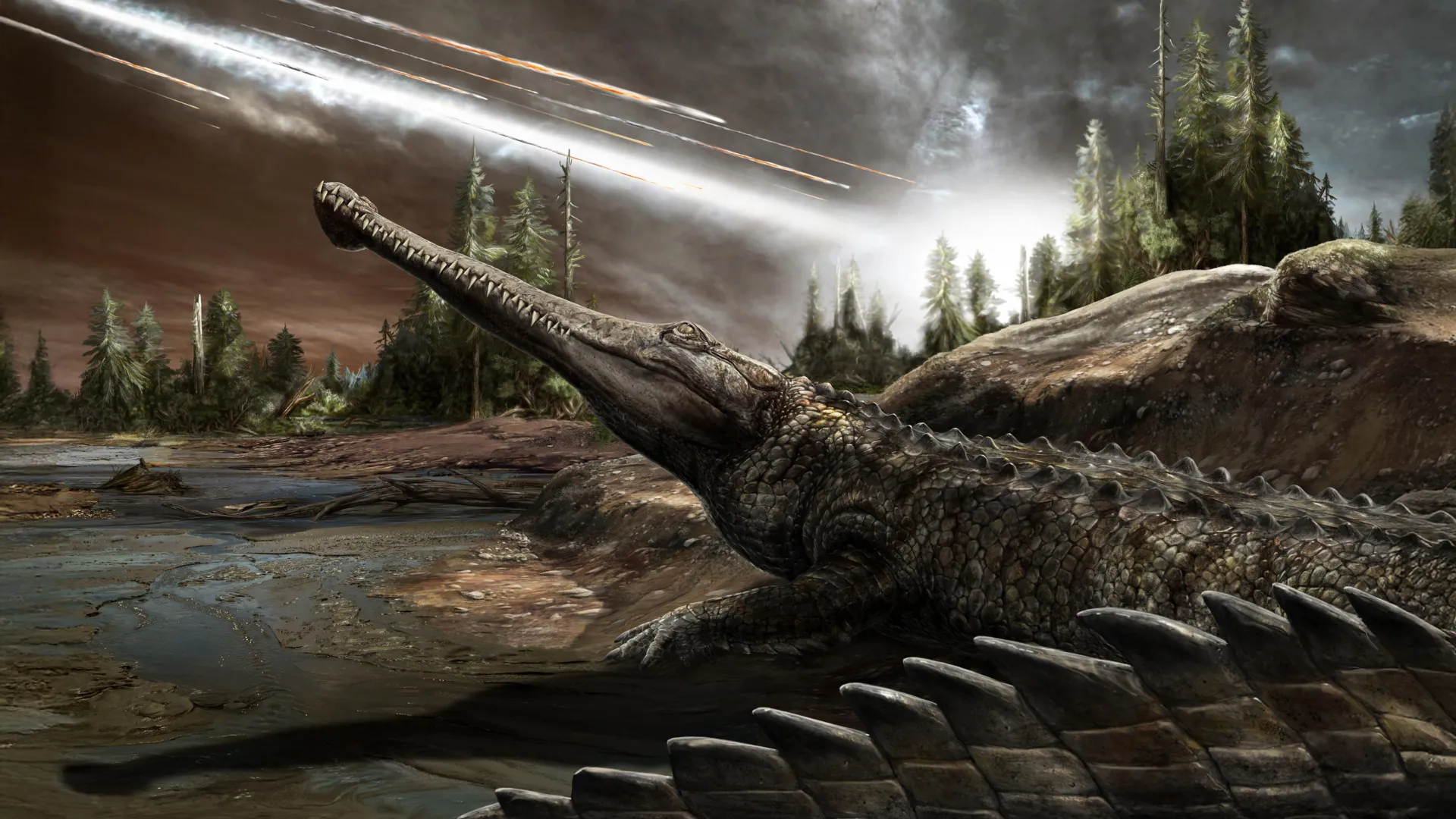
The previous height record for this group, the Ascomycota, was roughly 20 to 30 centimeters (8 to 12 inches). Molecular-clock analysis places the origin of D-Rex's new family, Dianjunaceae, at about 65 million years ago, roughly 1 million years after the asteroid impact that wiped out the non-avian dinosaurs, according to a Frontiers release.
The discovery is a reminder that large, eye-catching organisms can still escape science. It also arrives during fall foraging season in much of the United States, when unfamiliar mushrooms draw curious hands.
A Giant Spotted by Farmers First
Scientists did not find D-Rex on their own. During a 2024 fungal survey in a tropical rainforest in Yunnan Province, local farmers tipped researchers off and sent photos, and some had even tasted it, mycologist Indunil Chinthani Senanayake of the Kunming Institute of Botany told Science News. The team later recorded the fungus in temperate coniferous forests near Damaidi and Yipinglang and in rainforest near Nanbang.
Photos released by the Kunming Institute of Botany and the Chinese Academy of Sciences show clusters of creamy white to pale yellow stromata, the spore-bearing structures, rising from the soil around woody roots. Young specimens have rounded tops, while older ones become finger-like, branched or palm-shaped and darken with age. A laboratory image distributed by CGTN shows a two-lobed specimen registering 2.258 kilograms on a scale.
The researchers cultured spores, examined the fungus's anatomy and sequenced its genome before concluding it was distinct enough to need a new genus and family within the order Xylariales. Its closest known relative is Graphostroma platystoma, a fungus that grows on dead hardwood across the Northern Hemisphere.
Relatives in North American Woods
D-Rex belongs to the same broad order as two fungi many American hikers have seen without knowing it: candlesnuff fungus and dead man's fingers. Those relatives typically produce dark, crusty or club-shaped growths only a few centimeters tall on rotting wood. Against that background, a half-meter structure is striking.
Members of Xylariales are known for enzymes that break down tough plant material, and researchers think D-Rex may use similar enzymes to decompose dead wood. Senanayake said the discovery shows "how much fungal biodiversity remains to be discovered in East Asian forests."
Torda Varga, a mycologist at the Royal Botanic Gardens, Kew, who was not involved in the research, told Science News that D-Rex is the largest sac fungus fruiting body he knows of. He called it remarkable that a fungus of this size "appears to have remained scientifically undocumented until now," while noting his own experience is mostly in Europe.
Hidden in Plain Sight for Millions of Years
The research team pointed to several reasons a giant could go unrecorded. Yunnan's forests are rugged and hard to sample, fungi fruit only seasonally and briefly, and much of a fungus lives out of sight as threadlike filaments in soil or wood. Historical research in the region also concentrated on fungi with commercial value.
The 65-million-year date comes from a molecular clock, which estimates timing by comparing DNA differences against fungi with better-known histories. Senanayake suggested that the flood of dead plant material after the mass extinction may have opened opportunities for wood-decomposing fungi. That idea fits the timing but remains a hypothesis rather than a demonstrated cause.
The height of D-Rex may help it spread spores by wind above dense forest debris, the researchers proposed. They also noted such a structure is costly to build, which suggests the strategy pays off only in certain conditions.
Exactly how D-Rex lives is not settled either. The fungus fruits from the root zone of oak trees, and the researchers believe it feeds on dead wood, but its full relationship with living trees has not been confirmed. Field monitoring over several seasons would be needed to show whether it harms, helps or simply follows its host trees.
Record Holder, With a Caveat
D-Rex's record is about height. A Kenyan fungus, Engleromyces goetzei, has been reported at around 3.2 kilograms (about 7 pounds) and roughly 30 centimeters (12 inches) across, according to Senanayake's comments to CNN, so "largest" depends on how size is measured. Some truffles also approach D-Rex in bulk, Varga said.
The fungus has not been tested for toxins, CNN reported. That point matters for readers who forage. Many wild mushrooms, including some that look harmless, can cause serious poisoning, and appearance alone is not a reliable guide — even experienced foragers make mistakes.
Anyone who eats an unidentified wild mushroom and feels unwell should call the Poison Help line at 1-800-222-1222, and severe symptoms such as vomiting, confusion or trouble breathing require 911. Pet owners should also keep dogs away from wild mushrooms in yards and parks this fall — and call a veterinarian quickly if a pet eats one.
The researchers expect more unusual fungi to surface as surveys continue in China's subtropical forests, and Varga suggested searching environmental DNA databases for possible relatives. The bottom line is that a nearly 5-pound, 20-inch fungus went undescribed until 2026, a vivid sign of how much of the living world remains uncatalogued.
What Readers Want to Know
What is D-Rex?
D-Rex, or Dianjunus rex, is a newly described sac fungus from Yunnan, China. It represents a new genus and a new family, Dianjunaceae.
How big is it?
Its fruiting structures reach about 50 centimeters (20 inches) tall and up to 2.2 kilograms (4.9 pounds), the tallest known among sac fungi.
Is it the heaviest fungus of its kind?
Not necessarily. A Kenyan species has been reported at about 3.2 kilograms, so D-Rex's record is for height.
How old is its lineage?
Molecular-clock analysis suggests its family arose about 65 million years ago, shortly after the dinosaur extinction.
Is D-Rex safe to eat?
It has not been tested for toxins. Never eat wild mushrooms unless an expert has positively identified them.
Does D-Rex grow in the United States?
It has only been recorded in Yunnan, China. Smaller relatives such as candlesnuff fungus and dead man's fingers grow in North American woods.
What should I do if someone eats an unknown mushroom?
Call the Poison Help line at 1-800-222-1222, or 911 for severe symptoms.
© 2026 NatureWorldNews.com All rights reserved. Do not reproduce without permission.



















 English (US) ·
 French (CA) ·