

 7 hours ago
10
7 hours ago
10
PROTECT YOUR DNA WITH QUANTUM TECHNOLOGY
Orgo-Life the new way to the future Advertising by AdpathwayComputer scientists in Beijing have unveiled a new artificial intelligence model that can read human emotions from the way people walk, achieving state-of-the-art accuracy while using fewer computational resources than rival systems. The model, called MSH-GT, was developed by Ruicheng Wang, Ning He, Jinhua Wang, Lu Liu and Xuankai Chen at Beijing Union University and is described in a study published in the International Journal of Machine Learning and Cybernetics. Its release comes amid growing interest in gait-based emotion recognition, a field with applications ranging from socially aware robots and surveillance systems to mental health screening tools that can detect depression from movement patterns.
The central idea behind the research is deceptively simple: the way a person moves reveals how they feel. Psychologists documented this link as early as the 1980s, showing that observers could reliably identify happiness, anger, sadness and other emotional states from gait alone. Happy walkers tend to bounce, with exaggerated arm swings and an energetic stride, while angry walkers move with heavy, forceful steps and sad walkers drag their feet with slumped posture. Translating this human perceptual ability into an algorithm, however, has proven to be one of the harder problems in affective computing.
The Beijing team’s approach is based on skeleton data, which reduces a walking person to a time-varying set of joint positions, typically dozens of keypoints representing the head, torso, arms and legs. Skeleton-based recognition has several practical advantages over analyzing raw video. It strips away clothing, lighting, background clutter and other confounding factors, protects privacy by discarding facial features and appearance, and compresses each video frame into a compact geometric representation that neural networks can process efficiently. But it also discards information, which means the network must infer emotion purely from the geometry and dynamics of the moving body, often producing skeletal patterns that look nearly identical for visually similar emotional states.
Existing skeleton-based methods have faced three persistent limitations, according to the researchers. The first concerns how the skeleton is modeled spatially. Most graph convolutional networks connect joints according to the physical structure of the body, linking the elbow to the shoulder and the knee to the hip, mirroring anatomical connections. Yet emotions are often expressed through long-distance coordination between body parts that are not physically adjacent. A depressed gait, for example, may combine a dropped head with a shuffling step and reduced arm swing, requiring the model to relate distant joints across the whole body. Physical graphs miss these semantically related connections.
The second limitation is temporal. Many earlier systems rely on local convolutional operations along the time axis, which examine only a small window of consecutive frames at each step. To capture how motion evolves over an entire gait cycle, the network must stack many such layers, and even then its receptive field remains limited. Subtle emotional cues, such as hesitation before a step or the damping of a normally energetic stride, can unfold over long time scales that local windows fail to encompass. The third limitation is the ambiguity problem: emotions such as anxiety and sadness, or excitement and anger, can produce nearly indistinguishable skeleton sequences, and standard classification networks often confuse them.
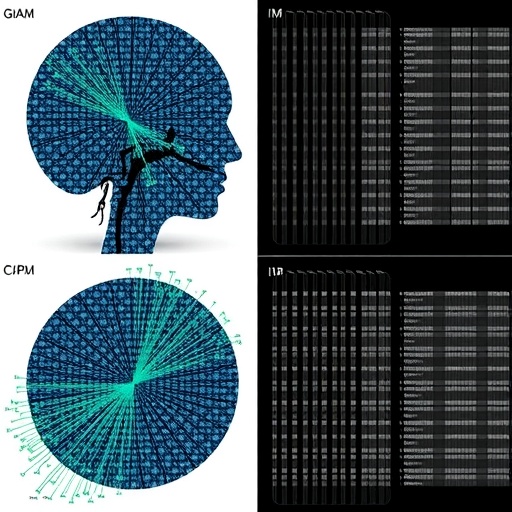
MSH-GT addresses all three weaknesses through a combination of three modules. The heart of the system is the hierarchical graph-transformer module, which fuses two complementary mechanisms. Hierarchical graph convolutions construct multi-scale semantic connections among joints using what the researchers call a centroid diffusion strategy. Instead of restricting connections to physical neighbors, this strategy treats selected joints as centers and progressively diffuses information outward through the graph, allowing the network to build relationships at multiple semantic scales, from fine local articulations to whole-body coordination patterns. Layered on top of this spatial modeling, Transformer attention mechanisms aggregate information across the entire temporal sequence, giving the model a global view of the gait cycle rather than a succession of narrow local glimpses. Attention weights let the network learn, for each walking sequence, which frames and which joint relationships matter most for distinguishing one emotion from another.
To make the most of different kinds of motion information, the team designed a dual-stream architecture. One stream processes the instantaneous pose of the body, the configuration of joints at each moment, while the other captures motion, the way those joint configurations change over time. A motion-pose spatio-temporal fusion module then combines the two streams, so that static postural cues such as a slumped shoulders and dynamic cues such as stride length and walking speed reinforce one another rather than being analyzed in isolation. This separation echoes the way human observers implicitly combine what a body looks like with how it is moving when judging emotion.
The third innovation targets the ambiguity problem directly. The prototype-based refinement contrastive module learns feature prototypes, essentially representative reference vectors, for each emotional category, and then pulls the features of each training sample toward its correct class prototype while pushing it away from the prototypes of other classes. This contrastive shaping of the feature space increases the margin between confusing emotion pairs, improving the discriminability of features for the hard, borderline samples that most often cause misclassification. In effect, the module teaches the network not just to classify, but to spread similar-looking emotions further apart in its internal representation.
The researchers evaluated MSH-GT on two widely used benchmarks, the Emotion-Gait dataset and the ELMD dataset, under their standard experimental protocols. The model achieved competitive state-of-the-art accuracy on both, outperforming or matching strong graph-based baselines. Crucially, it did so with fewer parameters and fewer floating-point operations, a measure of computational cost, than several competing architectures. That efficiency matters for real-world deployment: gait emotion recognition is envisioned in settings such as robots navigating crowded spaces, where a robot must infer the emotional state of nearby pedestrians quickly enough to adjust its path and behave politely, and in monitoring systems where lightweight models are needed for continuous operation.
The paper situates itself within a rapidly evolving lineage of gait emotion recognition systems. Earlier graph convolutional approaches, including STEP and subsequent adaptive and multiscale graph networks such as STA-GCN, AST-GCN and MSA-GCN, progressively refined how skeletons are represented, while more recent hybrid designs have begun combining graph convolutions with Transformers to exploit both structured spatial modeling and long-range temporal attention. MSH-GT pushes this hybrid strategy further by making the semantic graph itself hierarchical and multi-scale, rather than a fixed physical skeleton, and by adding an explicit mechanism for resolving ambiguous cases.
Practical applications extend well beyond robotics. Researchers have previously shown that multimedia gait analysis can help assess depression in students, and affect-aware systems are being explored for human-vehicle interaction, crowd monitoring and biometric contexts. A privacy-preserving gait model that runs efficiently could support early-warning mental health tools, adaptive smart environments that respond to occupant mood, and surveillance or human-computer interaction systems that read bodily affect without cameras capturing identifying facial images. At the same time, the technology raises familiar ethical questions about emotion surveillance, and the study relies on public datasets collected with informed consent, underscoring the importance of how such data is gathered before any deployment.
The team has released the source code publicly on GitHub, allowing other researchers to reproduce the results, build on the architecture and test it on new data. The work was supported by the National Natural Science Foundation of China. As machines are increasingly asked to share spaces with people, understanding not only where a person is going but how they feel while getting there may become a standard requirement, and models like MSH-GT suggest that the answer may be written in every step we take.
Subject of Research: Skeleton-based gait emotion recognition using a multi-semantic hierarchical graph-transformer network
Subject of Research: Technology and Engineering
Article Title: MSH-GT: a multi-semantic hierarchically graph-transformer network for gait emotion recognition
Article References: Wang, R., He, N., Wang, J., Liu, L., & Chen, X. (2026). MSH-GT: a multi-semantic hierarchically graph-transformer network for gait emotion recognition. International Journal of Machine Learning and Cybernetics, 17(9), Article 454. https://doi.org/10.1007/s13042-026-03284-1
Image Credits: AI Generated
DOI: 10.1007/s13042-026-03284-1
Keywords: Emotion recognition, Gait, Graph-transformer, Multi-semantic hierarchical modeling, Skeleton data, Graph convolutional networks, Affective computing, Dual-stream fusion, Contrastive learning, Human-robot interaction
Cite Scienmag News
APA
MLA
Chicago
Denise Maddox. (September 9, 2026). Multi-semantic graph-transformer network improves gait-based emotion recognition. Scienmag. https://scienmag.com/multi-semantic-graph-transformer-network-improves-gait-based-emotion-recognition/
Copy citation
Download RIS
Tags: affective computing and gait analysisaffective computing in human movementAI for emotion detection from walking patternsAI model for human emotion detectioncomputational models of emotional expression through gaitcomputationally efficient emotion recognition modelsdeep learning for emotion detectiondeep learning for gait emotion classificationemotion recognition from walking patternsGait-based emotion recognitionhuman posture and gait analysis for emotion inferencehuman posture and movement analysis for emotion inferencemental health screening through movementmental health screening using gait analysismovement pattern analysis for psychological assessmentmulti-semantic graph-transformer networkresource-efficient emotion recognition algorithmssocially aware robots and surveillance systemssocially aware robots emotion detectionstate-of-the-art gait analysisstate-of-the-art gait analysis modelssurveillance systems emotion recognition


















 English (US) ·
  French (CA) ·