

 7 hours ago
2
7 hours ago
2
PROTECT YOUR DNA WITH QUANTUM TECHNOLOGY
Orgo-Life the new way to the future Advertising by AdpathwayNASA's Neil Gehrels Swift Observatory, which has studied the universe's most powerful explosions since 2004, is expected to reenter Earth's atmosphere within months after a commercial mission to lift it into a higher orbit ended without success. The rescue spacecraft, Katalyst Space's LINK, fell back to Earth on September 25, and Swift is expected to follow in early November as its orbit sinks, the Associated Press reported.
NASA framed the timing slightly differently. In its lessons-learned report published September 28, the agency said the boost mission concluded without raising the spacecraft's orbit and that, without intervention, Swift was going to reenter by the end of the year. The report said the effort still produced experience that will benefit future in-space servicing programs.
Swift's loss matters beyond one telescope. The observatory served as a rapid first responder for astronomers, pivoting quickly toward sudden cosmic events so other telescopes could follow. Its descent also shows how the Sun's activity can shorten the lives of spacecraft in low Earth orbit.
A Rescue That Ran Out of Time
NASA contracted Katalyst, based in Flagstaff, Arizona, in September 2025, giving the company about a year to design, build, test, and launch a satellite that could meet, grab, and lift Swift. The AP put the value of the NASA-sponsored salvage effort at $30 million.
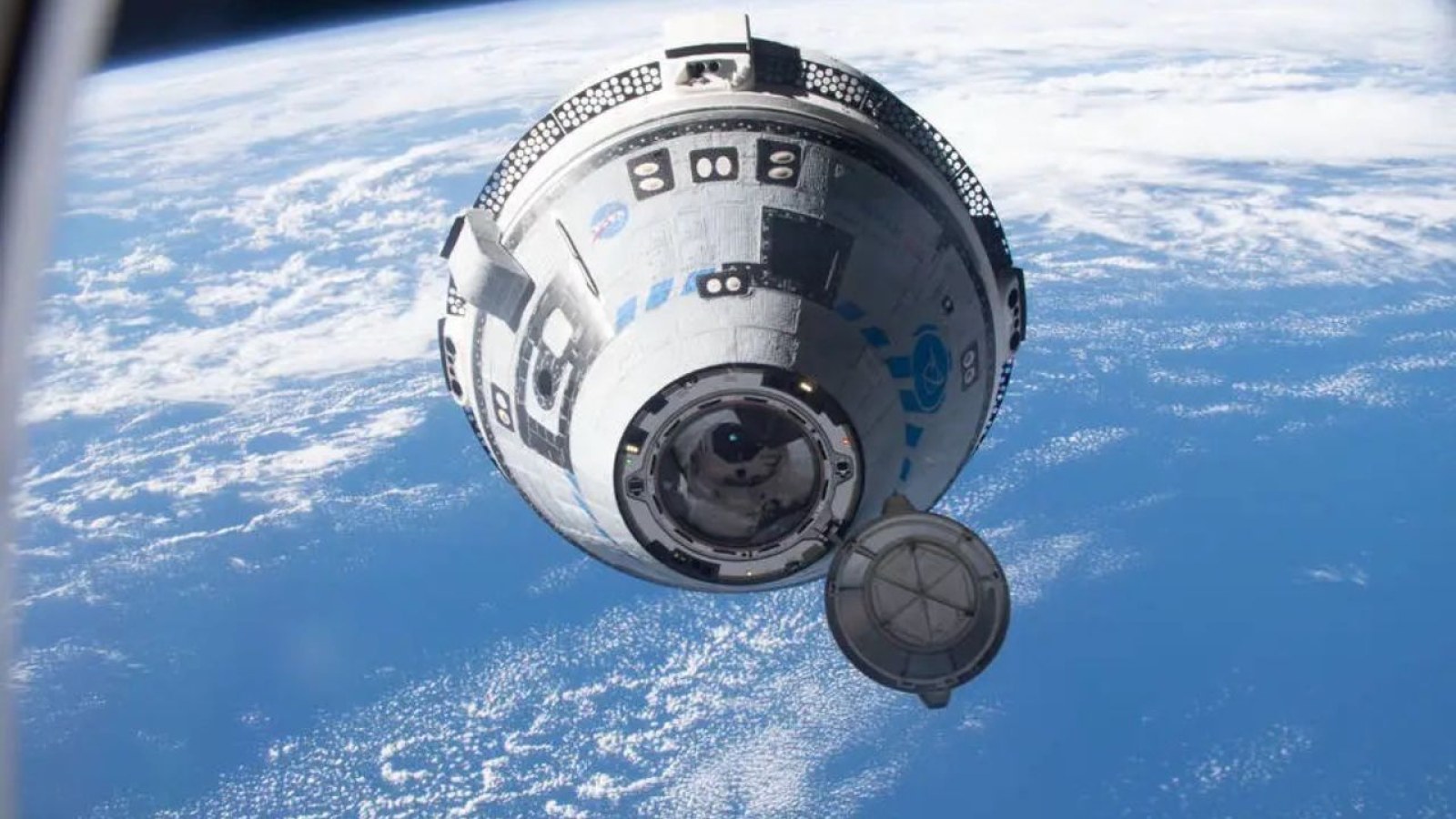
LINK launched from Kwajalein Atoll on July 3 in the Marshall Islands aboard a Northrop Grumman Pegasus XL rocket. After reaching space and completing initial checkouts, it began suffering intermittent communications losses and developed problems controlling its orientation. According to the AP, electronic faults took out two of the three reaction wheels used to turn the spacecraft, and a bad valve then sent it into a spin that disrupted communication. Engineers regained control, but LINK no longer had the fuel to do the job.
NASA and Katalyst scaled the mission back to a set of technology demonstrations, including exercising LINK's xenon-powered propulsion system and its three robotic arms, each about three feet long with a gripper on the end. NASA formally ended its involvement on September 3, and the spacecraft reentered the atmosphere weeks later on September 25. Before that, flight controllers guided LINK to within 7.5 to 9 miles (12 to 15 kilometers) of Swift, close enough to photograph it as a bright streak against space.
"From the beginning, this was a high-risk, high-reward mission," said Shawn Domagal-Goldman, director of NASA's Astrophysics Division. Katalyst CEO Ghonhee Lee said the company went from mission concept to launching and operating the first commercial space robot in less than a year, while acknowledging it did not accomplish every objective.
The Sun's Role in Swift's Descent
Every spacecraft in low Earth orbit experiences drag from the thin upper atmosphere, a small force that adds up over months. Swift has no propulsion system, so it cannot raise its orbit. According to NASA, a period of increased solar activity magnified that drag. When the Sun is more active, it heats and expands Earth's upper atmosphere, placing more air molecules in a satellite's path.
All the decision-making for the rescue hinged on predictions showing Swift sinking to a point of no return, an altitude of around 185 miles (300 kilometers), in fall 2026. To buy time, flight controllers at Penn State's Mission Operations Center began swapping about 25% of Swift's science targets in December 2025 for sky positions that minimized drag. By February, they had switched to that approach entirely, and the observatory stopped pointed science observations from mid-February to late August.
"These changes bought valuable time for the boost mission," said mission director John Nousek, who added that the methods can be carried forward to future NASA missions. The team also had to keep the telescopes away from the bright Earth, Moon and Sun, and avoid tilting Swift so far that atmospheric particles could strike its instruments. That balance held the spacecraft above the critical altitude for several months.
Swift's Scientific Legacy
Swift launched in November 2004 to study gamma-ray bursts, the most powerful explosions in the cosmos, and became a general-purpose tool for fast-changing events. According to NASA's mission summary and its September report, its work ranged from comets and asteroids in our own solar system, including tallying water from the interstellar comet Borisov, to many kinds of cosmic explosions and flares from black holes in distant galaxies. The AP put the observatory's cost at $364 million.
Its speed was the key. Swift could pivot toward a new event within minutes, pinpoint it, and alert observatories on the ground and in space. That first-look role is what astronomers stand to lose, and the AP reported that NASA is working out how it will fill the gap. The observatory has resumed scanning the sky for the time it has left.
S. Bradley Cenko, Swift's principal investigator at NASA Goddard, said the observatory's namesake, Neil Gehrels, would have celebrated the attempt. "That's how we explore the universe," he said, describing a team that learns from each other and keeps pushing forward.
Reentry Timing and What Remains Unknown
The early November estimate comes from the AP, while NASA's own statement describes reentry as expected by year's end. Reentry timing for an uncontrolled satellite depends heavily on solar activity, so predicted dates typically narrow only in the final days. The sources reviewed for this article did not include a NASA assessment of whether any debris could survive reentry or where it might fall.
Readers do not need to take any action. Satellite reentries are tracked by U.S. space surveillance, and decay predictions are published publicly as a reentry nears. Claims on social media about specific impact locations should be treated with caution until official predictions are available.
The episode also offers a broader lesson. As solar activity rises and falls over its roughly 11-year cycle, satellites without propulsion face shorter lifetimes during active years. NASA said the rapid, public-private approach used for the boost attempt, together with the drag-reducing operations developed at Penn State, will inform future servicing missions that could extend the lives of valuable spacecraft.
Swift is expected to reenter within the next few months after its rescue failed, ending a mission that transformed the study of cosmic explosions. Solar activity accelerated its fall, and while the boost did not work, NASA says the lessons will shape future efforts to save aging satellites.
What Readers Want to Know
When will Swift reenter the atmosphere?
The Associated Press reported that Swift is expected to reenter in early November. NASA has said that without a boost, it would reenter by the end of 2026.
Why did the rescue fail?
LINK suffered intermittent communications losses and orientation control problems after launch. The AP reported that two of three reaction wheels failed and a faulty valve sent the spacecraft into a spin, leaving too little fuel to complete the job.
How does solar activity affect satellites?
An active Sun heats and expands Earth's upper atmosphere, increasing drag on satellites in low orbit and making them lose altitude faster.
What did Swift discover?
Swift studied gamma-ray bursts and other cosmic explosions, tallied water from interstellar comet Borisov, and observed flares from black holes, often acting as an early alert for other telescopes.
Is Swift's reentry dangerous to people?
The sources reviewed did not include a NASA debris assessment. Readers should rely on official U.S. tracking predictions rather than social media claims as the date approaches.
What happened to the LINK spacecraft?
LINK reentered the atmosphere on September 25 after NASA ended its involvement on September 3.
© 2026 NatureWorldNews.com All rights reserved. Do not reproduce without permission.
















 English (US) ·
  French (CA) ·