

 1 hour ago
8
PROTECT YOUR DNA WITH QUANTUM TECHNOLOGY
Orgo-Life the new way to the future Advertising by AdpathwayA comprehensive systematic review and Bayesian network meta-analysis evaluating nine randomized controlled trials has found that specific Chinese patent medicines and herbal formulations may reduce the severity of radiation-induced oral mucositis and alleviate treatment-associated pain in oncology patients undergoing radiotherapy for head and neck malignancies. Published by researchers from Ningxia Medical University and affiliated institutions in Frontiers in Oncology, the synthesis analyzed clinical outcomes across 919 post-radiotherapy cancer patients and compared eleven different therapeutic regimens. The investigators reported that proprietary herbal formulations demonstrated favorable efficacy profiles relative to conventional control interventions, with Heat-Clearing Throat-Soothing Formula exhibiting the highest probability of improving overall clinical response and curtailing severe tissue ulceration, while Throat-Clearing Oral Liquid achieved the highest ranking for reducing moderate-to-severe oral pain. However, the study authors emphasized that these preliminary statistical rankings must be interpreted with caution due to the modest sample sizes, variable control regimens, and general lack of double-blind trial designs across the existing literature base.
Radiation-induced oral mucositis represents the single most prevalent dose-limiting acute toxicity encountered during curative radiotherapy and concurrent chemoradiotherapy for head and neck malignancies, with incidence rates approaching eighty percent of treated individuals. Clinically characterized by painful erythematous lesions, extensive mucosal ulcerations, dysgeusia, and profound dysphagia, this debilitating condition frequently precipitates severe dehydration, systemic malnutrition, unplanned treatment interruptions, and patient cachexia. Standard conventional management remains predominantly supportive, relying on topical analgesics, mild antiseptic mouth rinses, recombinant growth factors, and corticosteroid anti-inflammatory agents that often exhibit limited therapeutic efficacy. Prolonged corticosteroid administration in immunosuppressed cancer populations introduces additional clinical risks, including secondary oral fungal infections and systemic immune impairment. Because persistent mucositis compromises both long-term oncologic treatment adherence and patient-reported quality of life, the development of safe and reliably effective adjunct pharmacological therapies has remained a major clinical priority across radiation oncology.
Within the theoretical framework of Traditional Chinese Medicine, radiation-induced oral mucosal lesions are classified as manifestations of heat-toxin injury resulting in the depletion of body fluids and primordial qi, characterized pathologically by an underlying yin deficiency paired with superficial blood stasis and toxic heat accumulation. Accordingly, botanical preparations formulated to clear heat toxins, replenish bodily fluids, nourish yin, and resolve mucosal stasis have seen widespread empirical use across East Asian oncology centers as supportive adjuncts to radiotherapy. Despite their longstanding clinical application, comparative evidence directly contrasting the relative efficacy and safety profiles of diverse proprietary liquids, oral tablets, and multicomponent decoctions has historically been scarce. To resolve this empirical ambiguity, the research team conducted a Bayesian network meta-analysis to simultaneously pool direct and indirect clinical evidence, establishing quantitative hierarchies among proprietary preparations and compound formulas prescribed for post-radiotherapy stomatitis.
The methodological framework of the systematic review adhered rigorously to the Preferred Reporting Items for Systematic Reviews and Network Meta-Analyses statement and maintained formal prospective registration in the PROSPERO database under accession number CRD42024628713. Reviewers conducted systematic electronic literature queries across seven major biomedical databases, spanning China National Knowledge Infrastructure, Wanfang Data, the China Science Journal Database, PubMed, Embase, the Cochrane Library, and Web of Science from their respective inception dates through March 2025. Eligible studies were restricted to randomized controlled trials published in English or Chinese involving patients with confirmed head and neck malignancies who developed radiation-induced oral mucositis following radiotherapy or chemoradiotherapy. Prespecified intervention criteria required oral, buccal, or mouth-rinse administration of traditional patent medicines or herbal decoctions compared against conventional Western medical care, saline mouthwashes, routine supportive oral nursing, or inactive placebos.
Initial pairwise meta-analyses were conducted to synthesize direct comparative evidence across three primary binary endpoints: overall clinical response rate, the prevalence of moderate-to-severe pain assessed by visual analogue scales, and the incidence of grade three to four severe oral mucositis. In pairwise pooled assessments, Chinese patent medicines and herbal preparations demonstrated a statistically significant improvement in overall clinical efficacy relative to control groups, yielding a pooled risk ratio of 1.29 with a 95 percent confidence interval ranging from 1.02 to 1.62. For severe grade three to four oral mucositis, the pooled intervention effect demonstrated a significant risk reduction, with an estimated risk ratio of 0.67 and a 95 percent confidence interval spanning 0.46 to 0.88. Direct pooled analysis for moderate-to-severe pain yielded a point estimate of 0.76 with an associated confidence interval of 0.76 to 1.21, although heterogeneity across trials necessitated careful subgroup verification and subsequent Bayesian modeling.
To evaluate all interventions simultaneously across interconnected networks, the researchers performed Bayesian network meta-analyses using Markov chain Monte Carlo simulation algorithms executed within the gemtc package in R 4.3.2. Computational sampling incorporated 2,000 discarded burn-in iterations followed by 50,000 retained estimation iterations to generate stable posterior distributions. Convergence of Bayesian models was formally validated through trace plot trajectory inspections, posterior density assessments approaching normality, and Brooks-Gelman-Rubin diagnostic metrics where both median and 97.5th percentile potential scale reduction factors converged to 1.0. Rather than relying on traditional frequentist p-values, comparative therapeutic effects were summarized as risk ratios with corresponding 95 percent Bayesian credible intervals, while relative intervention hierarchies were mapped using the surface under the cumulative ranking curve, which quantifies the cumulative probability of a therapy ranking among the most effective options.
Cumulative ranking curve analyses identified distinct performance hierarchies across the evaluated endpoints. For overall clinical response rate, synthesized across five trials and six competing interventions, Heat-Clearing Throat-Soothing Formula achieved the highest SUCRA value at 81.8 percent, followed by Modified Adenophorae-Ophiopogonis Decoction at 64.2 percent, Modified Glycyrrhizae Stomach-Clearing Decoction at 59.1 percent, and Qi-Invigorating and Yin-Nourishing Decoction at 59.2 percent. Control interventions ranked lower at 23.7 percent, while Lonicera-Lilium Tablets demonstrated the lowest relative probability of response enhancement at 12.1 percent. In the reduction of severe grade three to four mucositis across seven trials evaluating nine comparative regimens, Heat-Clearing Throat-Soothing Formula again attained the leading position with an 86.6 percent SUCRA value, followed by Lonicera-Lilium Tablets at 74.2 percent and Throat-Clearing Oral Liquid at 61.1 percent, whereas standard control regimens ranked lowest at 0.4 percent. Conversely, in the analysis of moderate-to-severe pain relief, Throat-Clearing Oral Liquid demonstrated the superior ranking profile, registering a SUCRA value of 77.8 percent compared to 71.4 percent for a combination regimen of antimicrobial mouthwash, Periplaneta americana extract, and epidermal growth factor spray, while control interventions ranked at 0.8 percent.
The therapeutic superiority observed for Heat-Clearing Throat-Soothing Formula across mucosal repair endpoints aligns with documented cellular and molecular mechanisms attributed to its constituent botanical ingredients, which include Ophiopogon japonicus, Oroxylum indicum, Sterculia lychnophora, Imperata cylindrica, and Scrophularia ningpoensis. Pharmacological studies demonstrate that bioactive steroidal saponins and polysaccharides derived from Ophiopogon japonicus suppress radiation-induced inflammatory cascades by inhibiting the toll-like receptor 4, myeloid differentiation primary response 88, and nuclear factor-kappa B signaling axis while concurrently activating cyclic adenosine monophosphate, protein kinase A, and response element-binding protein pathways. These coordinated molecular shifts attenuate the release of pro-inflammatory cytokines such as interleukin-6, interleukin-17, and tumor necrosis factor-alpha. Concurrently, these polysaccharides upregulate epidermal growth factor and vascular endothelial growth factor expression, stimulating epithelial cellular proliferation and neovascularization to accelerate structural mucosal restitution.
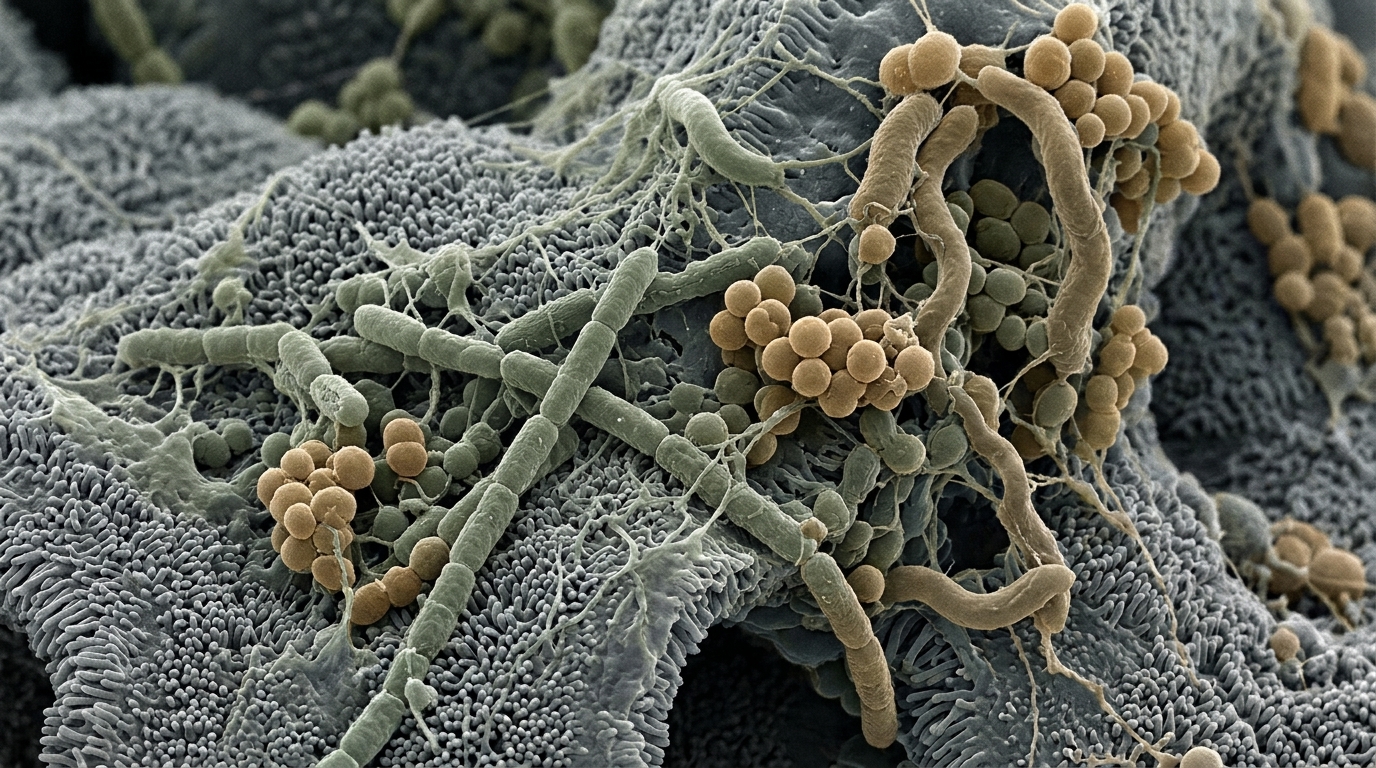
The remaining botanical constituents of the Heat-Clearing formulation contribute complementary antioxidant and antimicrobial defenses that further counteract radiotherapy-mediated tissue degradation. Seed extracts from Oroxylum indicum supply substantial concentrations of the bioactive flavonoids baicalin and baicalein, which exhibit potent free-radical scavenging capacity in radical assays, attenuate intracellular lipid peroxidation, and suppress mitogen-activated protein kinase and nuclear factor-kappa B signaling cascades to lower interleukin-1 beta and nitric oxide synthase expression. Concurrently, Sterculia lychnophora polysaccharides suppress secondary bacterial exacerbations by inhibiting standard oral pathogens such as Staphylococcus aureus and streptococcal strains. Polysaccharides, organic acids, and triterpenoids extracted from Imperata cylindrica rhizomes and Scrophularia ningpoensis roots provide additional multi-target benefits, downregulating transforming growth factor-beta 1 and Janus kinase 2-signal transducer and activator of transcription 3 signaling while scavenging reactive oxygen intermediates to preserve oral mucosal integrity.
The analgesic efficacy demonstrated by Throat-Clearing Oral Liquid in mitigating moderate-to-severe radiation stomatitis pain is similarly explained by the pharmacological actions of its four primary herbal components: Achyranthes aspera, Kalimeris indica, Plantago asiatica, and Carpesium abrotanoides. Saponins and ecdysteroid derivatives from Achyranthes species significantly downregulate cyclooxygenase-2, inducible nitric oxide synthase, and interleukin-6 expression, directly attenuating peripheral nociceptor sensitization at ulcerative mucosal margins. Whole-plant extracts and volatile oils from Kalimeris indica provide intrinsic analgesic and antimicrobial actions that prevent microbial colonization of open erosions. Furthermore, flavonoid fractions from Plantago asiatica upregulate cystathionine beta-synthase while suppressing inflammatory nuclear factor-kappa B activation, elevating endogenous antioxidant defense enzymes including superoxide dismutase and glutathione peroxidase to preserve membrane stability and diminish pain signaling induced by acute radiation injury.
Notwithstanding these promising quantitative findings, the authors highlighted several critical methodological caveats that limit immediate clinical translation. Methodological evaluation using the Cochrane Risk of Bias 2.0 tool revealed that only two of the nine included trials implemented and described adequate double-blinding procedures, creating potential vulnerability to performance and outcome detection biases. Furthermore, substantial clinical heterogeneity existed across comparator arms, which ranged from plain normal saline to multidrug supportive cocktails containing dexamethasone, lidocaine, gentamicin, or vitamins, obscuring whether treatment benefits represented independent herbal effects or incremental synergies. Systematic omission sensitivity analyses verified statistical robustness across all three primary endpoints without any single trial exerting decisive skew. Nevertheless, because fewer than ten trials met inclusion criteria, publication bias could not be formally assessed using funnel plots or Egger tests, prompting the investigators to conclude that rigorously blinded, adequately powered, multicenter randomized trials are required before incorporating these botanical regimens into standard oncology practice guidelines.
Subject of Research: Clinical efficacy and comparative rankings of Chinese patent medicines for radiation-induced oral mucositis in cancer patients
Article Title: Comparison of oral therapies of different Chinese patent medicines for post-radiotherapy stomatitis in cancer patients: systematic review and meta-analysis
Article References: Chen, Y., Zhao, H., Li, Z., Di, J., Xu, W., Zhou, Y., Xue, Y., & Jia, L. (2026). Comparison of oral therapies of different Chinese patent medicines for post-radiotherapy stomatitis in cancer patients: systematic review and meta-analysis. Frontiers in Oncology, 16, Article 2006315. https://doi.org/10.3389/fonc.2026.2006315
Image Credits: AI Generated
DOI: 10.3389/fonc.2026.2006315
Keywords: radiation-induced oral mucositis, Chinese patent medicines, network meta-analysis, head and neck cancer, radiotherapy toxicity, Heat-Clearing Throat-Soothing Formula, Throat-Clearing Oral Liquid, Lonicera-Lilium Tablets, Ophiopogon japonicus, SUCRA rankings, oral stomatitis, randomized controlled trials, pro-inflammatory cytokines, mucosal ulceration, supportive cancer care, Bayesian statistics, phytochemical pharmacology

















 English (US) ·
 French (CA) ·