

 6 hours ago
1
6 hours ago
1
PROTECT YOUR DNA WITH QUANTUM TECHNOLOGY
Orgo-Life the new way to the future Advertising by AdpathwayNewly published research identifies convective heat transfer and the consequent lapse rate, and not radiation, CO2 concentration, or the so-called greenhouse effect, as the predominant mechanisms warming Earth from its effective radiating temperature, ~255 K, to ~288 K.
Proponents of the anthropogenic global warming (AGW) narrative necessarily believe (1) CO2 is the Earth’s temperature “control knob,” (2) longwave (LW) radiation from greenhouse gases like CO2 and water vapor is what keeps the Earth’s surface ~33 K warmer than it would otherwise be in an imaginary world with no CO2 or water vapor.
This thought-experiment-based position relies on the presumption that LW radiation is the main heat transfer mechanism in the Earth’s lower atmosphere, or troposphere. It is not.
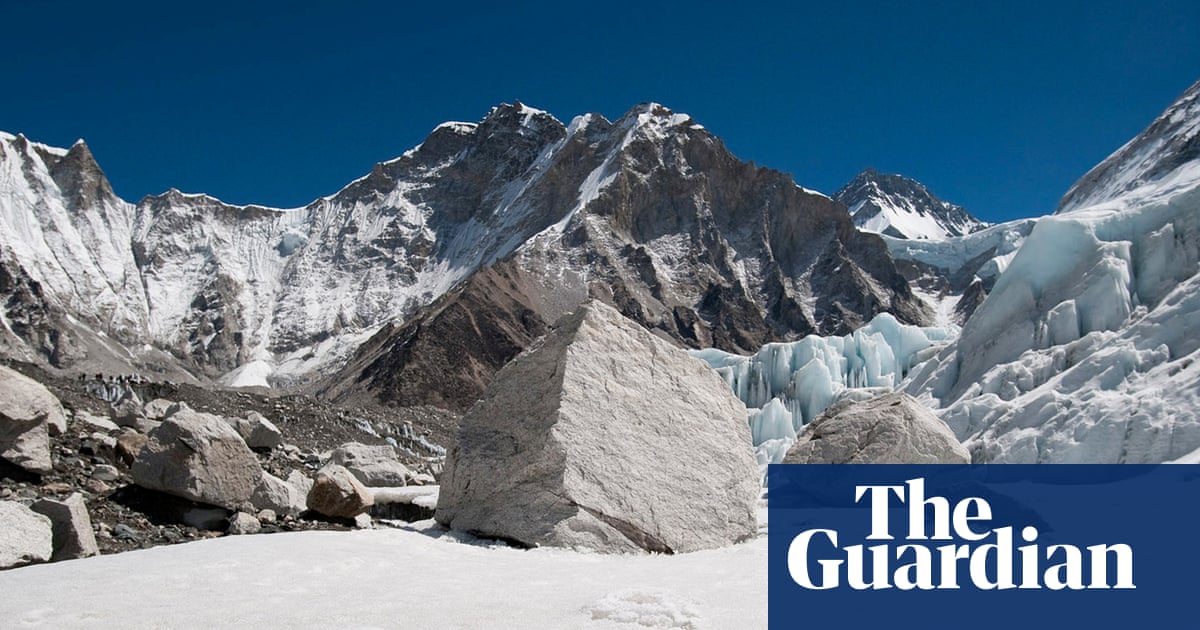
Convection, not radiation, dominates heat transfer near the surface. And convection sets the lapse rate, which means that as the density of the atmosphere falls the temperature drops 6.5°C for every km of altitude above the surface. This is why the snow-covered summit of Mt. Kilimanjaro is, for example, about -29°C colder than its base.
“The warming (from ~255 K to ~288 K) is a necessary consequence of the lapse rate, which in turn appears because of convection. Indeed, there would not be a lapse rate without convection.”
“Because the dominant mechanisms operating in the atmosphere are in several respects opposite to that of a greenhouse, the traditional label ‘greenhouse effect’ is arguably inaccurate. … [T]he expression ‘anti-greenhouse effect’ would be more accurate in describing the behavior of the atmosphere, namely the fact that the convection establishes a lapse rate and thereby a surface temperature above the column-mean temperature, while a greenhouse warms mainly by suppressing convection.”
Not only that, but the variations in LW radiation (attributed to variations in CO2 and water vapor) cannot explain either the lapse rate nor the temperature. Instead, it is the temperature variation that determines the variation in LW radiation, and not the other way around.
“The temperature variation full explains and predicts the variation in the LW radiation.”
“The small changes in the lapse rate cannot be attributed to changes in any component related to radiation. … [T]he lapse rate is invariant with respect to changes in LW radiation.”
Over the tallest mountain range on Venus, Maxwell Montes, the atmospheric pressure drops from around 92 bars to roughly 45 bars, and the temperature consequently drops about 82°C compared to the average Venus surface temperature. So convection and lapse rate, not CO2 or radiation, dominate heat transfer in the Venus atmosphere too.
“The proposed explanation of surface warming due to convection and the implied lapse rate extends beyond Earth, most notably to Venus. … The very high temperature of Venus’s surface, of more than 700 K, is usually attributed to the abundance of CO2. … [T]he actual lapse rate in the entire troposphere [60 km altitude] is very close the dry adiabatic, which suggests an isotropic profile…convection with cellular structures dominates in the atmosphere [of Venus].”





















 English (US) ·
  French (CA) ·