

 1 month ago
76
1 month ago
76
PROTECT YOUR DNA WITH QUANTUM TECHNOLOGY
Orgo-Life the new way to the future Advertising by AdpathwayLaser powder bed fusion, the workhorse technology of metal 3D printing, can build aerospace brackets, turbine components, and medical implants with geometric freedom no milling machine can match. Yet inside every part it produces, an invisible enemy accumulates: residual stress. A new comprehensive review published in the journal Advanced Materials Joining lays out the most complete roadmap to date for taming these internal forces, proposing an integrated, closed-loop workflow that spans simulation, process optimization, material control, and post-treatment management. The work arrives at a critical moment, as industries ranging from aviation to energy push to qualify additively manufactured parts for safety-critical service.
The origin of residual stress in laser powder bed fusion lies in the physics of the process itself. A laser beam sweeps across a thin bed of metal powder, melting a tiny pool of material that solidifies within microseconds. Each layer is reheated and partially remelted by the layers deposited above it, creating steep thermal gradients and repeated cycles of expansion and contraction. When the transient thermal stress exceeds the temperature-dependent yield strength of the alloy, the material deforms plastically, and that irreversible strain is locked in as the part cools. The result is a stress field that can approach, or even exceed, the room-temperature yield strength of the printed alloy.
The consequences are far from academic. During a build, accumulated stress can crack delicate overhangs, warp the powder bed into the path of the recoater blade, and abort an entire print. After printing, high tensile stresses drive distortion and warpage that destroy dimensional tolerances, and they combine with surface defects to accelerate fatigue crack growth. In susceptible environments, they can even trigger stress corrosion cracking. The review emphasizes that these stresses exist at multiple scales: macroscopic Type I stresses govern global distortion, grain-scale Type II stresses arise from anisotropy and phase mismatch, and sub-grain Type III stresses are tied to the dense dislocation structures created by rapid solidification.
Because directly measuring stress evolution inside a working printer is essentially impossible, the authors place multiscale simulation at the heart of their proposed workflow. At the microscale, phase-field models and crystal plasticity finite element methods capture how grain structures nucleate, grow, and carry stress during solidification, explaining the formation of Type II and Type III stresses. Recent advances couple these frameworks with computational fluid dynamics melt-pool simulations and even machine learning surrogates that dramatically cut computational cost. At the mesoscale, thermal-fluid-mechanical models resolve individual scan tracks, linking melt-pool dynamics to residual stress development through mapped temperature fields and temperature-dependent material properties.
At the part scale, where full thermo-mechanical simulation can take weeks or months, the review highlights the inherent strain method as the pragmatic workhorse. This approach extracts the permanent plastic strain generated during printing from small calibration specimens or high-fidelity simulations, then applies it to a large finite element model in a single fast elastic analysis. Modified versions of the method account for residual elastic strain and scanning strategy effects, and commercial platforms such as ABAQUS, ANSYS, and Simufact Additive now embed these workflows. The authors stress that simulation is most valuable when used as a decision-support tool, calibrated against experiments and continuously refined, rather than as a post hoc explanation.
With predictive models in hand, the workflow turns to manufacturing optimization. Process parameters such as laser power, scan speed, and preheating temperature directly shape melt-pool geometry and thermal gradients, while scan strategy choices, including inter-layer rotation angles, island segmentation, and scan sequencing, redistribute shrinkage strains across the part. Notably, the review reports that the optimal rotation angle is material-dependent: 67-degree rotation outperformed 90-degree alternation in Inconel 718, while simple 90-degree strategies sufficed for other alloys. Artificial intelligence is increasingly entering this space, with frameworks like SmartScan using physics-informed optimization to sequence scan islands, and deep reinforcement learning agents that dynamically adjust laser power and velocity to stabilize melt-pool depth, cutting distortion by nearly half in some demonstrations.
Structural design offers another lever. Topology optimization frameworks now incorporate thermal stress constraints, build orientation selection, and support structure design, treating sacrificial anchors and heat dissipation pathways as design variables rather than afterthoughts. Feature-based surrogate models trained on geometric primitives can predict part-scale residual stress fields fast enough to embed in iterative design loops. The review argues that the future lies in co-optimizing topology, supports, and scan paths simultaneously, so that stress-aware design becomes an integral part of engineering workflow rather than a separate corrective step.
Material-level control closes the gap between idealized simulations and messy reality. Powder reuse changes particle size distributions, surface chemistry, and optical absorptivity, all of which inject run-to-run variability into the thermal history and therefore into the stress state. The authors recommend stricter reuse governance, including sieving, controlled refresh ratios, and traceability systems. Process atmosphere matters too: oxygen pickup in titanium alloys, spatter oxidation in nickel superalloys, and nitrogen uptake in stainless steels all couple atmospheric conditions to microstructure and stress. More exotic strategies exploit the material itself, such as low-transformation-temperature alloys whose martensitic transformations generate compressive strains that offset tensile stresses, and nanoparticle inoculants like LaB6 that refine grains in crack-prone aluminum alloys, broadening the printable process window.
Finally, post-treatment delivers the finishing blow to residual stress. Stress-relief heat treatment remains the baseline, but the review details how schedules must be tailored to each alloy’s metastable as-built microstructure: aging below 200 degrees Celsius preserves the strengthening silicon network in AlSi10Mg, while Ti-6Al-4V requires careful balancing of martensite decomposition against embrittlement, and heavily gamma-prime-strengthened nickel superalloys may need rapid heating above their precipitate dissolution temperatures to avoid treatment-induced cracking. Alternatives such as deep cryogenic treatment, which relieved over 70 percent of stress in AlSi10Mg without any strength loss, and thermal-vibration hybrid methods offer lower-temperature options. Surface techniques like shot peening and laser shock peening then implant deep compressive stress layers that multiply fatigue life, with hybrid peening combinations boosting compressive stress by more than two-thirds compared with laser peening alone.
The unifying message of the review is that no single knob controls residual stress. Instead, the authors propose a six-stage closed-loop workflow: define application-driven acceptance targets, run decision-oriented multiscale simulation, optimize the printing process, stabilize materials and atmosphere, apply tailored post-treatment, and validate the finished part against measurements that feed back into recalibrated models. By treating residual stress as a system-level challenge rather than an isolated defect, the framework aims to carry laser powder bed fusion from laboratory-scale optimization toward reliable, repeatable, and qualifiable industrial production, a transition that could finally unlock the technology’s full promise for safety-critical components.
Beyond the strategies themselves, the review draws attention to the practical challenge of verifying that residual stress has actually been reduced. Experimental characterization techniques such as hole-drilling, neutron diffraction, and X-ray diffraction each occupy a distinct niche. Hole-drilling is relatively inexpensive and can be performed in workshops, but it is destructive and provides only local information. X-ray diffraction offers surface-sensitive measurements that are well suited to assessing the compressive layers introduced by peening treatments, while neutron diffraction penetrates deep into thick sections, making it the method of choice for mapping internal stress fields in finished components. The cost and limited availability of these techniques explain why purely experimental, trial-and-error optimization of printing parameters remains impractical, and why the authors argue so strongly for simulation-guided workflows in which measurements are used sparingly, for calibration and validation rather than exhaustive mapping.
The fragmented nature of much of the existing literature emerges as a recurring theme. Studies that optimize scan strategies in isolation, for example, may reduce distortion while simultaneously degrading density or surface quality, creating trade-offs that only become apparent when the whole manufacturing chain is considered. Similarly, a heat treatment schedule developed for one powder lot may perform differently once powder reuse alters the starting microstructure. By organizing mitigation into a system-level workflow, the review makes these hidden interactions explicit and provides a structure in which each decision can be evaluated against application-driven acceptance targets rather than a single metric such as maximum stress magnitude.
The industrial significance of this framing is considerable. As laser powder bed fusion moves from prototyping into end-use production for aerospace, medical, and energy applications, qualification bodies increasingly demand demonstrated control of the internal stress state, not merely of geometry and density. A closed-loop workflow in which experimental measurements continuously feed back into recalibrated models offers a pathway to the repeatability that certification requires. It also supports the economic case for the technology: scrapped builds, post-print straightening, and unexpected failures during machining all carry substantial cost, and each of these traces back to unmanaged residual stress.
Looking forward, the review points toward several converging trends. Machine learning surrogates and reinforcement learning agents are making in-process and design-stage stress prediction fast enough for routine use, while in situ monitoring promises the data streams needed to close the loop during the build itself rather than after it. At the same time, material-level innovations such as transformation engineering and grain-refining inoculants are expanding the range of alloys that can be printed reliably. The authors acknowledge that open questions remain, including the transferability of calibrated models between machines and powder batches, but the overall trajectory is clear: residual stress is shifting from an unavoidable consequence of the process to a quantifiable, controllable, and designable feature of additive manufacturing.
Subject of Research: Residual stress mitigation and control in laser powder bed fusion metal additive manufacturing
Article Title: A workflow for residual stress control in laser powder bed fusion manufacturing
Article References: Zhou, S., Guo, Q., Li, M., Wang, Q., Xu, X., Chang, S., Yan, W., Li, L., & Ding, J. (2026). A workflow for residual stress control in laser powder bed fusion manufacturing. Advanced Materials Joining, 1(1), Article 10. https://doi.org/10.1007/s44500-026-00007-y
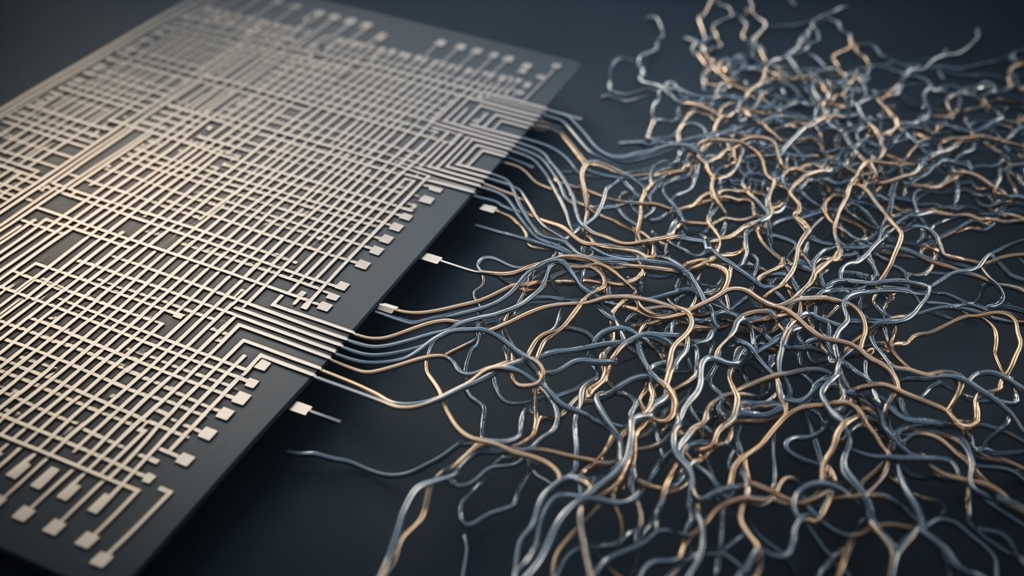
Image Credits: AI Generated
DOI: 10.1007/s44500-026-00007-y
Keywords: laser powder bed fusion, residual stress, metal additive manufacturing, multiscale simulation, scan strategy optimization, stress-relief heat treatment, inherent strain method, powder reuse, laser shock peening, topology optimization, phase transformation engineering, closed-loop workflow
Cite Scienmag News
APA
MLA
Chicago
Copy citation
Download RIS
Tags: closed-loop workflowclosed-loop workflow for stress management in metalinherent strain methodinternal stresses in additively manufactured aerospace componentslaser powder bed fusionlaser powder bed fusion process optimizationlaser shock peeningmaterial selection and control in laser powder bed fusionmetal additive manufacturingmultiscale simulationphase transformation engineeringpost-treatment methods for residual stress reductionpowder reuseprocess control strategies for stress mitigation in metal additive manufacturingquality assurance in safety-critical metal 3D printed partsresidual stressresidual stress in metal 3D printed partsscan strategy optimizationsimulation and modeling of residual stress in 3D printed metalsstress-relief heat treatmentthermal gradient effects in metal 3D printingtopology optimization




















 English (US) ·
  French (CA) ·